
Precarious fish farming on hydroelectric reservoirs.
Fish farming in cages on hydroelectric reservoirs is a relatively lucrative livelihood, encouraged by local authorities. However, in recent years, this profession has become as precarious as the waves. Most recently, many households in Tam Thai commune lost everything when the hydroelectric plant released water, leaving them no time to recover.
Fish die from being stranded.
Ten days have passed since all the fish in his cages died, but Mr. Lo Van Loi (69 years old), from Canh Trap village, Tam Thai commune (Nghe An province), still hasn't dared to buy new fish fry to continue raising them. "The water level in the reservoir keeps fluctuating so suddenly like this, it's terrifying. A whole year's worth of hard work is lost in just a few hours," Mr. Loi said.
Located on the banks of the Lam River, like other households, Mr. Loi previously relied primarily on agriculture. More than 10 years ago, since the Khe Bo Hydropower Plant began impounding water, submerging his fields and rice paddies beneath the reservoir, Mr. Loi started learning the trade of raising fish in cages on the hydropower reservoir.
“Now there are no more rice fields, they're all flooded, and clearing land for farming is impossible, so I have to do this job. Actually, this fish farming business brings in a very good income,” Mr. Loi recounted, adding that he has two cages for raising grass carp. One batch he raised more than a year ago, and the other has been raised for over nine months, ready for sale. However, at around 4 PM on October 28th, the water level in the Khe Bo hydroelectric reservoir suddenly dropped, leaving all the fish cages stranded.
“We can’t always be on the fish cages to monitor the water level. That afternoon, I went to check and saw the water receding unusually quickly, so I immediately shouted to the other fish farmers on the lake to come and help. However, after only about 30 minutes, the water had completely dried up, and 200 kg of carp were stranded in the mud, unable to breathe, and all died. Not a single one could be saved,” Mr. Loi added.
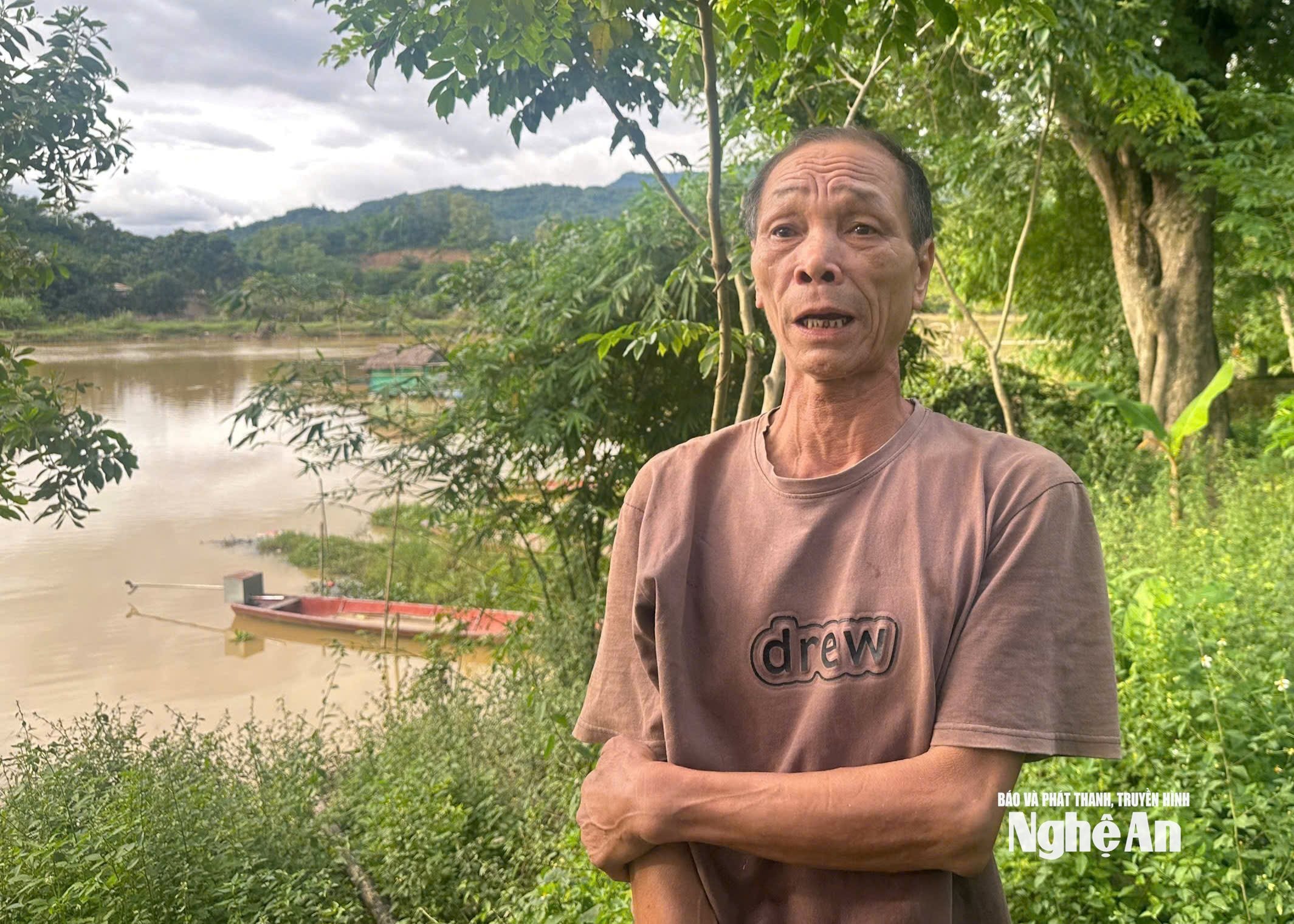
Sharing the same fate as Mr. Loi, Mr. Vi Van Doan (48 years old), from Canh Trap village, also lost more than 400 kg of fish due to the rapid receding of the reservoir water. Mr. Doan said that he had 3 fish cages on the Khe Bo hydroelectric reservoir, most of the fish were already large and waiting for traders to come and buy them. “That day, as soon as I heard Mr. Loi's call, I ran out immediately. Seeing the fish struggling was heartbreaking. I tried to save them by bringing out large tarpaulins to catch the fish in the cages and scooping water from inside the house, but I only managed to save a mere 5 tilapia. Nearly 400 kg of the remaining fish died completely, all my efforts in raising them for almost a year were wasted,” Mr. Doan said, adding that if he had sold these 400 kg of fish, he would have earned 40 million VND.
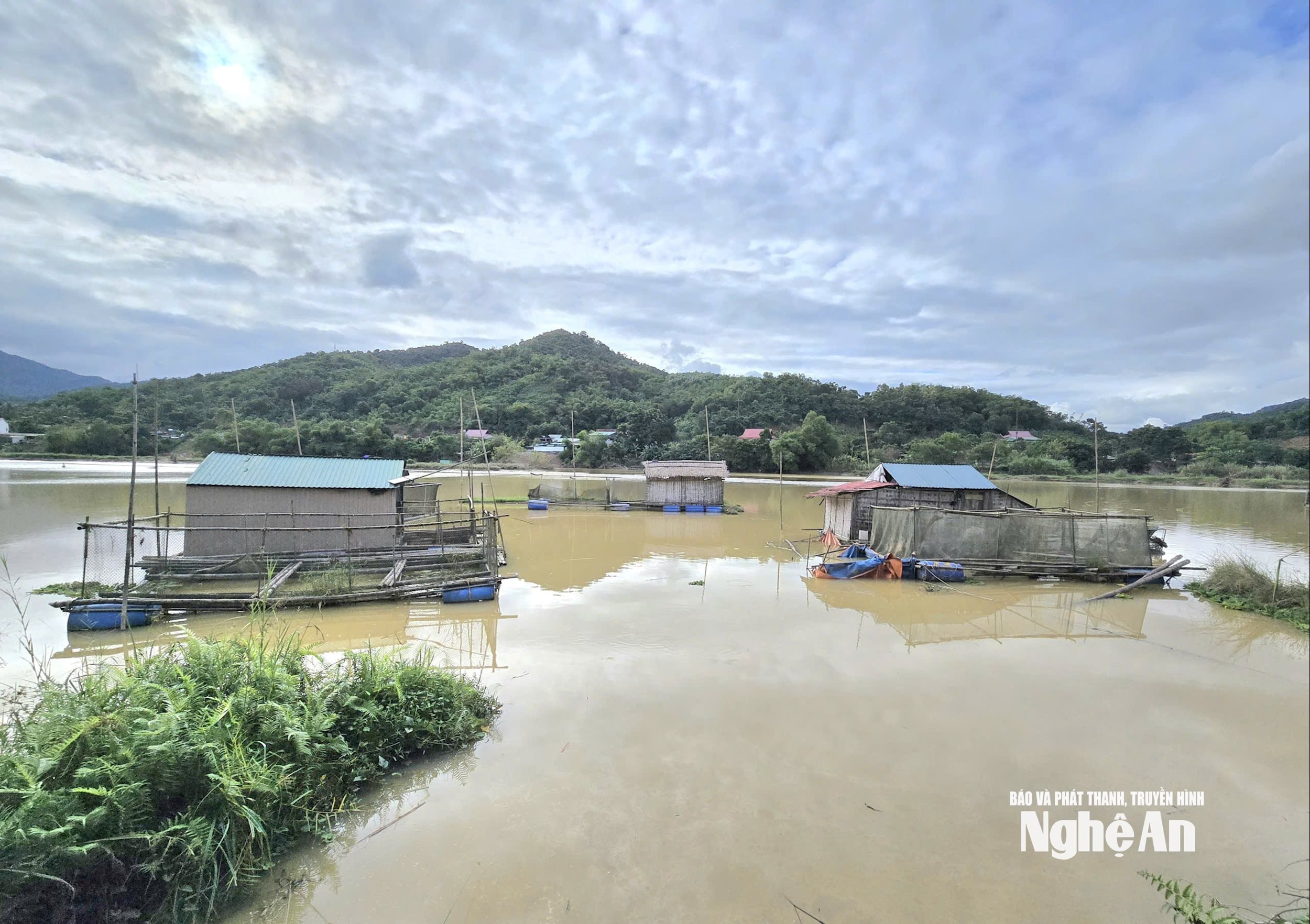
This is not the first time Mr. Doan has suffered heavy losses due to the sudden drop in water level in the hydroelectric reservoir. Around this time last year, more than 100 kg of his fish also died due to being stranded. The area where Mr. Doan and Mr. Loi set up their fish cages normally has a water depth of about 1.3 meters; however, on the afternoon of October 28th, the water quickly receded, leaving only mud.
“Last year, we detected the water receding earlier, so we were able to save a few fish. Among the 400 kg of fish that died this time, there were some very large carp, nearly two years old, that survived last year’s stranded fish crisis. This year, from the time we detected the receding water until it completely dried up, it was only about 30 minutes, so we couldn’t react in time,” Mr. Doan added.
The people need the cooperation of the hydroelectric power plant.
According to Mr. Vi Van Thanh, Secretary of the Party Branch of Canh Trap village, many households in the village raise aquatic products on the Khe Bo hydroelectric reservoir. However, on the afternoon of October 28th alone, four households suffered heavy losses due to the sudden receding of the water, resulting in the death of nearly 2 tons of fish.
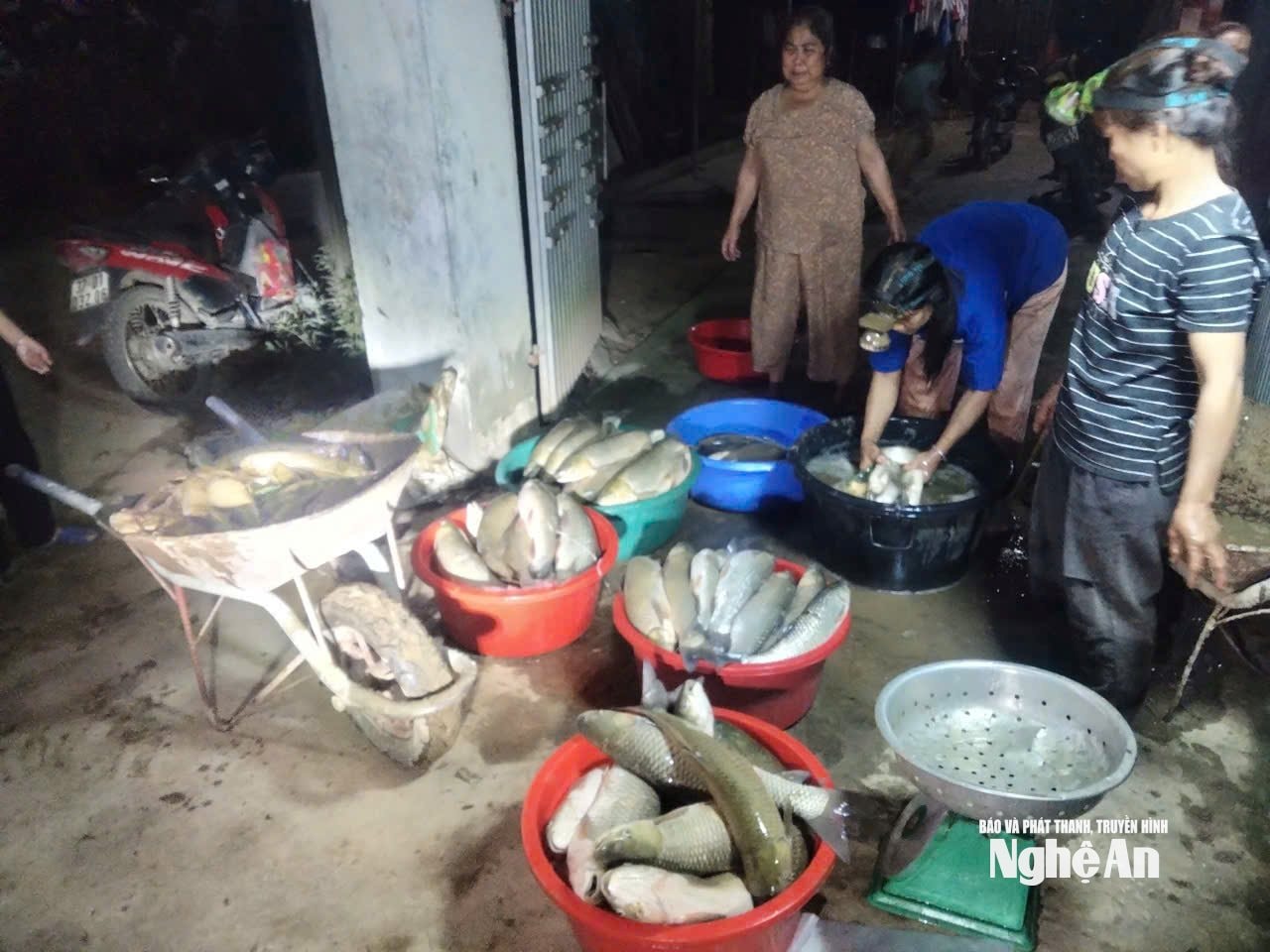
“We went to see for ourselves and felt sorry for the fish cage owners. Therefore, that day the entire village management board stayed up almost all night, using every connection to call each person individually to ask them to buy the fish at a cheap price, helping the cage owners recoup some money. Because if they waited until the next morning, the fish would have spoiled,” Mr. Thanh said, adding that fish farming in cages in Canh Trap village provides a decent income; however, for the past three years, the villagers have suffered heavy losses due to sudden water recedes.
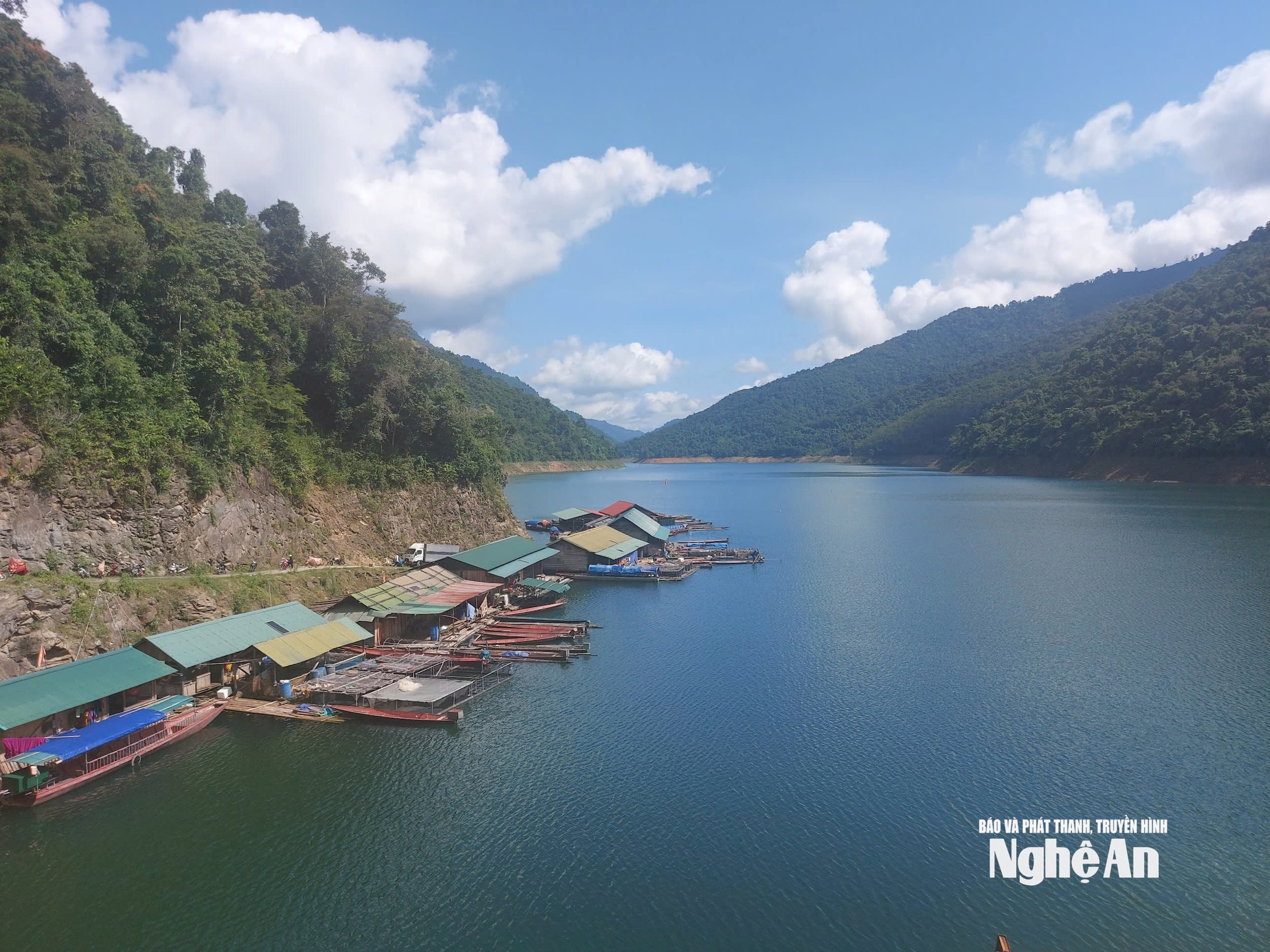
According to our investigation, in the Khe Bo hydroelectric reservoir area alone, there are approximately 250 fish cages regularly used by local people for aquaculture. These are mainly concentrated in the communes of Tam Quang, Tam Thai, and Tuong Duong. In addition, the Ban Ve and Nam Non hydroelectric reservoirs in Luong Minh and Yen Na communes also have hundreds of fish cages. This provides a relatively good income for people in the highlands; however, in recent years, it has become precarious. Especially after the recent record-breaking floods, many fish cages were swept away.
“If a natural disaster occurs and we can't prevent it in time, we have to accept the damage. But in this case, the water receding due to the hydropower plant releasing water is very upsetting. If they had just notified us a little earlier before releasing the water, we could have avoided the damage,” said Mr. Lo Van Ngoc, who lost more than 300 kg of fish due to the water level in the reservoir receding. According to Mr. Ngoc, the people have also raised this issue in meetings with voters. However, they only received the answer that “the hydropower plant operates according to procedures and does not encourage people to raise aquatic products in the reservoir area.”
Regarding this matter, a leader of Tam Thai commune said that the local government had also visited and encouraged the affected residents and provided each household with 2 million VND in support. “We believe that the hydropower plants did not follow the correct operating procedures for interconnected reservoirs. According to our investigation, at that time, the Ban Ve hydropower plant upstream released very little water, but the Khe Bo hydropower plant downstream released a lot, causing the water level to drop suddenly. Many households in Tam Thai commune currently rely on this for their livelihood because their rice fields have been submerged under the reservoir, leaving them with no land for agriculture. For many households, their fish cages are their entire livelihood. Therefore, the commune only hopes that the hydropower plant will notify the people in advance each time it releases water, so that they have time to move their fish cages to deeper water,” the leader of Tam Thai commune said.
Meanwhile, Mr. Nguyen Van Luu, Director of Khe Bo Hydropower Plant, said that the hydropower plant has not yet received information about the damage to the fish farmers. However, Mr. Luu stated that the hydropower plant followed the correct procedures.
“The Khe Bo hydropower plant operates with a reservoir water level between 63 and 65 meters, so the plant has the right to release water down to the dead water level of 63 meters, but it rarely releases water that deep. Each time it releases water, it only needs to notify the downstream area, not the reservoir area. As for the people raising fish in cages on the hydropower reservoir, it is all spontaneous and not in accordance with regulations. Regulations do not prohibit it, but people who want to raise fish must have a permit and conduct surveys to choose a safe location. This issue has been happening for many years, and the hydropower plant has investigated it many times and has also advised the local authorities and reported it to the Department of Industry and Trade,” Mr. Luu said.
Meanwhile, leaders of communes in the reservoir area of the hydroelectric dam, such as Tam Thai, Tuong Duong, and Luong Minh, all stated that households raising fish in cages on the reservoir only need to register with the local authorities and do not need to apply for a permit.


