
Despite warnings, farmers in Nghe An province sow rice seedlings early and do not cover them with plastic sheeting.
(Baonghean.vn) - According to the agricultural calendar, spring planting should not begin until mid-January 2020, but since the beginning of December, many localities in Hung Nguyen district (Nghe An) have started sowing rice seedlings, concentrated in the communes of Hung Thinh, Hung Phuc, Hung Nhan, etc.
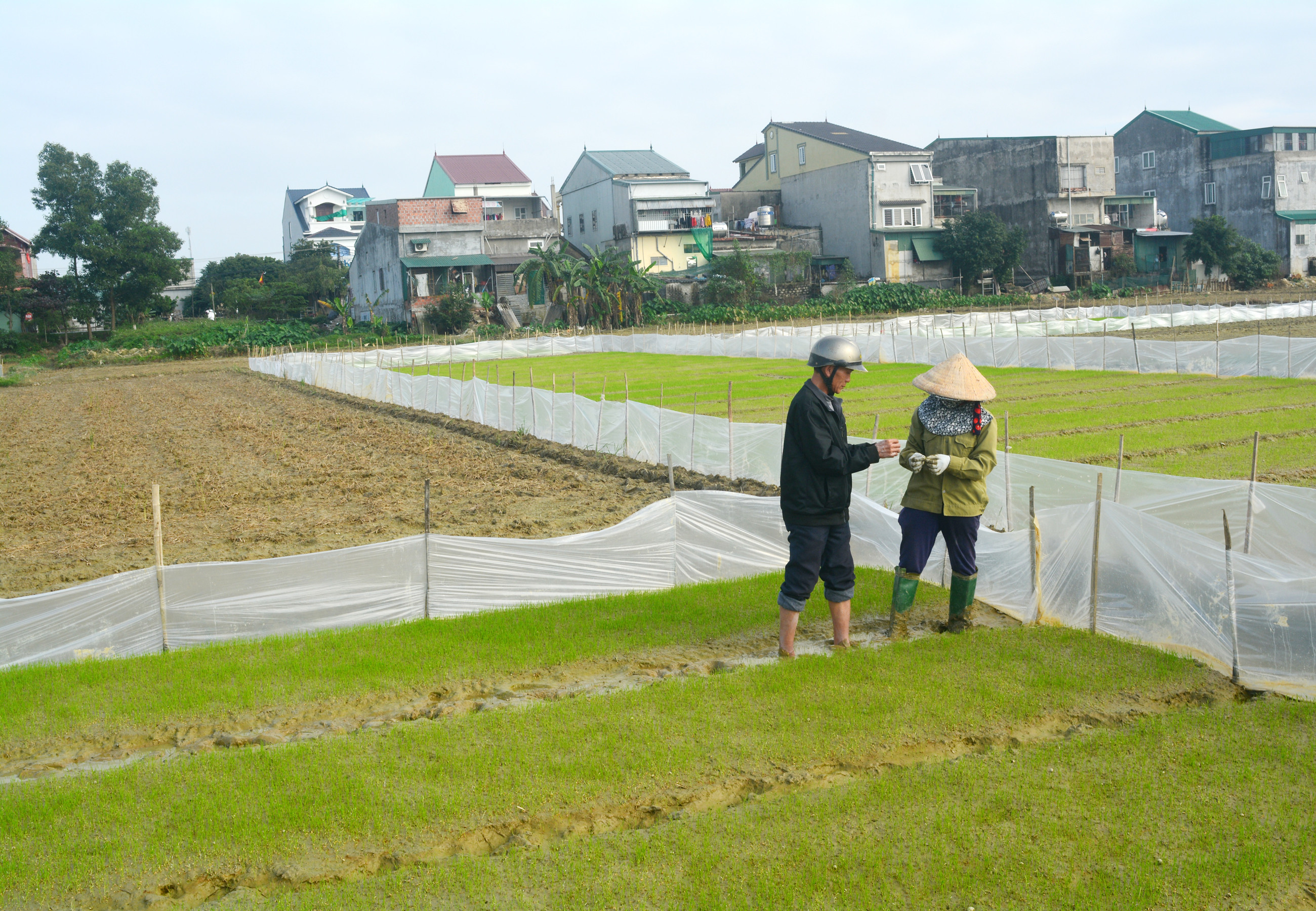 |
| Currently, in Hung Nguyen district, many rice seedlings have already turned green, even though the planting schedule for the spring crop is from January 8th to 25th. Photo: Thanh Phuc |
In the spring of 2020, Ms. Nguyen Thi Mai's family, farmers in Yen Phu hamlet, Hung Thinh commune, cultivated 9 sao (approximately 0.9 hectares) of rice fields, including 5 sao in low-lying areas, planting long-duration rice varieties. She started sowing on December 4th. The sowing coincided with a severe cold spell, and because they didn't cover the seedlings with plastic sheeting, the seedlings didn't sprout evenly, with many patches showing white leaves and dying from the cold. Ms. Mai said: "If we covered each sao of rice with plastic sheeting, the cost would increase by 40,000 dong. Therefore, to save costs, we didn't cover the seedling beds with plastic sheeting, only covering the outside to protect against rats."
This spring, Hung Thinh commune has 40 out of 210 hectares planted with long-duration rice varieties, so farmers started sowing seedlings from the beginning of December. Mr. Nguyen Thuc Nghi - Deputy Chairman of Hung Thinh Agricultural Cooperative said: “Due to the characteristics of Hung Thinh, which is a low-lying, flood-prone area accounting for up to 20% of the rice production area, farmers have planted long-duration rice varieties early to avoid the risk of flooding. This way, if unfavorable weather conditions cause the rice plants to die, they can be replaced with short-duration varieties. Because the rice varieties are purebred and have good cold resistance, farmers do not cover them with plastic sheeting.”
At this time, in some communes such as Hung Phuc, Hung Nhan, Hung Khanh, Hung Phu, etc., rice seedlings have already turned green in many fields, and most of them are not covered with plastic sheeting. As a result, the seedlings are growing poorly, and due to the cold weather, many seedlings are dying, with up to 70% of the plants showing white leaf disease.
Early sowing of rice seedlings, disregard for seasonal planting schedules, failure to adhere to crop varieties, and the lack of plastic mulch on the seedlings have led to numerous negative consequences. According to assessments from the Department of Agriculture and Rural Development, in the spring crop of 2019, in localities where rice was sown earlier than scheduled, the rice panicles degenerated, resulting in blackened and shriveled grains. Yields for early-sown rice decreased by 500 kg - 1,400 kg/ha compared to rice sown according to the seasonal schedule, equivalent to a reduction of 3,000,000 - 8,400,000 VND/ha. Furthermore, the introduction of long-duration rice varieties led to delayed harvesting, impacting summer-autumn crop production and increasing the risk of damage from storms and floods.
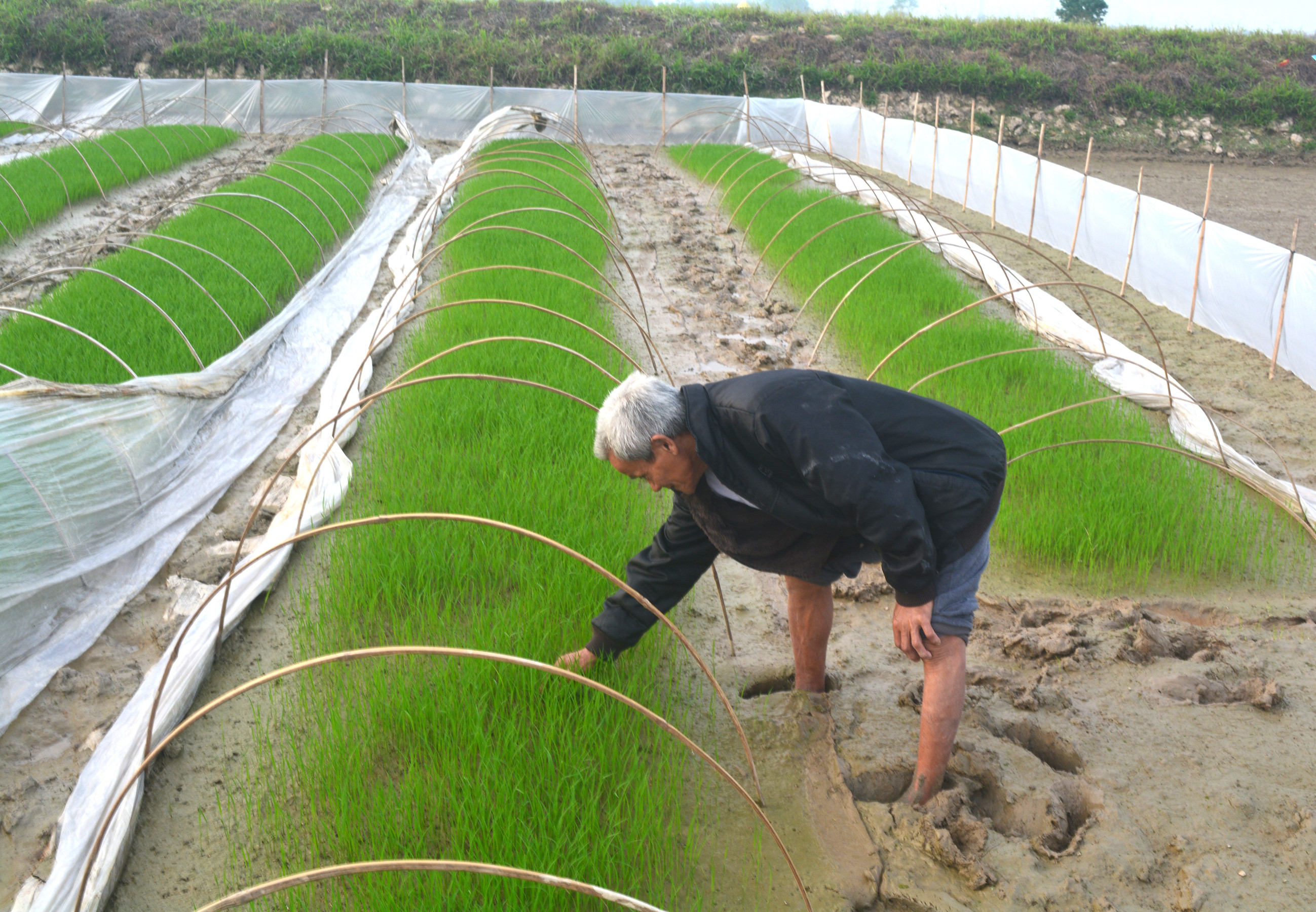 |
| Even with the same variety, rice seedlings covered with plastic film grow and develop better, and are more resistant to pests and diseases compared to rice seedlings that are not covered. Photo: Thanh Phuc |
Mr. Phan Duy Hai, Deputy Head of the Department of Crop Production and Plant Protection, advised: “Currently, there are some early-sown rice seedlings in the province, mainly in Hung Nguyen district, with about 1.2 hectares of seedlings and 30 hectares of direct sowing. Early sowing violates the province's planting schedule and the introduction of long-duration varieties into production is inconsistent with the production plan's structure. This leads to the risk of rice flowering being affected by the 'Nang Ban' cold spell, resulting in reduced yields or even crop failure. Especially recently, with the end of the support policy, many farmers are not applying plastic mulch to the seedlings, leading to damage by rats, stunted growth with black stripes, white-backed planthopper infestations, etc., affecting the growth and development of the rice plants, reducing yield and production value.”
For the spring crop of 2020, the planting schedule included the following three basic groups of varieties:
- Group 1 (varieties with a growth period of 140-145 days): Sow seedlings fromJanuary 8-13; transplanting from January 28-31 (transplanting from the 4th day of the 1st lunar month).
- Group 2 (varieties with a growth period of 130-135 days): Sow seedlings fromJanuary 15-20; transplanting from February 4-9.
- Group 3 (varieties with a growing period of around 125 days): SowingSeedlings are sown from January 20-25; transplanting is done from February 9-14.


