
US election awaits last-minute surprises.
(Baonghean) - The US presidential election campaign is becoming more interesting at a time when everything seems settled for the two Democratic and Republican candidates. Candidates from smaller political parties are emerging and could bring exciting surprises in the final stages.
Late hopes
As usual, the 2016 US presidential election campaign has been flooded with news surrounding the verbal clashes between Democratic and Republican candidates since the primaries. The scenario of a final showdown between former Secretary of State Hillary Clinton, the Democratic candidate, and billionaire Donald Trump, the Republican candidate, seems almost certain. However, public attention may be diverted in the coming months by a new development.
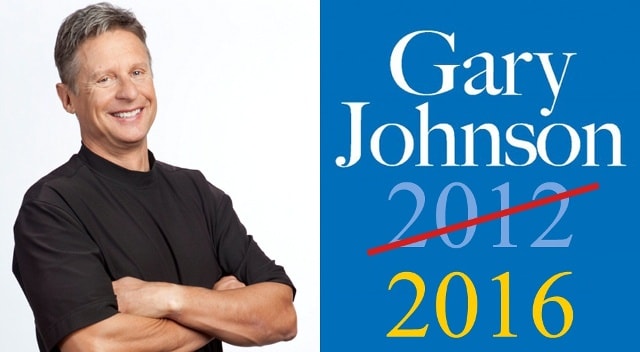 |
| 1. Gary Johnson, the Libertarian Party candidate, is expected to make a difference in the 2016 US presidential election campaign. Photo: RT. |
The Libertarian Party has just decided to nominate former New Mexico Governor Gary Johnson as its presidential candidate. Johnson, 63, secured the nomination for the second time at the party convention held in Orlando, Florida on May 29th. After two rounds of voting, Johnson beat five other Libertarian rivals to win the party's sole presidential nomination. Competing against the two giants of the Democratic and Republican parties is perhaps a major battle beyond the expectations of this politician.
Speaking after his nomination, Johnson declared that he would elevate the party's standing to "unprecedented heights"; at least by attempting to participate in the upcoming debates between US presidential candidates, bringing a different voice to political discussions currently dominated by Democrats and Republicans.
Johnson's most notable political experience comes from his two terms as Governor of New Mexico from 1995 to 2003 as a Republican. In 2011, Johnson also ran for president of the United States under the Republican banner.
Later, due to internal disagreements, the construction businessman left "The Elephants" and continued his political career as a Libertarian Party candidate. However, his second attempt was unsuccessful, as he only received 1.2 million votes from American voters in the November 2012 election.
Additionally, it's worth mentioning Green Party candidate Jill Stein, who is actively campaigning for the party's nomination. Stein's official statement indicates that if chosen, she would challenge former Secretary of State Hillary Clinton.
What opportunities are there for smaller applicants?
The emergence of smaller parties with their official representatives is hoped to add new color to the presidential race. American voters, after being satiated by Donald Trump's attacks or the controversy surrounding Clinton's use of a private email server for official business, are now looking for new faces.
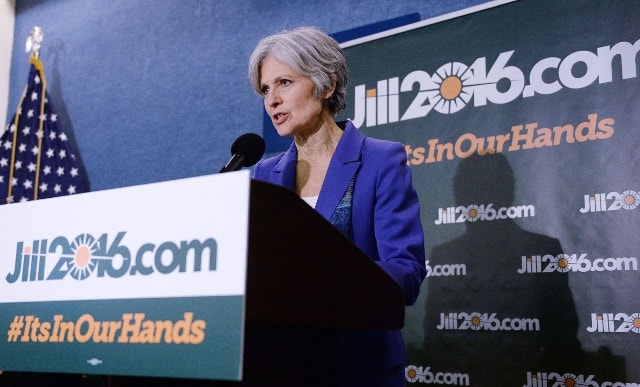 |
| Jill Stein is awaiting the nomination to become a rival to former Secretary of State Hillary Clinton. Photo: insidegov.com. |
Recent polls assessing the level of American public sentiment toward the two candidates show that 37% of those who identify as "extremely disliking" Clinton have reached a record high, surpassing the majority for Trump in US election history.
The strategies and platforms of smaller parties are also believed to help draw the attention of American voters to less well-known candidates with limited backing. For example, the Libertarian Party – a political party that emphasizes individual liberalism. Although not clearly defined as "left" or "right," many members of the party believe they have more progressive views on social issues than the Democrats, while being more conservative than the Republicans on financial matters.
Approaching issues from a more moderate perspective helps these smaller candidates stand out. Candidate Gary Johnson's views also demonstrate strong support for freedom of speech, military service, same-sex marriage, the right of adults to use cannabis, as well as support for free trade and lower personal taxes.
However, regardless of their stated views or promises, candidates from smaller parties still face significant hurdles in terms of votes and financial support. To compete against the overwhelming dominance of the Democratic and Republican parties, a third-party candidate needs to secure at least 15% support in national polls to participate in the three presidential debates before American voters go to the polls on November 8th.
Another significant challenge for third-party candidates is financial support. To be officially announced as a nominee, they must raise at least $5,000 for their campaign. In a race for the White House known for its financial competition, campaign funding is a major issue for anyone aspiring to become the leader of the United States.
The game-changer
Regardless of how far they can go in challenging the Democratic and Republican candidates, representatives from smaller parties could make the competition over the next six months more interesting. They could potentially disperse votes in key states, thereby impacting the overall election outcome. This is because the US presidential election is not determined by the national popular vote, but by the electoral votes of each individual state.
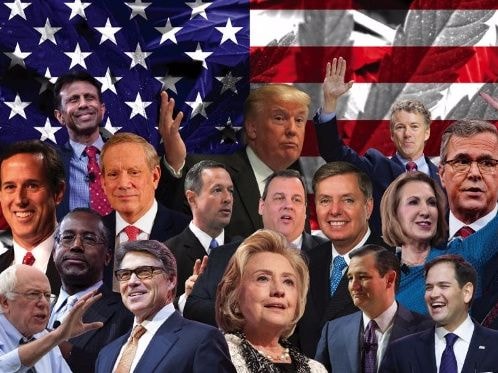 |
| There will be many surprises and exciting moments to look forward to in this year's US election. Photo: Sydney Morning Herald. |
The most populous states play a crucial role in determining election results. History has shown that lesser-known candidates have ultimately decided the outcome of the world's most expensive race. For example, in 1992, Democratic candidate Bill Clinton defeated then-President George Bush (Sr.) thanks to independent candidate Ross Perot, a technology executive, winning 20% of the vote in the election campaign. Although he didn't win in any state, the votes Perot received were enough to give Clinton's husband a significant advantage.
Thanh Son
| RELATED NEWS |
|---|


