
French Presidential Election: Will the Right Rise to Power?
(Baonghean) - The 2017 French presidential election season officially began with the first round of primary elections for right-wing and centrist parties on November 20th to select candidates for next year's presidential campaign. Similar to the US presidential election, the results of this primary election show many surprises, and anything is possible.
Surprises from the qualifying round
Contrary to predictions and earlier polls, the election results were truly surprising. Candidate Francois Fillon won over 44.1% of the vote, leading the election and far ahead of second-place Alain Juppé with 28.3%, and third-place former President Nicolas Sarkozy with 21.1%.
With this result, Francois Fillon and Alain Juppé will continue to compete in the second round of voting, to be held on November 27th, to select the right-wing and center-right candidates for the Élysée Palace race in April 2017. Meanwhile, former President Nicolas Sarkozy, once known as the "hot-tempered president" during his term from 2007 to 2012, has once again failed in his attempt to return to the Élysée Palace.
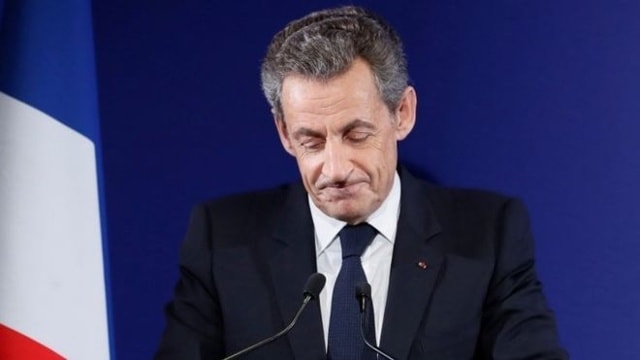 |
| Former President Nicolas Sarkozy lost the primary election and announced his retirement from politics. (Photo: AFP) |
The outcome was surprising because throughout the months-long election campaign, analysts, the media, and even within the right-wing party, everyone had predicted a "two-way" race between the two candidates: the Mayor of Bordeaux, Juppé, and former President Sarkozy. However, Fillon's victory and Sarkozy's defeat can be explained.
A prominent member of the right wing, Fillon served as Prime Minister under Sarkozy's government. He was seen as representing the traditional right, pursuing a relatively liberal economic policy, but heavily influenced by Catholic ideology and issues of national identity. This contrasted sharply with Sarkozy, who preferred hardline, far-right rhetoric to attract voters from the National Front. Fillon's landslide victory demonstrates that French voters prioritize practical issues, avoiding grand pronouncements or overly optimistic promises from some candidates.
This is also one of the reasons for Sarkozy's failure this time. Furthermore, in recent years, Sarkozy has been involved in a scandal related to allegations of violating campaign spending limits in the 2012 election. In September, a judge ruled that Sarkozy must be tried in this case. Despite confidently running for re-election, polls show that 74% of French people do not want Sarkozy or Hollande to return to power again.
"Mini-election"
Although it was only the first round of the right-wing and center-right primary elections, the November 20th election attracted significant attention from the French media and public. Looking at the current political landscape in France, the two rounds of right-wing primary elections are, in fact, considered by many French political analysts as a "mini-presidential election" because numerous factors suggest that the candidate representing the right wing has a very high chance of becoming the new President of France in 2017.
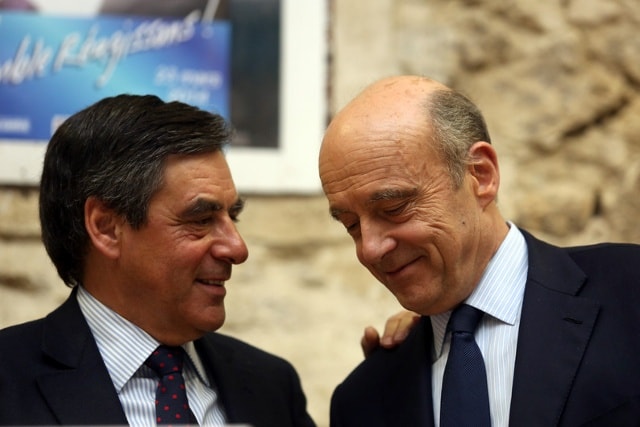 |
| Francois Fillon (left) and Alain Juppé will compete in the second round of voting on November 27 to choose the presidential candidate for the April 2017 election. (AFP photo) |
The French presidential election (April 23 and May 7, 2017) was a race centered around three main contenders: the left, represented by the ruling Socialist Party; the far right, represented by the National Front; and the right, represented by the Republican Party. Opinion polls and election analyses suggest that, given the strong rise of the far-right National Front in recent years and the international context of the rise of nationalism, populism, and xenophobia, the chances of its leader, Marine Le Pen, advancing past the first round of the French presidential election are considered very high. The remaining question is, which candidate—the left or the right—will be her opponent in the second round?
Observers believe that the candidate who loses in the first round is most likely from the left wing. The ruling left wing is currently deeply divided, and to date, French President François Hollande has not announced whether he will run for another term. Regardless of Hollande's decision, the left wing's chances of winning are not high because French voters are already deeply disappointed with the party's leadership.
During his four years leading the country, President Hollande and his left-wing government have not really left a significant mark. Unemployment has not decreased, society is unstable, taxes and prices have risen, immigration is rampant, security is not guaranteed, and the threat of terrorist attacks is even a constant one in major cities. As a result, Hollande's popularity has fallen to its lowest point ever, with only about 16% of the French people supporting him.
If this scenario unfolds, the second round of the French presidential election on May 7, 2017, will be a duel between two candidates from the right wing and the far right. It remains unclear which side French voters will favor in next year's election, as both the right and the far right currently hold certain advantages.
Despite gaining increasing support from French voters, the National Front party also raises doubts and concerns among many due to its xenophobic and nationalist ideology. Many have speculated that next year's election could resemble 2002, where in the second round, French voters would abandon the far-right and overwhelmingly vote for a right-wing candidate, thus regaining power. However, the outcome remains highly unpredictable in the current context, given the unexpected surprises from the Brexit referendum and the recent US presidential election, and the possibility of any scenario unfolding.
Thanh Huyen
| RELATED NEWS |
|---|


