
Closing of the Third Conference of the Central Committee of the 14th Party Congress
The 3rd Plenum of the 14th Central Committee concluded with many important decisions on Party building, economic development, national defense, and governance reform.
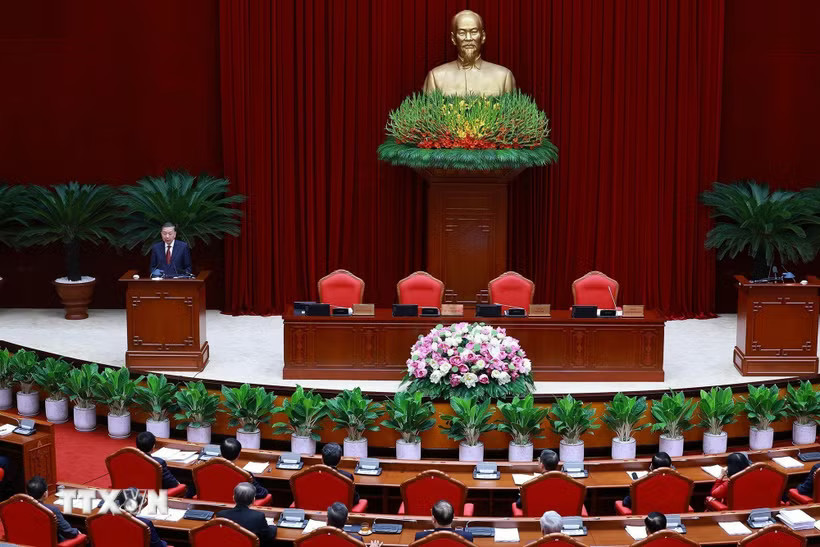
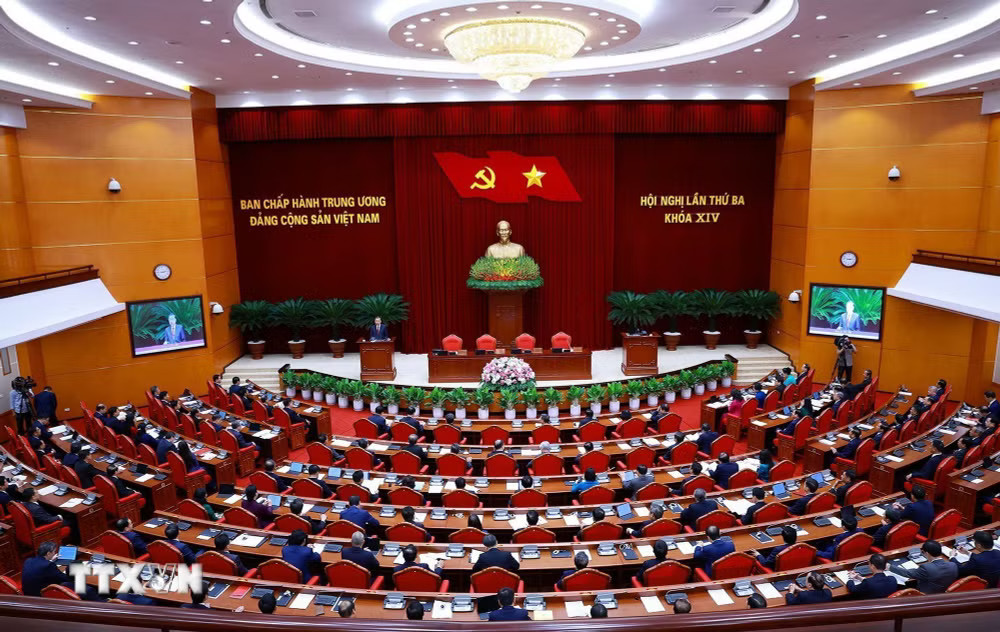
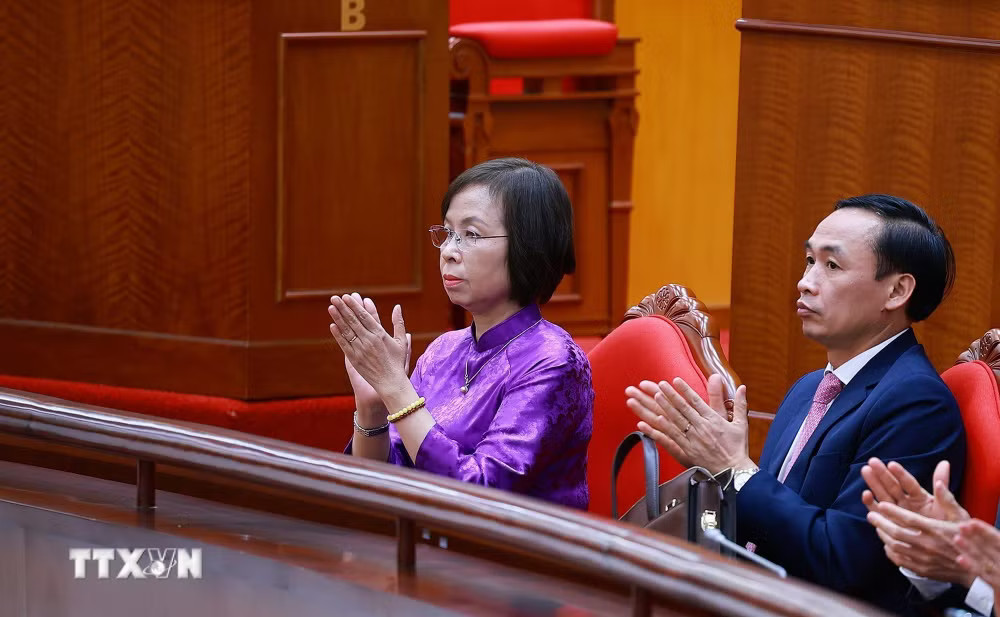
After five days (from July 20-24) of urgent, serious, democratic, frank, and responsible work, the Third Conference of the Central Committee of the 14th Party Congress concluded on the afternoon of July 24 in Hanoi.
The Central Committee thoroughly discussed the issues; reaching a high level of consensus on many major policies and decisions regarding Party building, the political system, and national development and defense. The Politburo seriously considered, explained, and refined the draft documents.
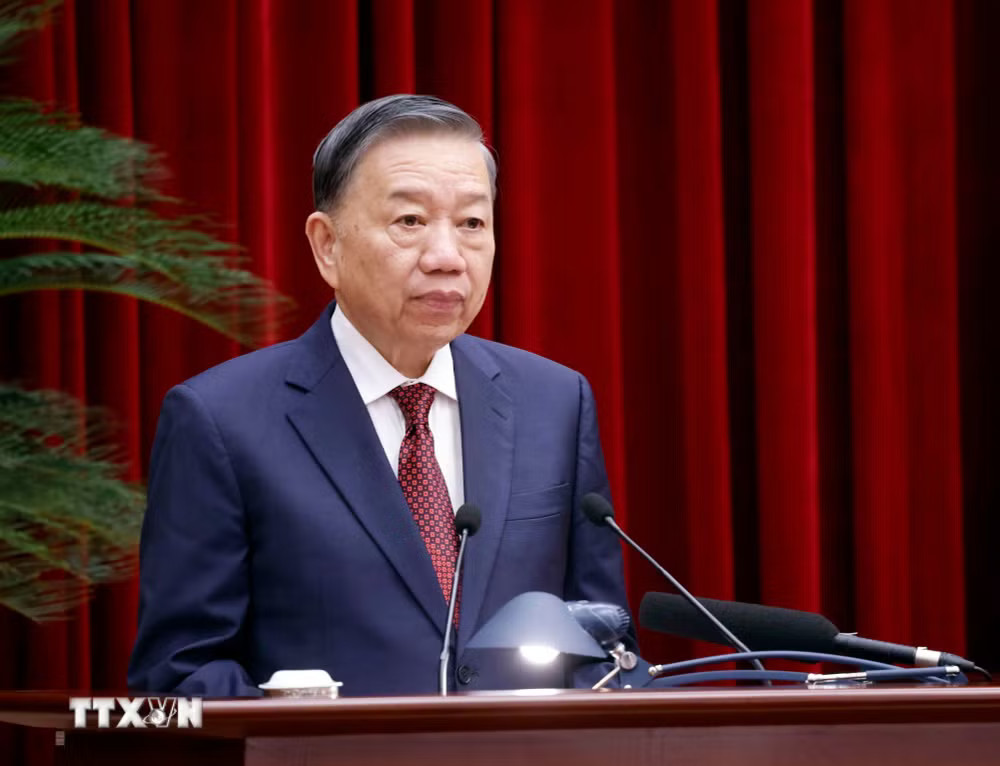
General Secretary and President To Lam presided over and delivered the closing remarks at the conference.
There was strong consensus on many major policies and decisions.
In his closing remarks at the conference, General Secretary and President To Lam emphasized that the Central Committee unanimously assessed that: In the first six months of 2026, the concretization of the Resolution of the 14th National Congress and the Party's strategic resolutions was implemented urgently and decisively; the Party's leadership, management, inspection, and supervision capacity has improved significantly; and the political system's apparatus, after restructuring, has operated stably and is beginning to show effectiveness.
However, the biggest bottleneck remains implementation. The underlying reasons are that in some places, authority is not directly linked to responsibility; decentralization is not adequately connected to resources, data, tools, staff capacity, and control; resources are fragmented; growth is not based on productivity and internal strength; and forecasting and prevention in some sectors, industries, and localities have not kept pace with changes.
Therefore, we must address the root causes, comprehensively across institutions, organizations, people, and leadership and governance methods; linking Party building with national governance, socio-economic development, and national defense.
General Secretary and President To Lam stated that the Central Committee unanimously agreed on the contents presented to the conference; and voted to approve the Conference Resolution and other documents on the agenda.
The resolutions, conclusions, regulations, and projects adopted closely adhere to the Resolution of the 14th National Congress of the Party, meeting both immediate and long-term requirements, and creating a basis for implementing the four strategic transformation steps.
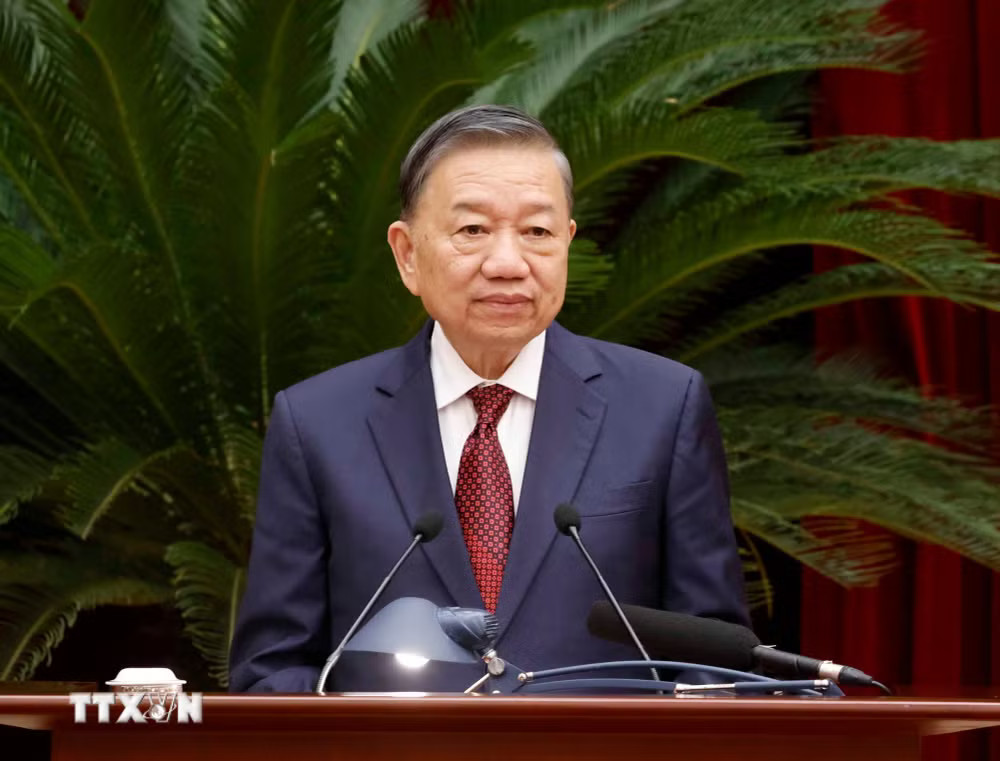
Regarding Party building and the political system, the Central Committee unanimously assessed that: after one year of operating the overall organizational model of the political system and the two-tiered local government model, the new apparatus has demonstrated superiority, suitability, smooth operation, and effectiveness, but the quality of operation is still uneven, especially at the grassroots level.
The Central Committee approved the key tasks for the last six months of 2026; requesting continued improvement of functions, authority, and working relationships, ensuring decentralization is linked to human resources, data, and tools for implementing and controlling power.
The Central Committee decided to issue a revised and supplemented Regulation No. 20. The Central Committee unanimously agreed to issue a new regulation on what Party members are not allowed to do, meeting the requirements of the new situation and in line with the Party's regulations.
Regarding the organization of development space and resource management, the Central Committee approved the policy of establishing Quang Ninh City and Bac Ninh City.
The Central Committee unanimously issued a Conclusion on the preliminary review of Resolution No. 18 and the viewpoints and orientations for amending the Land Law and related laws. The Central Committee also unanimously issued a new Resolution on building and developing Vietnam into a strong maritime nation, defining the sea as a space for survival, development, and national defense; modern marine economic development must be linked to ecosystem protection, improving people's lives, and maintaining national sovereignty.
Regarding socio-economic issues, the Central Committee unanimously assessed the situation in the first six months of the year, identified key tasks and solutions for the last six months, and resolved to strive for growth of 10% or more, while maintaining macroeconomic stability, controlling inflation, and ensuring major balances, employment, income, and social security.
Regarding the Project to innovate Vietnam's development model, the Central Committee decided to issue a Resolution, identifying this as a very large, very new, unprecedented issue, with the significance of shaping the national development model until 2045 and beyond.
The Central Committee unanimously approved the Project on building a disciplined, safe, civilized, harmonious, and developed society, identifying the development of human resources, culture, law, discipline, and a healthy social environment as core contents, ensuring that all development achievements truly improve the quality of life and happiness of the people.
Regarding national defense and sustainable development, the Central Committee unanimously agreed on the main viewpoints, objectives, and tasks of the National Security Strategy; requiring that security be placed within the overall national development, proactively identifying, forecasting, preventing, and addressing traditional, non-traditional, inter-sectoral, and cross-border threats early and from afar; firmly protecting the Party, the Regime, the State, the People, independence, sovereignty, unity, and territorial integrity; and ensuring the security of people, data, energy, water resources, food, and critical infrastructure.
The Central Committee approved the results of the review of Resolution No. 24 and issued a Conclusion on environmental protection and proactive response to climate change in the new era.
General Secretary and President To Lam stated that the Central Committee has agreed on a mechanism to ensure that policy decisions are implemented synchronously, are controllable, measurable, and accountable.
Implementation capacity must be designed right from the start of each policy decision. Each task must clearly identify the lead agency, the responsible party, the authority, the conditions for implementation, the deadline, and the expected outcomes; regular inspection and monitoring are necessary to provide timely warnings and adjustments.
Do not assign tasks without clearly defining the conditions for implementation; do not decentralize without proper control; and do not allow responsibility to be diluted in coordination. Actual results and the satisfaction of the people and businesses are the primary basis for evaluating organizations and officials, especially their leaders.
The new aspects are evident in each policy decision and in the leadership approach: directly addressing the root causes, organizing resources according to common goals, linking decisions with implementation, and placing the long-term interests of the country and the lives of the people above all else.
Immediately translate unity of policy into unity of action.
Based on that understanding, the General Secretary and President demanded that the unity of policy be immediately translated into unity of action, turning the Central Committee's decisions into concrete results.
Immediately after the Conference, the General Secretary and President pointed out that the entire Party and the entire political system must focus on doing well in five groups of tasks:
First, it is crucial to correctly identify the focus, priorities, and breakthroughs that need to be concentrated on. The decisions of the Conference have a broad scope, multifaceted impacts, and are closely interconnected. Therefore, they must be implemented immediately. Fundamental tasks with leading and far-reaching influence must be given priority.
The task is clear, the conditions are ripe, and action must be taken immediately, thoroughly, and effectively; new, difficult, and unprecedented tasks must be carefully studied; when necessary, controlled pilot programs should be implemented, with evaluation conducted simultaneously, and within the proper authority. Key issues must be resolved definitively to pave the way for the remaining tasks.
Secondly, implementation must be carried out under the unified and consistent leadership of the Party; fully utilizing the functions, authority, and responsibilities of each agency. The Politburo and the Secretariat will lead, direct, assign tasks, inspect, and supervise.
The Party Committee of the National Assembly leads the institutionalization process; the National Assembly, the Standing Committee of the National Assembly, and People's Councils at all levels decide and supervise according to their authority. The Party Committee of the Government leads the development of the action program; directs the Government, ministries, sectors, and localities to allocate resources and organize implementation.
The Party Committee of the Vietnam Fatherland Front and central mass organizations lead the work of propaganda, mobilization, supervision, social criticism, and reflecting the opinions of the people. The entire system must act synchronously and smoothly, focusing on the grassroots and the people.
Thirdly, clearly define responsibilities between the central, provincial, and commune levels; ensuring smooth operation, close coordination, and effective interaction among the three levels. The central government should focus on strategic direction, institutional improvement, building common platforms, allocating significant resources, and monitoring implementation.
The provincial level must implement more vigorous reforms and innovations in its leadership, guidance, and management methods; concretize policies, organize development space, coordinate resources, ensure conditions for the commune level, and be accountable for the results of its work.
The commune level is the frontline of public administration, directly implementing and serving the people, handling and resolving all issues arising from real-life situations and the needs of citizens and businesses. Therefore, the commune level must be built with sufficient capacity to manage development.
The central government does not replace local authorities; the provincial level does not monopolize tasks that the commune level can handle effectively; when tasks at the commune level are difficult to implement, or when the necessary authority, human resources, finances, data, tools, and guidance are not ensured, the provincial level is responsible for resolving and addressing the issues, preventing backlogs. The implementation capacity of the commune level and the satisfaction of citizens and businesses are the measures of the effectiveness of the entire system.
Fourth, each policy decision must be concretized into programs and action plans; clearly defining resources, timelines, deliverables, and responsibilities for implementation. The current requirement is to translate the speed of issuance into the speed of implementation, and to transform political will into substantive change and concrete results.
The action plan of each committee, ministry, sector, locality, and institution must clearly state the resources, progress, deliverables, and responsible persons; it must adhere closely to the overall goal, be based on reality, and avoid rigid, mechanical application.
Leaders must be deeply involved, understanding the pulse and rhythm of life in the area and sector they are responsible for; they must know how to listen to the grassroots, businesses, and the people; and they must be proactive and creative in organizing and implementing tasks, adhering to the correct direction, within their authority, and for the common good.
Progress must be integrated into each task, linked to specific responsibilities. In the last six months of 2026, it is necessary to ensure the smooth functioning of the system, address urgent bottlenecks, and achieve the highest possible socio-economic targets.
During the 14th term, it is necessary to institutionalize policies, improve decentralization and delegation of power, reorganize the development space, and innovate the development model. Towards the 2030 goals and the 2045 vision, it is essential to enhance strategic autonomy, self-reliance, and self-strength; promote innovation; proactively prevent and respond to risks and challenges; protect the environment; ensure human security, national security, and firmly defend the Fatherland.
Each action plan must clearly define the content, methods, and responsibilities for disseminating information about the Party's resolutions, guidelines, and policies; ensuring timeliness, accuracy, clarity, and persuasiveness; fostering unity within the Party and consensus in society, so that the people understand correctly, trust, and voluntarily implement them; and proactively guiding public opinion and refuting false and distorted information. Implementation is not only the responsibility of the political system but must become a widespread action of the entire population.
Fifth, strengthen inspection and supervision; evaluate using data, products, and actual results. We must assess the bottlenecks that have been removed, the resources that have been unlocked, and how people's lives have improved.
The results of implementation must be the most important basis for evaluating officials, especially those in leadership positions; commending those who do well and protecting those who dare to innovate; and at the same time, strictly dealing with situations of avoidance, shirking responsibility, delays, and superficiality.
The objectives, progress, products, and results of implementation must be publicly and transparently disclosed as prescribed so that the Vietnam Fatherland Front, political and social organizations, and the people can monitor, supervise, provide feedback, and make recommendations; promptly identify areas that perform well to commend and replicate their success, and identify limitations and obstacles to rectify and resolve them.
The General Secretary and President noted that the success of the Conference was only the first step. The global situation will continue to evolve rapidly and complexly, with opportunities and challenges intertwined.
In such circumstances, it is even more crucial to remain steadfast in our goals, uphold principles, maintain unity and discipline; to be proactive, creative, and courageous in thinking, acting, and taking responsibility for the common good.
On the occasion of the 79th anniversary of the War Invalids and Martyrs Day on July 27th, on behalf of the Central Committee of the Party, the General Secretary and President respectfully send to the Heroic Vietnamese Mothers, Heroes, war invalids, sick soldiers, families of martyrs, veterans, former People's Public Security officers, former youth volunteers, those who participated in the resistance war, and those who have rendered meritorious services to the nation, heartfelt greetings and profound gratitude.
The General Secretary and President requested that all levels and sectors continue to care for war veterans and families of fallen soldiers through practical and compassionate actions; and effectively implement the 500-day campaign to intensify the search, collection, and identification of the remains of martyrs whose information is still incomplete.


