
Closing of the first session of the 16th National Assembly
After 12 days of work carried out with a high sense of responsibility, democracy, urgency, and innovation, on the morning of April 24th, the 16th National Assembly completed all the agenda items of its first session and held its closing session.
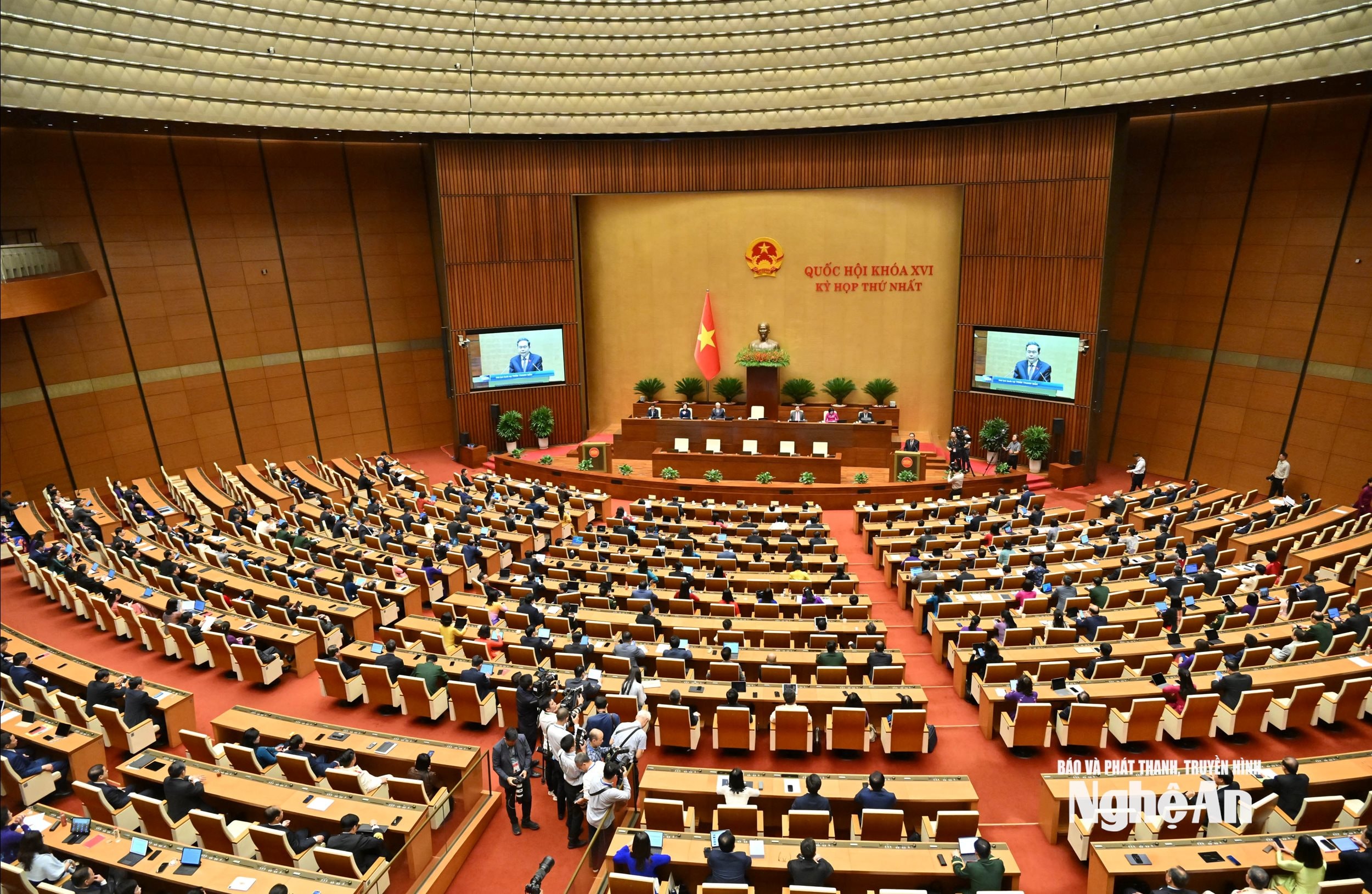
Attending the closing session of the first meeting of the 16th National Assembly were General Secretary and President To Lam; Prime Minister Le Minh Hung; National Assembly Chairman Tran Thanh Man; Standing Member of the Party Central Committee Tran Cam Tu; along with former leaders of the Party and State, members of the Politburo, former members of the Politburo, Secretaries of the Party Central Committee, and former Secretaries of the Party Central Committee.
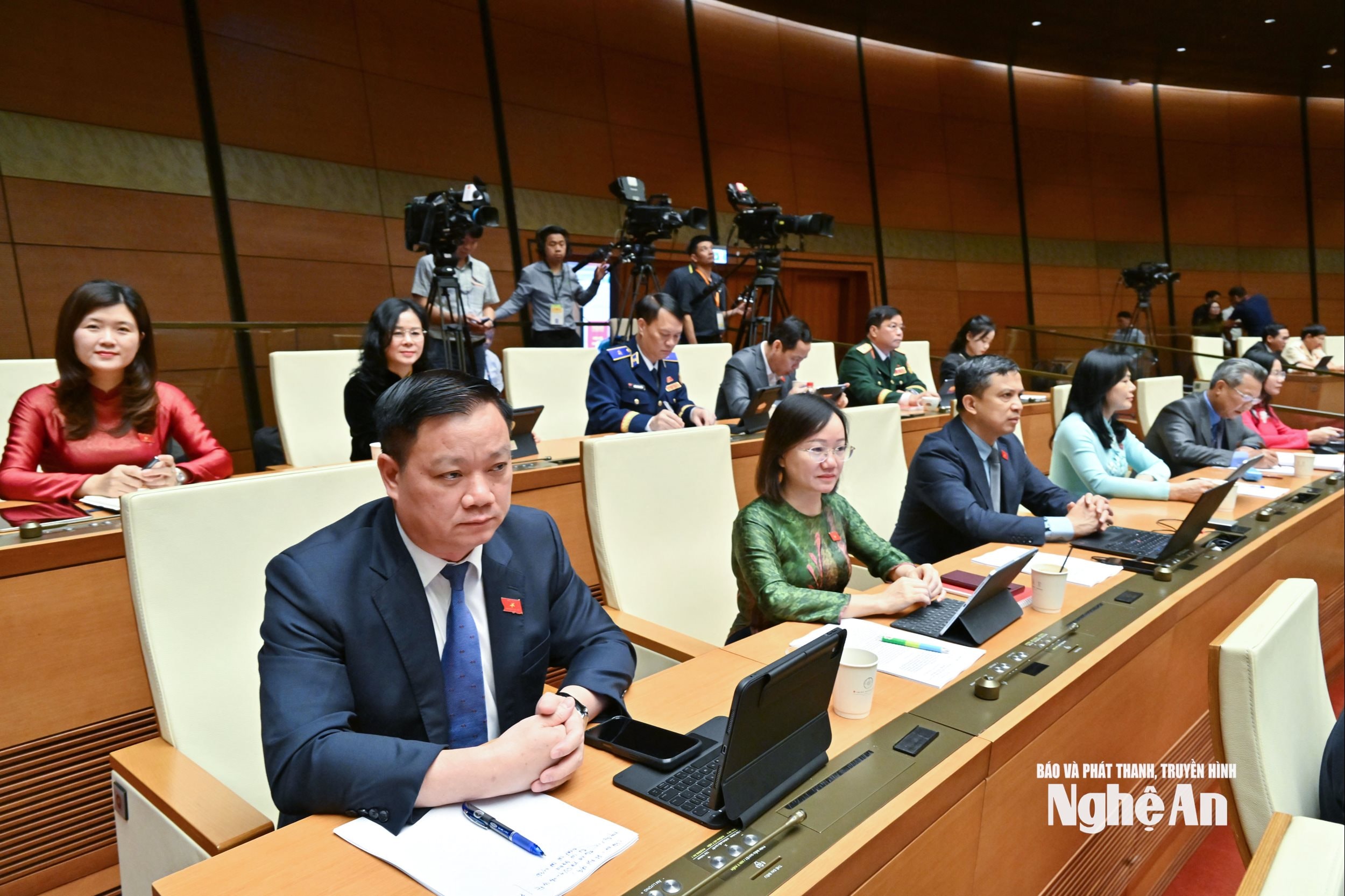
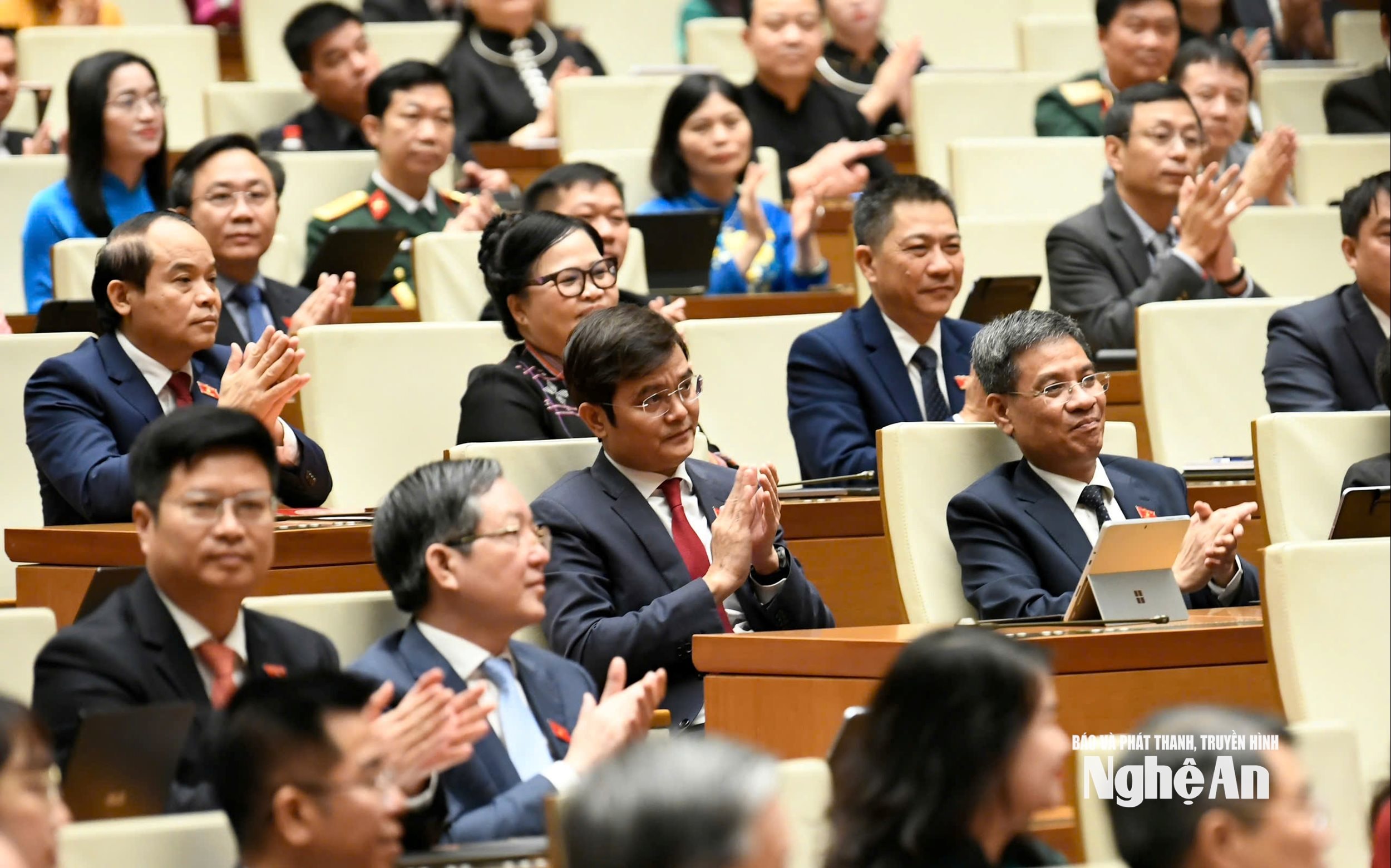
The delegation of National Assembly deputies from Nghe An province attending the session included Politburo member and Director of the Ho Chi Minh National Political Academy Doan Minh Huan; Central Committee member, Secretary of the Provincial Party Committee, and Head of the National Assembly Delegation of Nghe An province Nguyen Khac Than; and other delegates in the delegation.
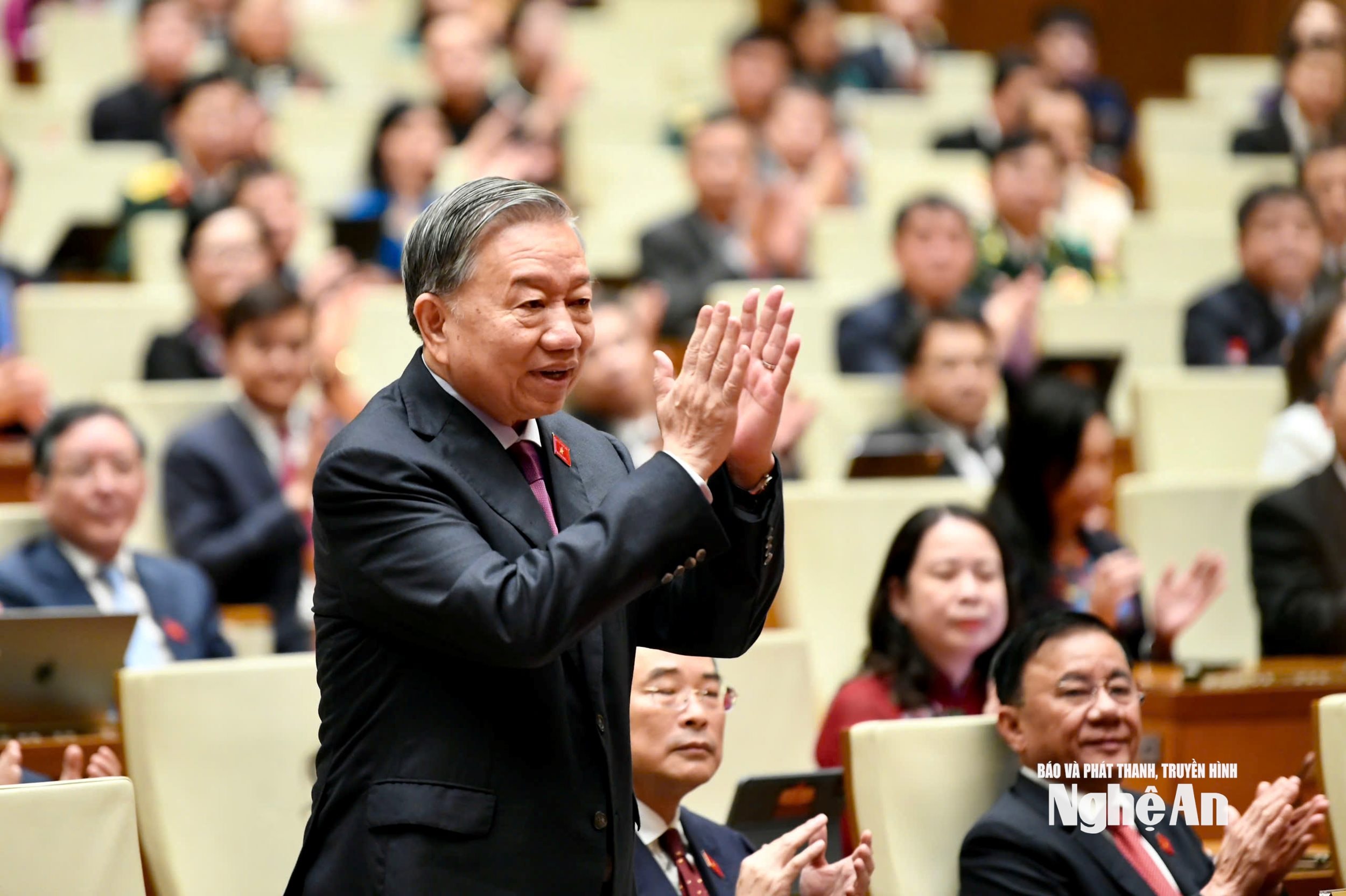
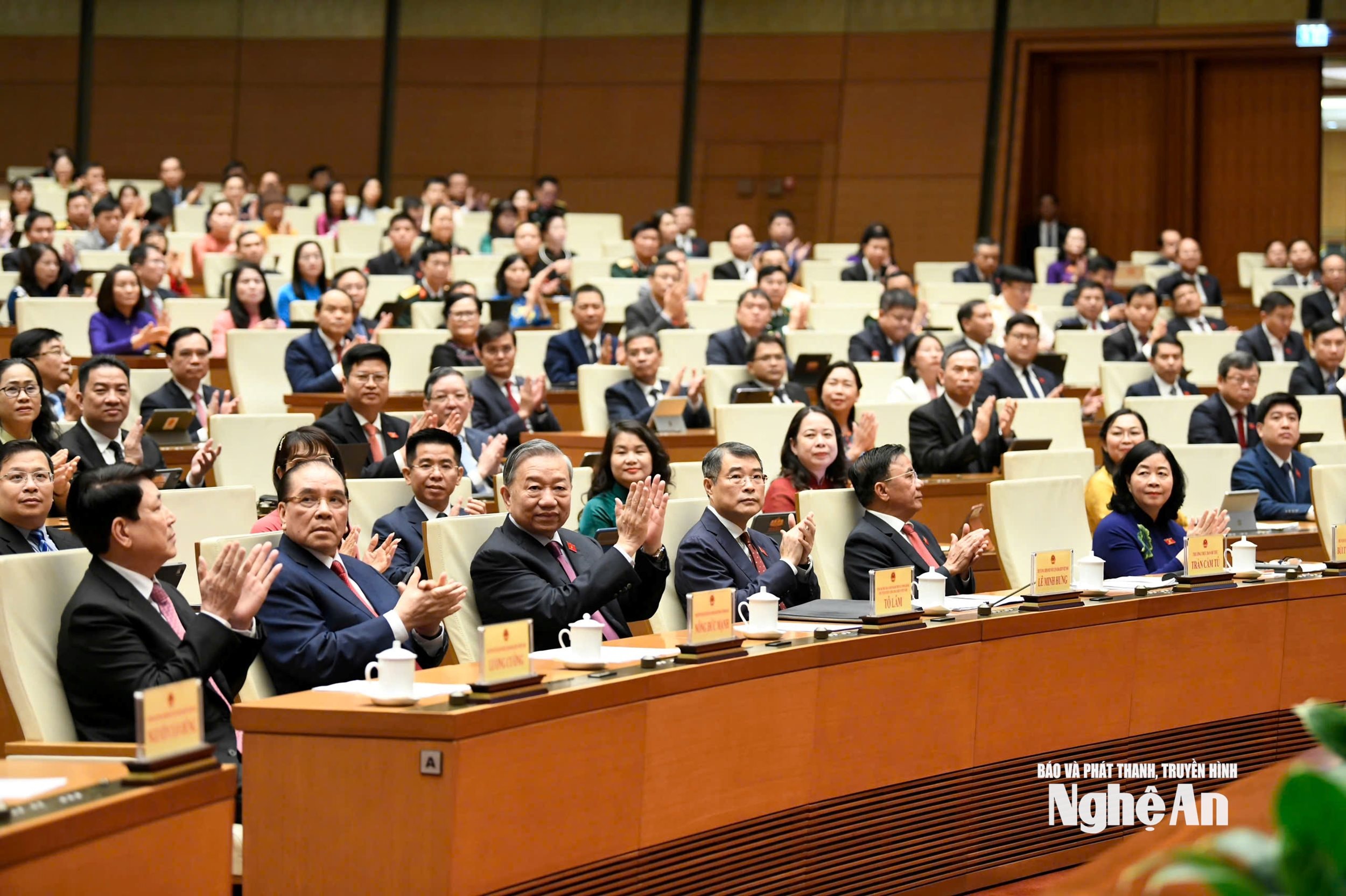
At the closing session, the National Assembly voted to approve the Resolution on the five-year socio-economic development plan for the period 2026-2030; the Resolution on the five-year national financial plan for the period 2026-2030; the plan for borrowing and repaying public debt for the period 2026-2030; the Resolution on the medium-term public investment plan for the period 2026-2030; and the Resolution of the first session of the 16th National Assembly.
The National Assembly's resolution on the five-year socio-economic development plan for the period 2026-2030 sets the overall goal of rapid and sustainable national development; striving for an average GDP growth rate of 10% or more per year while maintaining macroeconomic stability, controlling inflation, ensuring major balances; and comprehensively improving and enhancing the people's living standards.
Successfully achieving the goal of becoming a developed country with modern industry, high middle income, and among the top 30 economies in the world by 2030 in terms of GDP.
Establishing a modern and sustainable development system; a synchronized infrastructure network; enhancing the potential and level of science, technology, innovation, digital transformation, and the quality of human resources; strongly and comprehensively developing Vietnamese culture and people; protecting the environment and adapting to climate change; a democratic, just, disciplined, and safe society; ensuring national defense and security; and raising Vietnam's position and prestige in the international arena.
The resolution also sets key targets for socio-economic development, linked to achieving the goal of an average national GDP growth rate of 10% or more per year; a per capita GDP of US$8,500 per year by 2030; an average life expectancy of 75.5 years; a reduction in the poverty rate (according to the multidimensional poverty standard) of 1-1.5 percentage points per year; universal health insurance coverage; and a forest cover rate of 42%...
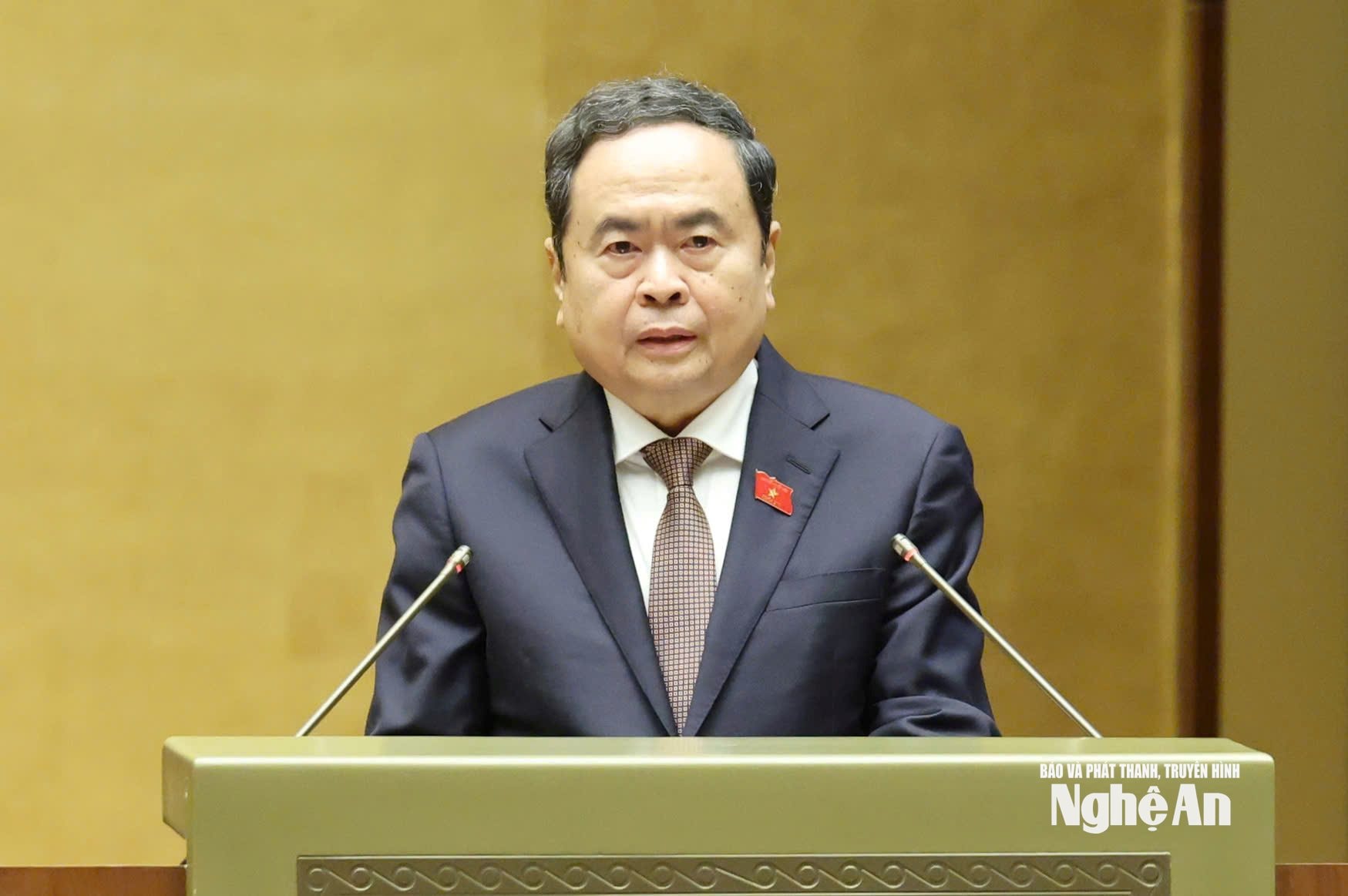
In his closing remarks at the session, National Assembly Chairman Tran Thanh Man said that in a very short time, immediately after the election of deputies to the 16th National Assembly and People's Councils at all levels for the 2026-2031 term, the first session of the 16th National Assembly had accomplished many important tasks.
The National Assembly focused on consolidating the state apparatus and electing high-ranking leaders in accordance with the Constitution and laws. It promptly institutionalized many policies and laws to implement the Resolution of the 14th National Congress of the Party, while also deciding on tasks for socio-economic development, national defense and security, and foreign affairs, including many urgent and pressing tasks.
The Speaker of the National Assembly affirmed that, in response to the country's reform needs, the 16th National Assembly proactively and urgently implemented its work from the very beginning with a high level of determination: doing it immediately and systematically.
The National Assembly delegates, whether re-elected or first-time, demonstrated a high level of responsibility to their constituents and the people, clearly showing their character, intellect, and desire to contribute. They made the most of their working time, even on Saturdays and Sundays, contributing many heartfelt, insightful, and high-quality opinions. As a result, the session successfully completed a large volume of work.
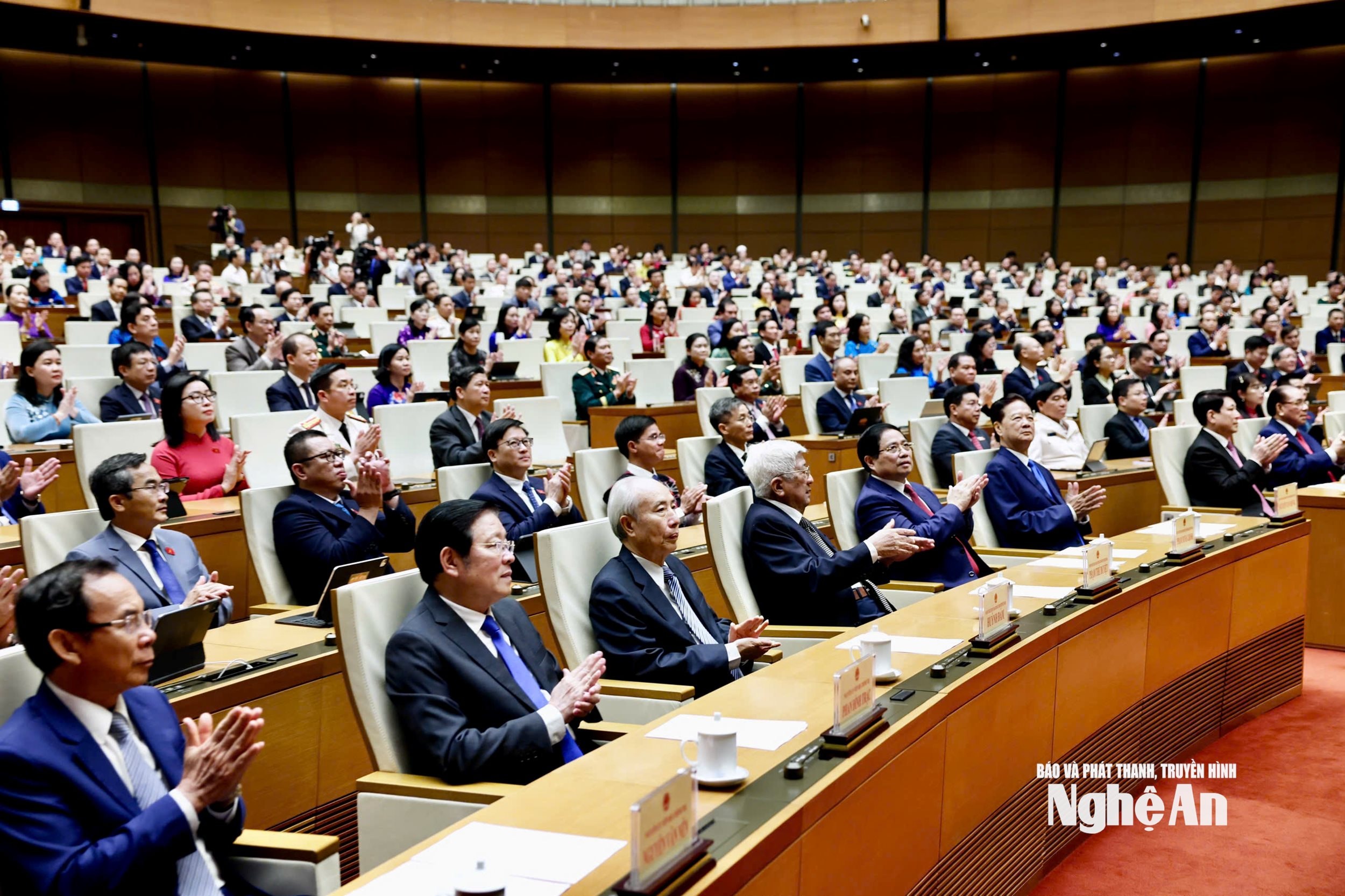
The first,The National Assembly has completed a crucial task: reviewing and deciding on the organizational structure and electing and approving 39 high-ranking officials of the state apparatus. The National Assembly elected the President, the Speaker of the National Assembly, and the Prime Minister with very high confidence from the National Assembly deputies.
Monday,The National Assembly passed 9 laws and 31 resolutions, many of which were approved with 100% of the National Assembly deputies present voting in favor, contributing to the timely institutionalization of the resolutions of the 14th National Congress of the Party and the resolutions and conclusions of the Central Committee, the Politburo, and the Secretariat.
The policies enacted at the session were imbued with a spirit of innovation and decisive action to remove bottlenecks, while also ensuring long-term fundamentals, promptly meeting practical requirements, and promoting decentralization and delegation of power coupled with increased specific responsibilities.
Simultaneously, specific policy mechanisms have been established to effectively handle stalled projects and unlock resources for socio-economic development. In particular, the timely and flexible adjustment of tax rates has demonstrated proactive and decisive action in fiscal policy management and support for businesses and individuals to overcome difficulties.
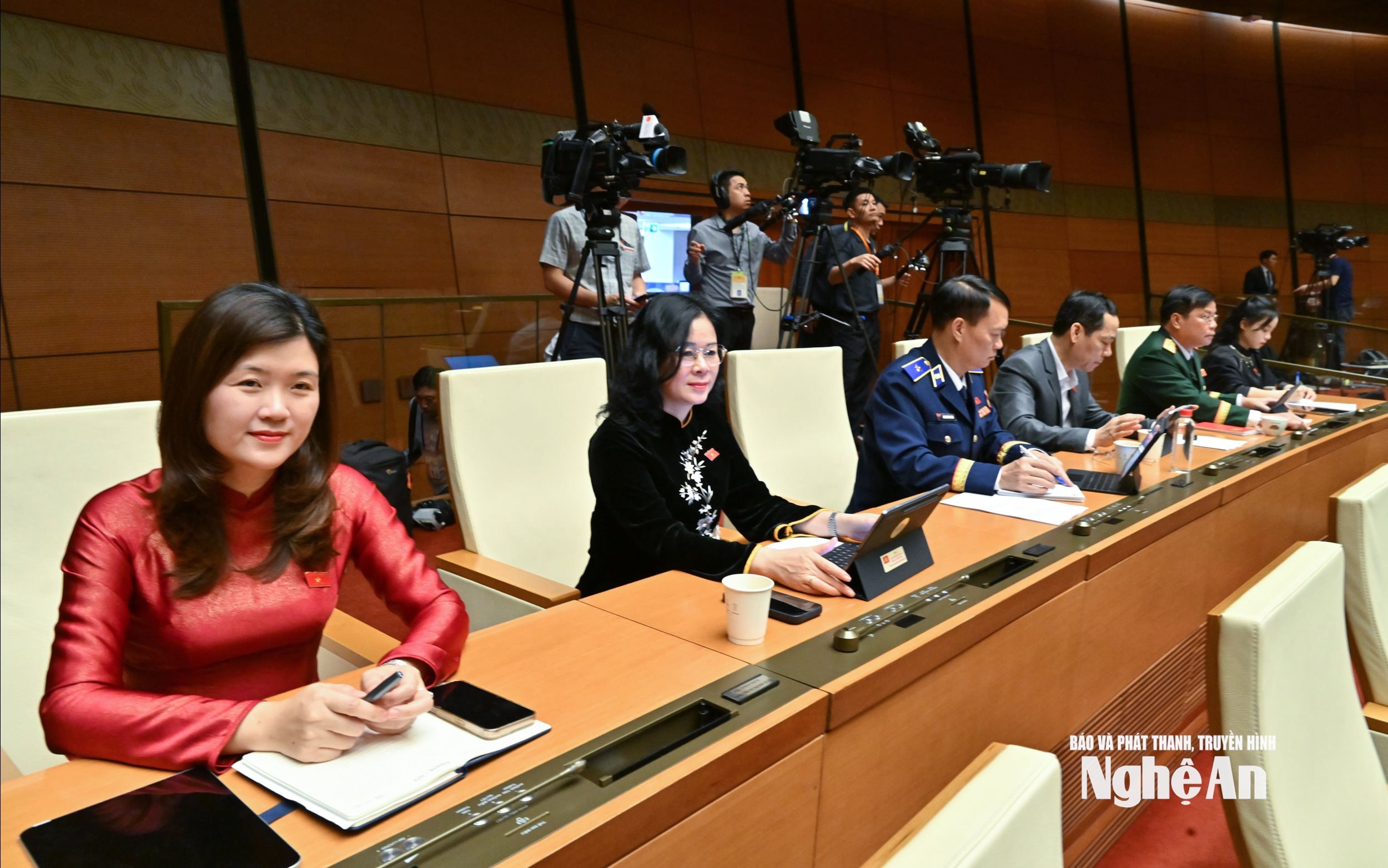
Tuesday,The National Assembly devoted considerable time to carefully considering and discussing the system of five-year development plans for the period 2026-2030, including: the socio-economic development plan, the national financial plan, public borrowing and debt repayment, and the medium-term public investment plan. Based on this, the National Assembly proposed comprehensive and feasible solutions to stabilize the macroeconomy, control inflation, ensure major economic balances, and create momentum for growth from the very first year of the term, making a significant contribution to realizing the double-digit growth target.
In addition, the National Assembly decided to establish Dong Nai City. The National Election Council reported on the summary of the election of deputies to the 16th National Assembly and deputies to the People's Councils at all levels for the 2026-2031 term, confirmed the qualifications of National Assembly deputies, reported on the consolidated opinions and recommendations of voters and the people, reviewed the results of monitoring the resolution of voters' recommendations, approved the National Assembly's monitoring program for 2027, reviewed the report on the work of practicing thrift and combating waste, and considered many other important reports.
Based on the resolutions passed by the National Assembly, the National Assembly requests the Government, the National Assembly's agencies, relevant organizations, and localities to promptly and effectively implement the laws and resolutions passed immediately after the session; focusing on issuing all detailed regulations and guidelines for implementation, avoiding legal gaps and delays in implementation, and ensuring that the National Assembly's decisions yield practical results in practice.
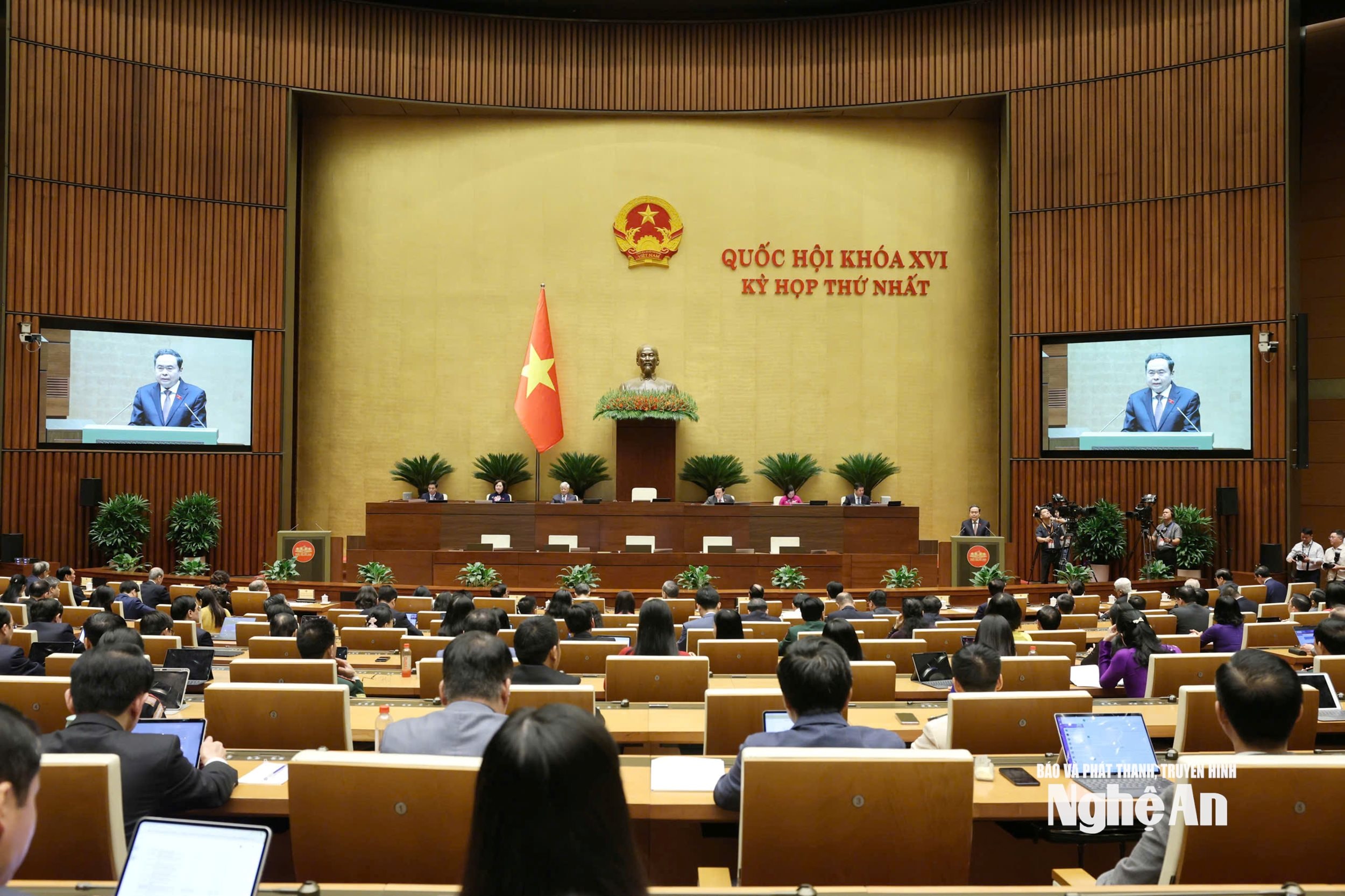
At the end of the session, National Assembly deputies will meet with constituents to report on the results, spirit, and momentum of the session, and to listen fully and responsibly to the opinions of voters and the people.
Emphasizing that our country is facing new opportunities and prospects for development, intertwined with increasingly complex difficulties and challenges, the Chairman of the National Assembly stated that, in this context, it is necessary for the National Assembly to continue to innovate more strongly, comprehensively, and substantively in its organization and operation, constantly improving the quality of legislative work, supreme supervision, and decision-making on important national issues.
Deeply understanding the directives of Comrade To Lam - General Secretary and President of the Republic, each National Assembly delegate needs to continue to maximize their role as representatives of the will and aspirations of the people, maintaining close ties with constituents, listening to and reflecting the realities of life in the parliamentary arena, and translating the people's aspirations into correct, timely, and effective policies. The National Assembly's agencies should continue to enhance professionalism and improve the quality of their advisory services, ensuring that policies have a strategic vision, high feasibility, and are implemented promptly.
Inheriting and building upon the achievements and experiences of previous National Assembly terms, with renewed confidence and enthusiasm, the 16th National Assembly will continue to vigorously innovate, act decisively, and work alongside the Government and the entire political system, maximizing all resources, transforming aspirations into concrete actions and results, and resolutely implementing the Resolution of the 14th National Congress of the Party; all for the goal of a prosperous and civilized country, and a well-off and happy people.


