
Nghe An Friendship General Hospital successfully implemented HYBRID ECMO technique to save critically ill patients.
Hybrid ECMO technology, which provides both respiratory and circulatory support, helps save the lives of patients with septic shock, severe pneumonia complicated by ARDS, acute myocardial infarction, and multiple organ failure.
On October 24th, doctors from the Intensive Care Unit of Nghe An Friendship General Hospital reported that the hospital had successfully saved a patient suffering from septic shock, pneumonia complicated by ARDS (acute respiratory distress syndrome) of very severe severity, acute myocardial damage, and multiple organ failure, thanks to the application of Hybrid ECMO (VAV ECMO) technique.
Female patient NTH (37 years old, Nghe An province) was brought to the hospital by her family in a state of acute respiratory failure, rapid and labored breathing, difficulty breathing, SpO2 (peripheral blood oxygen saturation) only reaching 70%, and numerous crackles in both lungs.
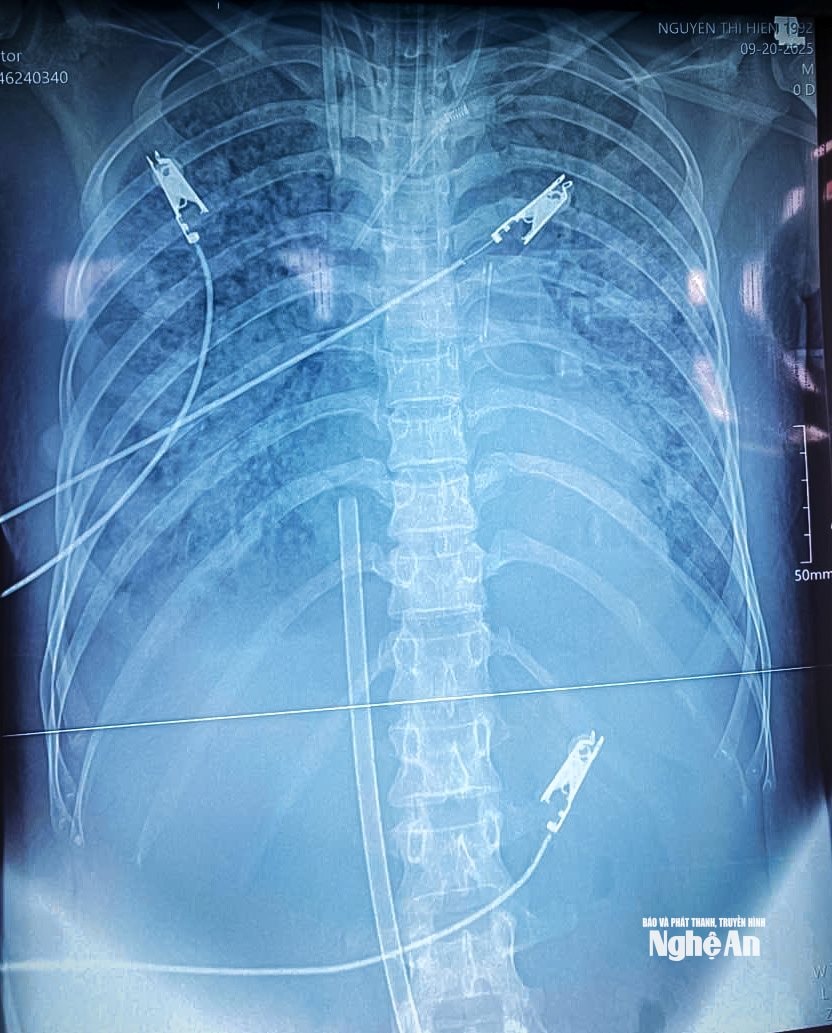
The patient was transferred to the Intensive Care Unit with a diagnosis of septic shock, pneumonia complicated by severe ARDS, acute myocardial injury, and multiple organ failure....
Despite prompt intervention, the patient's condition rapidly deteriorated with altered consciousness and severe respiratory failure requiring intubation and invasive mechanical ventilation. Even with optimal mechanical ventilation combined with three types of vasopressors and high-dose cardiac support medications, the patient failed to achieve target blood oxygenation and blood pressure, resulting in a very high risk of death.
Doctors in the Intensive Care Unit decided to implement ECMO, a cardiopulmonary bypass technique considered a "last resort" in resuscitation. The unique aspect of this case was that the patient had both low blood pressure despite using three vasopressors and high-dose cardiac support, and severe respiratory failure; therefore, ECMO alone was insufficient. The doctors chose Hybrid ECMO (VAV ECMO) – a combination of VV-ECMO and VA-ECMO, providing both respiratory and circulatory support.
Hybrid ECMO is the optimal "hybrid" solution, leveraging the strengths of both methods, becoming the only option for saving lives in complex resuscitation situations, when patients simultaneously face severe respiratory failure and significant hemodynamic instability.
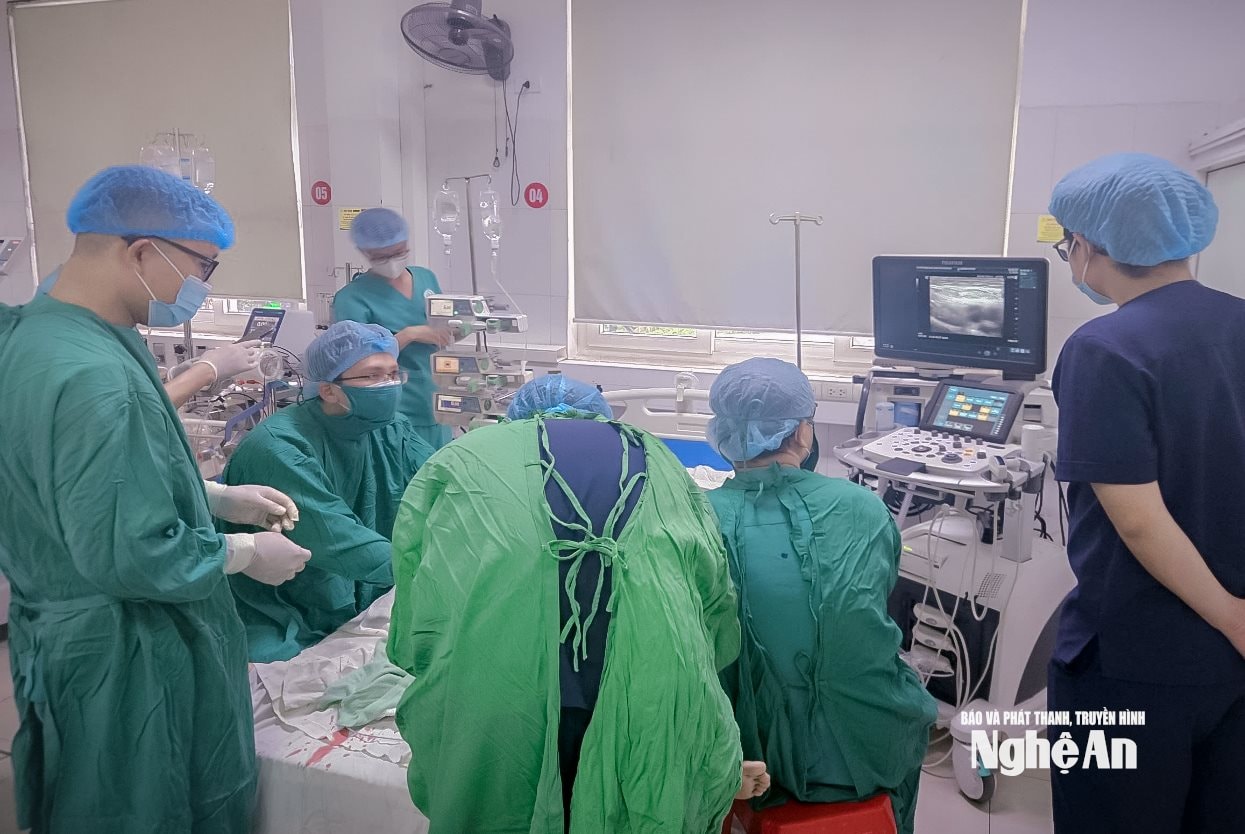
In parallel with VAV ECMO, the patient also received a combination of intensive treatments such as invasive mechanical ventilation, continuous renal replacement therapy, cytokine adsorption hemodialysis, anticoagulation, combination and optimized antibiotics based on antibiotic susceptibility testing, ulcer prevention, respiratory rehabilitation exercises, and comprehensive nutritional support, contributing to the gradual stabilization of their health.
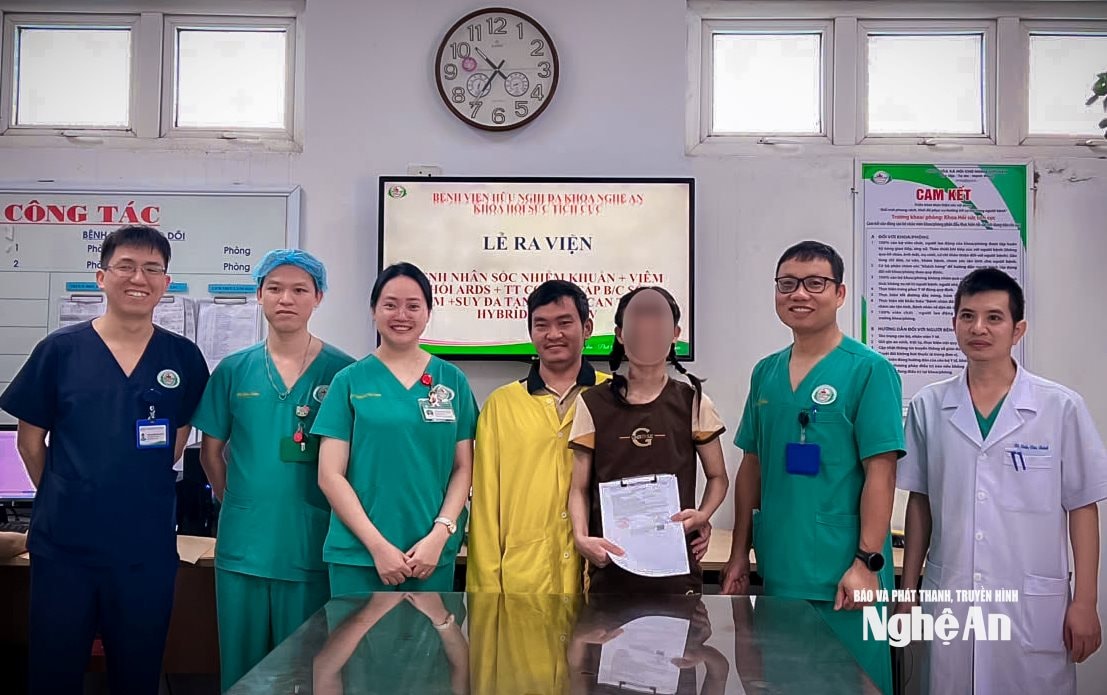
By October 7th, the patient's vital signs were stable, and the ventilator was weaned off and the endotracheal tube removed. On the 14th day after ECMO, the patient's paraclinical indicators and clinical condition improved significantly. The patient was then weaned off ECMO and resumed intensive care. After 29 days of intensive treatment, on October 24th, the patient was eligible for discharge.
According to Dr. Tran Phuong, Specialist Level 2 and Deputy Head of the Intensive Care Unit at Nghe An Friendship General Hospital: Acute respiratory failure is a common condition in patients treated in intensive care units. Pneumonia and sepsis are common causes of ARDS, a critical condition characterized by diffuse pneumonia, increased permeability of the alveolar-capillary membrane, and decreased gas exchange.
Despite advances in diagnosis and treatment, the mortality rate for patients with severe ARDS pneumonia remains very high (over 60%). In patients with complications such as septic shock, the treatment challenges become even more severe.
ECMO acts as a "lifeline" to support and replace vital functions. ECMO (Extracorporeal Membrane Oxygenation) is an extracorporeal circulation system that provides temporary mechanical support for respiration and/or circulation in patients who have failed conventional treatment.
The two main types of ECMO are: VV ECMO: Blood is drawn from a vein and returned to the vein, acting like an artificial lung by exchanging O2 and CO2 through a gas exchange membrane; VA ECMO: Blood is drawn from a vein and returned to the artery, acting like an artificial heart pumping blood to nourish the body.
The successful treatment of a young patient with septic shock, ARDS pneumonia caused by Staphylococcus aureus, acute myocardial injury, and multiple organ failure using HYBRID ECMO technology clearly demonstrates the investment in equipment and the emphasis on training and improving the professional skills of the hospital's medical staff. ECMO technology, applied at Nghe An Friendship General Hospital since 2021, has successfully saved many critically ill patients facing life-threatening conditions.
Associate Professor, Dr. Nguyen Van Huong - Director of Nghe An Friendship General Hospital


