Society

The secret to keeping bamboo chopsticks from molding, according to people in the highlands of Nghe An.

Dinh Tuan September 14, 2024 15:12

From bamboo stalks, through the skillful and meticulous hands of the people of Nghe An's highlands, smooth, uniform, beautiful, and golden-yellow chopsticks are brought to the market. Especially, thanks to their unique secret, these bamboo chopsticks never get moldy and retain their beautiful color.

bna_1(2)-870cd64ed92c209e9daddfe3652cb8c8.jpg
The craft of whittling bamboo chopsticks has long been associated with many families in the highlands. To this day, many families in Tuong Duong district still maintain and preserve this craft, both for family use and to supply the market, contributing to economic development. (Photo: Dinh Tuan)
bna_2(2).jpg
The process of making bamboo chopsticks is entirely manual, starting from selecting the raw materials, to sawing, planing, and shaping the chopsticks... Mr. Lo Minh Thanh, from Thach Duong village, Xa Luong commune, Tuong Duong district, said: "To make durable and beautiful chopsticks, the raw material selection is very important. Bamboo used for chopsticks must be at least 3 years old; if it's too young, the chopsticks will be thin and soft, leading to warping; the bamboo segments must be long and straight. In addition, the person shaping them must be careful, meticulous, and have skillful hands to produce beautiful and satisfactory products." In the photo: Mr. Thanh is meticulously shaping chopsticks. Photo: Dinh Tuan
bna_3(1).jpg
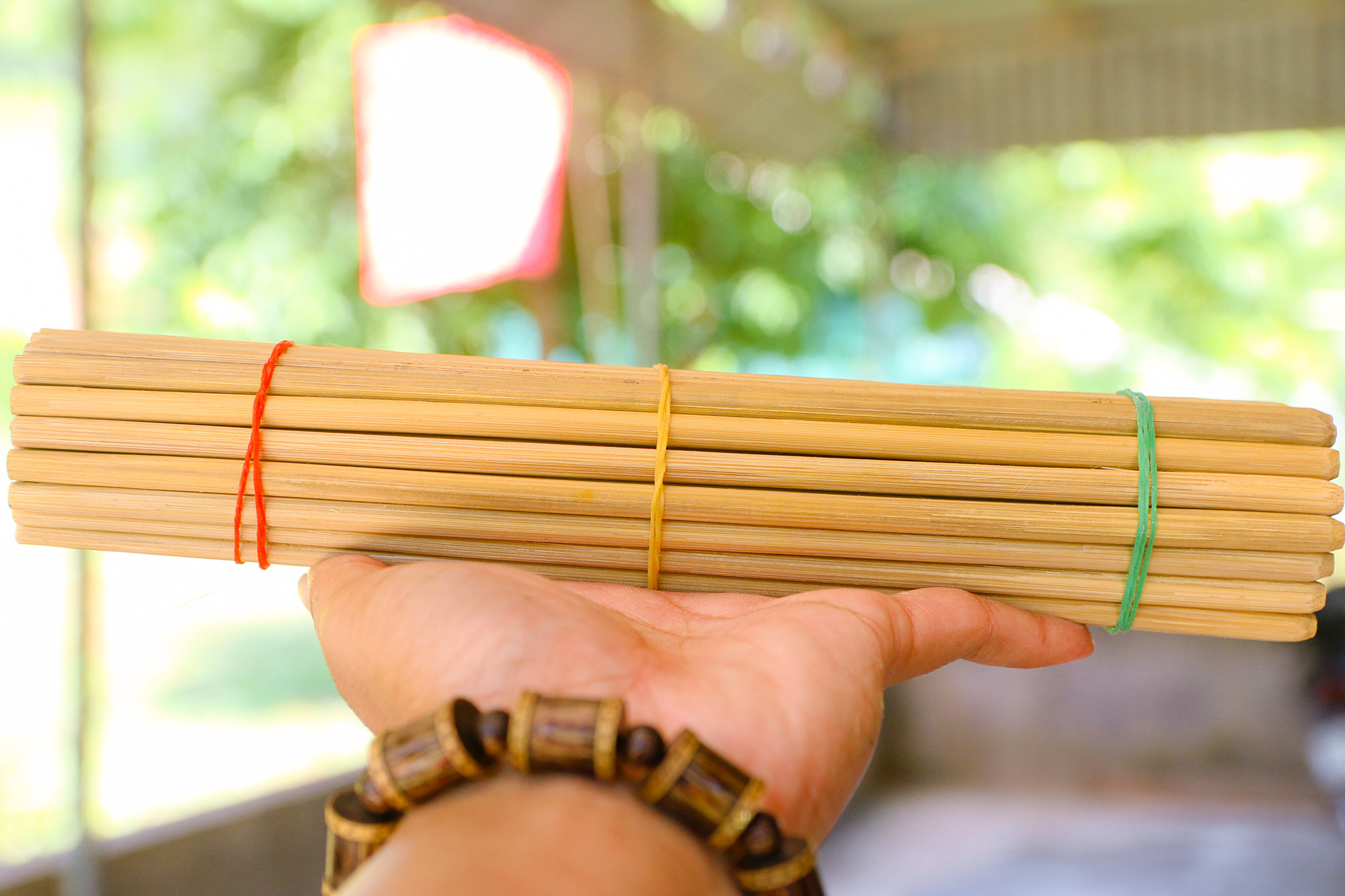
To ensure product quality, each chopstick must be carefully shaped to be uniform, tapering towards the end, and free from bends or unevenness. Not many people can whittle a bundle of chopsticks where any individual piece forms a pair. After whittling, the chopsticks must be sanded smooth and shiny before being dried in the sun. (Photo: Dinh Tuan)
bna_4(2)-0d7e7c1fbc3d7e3b02fe0a261c6eb4de.jpg
Mr. Thanh spreads out the chopsticks to dry in the sun after polishing them. Photo: Dinh Tuan
bna_5(1).jpg
After whittling the chopsticks into uniform and beautiful pieces, a very important step is dyeing them. Thais usually dye their chopsticks with fresh turmeric. Photo: Dinh Tuan
bna_6(1).jpg
Fresh turmeric, after being harvested, is pounded into a paste. Photo: Dinh Tuan
bna_7(2)-82bd8f3c66adeed866cc48cf79b83336.jpg
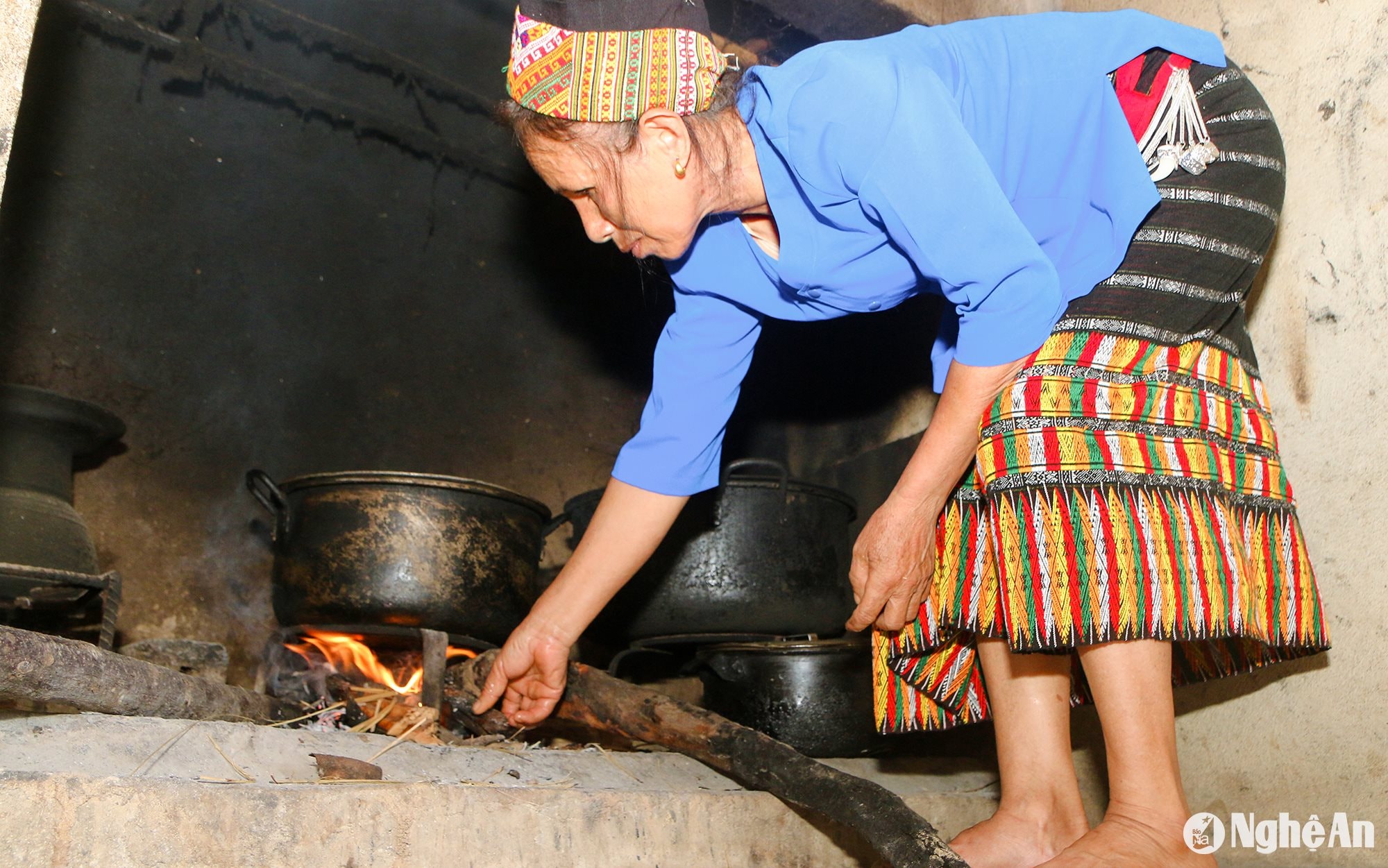
Next, place a layer of chopsticks in the pot, followed by a layer of turmeric and white salt. Repeat this process until all the chopsticks, turmeric, and salt are used up. Then, bring to a boil on the stove for about an hour, then remove from the heat and take the chopsticks out to dry in the sun. Photo: Dinh Tuan
bna_8.jpg
According to Ms. Loc Thi Lan (born in 1958), residing in Thach Duong village, Xa Luong commune (Tuong Duong district), turmeric gives chopsticks a golden sheen, while white salt prevents mold and insect infestation. Therefore, the chopsticks produced by the villagers last longer and are safe for health. Photo: Dinh Tuan
bna_9-e36abe9f0ae8df52419157de059d5488.jpg
The market offers many types of chopsticks with attractive designs and quality, such as plastic, metal, and wooden chopsticks. However, many people still prefer handcrafted bamboo chopsticks because they are environmentally friendly, free from chemicals and dyes, safe for daily use, and most importantly, never get moldy. Currently, many people not only make chopsticks for personal use but also to sell them to supplement their income. Each pair of chopsticks is reportedly sold for 2,000 dong. (Photo: Dinh Tuan)
0 0 0
x
The secret to keeping bamboo chopsticks from molding, according to people in the highlands of Nghe An.
Google News
POWERED BYFREECMS- A PRODUCT OFNEKO