
Climate change is causing an increase in infectious diseases worldwide.
According to the latest COP30 summary report by Climate Amplified Diseases & Epidemics (Climade), an alliance of leading scientific and public health organizations, climate change is increasing the incidence of new diseases globally.
The report states that rising temperatures, extreme weather, and the development and migration of pathogens due to climate change are increasing disease outbreaks worldwide.
According to the VNA correspondent at the report launch, Professor Tulio de Oliveira, co-leader of Climade and Director of the Centre for Epidemic Response and Innovation (Ceri) at Stellenbosch University, South Africa, stated that highly accurate data shows that "climate change has the potential to exacerbate pathogens by more than 50%".
The Southern Hemisphere contributes less than 10% of global emissions, but will bear the brunt of the most significant health impacts due to its proximity to biodiversity hotspots, high burden of basic diseases, and limited access to healthcare. The Climade report calls for: "Addressing the intersection of climate change and infectious diseases is urgent. Climate action must go hand in hand with efforts to strengthen health systems, especially in areas that are underserved and vulnerable to climate change."
Climate change is putting pressure on communities already facing shortages of food, clean water, and health. However, the report highlighted one of the most serious and often overlooked consequences of climate change: its impact on the economy.Its contribution to infectious diseases.
Research shows that climate change could exacerbate more than half of all known human pathogens, evidenced by outbreaks of oropouche virus, new chikungunya variants, dengue fever, influenza, cholera, and malaria.
Four main mechanisms drive these trends: rising temperatures expand the range of disease transmission; pathogens evolve; extreme weather creates conditions for outbreaks; and climate migration increases exposure and puts pressure on already weakened healthcare systems.
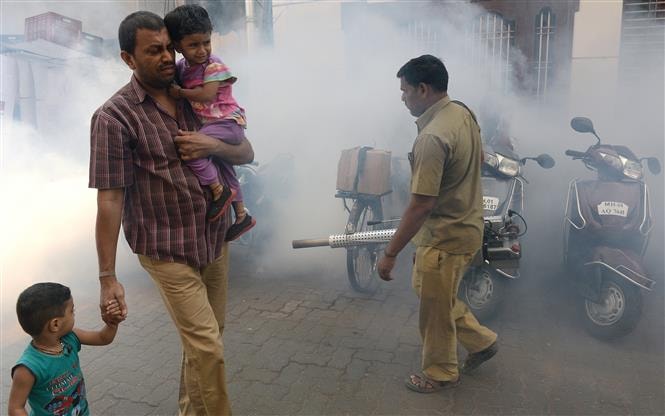
Rising temperatures accelerate mosquito development, shorten the incubation period of the virus, and prolong the transmission season. Increased rainfall expands breeding sites, while humidity extends the lifespan of mosquitoes. For example, the Aedes aegypti and Aedes albopictus species were recently discovered in Chandannath, Nepal, at an altitude of 2,438 meters above sea level – the first time these disease-carrying species have been found at such a high altitude.
Between 2024 and 2025, chikungunya, a mosquito-borne viral disease, surged globally, with over 400,000 cases and 155 deaths across 40 countries. Gradual warming and more frequent extreme weather accelerated the emergence of viruses like chikungunya. This virus, first discovered in Tanzania in 1952, has evolved into several different strains. The 2025 outbreak began on Réunion Island, spreading to Mauritius and Mayotte, then to Italy, France, and China, where over 16,000 cases were reported.
According to researchers, rising temperatures, changing rainfall patterns, and expanding mosquito habitats have fueled the spread of the Ecsa (East-Central-South Africa) genotype – a variant well-adapted to the Aedes mosquito – from the Indian Ocean to Europe, Asia, and the Americas.
Meanwhile, West Nile virus is an example of a climate-sensitive pathogen transmitted by mosquitoes. The unusually warm and humid summer in Europe in 2025 caused 718 cases of West Nile virus infection in humans and 49 deaths in Italy alone.
Africa is the most vulnerable region to climate change in the world, with temperatures rising faster than the global average and projected to increase by up to 3°C by mid-century. More than 60% of Africans rely on slash-and-burn agriculture for their livelihoods, so even minor climate shocks can trigger severe food and livelihood crises.
According to the Climade report, by 2050, climate change could force 1.2 million people to be displaced across borders – accounting for about 10% of all migrations – with the Horn of Africa, the Sahel, and Southern Africa being most affected. Climate-induced migration could therefore increase the risk of infectious diseases as people move to areas where malaria, dengue fever, and chikungunya are endemic.
Overcrowded settlements, poor sanitation, and erratic rainfall prolonging the mosquito breeding season create conditions conducive to disease spread. The report states that the weak healthcare system is overwhelmed, reducing its capacity for care, vaccination, and surveillance.
The report's authors call on governments, academic institutions, scientists, public health officials, private industry, and healthcare organizations to address the urgent challenges related to climate change-induced diseases using their expertise and resources.
Interventions include enhanced surveillance through genomic and epidemiological tracking to enable early detection and rapid response. Vulnerable communities should be prioritized, while ensuring equity and inclusion are central to adaptation strategies. Additionally, long-term funding is needed for research, data sharing, and capacity building to predict and mitigate health impacts before crises occur.
Outbreaks need to be reported promptly, and resilience to climate change needs to be fostered through innovation, interdisciplinary partnerships, and integrated solutions that link climate adaptation and healthcare delivery.


