
Is a "new dawn" breaking in Gaza?
On November 17, the United Nations Security Council adopted a historic resolution drafted by the United States, officially endorsing President Donald Trump's 20-point peace plan to end the war in Gaza.
This resolution legalized the establishment of a transitional administration and authorized the deployment of the International Stabilization Force (ISF) in the devastated Palestinian territories. It was considered a significant turning point, opening a "possible path" toward self-determination and the establishment of a Palestinian state, while simultaneously posing major challenges to all parties involved, particularly Hamas.
Legalizing the post-war transition mechanism.
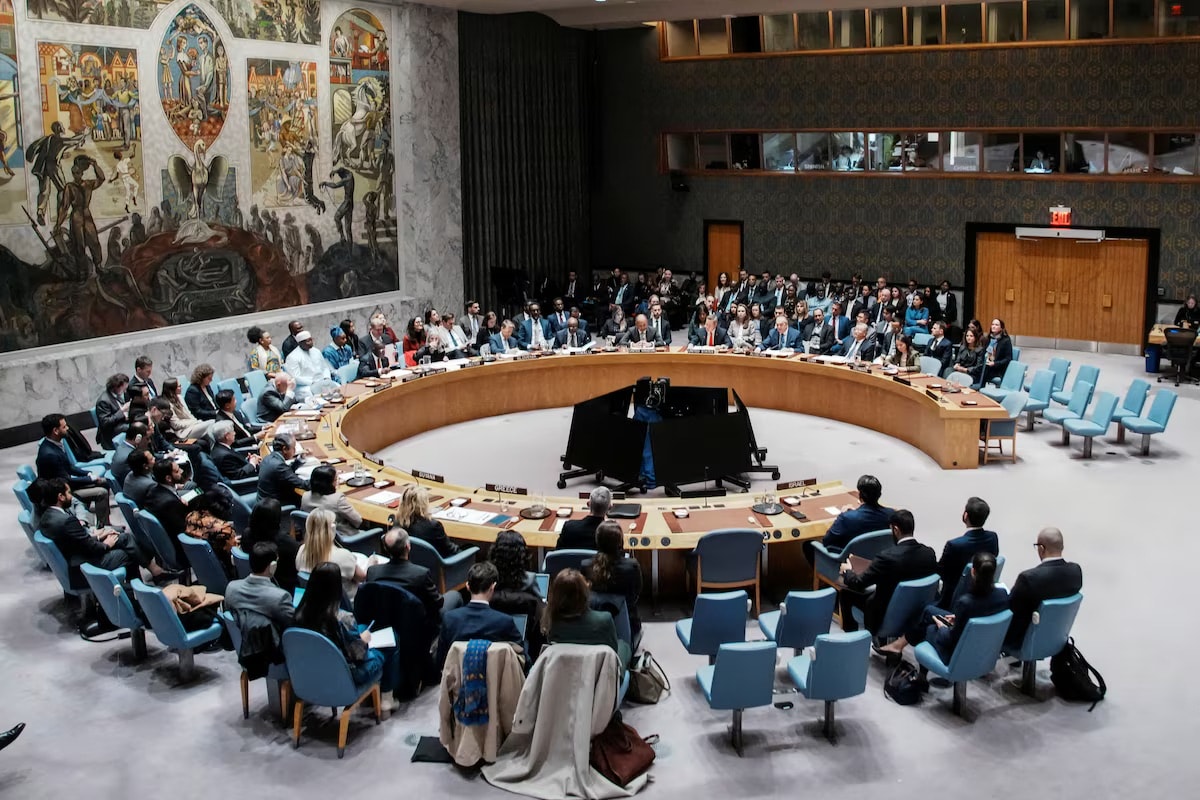
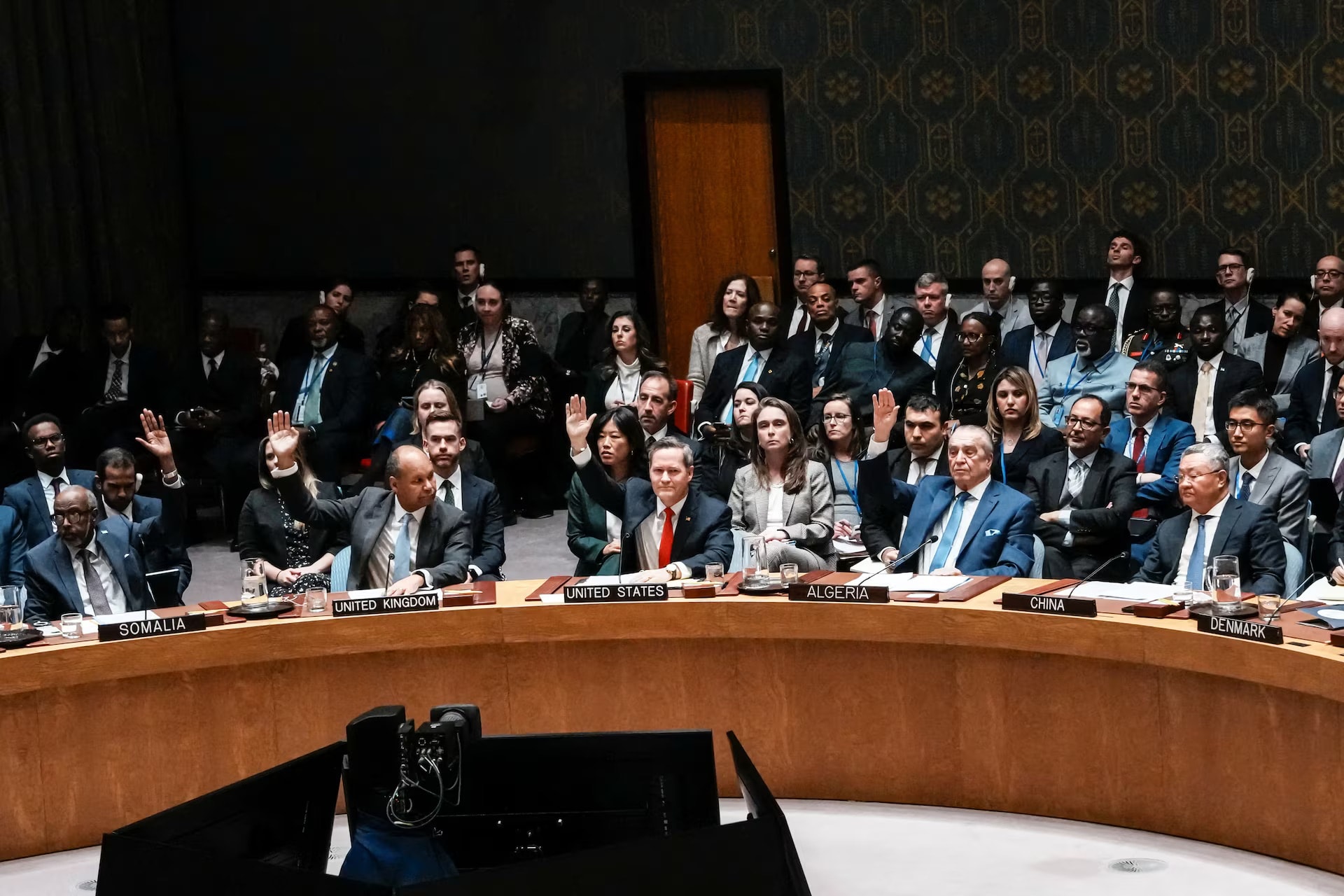
News agencies reported that, after nearly two weeks of tense negotiations, Security Council Resolution 2803 (2025) was adopted with 13 votes in favor, none against, and two abstentions from the two permanent members, Russia and China. This result reflects fairly broad international consensus, including support from key Arab and Muslim countries, for a post-war stabilization framework. The US resolution focuses on restoring order and rebuilding Gaza after two years of fighting between Israel and Hamas through two main mechanisms. First, the resolution welcomes the establishment of the Peace Commission (BoP) as a transitional governing body headed by US President Donald Trump. The BoP will be tasked with coordinating and overseeing reconstruction efforts and the economic recovery of Gaza. Second, the resolution authorizes the BoP to establish and deploy the International Stabilization Force (ISF) under a unified command. This is the most crucial and controversial point. The ISF is tasked with ensuring security and supporting the demilitarization of Gaza through disarmament and the destruction of military infrastructure belonging to non-state armed groups, while also maintaining the safety of Palestinian civilians. The mandates of the BoP and ISF expire on December 31, 2027.
President Trump's 20-point peace plan is considered the cornerstone, with phase one leading to a ceasefire and hostage exchange between Israel and Hamas last month. The adoption of the Security Council resolution is essential to legitimize the transitional governance structure and reassure nations considering sending troops to participate in the ISF. U.S. Ambassador to the UN Mike Waltz affirmed that the resolution "outlines a possible path to Palestinian self-determination... where missiles will give way to olive branches," emphasizing that it will "dismantle Hamas's grip, ensuring Gaza emerges from the shadow of terrorism, prosperous and secure."
The arduous road to a Palestinian state.
The US resolution also addressed a crucial but politically sensitive point: the prospect of establishing a Palestinian state. The resolution stated that "conditions may eventually be established for a credible path toward self-determination and the establishment of a Palestinian state" after the Palestinian Authority (PA) completes its reform program and the reconstruction of Gaza progresses. This added language, while lacking a specific timeframe, represents a diplomatic victory for Arab and Palestinian states and provides a basis for future dialogues between the US, Israel, and Palestine aimed at "unifying a political horizon for peaceful coexistence and prosperity." The PA's statement welcoming and expressing its willingness to implement the resolution was also crucial in preventing a Russian veto. However, even within Israel, the resolution was controversial due to its mention of this possibility. Prime Minister Benjamin Netanyahu, under pressure from right-wing members of his government, reiterated his opposition to a Palestinian state and pledged to demilitarize Gaza. Meanwhile, the Hamas militant group issued a statement rejecting the resolution outright, arguing that the plan did not meet the rights and demands of the Palestinian people and "imposed an international guardianship mechanism on the Gaza Strip." More importantly, the group reaffirmed its refusal to disarm, considering the war against Israel a legitimate resistance. Hamas warned that entrusting the disarmament task to international forces would "strip it of its neutrality and turn it into a party to the conflict for the benefit of the occupier," creating the risk of a direct confrontation between the ISF and Hamas.
The abstentions of Russia and China were crucial in allowing the resolution to pass, but both powers expressed deep concern. Russian Ambassador Vasily Nebenzya complained that the resolution "does not provide a clear role for the United Nations in the future of Gaza." He argued that the Security Council was essentially "blessing a US initiative based on Washington's promises," handing over full control to the BoP and ISF, whose mechanisms "we so far know nothing about." The Chinese ambassador shared similar concerns, describing the resolution as "flawed in many respects and deeply worrying," "vague and unclear on many important points." He stated that "Palestine is hardly represented in it, and the sovereignty and self-determination of the Palestinians are not fully reflected." Despite acknowledging support from Arab and Muslim countries, Russia and China maintained that the resolution did not fully guarantee the role of the United Nations and did not strongly support a Palestinian state.
A test of the feasibility of ISF
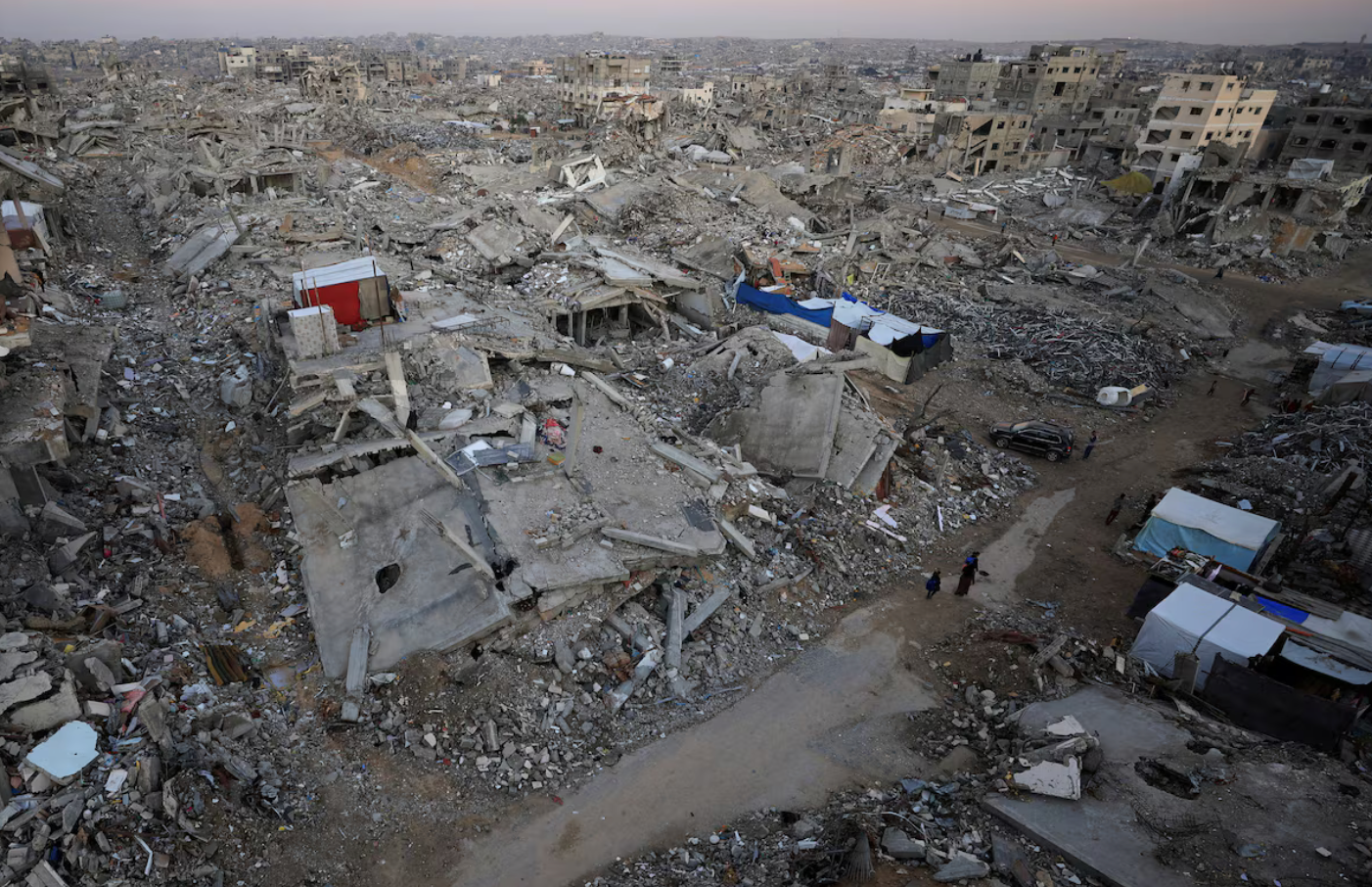
Many observers believe the biggest challenge lies in implementing the demilitarization mission. The US plan requires the ISF to ensure "the permanent disarmament of non-state armed groups." With strong opposition from Hamas, the ISF was empowered to "use all necessary means to carry out its mission" in accordance with international law – the diplomatic language that allows the use of military force. The ISF's role will include: border protection, coordination with trained Palestinian police forces; coordination with neighboring countries to ensure the flow of humanitarian aid; and serving as a base for the withdrawal of Israeli troops from Gaza "based on standards, milestones, and timelines linked to demilitarization."
Thus, the Security Council resolution provided an international legal and political basis for the US peace plan. However, its feasibility will depend on the BoP's ability to coordinate reconstruction and manage the transition, as well as the ISF's capacity to maintain security and implement demilitarization without becoming bogged down in a proxy war with Hamas. The mandate deadline of the end of 2027 sets a specific but challenging timeframe for the peace process. If successful, this resolution will be a historical legacy. If it fails, it could plunge the Middle East into a new spiral of instability, demonstrating the complexity and unpredictability of the decades-long conflict...


