Peace be upon the birds of the sky...
Once the birthplace of the renowned bird hunting tradition in northern Nghe An province, Quynh Thanh (Quynh Anh commune) is now witnessing a dramatic and powerful transformation: abandoning their age-old profession, the people are now siding with wild birds, working alongside authorities to protect migratory birds during their return season. This shift began with the quiet efforts of those who sowed the seeds – a small project, simple leaflets, and individuals full of dedication.

Nhat Lan - Vo HaiNovember 30, 2025
Once the birthplace of the renowned bird hunting tradition in northern Nghe An province, Quynh Thanh (Quynh Anh commune) is now witnessing a transformation: abandoning their age-old profession, the people are now siding with wild birds, working alongside authorities to protect migratory birds during their migration season. This shift began with the quiet efforts of those who sowed the seeds – a small project, simple leaflets…, and individuals full of dedication.

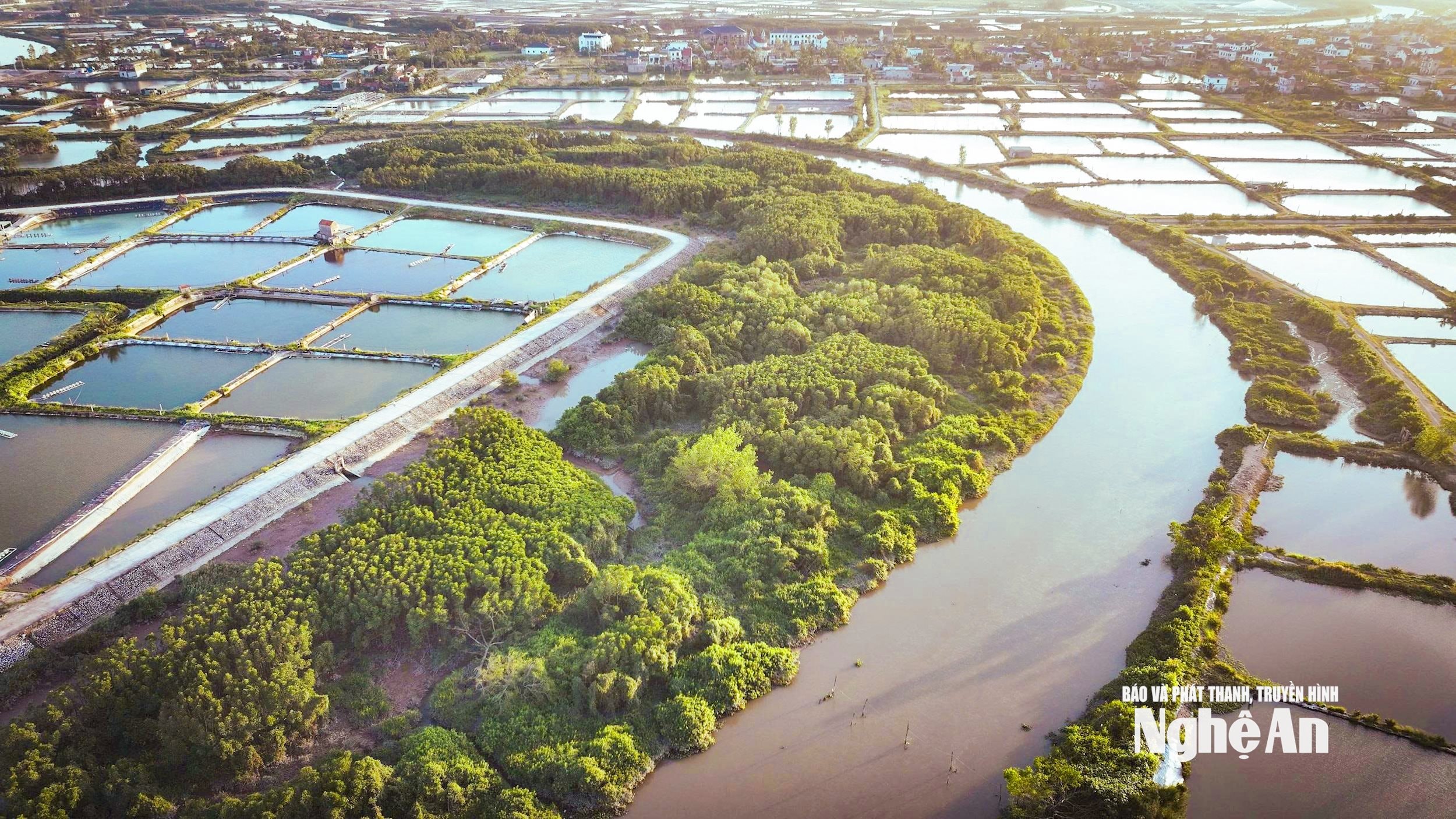
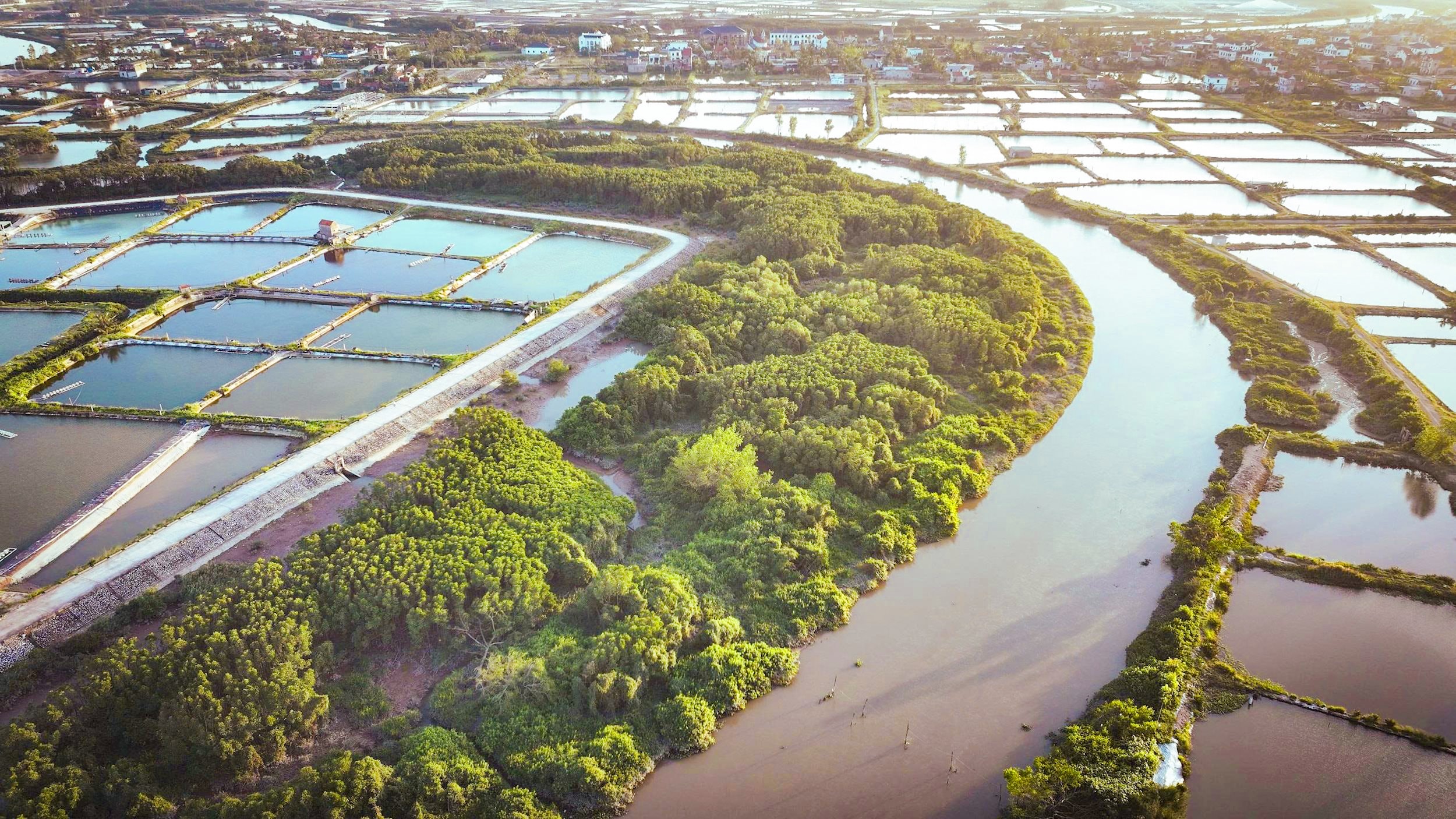
In late autumn, we returned to Quynh Thanh – now part of Quynh Anh commune after the merger. The road winding through low-lying rice paddies, ponds, and swamps revealed a peaceful rural landscape, yet one filled with stories. Quynh Thanh was originally the lowest-lying area in the former Quynh Luu district, only 0.2 meters above sea level. More than half of its area consists of ponds, swamps, and mangrove forests, making it an ideal habitat for migratory birds that return twice a year.
"Our great-grandfather's time has been spent hunting birds. It's a generational occupation, a passion, and an integral part of this region's identity," recounted Mr. Nguyen Van T., (82 years old), who has spent almost his entire life hunting birds.
In those days, whenever the bird season arrived – from July to the end of September in the lunar calendar and after the Lunar New Year – the entire field was ablaze with the calls of flocks of herons, egrets, swallows, and storks... The number of hunters was almost equal to the number of birds. Each household had its own type of trap and way of setting up shelters. Skilled hunters possessed well-trained decoy birds; all it took was a signal and the entire flock would swoop down.
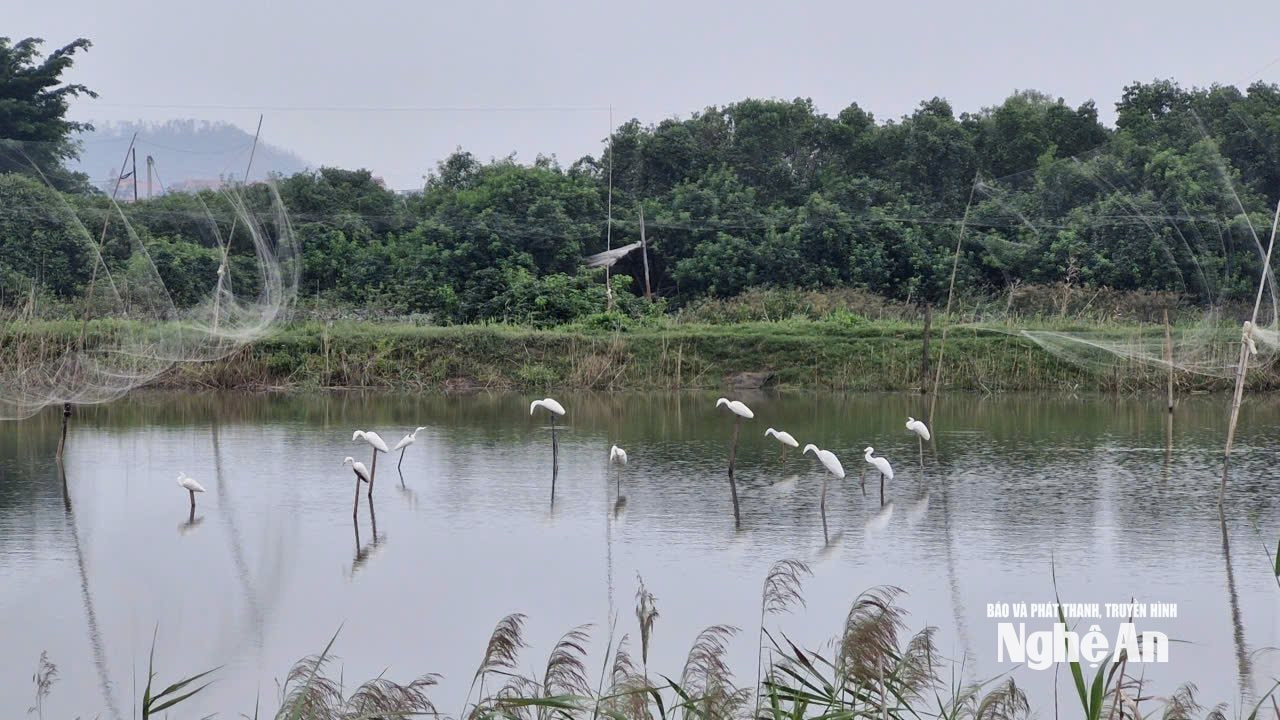
Such stories once formed a unique cultural characteristic of the former Quynh Thanh. But they have also made this area one of the "hot spots" for hunting wild birds in Nghe An for many years.
Changing a deeply ingrained custom that has lasted for decades is no easy task. But in recent years, with new awareness, increasingly clear legal regulations, and the decisive involvement of forest rangers and the community, Quynh Thanh (formerly) has begun to transform.
In the center of Quynh Anh commune, leaflets titled "Protect wild and migratory birds" are distributed directly to residents and posted at the commune's People's Committee gate, cultural center, and general stores - places that were previously used as bird collection points.
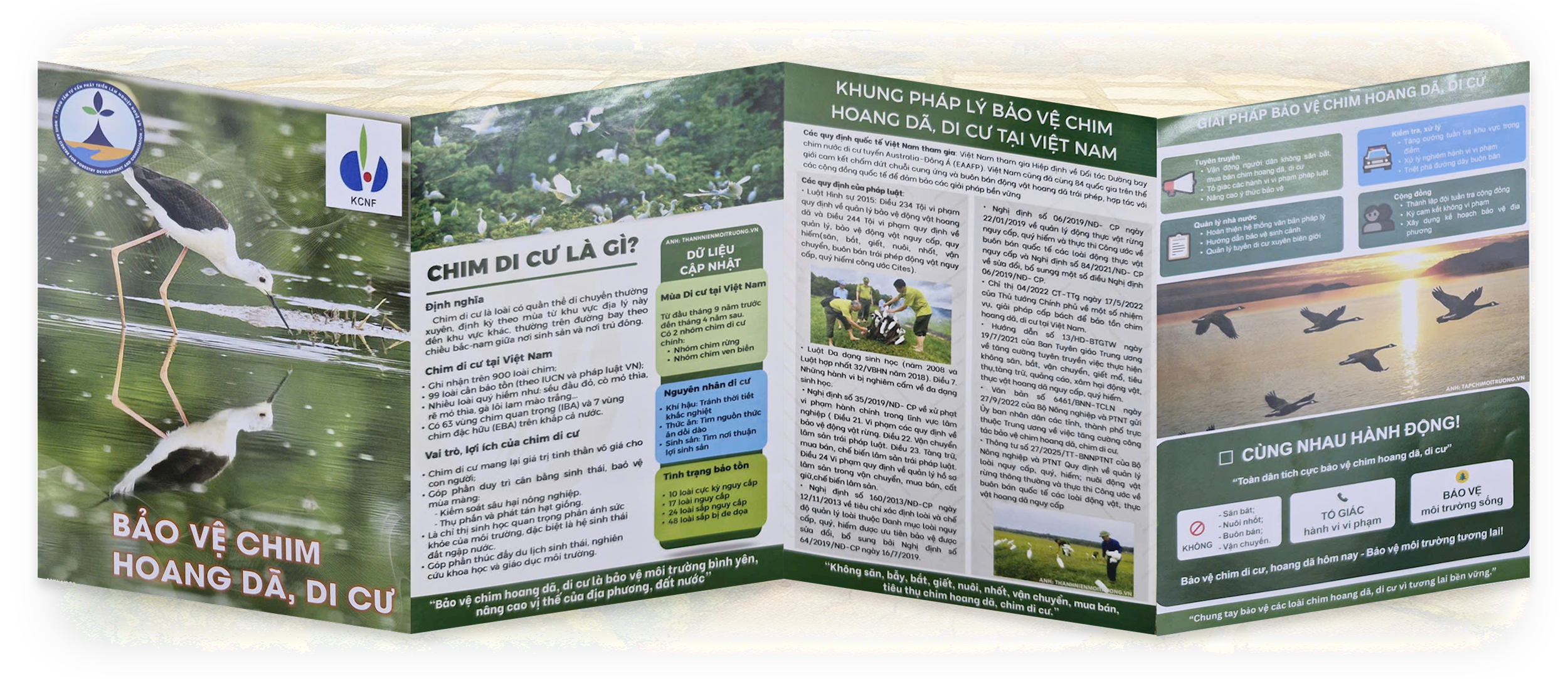
The leaflet only contains essential information: what migratory birds are, and the migratory season in Vietnam from September of the previous year to April of the following year. Scientific studies have shown that migratory birds in Vietnam offer many benefits, including providing spiritual value; contributing to ecological balance, controlling agricultural pests, pollination and seed dispersal; serving as important biological indicators reflecting environmental health, especially in wetland ecosystems; promoting ecotourism, scientific research, and environmental education; and most importantly, prohibiting certain behaviors under the law.
Vietnam has joined the Agreement on Migratory Waterbird Flight Partnership between Australia and East Asia; and, along with 84 other countries worldwide, has committed to addressing the supply chain and illegal wildlife trade, cooperating with international communities to ensure sustainable solutions. In addition, numerous legal regulations and government directives have been issued to strengthen urgent measures to protect wild and migratory birds. All this information is presented concisely, with clear and memorable images.
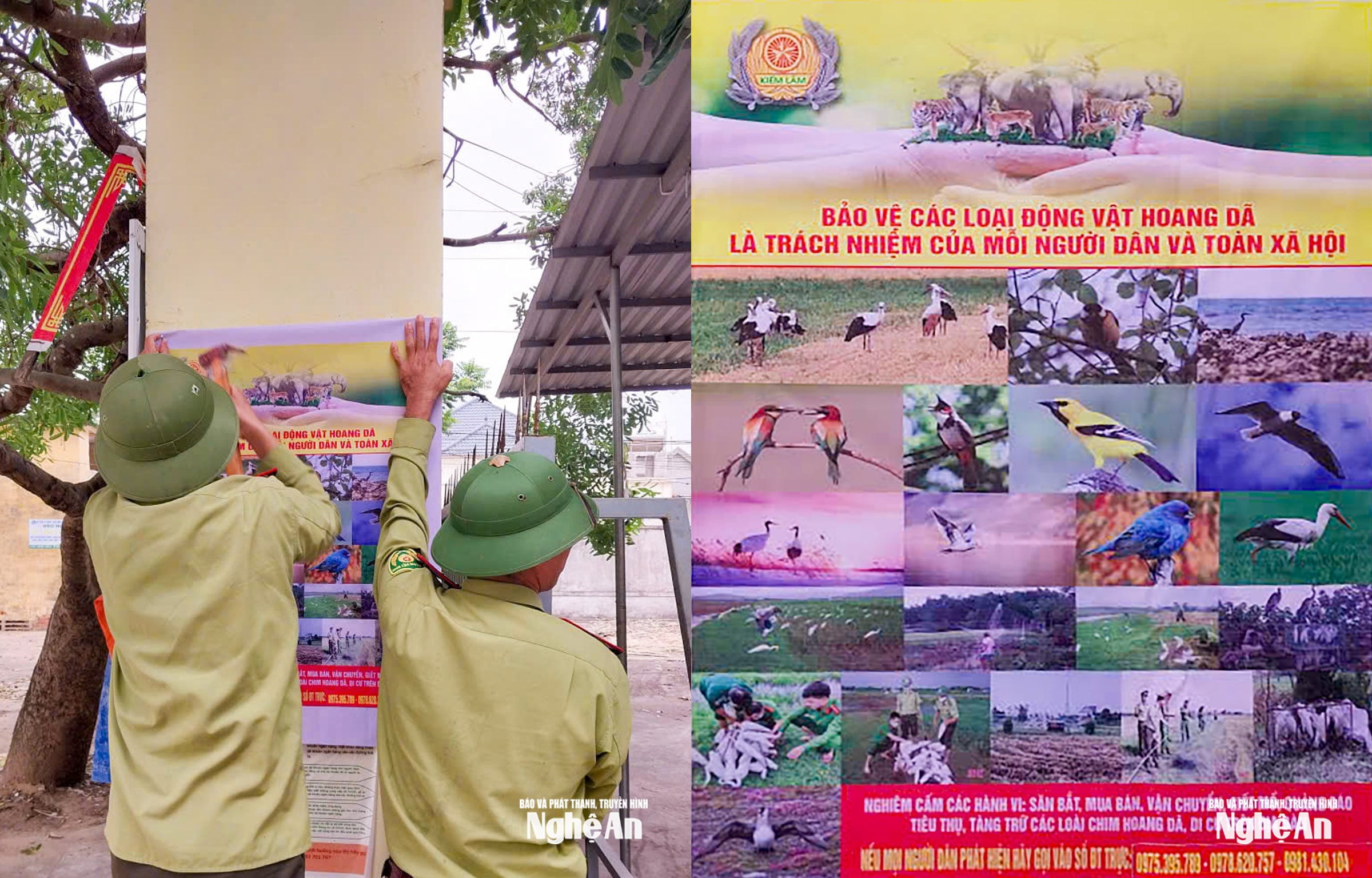
Mr. Hoang Dang Phuc, Deputy Head of the Quynh Luu - Hoang Mai Forest Ranger Station, shared: “The station regularly and persistently coordinates with the People's Committee of the commune and other forces to do a good job of disseminating information. We don't talk in a sophisticated way, we only tell people what they need to know. When people understand the law and know about the benefits of migratory birds, they will change their habits on their own. Leaflets are just the beginning. The biggest change lies in the people themselves.”

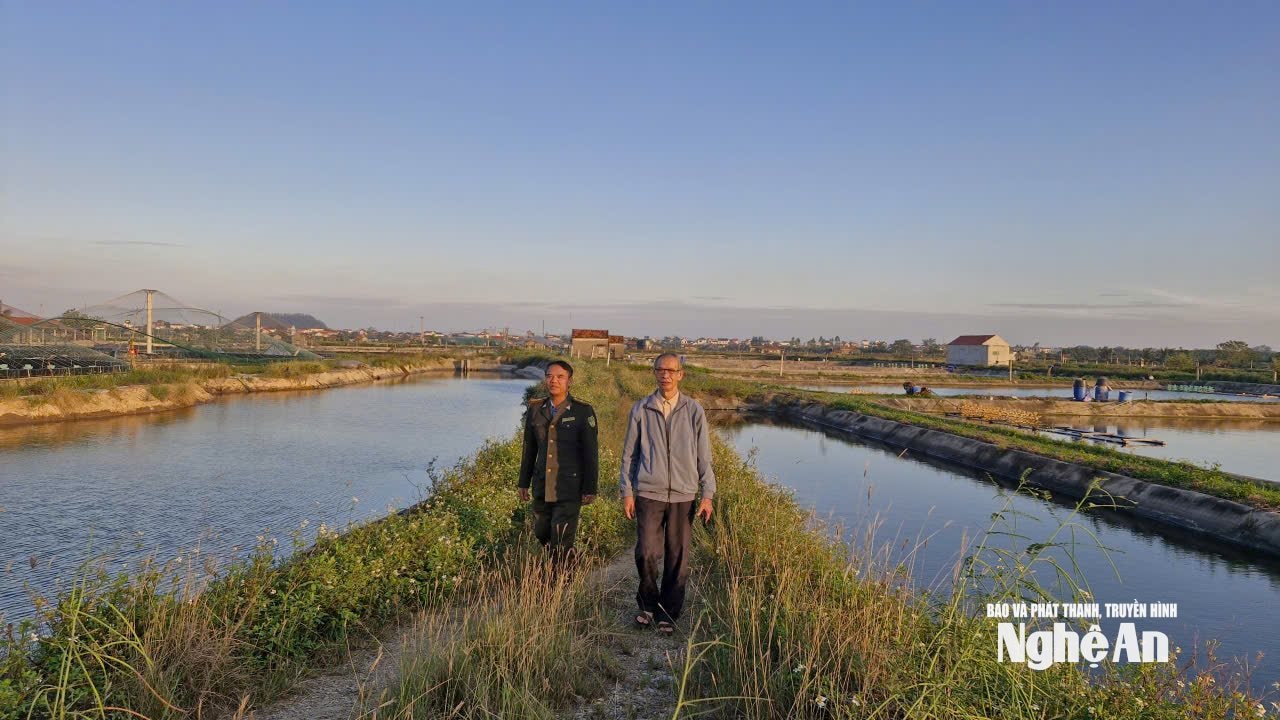
Following the flyer's lead, we arrived at Thanh Thuong hamlet – where one of the three community patrol teams had been established. We were greeted by familiar faces from the bird-hunting profession: Mr. Nguyen Ba Thu, Mr. Nguyen Ba Dong, and several elderly farmers with graying hair… We sensed they were generous, hospitable farmers, and knew they had a passion and considerable experience in bird hunting.
In her small house overlooking the low-lying fields, Mrs. Thu smiled gently as she recalled her youth: "This profession has been passed down to me from my grandfather, my father, and now to myself. Before he passed away, my grandfather even said, 'Cluck,' three times for me to hear. That's how strong my passion is."

Uncle Thu recounted that his entire extended family used to be involved in bird trapping. Now, only one older brother keeps a few decoy birds he raised since childhood to occasionally use for trapping. However, trapping is hard work, enduring the elements and coming back empty-handed seven out of ten times. He added, "I gave up bird trapping a long time ago." When the patrol team tried to persuade him, Uncle Thu convinced his brother to quit and release the decoy birds back into the wild. "A human life is not as long as nature's. Why keep the heron? Raising buffalo and cows is healthier and helps our children and grandchildren," he said.
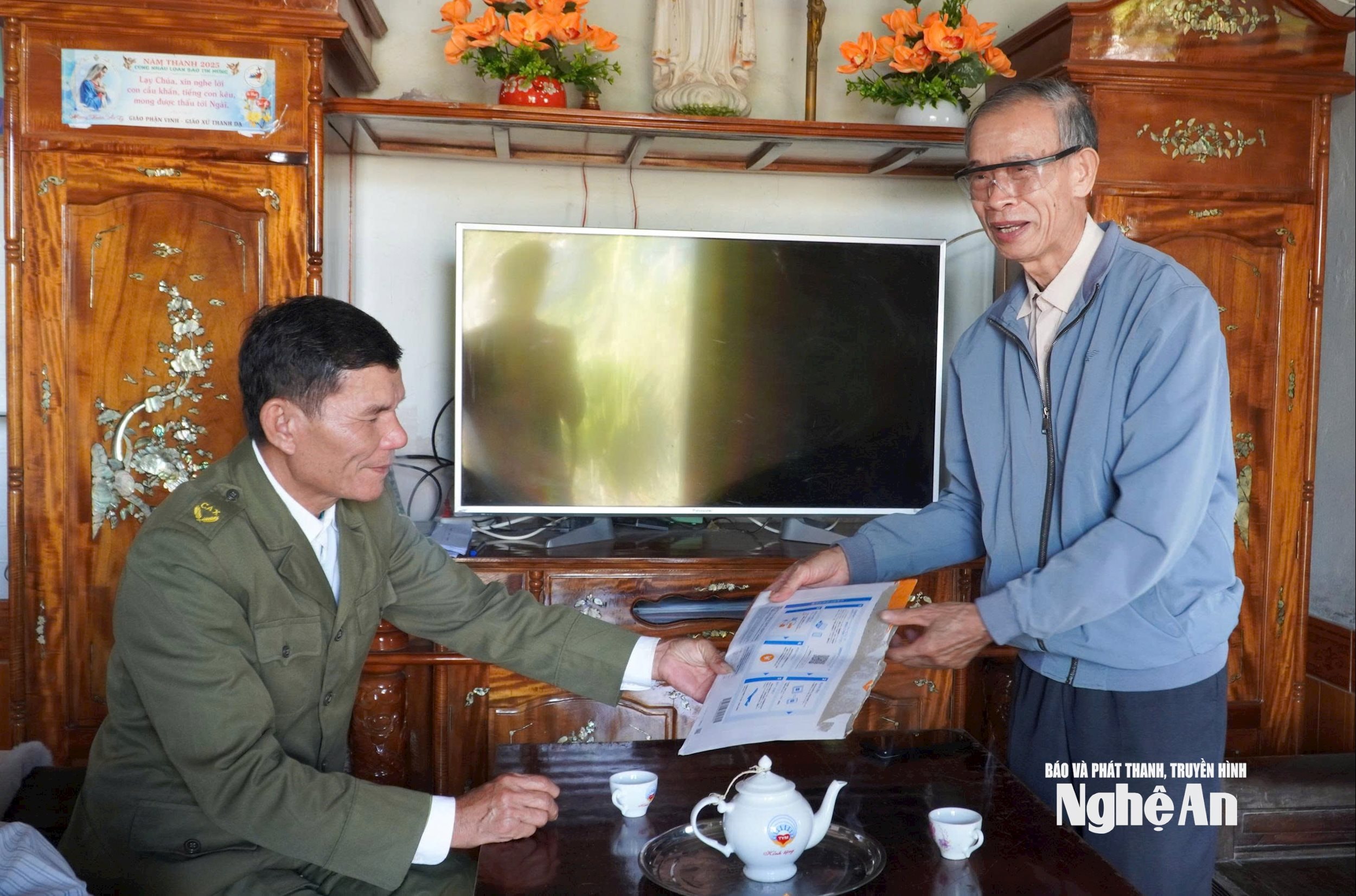
As for Mr. Nguyen Ba Dong, the head of the patrol team, bird hunting has been his profession since he was 5 years old. Tall and thin, with bright eyes, Mr. Dong tells his story in a steady voice, but one filled with memories.
“In the old days, there were so many birds, you could see them everywhere. I once had three very precious decoy herons; their songs were enchanting. I wouldn’t sell them to anyone who offered to buy them. Whenever I saw a flock of birds in the sky, I just had to gently tug on the string and they would flap their wings and call out. The birds would hear that and swoop down, sometimes right where I was standing, and I could catch them with just a reach of my hand,” the old man recounted, his eyes sparkling with old memories.
But the end of his career was sad. One year, he went to the South for an extended period on business, leaving his decoy birds with family members to look after. When he returned, all three herons had died. "It was very sad and disappointing. But then it felt like a milestone: That's the end of my career," he recalled.
From then on, he abandoned his previous profession and became a campaigner for change among the people. To many, Mr. Dong was a "professional," his words carried weight. He said: "Before, people didn't know that migratory birds were protected. Now they know. I told them: Other countries protect birds very strictly; hunting them is punishable by imprisonment. If migratory birds come to Vietnam and don't return, people will judge us. We must change to maintain the country's reputation and ensure that future generations can still study and work with dignity."
Thanks to their persistence, three of the five people who used to hunt birds in Thanh Thuong hamlet have now given it up completely. The remaining two are still secretly hunting, but the patrol team is working to persuade them every day.
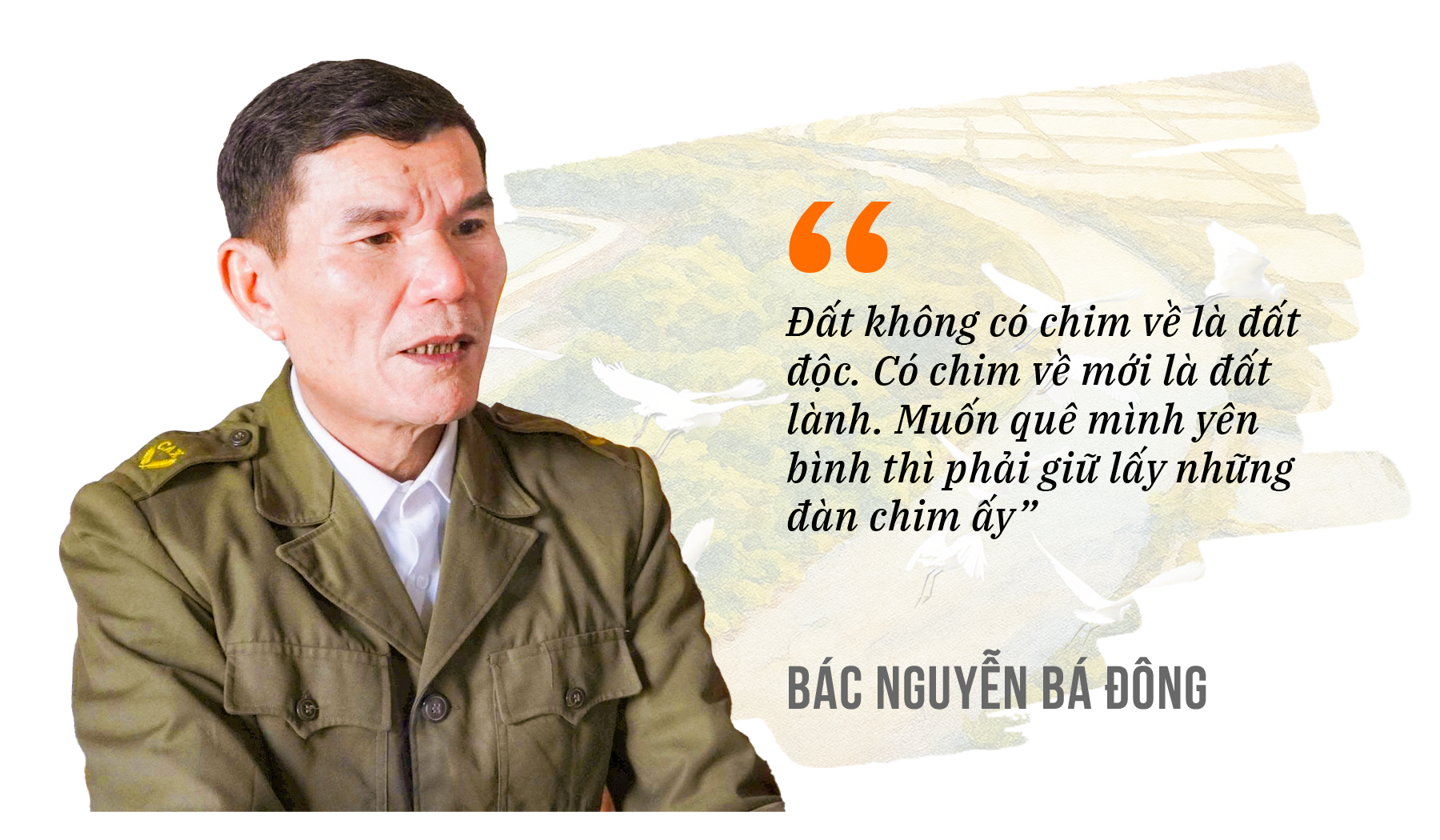
"Land without birds is cursed land. Only land with birds is blessed land. If we want our homeland to be peaceful, we must preserve those flocks of birds," Uncle Dong said before we parted ways.

Behind these visible changes lies the quiet dedication of one man: Mr. Nguyen Thanh Nham - former Director of the Pu Huong Nature Reserve - who has devoted his entire life to the forest.
When asked about Mr. Nham, all forestry officials speak of him with respect: "He is the founder of Pu Huong." In 2002, when the conservation area was newly established amidst countless difficulties, Mr. Nham laid the first bricks, built the organizational foundation, and set the direction for the entire conservation strategy. Mr. Vo Minh Son, Director of the Pu Huong Nature Reserve, said: “Having lived and worked with Mr. Nguyen Thanh Nham, what remains in my memory is a sincere and simple man, yet upright, honest, always responsible, and dedicated to his work, putting the interests of the community and the collective first. In the work of forest protection, biodiversity conservation, and wildlife preservation, he didn't just direct from afar, but went down to each village and hamlet, to each household to listen, observe, and understand the difficulties. It was this closeness to the people and understanding of the people that helped him find practical, appropriate, and effective solutions, creating consensus within the community – a key factor in long-term forest protection. Therefore, when mentioning the work of forest protection, biodiversity conservation, or wildlife protection in Pu Huong, almost everyone remembers him first…”
Upon hearing that the former Quynh Thanh area was still a hotspot for the hunting of migratory birds, Mr. Nham sought to connect with the Keidanren Nature Conservation Foundation (KNCF) of Japan – an organization that funds conservation projects in Japan and Southeast Asia. This foundation supports nature conservation and biodiversity preservation activities in Japan and Southeast Asian countries. With his experience in wildlife conservation and his knowledge of the former Quynh Thanh area, he wrote a project proposal for the organization. The project set three clear objectives: to raise awareness and enhance knowledge about protecting wild and migratory birds among the community and local officials; to build a model of community participation in protection, patrolling, and monitoring – forming a core local force; and to summarize the project's implementation and propose solutions to address existing problems in order to establish regulations for the sustainable protection of wild and migratory bird species.
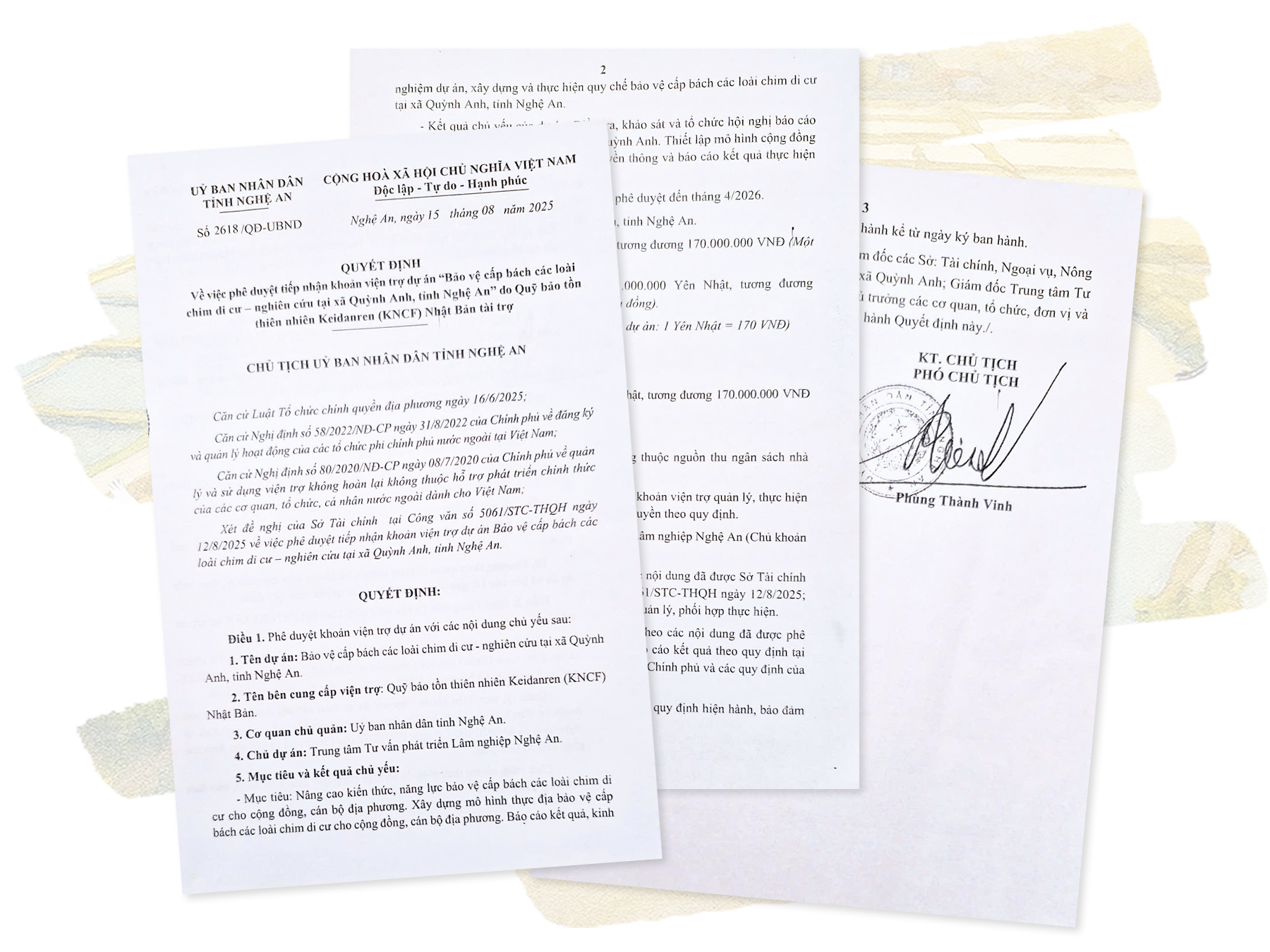
The project received 1 million Yen (equivalent to 170 million VND) in funding from KNCF. On August 15, 2025, the Provincial People's Committee issued a Decision approving the acceptance of the grant for the project "Urgent Protection of Migratory Bird Species - Research in Quynh Anh Commune, Nghe An Province," from which the doctor and his colleagues will implement the project's objectives until March 2026.
From there, a series of activities were implemented: Investigating the status of migratory birds and hunting activities; holding consultation meetings to develop protection plans and community models; designing and printing leaflets and posters; editing radio content; creating a bilingual Vietnamese-English information page; establishing three community patrol teams; coordinating with the police and forest rangers; and campaigning for people to sign pledges not to hunt or trade wild birds.
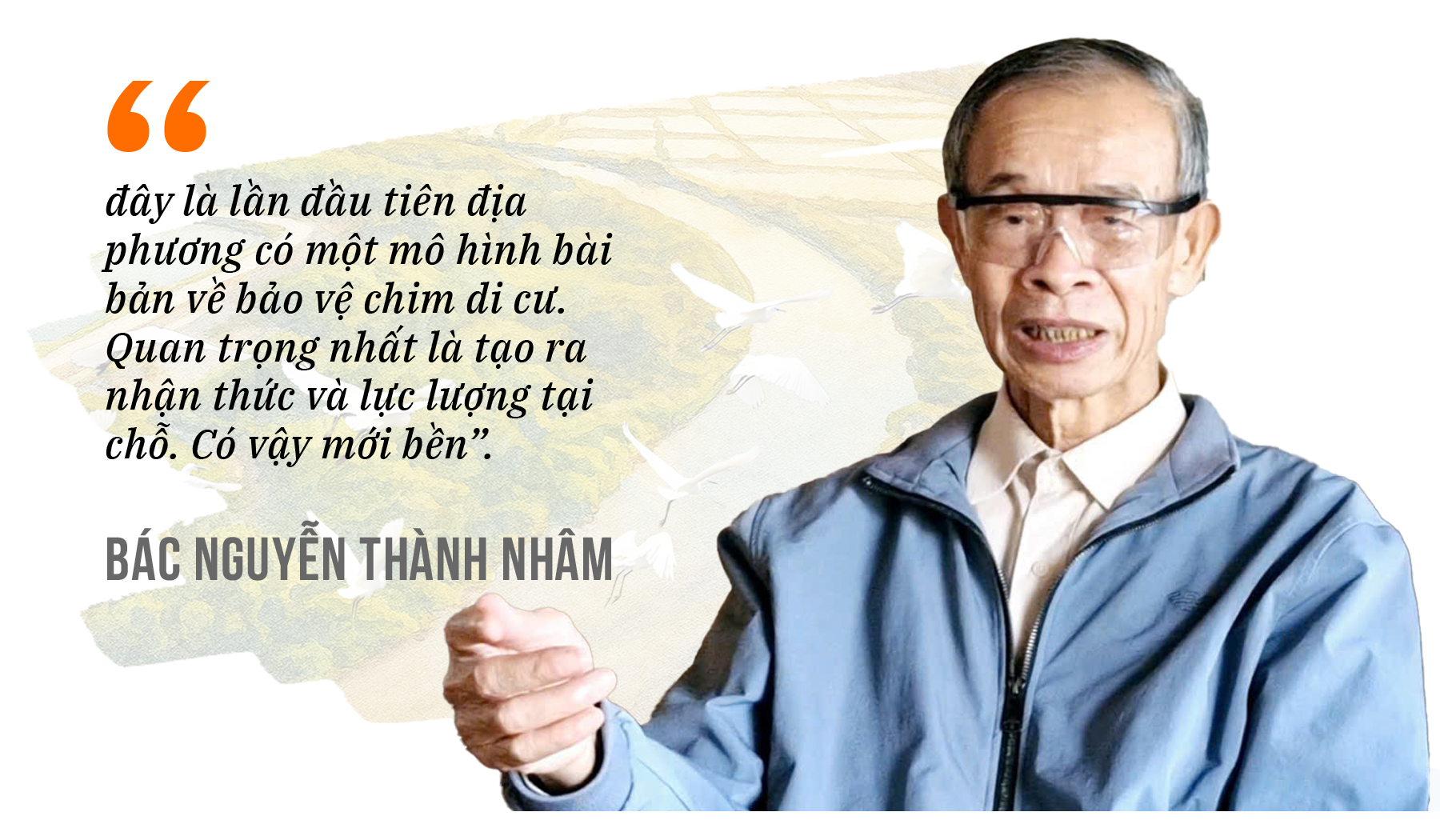
One afternoon in Quynh Thanh (formerly), Mr. Nham told us: “The project is very small, the budget is not much, and the implementation time only lasts until March 2026. But this is the first time in a locality there has been a systematic model for protecting migratory birds. Most importantly, it contributes to creating awareness and a local force. Only then will it be sustainable...”
A representative from the People's Committee of Quynh Anh commune acknowledged: "Previously, there were efforts to protect migratory birds, but they were fragmented and ineffective. Now, with a project and a well-structured plan from higher levels, along with effective public awareness campaigns and coordination among various forces and community patrol teams, there has been a positive shift, achieving significantly better results. The commune is proposing continued support to maintain this model long-term, aiming to build Quynh Anh commune into a safe stopover point for migratory birds each season."
.jpg)
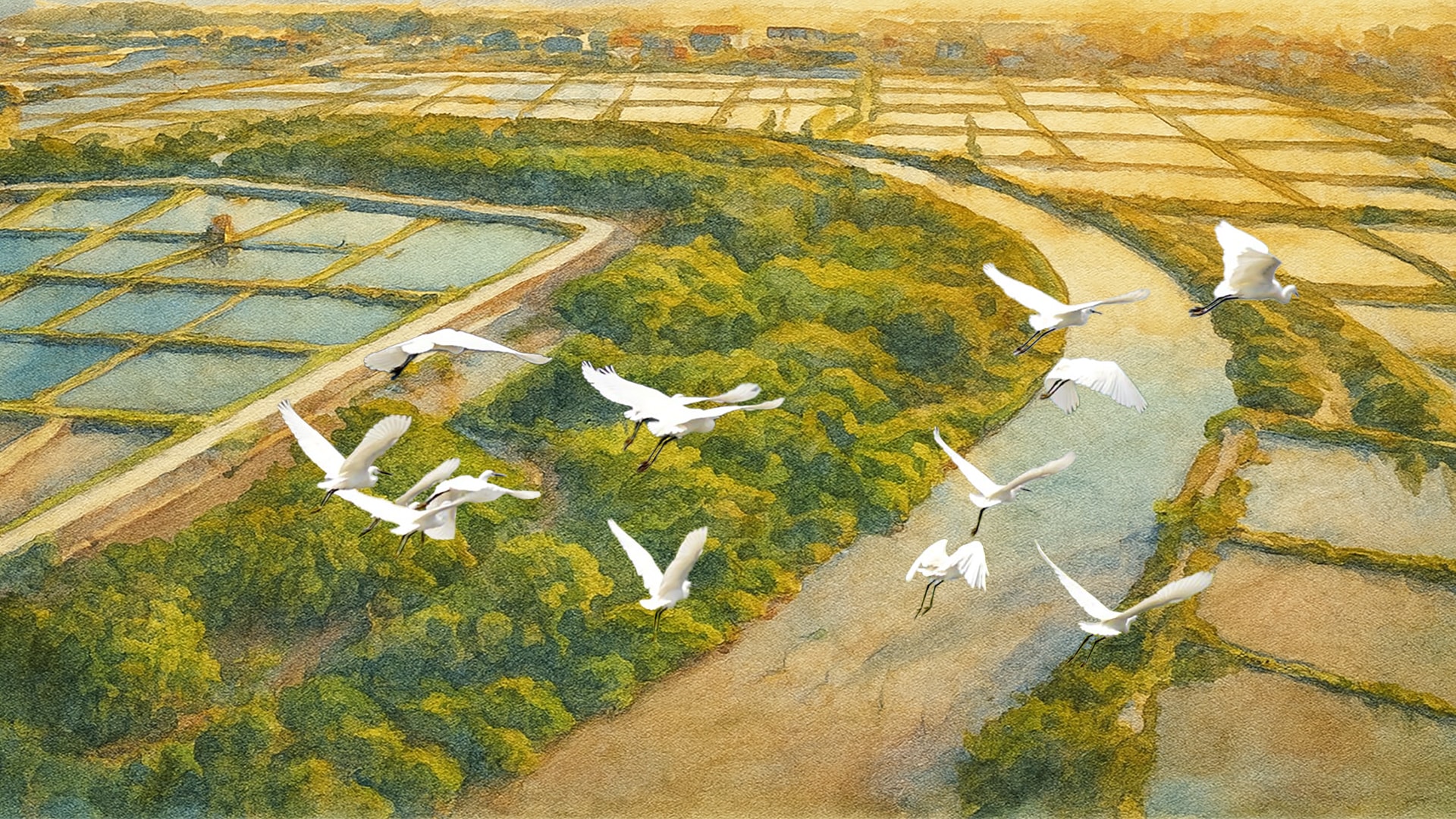
The flocks of birds that were once just a memory of a village where people hunted wild birds are gradually returning to the former Quỳnh Thanh region. Their return is not only a sign of a peaceful season in nature, but also proof of the community's efforts to change – those who once made a living by trapping birds are now paving the way for these birds to fly freely.
A small project, simple leaflets, and persistent people have been contributing to changing a long-standing custom. And so, across the fields and salty, sea-breeze-swept ponds, the calls of the night herons resound like a soothing song of a land that has learned to preserve nature with its own hands.