
Bloomberg: Global oil reserves are depleting at a record rate.
According to the latest report, global oil reserves are shrinking at a record rate due to ongoing conflicts in the Middle East. This situation not only directly threatens the stability of the energy market but also exposes serious vulnerabilities in the global supply chain.
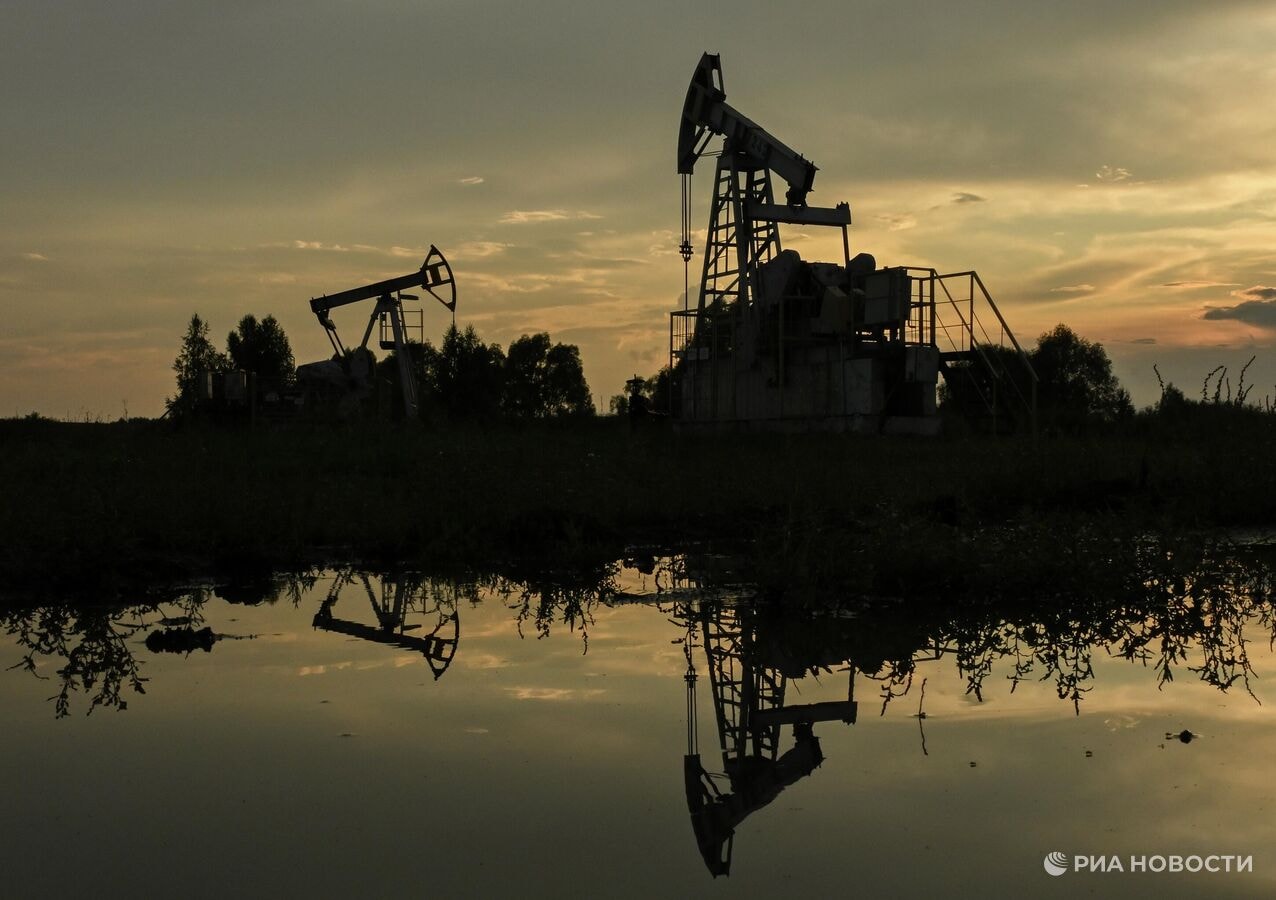
According to RIA Novosti, Bloomberg reported on May 10th, citing an analysis: "Oil reserves are dwindling, as the war in Iran is hindering fuel shipments from the Persian Gulf. This weakens the buffer that protects the market from supply shocks."
The rapid decline in reserves increases the risk of shortages and leads to more volatile prices. This means that governments and industries will face significant challenges in mitigating the effects of losing more than 1 billion barrels of oil supply in just two months.
Bloomberg emphasizes that the market will remain vulnerable to future disruptions, even after the conflict has ended.
In late February, the US and Israel launched a military campaign against Iran. This move led to the near complete paralysis of maritime traffic through the Strait of Hormuz – a vital route for transporting oil and liquefied natural gas (LNG) from Arab nations.
As a result, energy prices are continuously breaking records. Earlier this week, Brent crude oil prices surged to $103.91 per barrel, marking the highest level since July 2022.
In an interview with RIA Novosti, expert Valeria Stepanova, Deputy General Director for Oil and Gas Exploration at the Karpinsky Institute, explained that part of the reason for the shortage of oil reserves is that the distribution of fossil fuels depends on a combination of geological conditions.
Expert Valeria Stepanova stated: "Oil deposits are not evenly distributed across the Earth's surface. The formation of oil requires the convergence of specific geological conditions: the accumulation of organic matter (such as algae and ancient biological remains), certain temperatures and pressures maintained over millions of years, along with natural 'traps' that help retain the fluid."
Expert Stepanova emphasized that oil and gas "traps" are natural reservoirs where hydrocarbons accumulate. This formation process is also influenced by many other factors such as tectonics, climate, and the alluvial environment (oceanic or continental). In each geological period, the combination of these factors is unique to each region.
For example, studies cited by geologist Scott Montgomery of the University of Washington show that an organic matter content of just 2% in rocks is sufficient for profitable mining. Meanwhile, in the Persian Gulf region, this percentage reaches 13%, or even higher.
Scientists believe that the oil-rich countries in this region owe their wealth to the collision of tectonic plates over 35 million years. On the Iranian side, the folds formed the Zagros mountain range, while on the Arabian side, dome-shaped structures were formed. These features, combined with the deep depressions beneath the bay, created ideal conditions for the formation and accumulation of oil and gas.


