
BMW M3 Electric: Reviving the legendary V10 and V8 engine sounds to keep the driving experience alive.
BMW has unveiled an electric M3 model featuring a sound system modeled after the iconic M Series, along with virtual shifters to preserve the driving experience in the digital age.
BMW has just released key technical details about its upcoming all-electric M3, emphasizing the recreation of the signature high-performance audio experience. Instead of using technologically advanced electronic effects like many competitors, BMW has chosen to preserve its heritage by bringing the sounds of its legendary internal combustion engines to the electric vehicle.
The sonic legacy from the iconic M Series machines.
This decision stems from the fact that the absence of mechanical sounds can significantly diminish the excitement of driving high-performance models. BMW conducted a real-world recording process using sounds from three of the most iconic M models in history to refine the new electric M3.
| Source model | Engine configuration | Engine code |
|---|---|---|
| BMW E63 M6 | V10 | S85 |
| BMW E90 M3 | V8 naturally aspirated | S65 |
| BMW F82 M4 | Turbocharged I6 | S55 |
Based on test videos from BMW Motorsport, the next-generation electric M3 will feature a variable sound system. Depending on the driving mode or user selection, the car can emit the characteristic roar of a V10 engine or the powerful sound of a V8 engine. This creates a distinct personality for the electric car, instead of monotonous digital soundscapes.
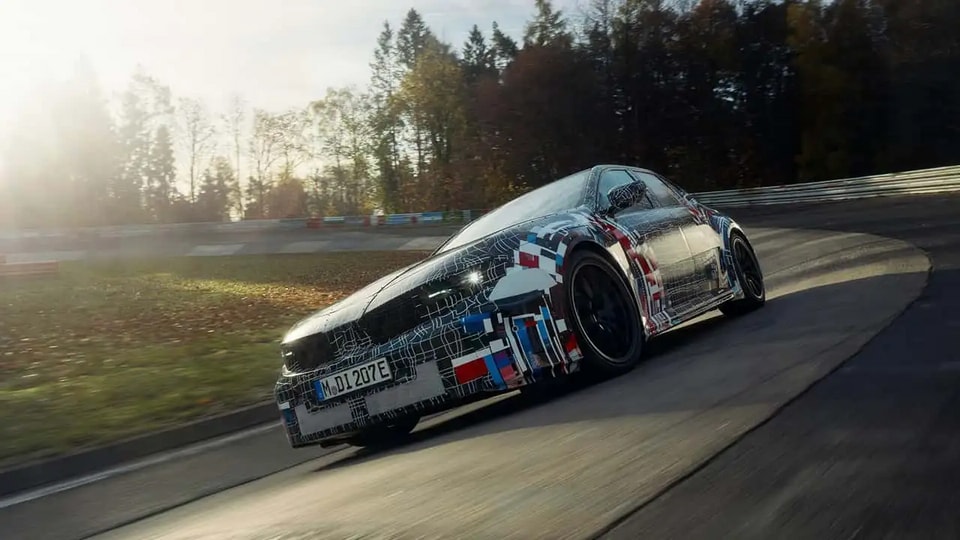
Virtual shift technology and four-motor drivetrain.
In addition to the sound, BMW also introduced a "virtual shifting" feature on the electric M3. This system simulates the lag and slight jerk of shifting in a traditional dual-clutch or manual transmission. While theoretically, interrupting the power flow could slightly reduce 0–100 km/h acceleration, BMW engineers believe that emotional connection is a top priority for the M series' customer base.
In terms of hardware, the electric BMW M3 is expected to be equipped with a system of four independent electric motors. This configuration allows for extremely precise torque vectoring at each wheel, providing superior agility compared to previous generations using gasoline engines.
Efforts to preserve identity in the age of electrification.
The significant investment in simulated sound technology shows BMW's efforts to retain loyal M-series customers as they transition to electric vehicles. In the last two years, M-branded electric models such as the i4 M50 and M60 have achieved strong sales, laying a solid foundation for the launch of an electric M3.
Overall, the electric BMW M3 is not simply a zero-emission car, but rather an attempt by the German automaker to demonstrate that pure performance and driving emotion can coexist, even when the sound of an internal combustion engine is no longer physically present under the hood.


