
Politburo: Continue to streamline staffing by 5-10%.
The Politburo has set a direction for the period 2027-2031 to continue streamlining the political system's workforce by 5-10%.
On behalf of the Politburo, Standing Committee Secretary Tran Cam Tu has just signed and issued Conclusion No. 40 on supplementing and amending the Regulations on personnel management of the political system; allocating personnel for the political system in 2026 and orientation for the period 2027-2031.
In conclusion, the Politburo assigned the Central Organization Department to incorporate feedback to supplement and refine the draft regulations on personnel management and the decision on personnel allocation for 2026 of the political system, carefully review the data to ensure accuracy, and submit it to the Standing Committee of the Party Central Committee for consideration and promulgation.
Regarding the personnel allocation plan for the period 2027-2031, the Politburo's conclusion clearly states that the streamlining of personnel in the political system (approximately 5-10%) will continue to be implemented based on plans, roadmaps, and commitments of responsibility from each agency, unit, organization, and locality in implementing decentralization, delegation of power, delineation of authority, application of science and technology, and digital transformation...
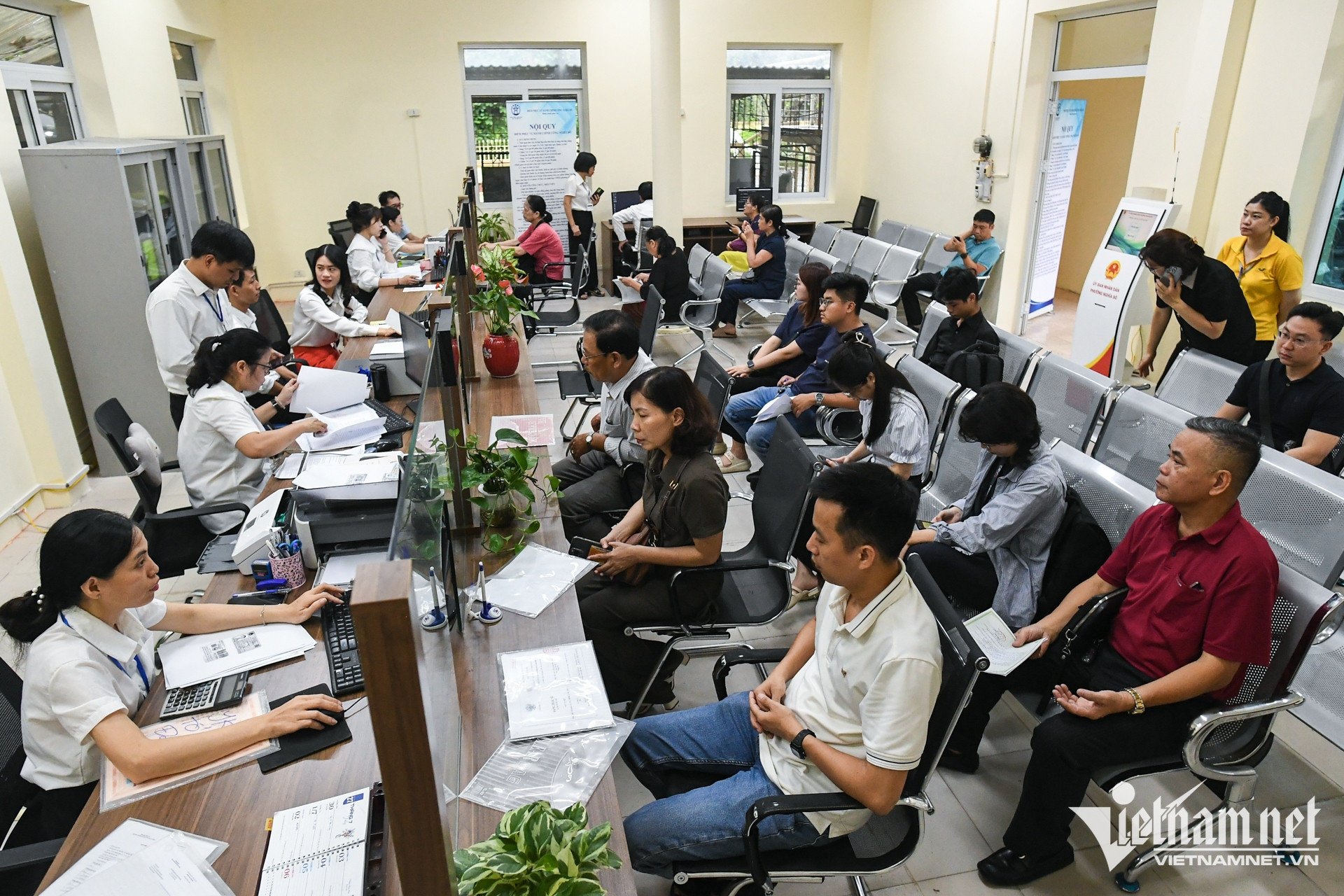
The Politburo also called for streamlining work processes, reducing intermediate steps in operations, reorganizing internal structures, restructuring public service units, reducing the number of leaders in agencies, units, and organizations, etc.; applying data-driven management methods, and quantifying work to determine actual staffing needs.
The focus should shift from managing staff numbers to managing the quality and efficiency of public service delivery, with periodic evaluations of officials using quantifiable indicators. The Politburo emphasized the need to remove incompetent and underperforming individuals from the system, in order to recruit qualified and capable civil servants and public employees into the system.
At the same time, the Politburo requested a plan for the arrangement and reassignment of civil servants to ensure a sufficient number of civil servants to perform state management tasks in agencies and units, preventing the situation where public employees perform civil servant positions.
Agencies and units should proactively review and adjust their structure and number to suit practical realities and meet the requirements of assigned tasks, reporting to competent authorities for consideration and decision, especially those agencies, units, and localities lacking specialized positions that need to be filled promptly.
Localities where the number of civil servants and public employees exceeds the allocated staffing quota for 2026 must urgently develop appropriate and feasible plans, solutions, and roadmaps to gradually reorganize and adjust staffing levels so that by the end of 2026, they meet the staffing quota assigned by the Politburo.
Large cities and special urban areas (such as Hanoi and Ho Chi Minh City) will have special mechanisms for managing and utilizing personnel as decided by the Politburo, and will implement them according to the Politburo's policies and conclusions...
Prevent the practice of requesting staff positions, retaining seats, and maintaining existing structures for the sake of vested interests.
The Politburo requested the Central Organization Department to conduct a comprehensive study and propose reforms to the management and allocation of personnel within the political system to ensure tangible effectiveness and consistency with the Party's policies on job position schemes and salary schemes.
In this context, the Politburo suggested the need for fundamental reform in thinking, perception, and methods for determining the staffing levels of the political system; shifting from a fixed, long-term mindset to a 3-year cycle for appropriate adjustments; determining staffing levels in a scientific, objective manner, based on clear norms, criteria, and standards, consistent with reality, and fundamentally addressing the limitations and shortcomings from previous terms.
The allocation of personnel must be closely linked to promoting digital transformation, applying science and technology, administrative reform, decentralization, delegation of authority, functions, tasks, job positions, and specific output results.
The conclusion clearly states that there should be no situation where areas lacking staff are not being filled, while areas with low efficiency maintain stable staffing levels; a stronger mechanism is needed to screen and replace those who do not meet job requirements, adhering to the principle of "in and out" for state-funded staff, and preventing the situation where being on the payroll means lifelong stability.
"Absolutely no instances of requesting staff positions, retaining seats, or maintaining existing structures for the sake of vested interests should be allowed," Conclusion No. 40 clearly states.


