
The Ministry of Industry and Trade has released a handbook guiding the use of E10 bioethanol fuel.
The new document provides comprehensive information on the benefits, technical standards, and important considerations to help consumers optimize the efficiency of using E10 gasoline.
The Ministry of Industry and Trade has officially released the "Handbook for Using E10 Biofuel," a detailed guide aimed at promoting the consumption of green fuel and implementing the energy security roadmap in Vietnam. This is an official source of information to help people understand the properties, advantages, and how to switch to this type of fuel with a 10% ethanol blend.
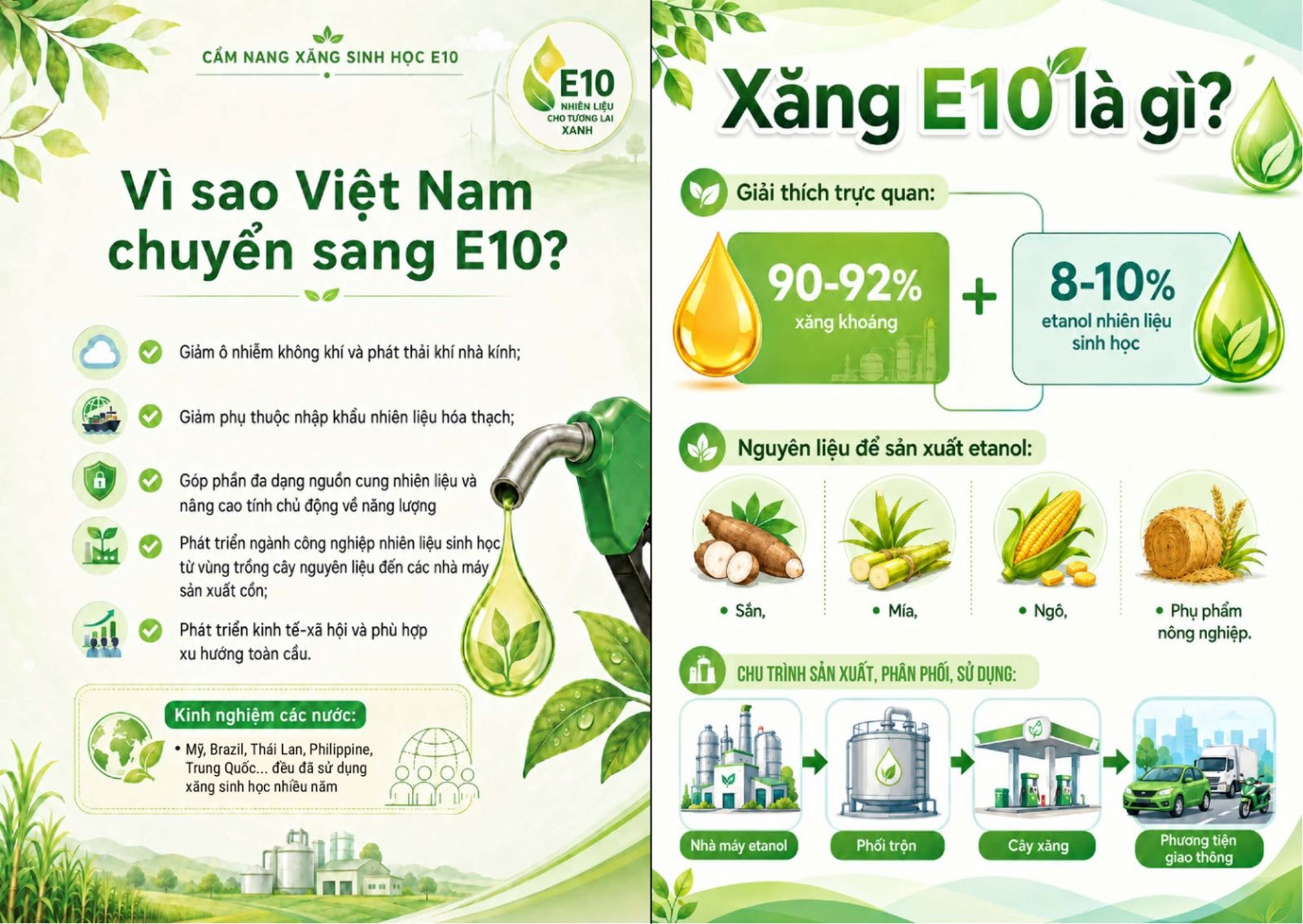
E10 biofuel and its benefits for engines.
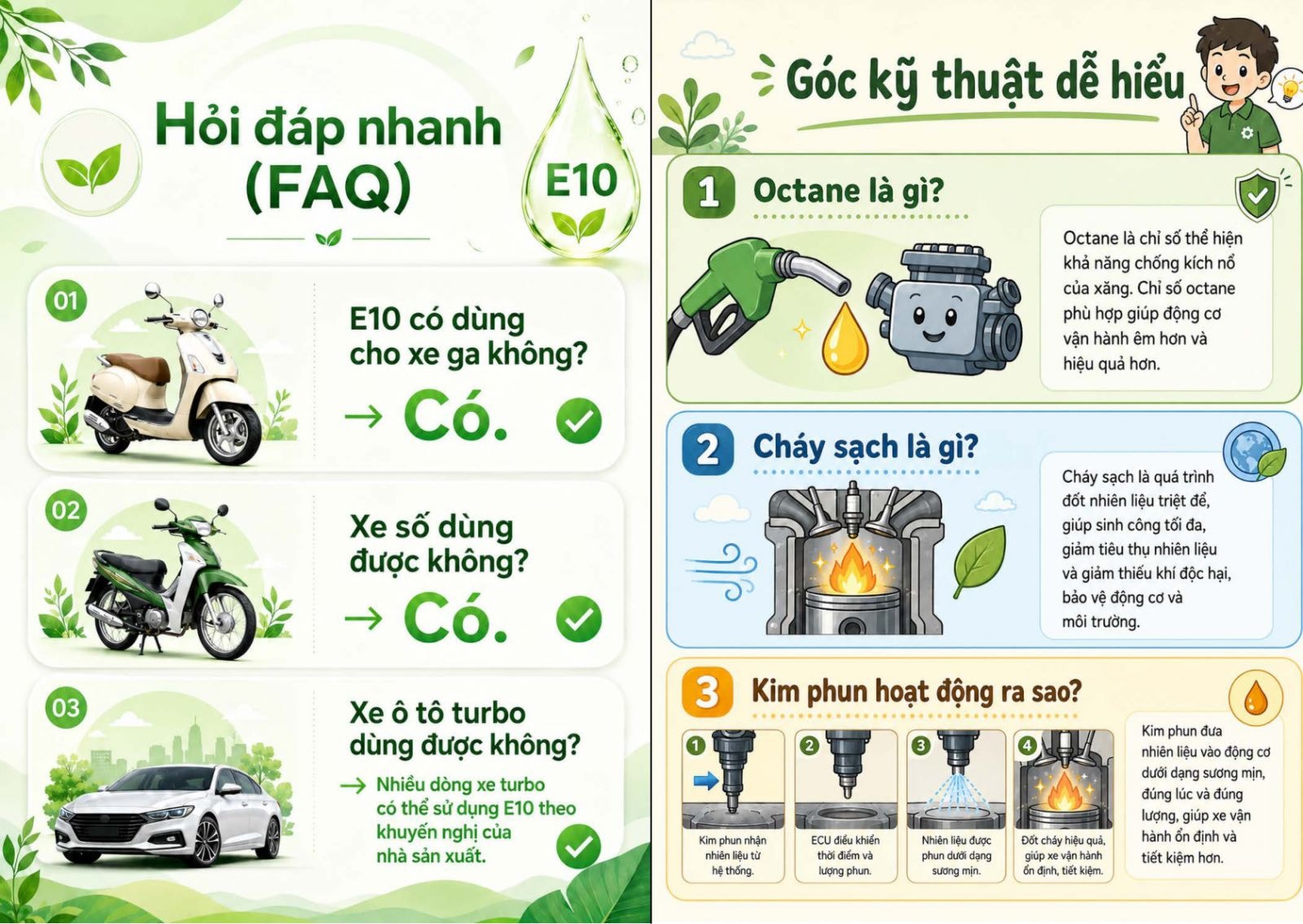
E10 gasoline is a fuel blend consisting of 90% mineral gasoline and 10% bioethanol. According to expert analysis in the manual, the use of ethanol increases the fuel's octane rating, allowing for more complete combustion in the combustion chamber, thereby improving engine performance.
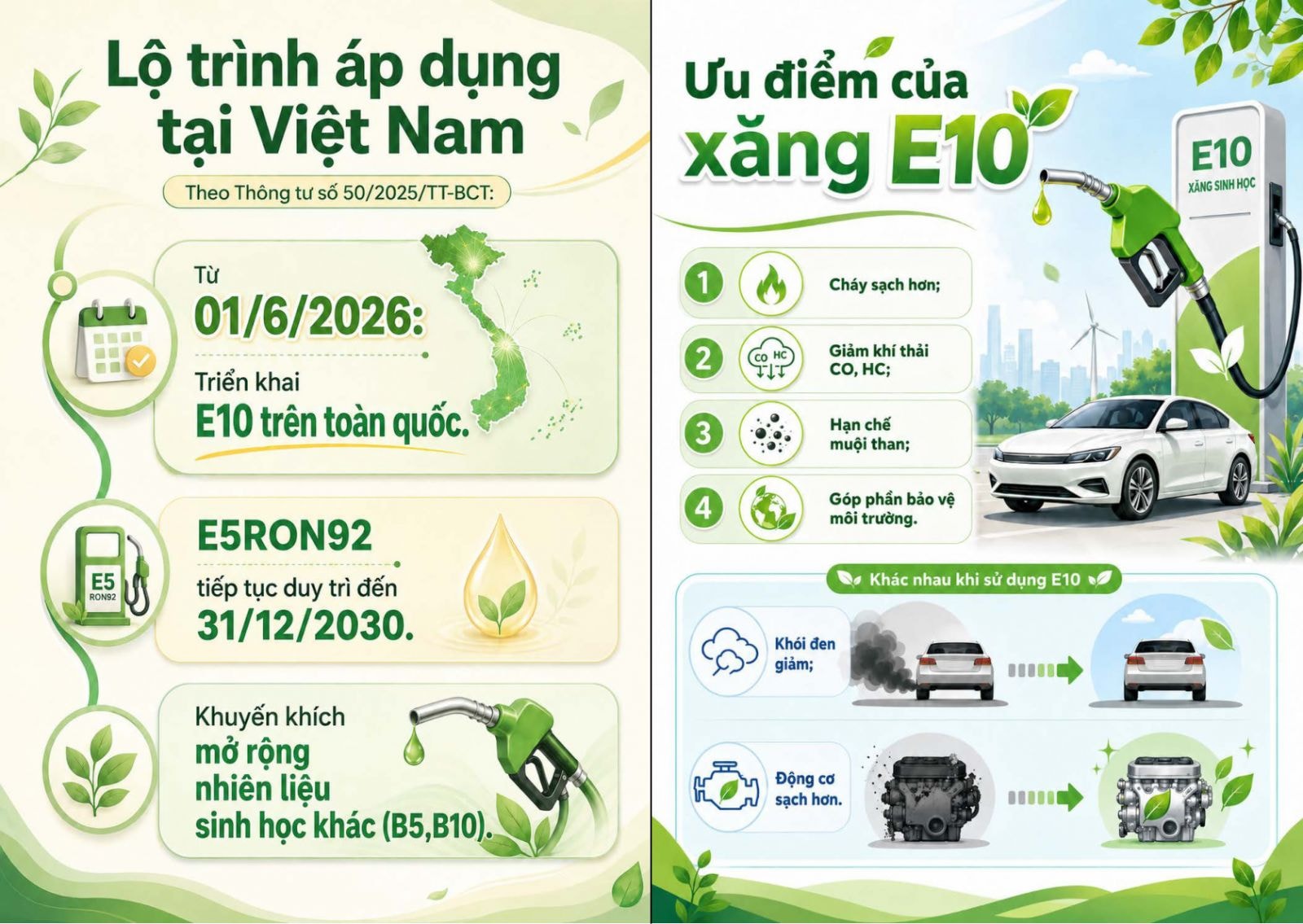
In addition, E10 gasoline has the ability to clean deposits in the fuel delivery system, keeping fuel injectors and combustion chambers cleaner than when using regular mineral gasoline. This not only helps the car run more smoothly but also extends the lifespan of engine parts if properly maintained.
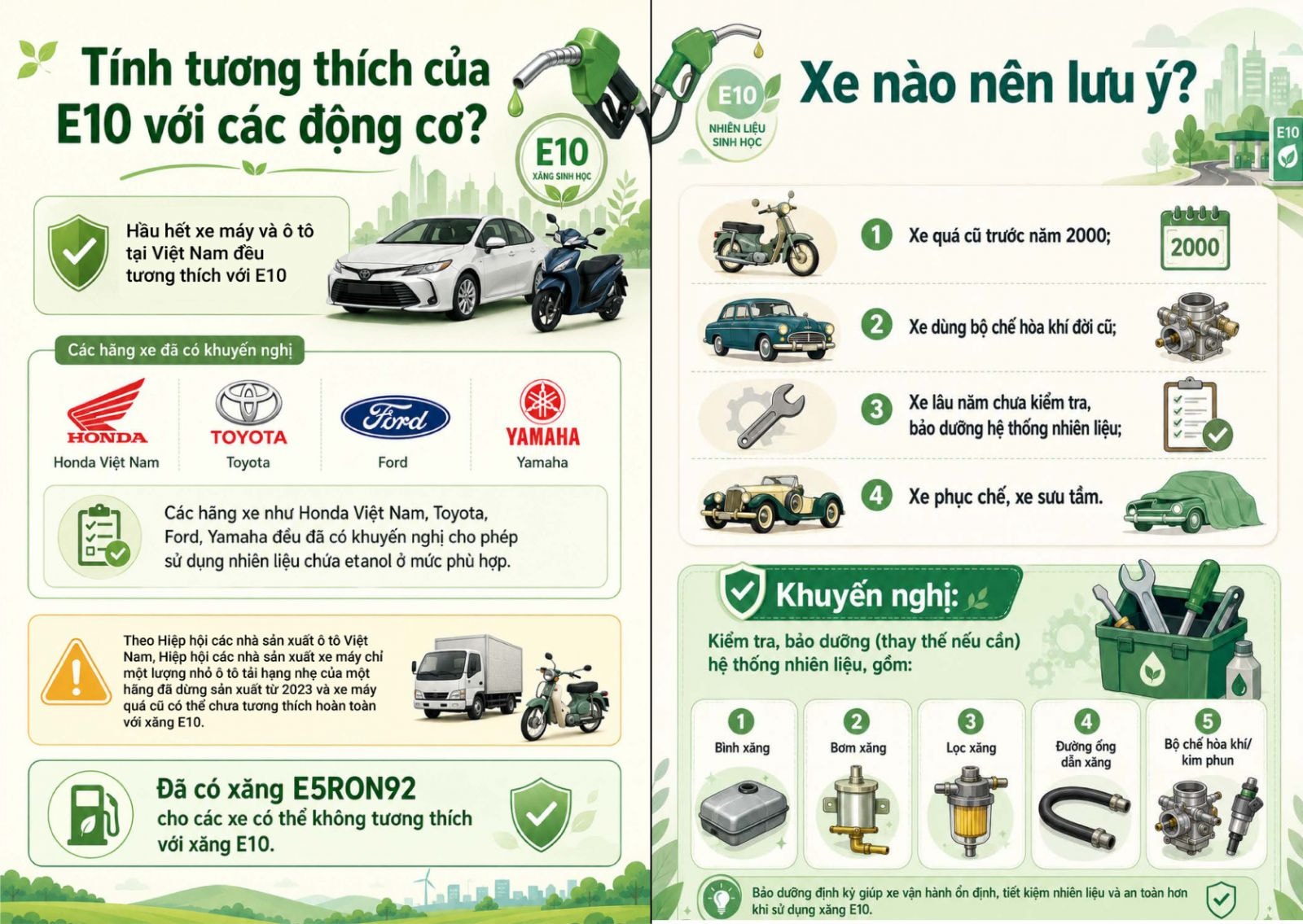
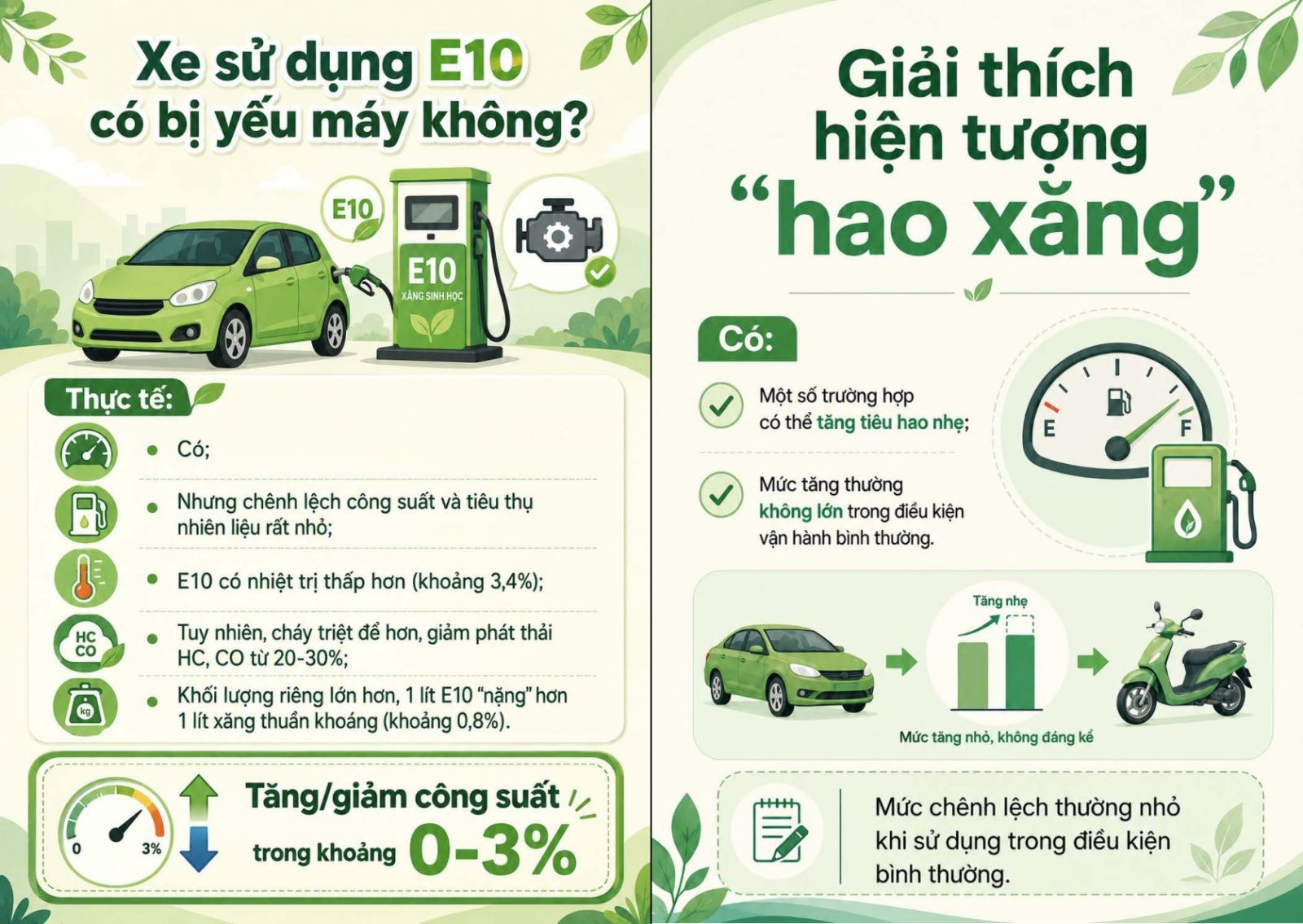
Positive impact on the environment and the economy.
One of the biggest advantages of E10 gasoline is its ability to reduce emissions of harmful gases such as CO (carbon monoxide) and HC (hydrocarbons). Replacing a portion of mineral gasoline with ethanol – a renewable energy source from agricultural products like cassava and corn – significantly reduces the greenhouse effect and protects air quality.
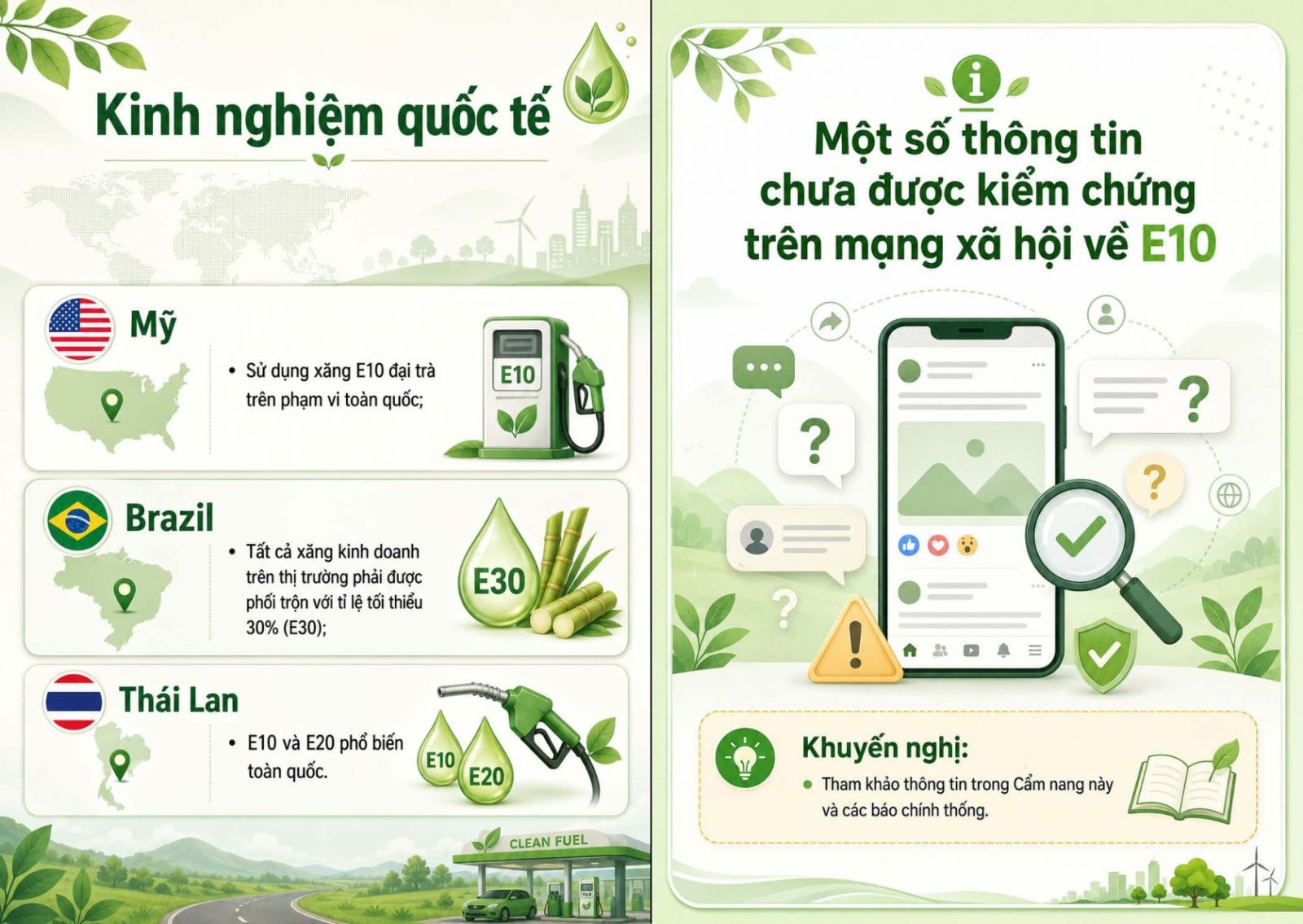
Economically, E10 biofuel contributes to reducing dependence on imported fossil fuels while creating a stable output for the domestic ethanol production industry in agriculture. This aligns with the sustainable development trends of advanced countries worldwide.
Recommendations for consumers
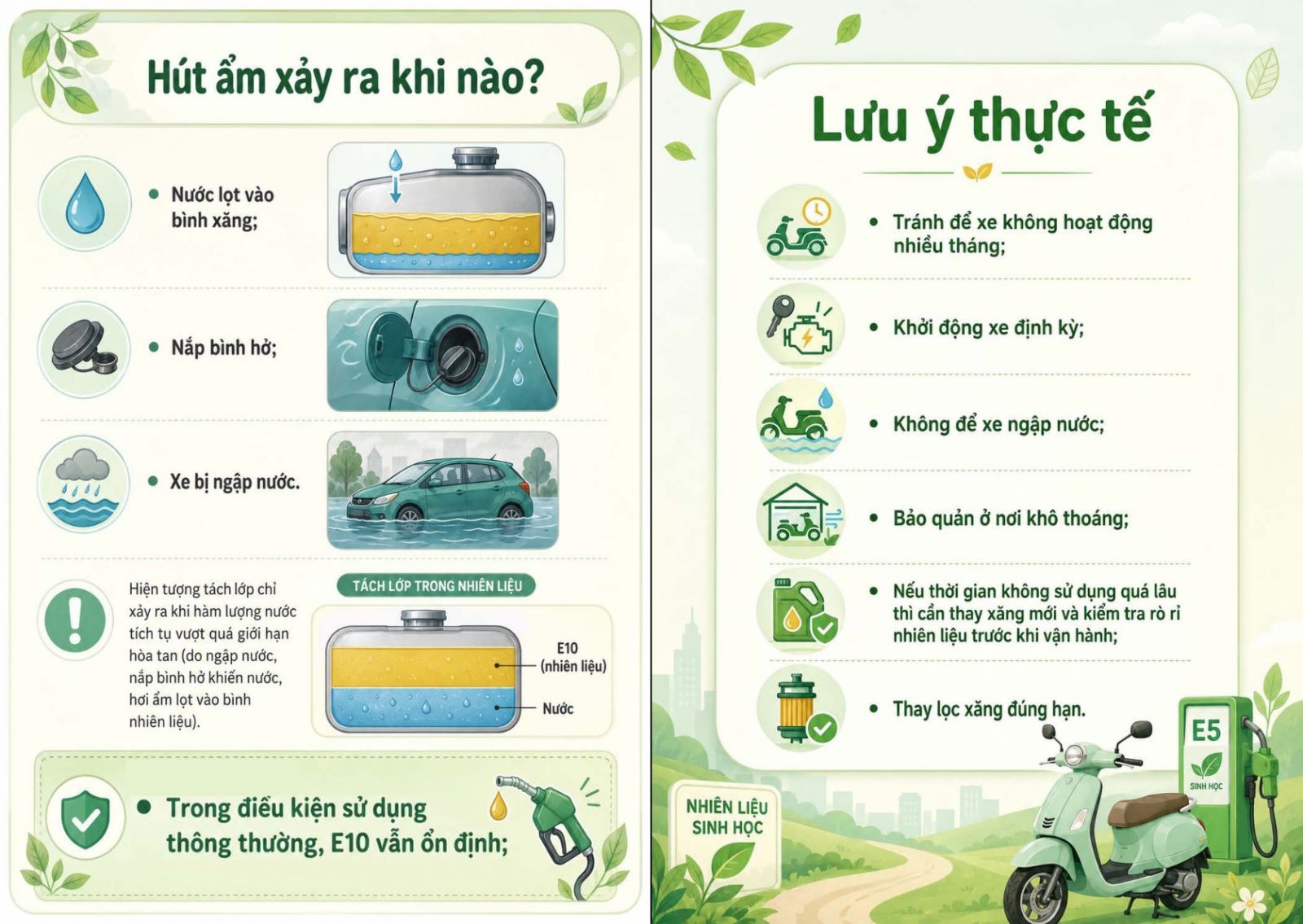
The manual also answers questions about vehicle compatibility. Most vehicles manufactured after 2000 can use E10 gasoline without technical adjustments. However, for very old vehicles or those that have not been used for a long time, users should check and clean the fuel tank to ensure optimal performance.
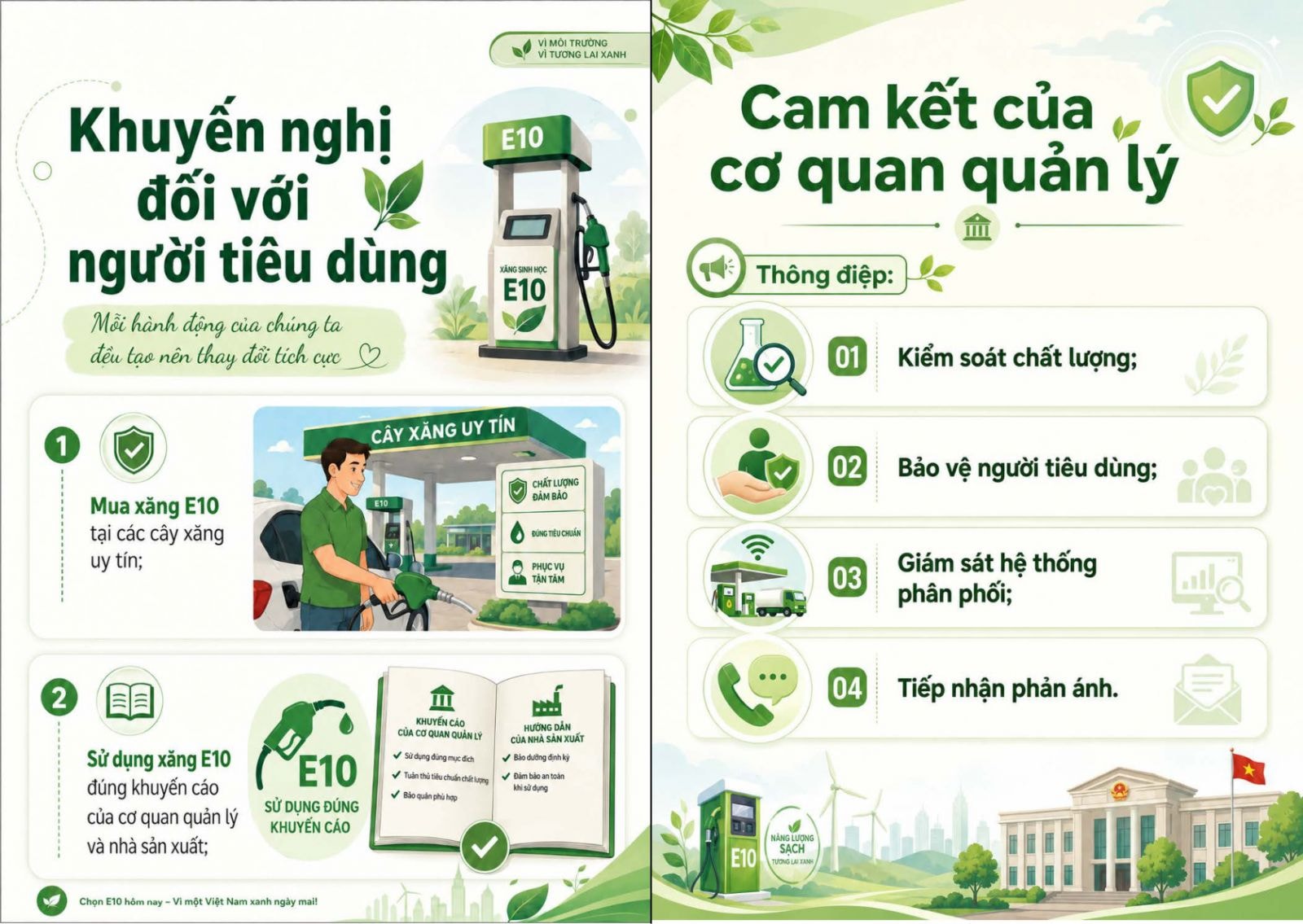
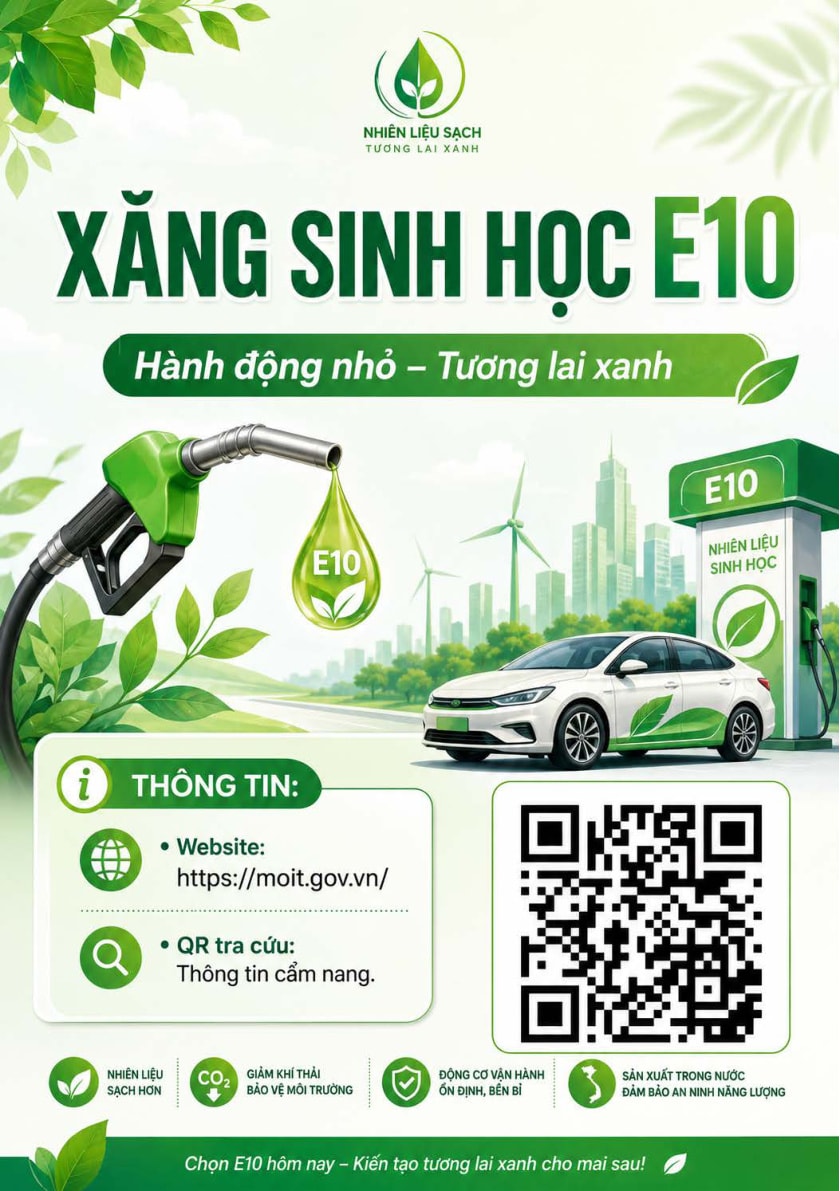
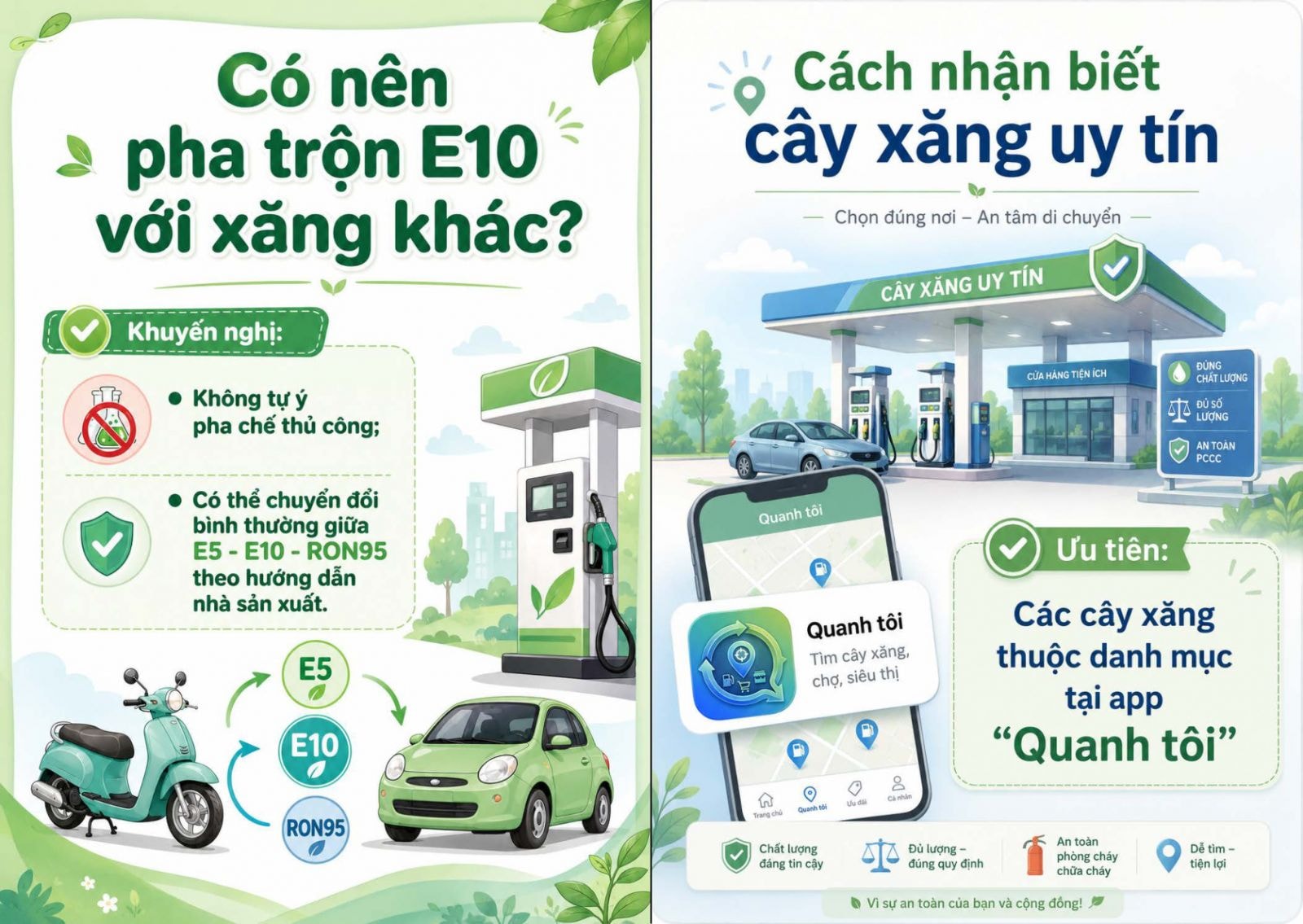
Currently, the biofuel distribution network is continuing to expand nationwide. The Ministry of Industry and Trade encourages people to access the handbook to gain a comprehensive and accurate understanding, thereby proactively choosing the appropriate fuel for their vehicles and contributing to the protection of a green environment.


