
The Ministry of Industry and Trade will operate a centralized food traceability system starting in 2026.
Decision 400/QD-BCT sets a roadmap to complete the centralized traceability system by 2026, aiming to increase market transparency and protect consumers.
The centralized food traceability system is a technological solution spearheaded by the Ministry of Industry and Trade to enhance information transparency, connect inter-sectoral data, and protect consumer rights, as stipulated in Decision 400/QD-BCT. This is considered a strategic step to synchronize state management and support businesses in complying with legal regulations in the context of deep international economic integration.
Roadmap for implementing the traceability system in the period 2026-2027
According to the recently issued task implementation plan, the Ministry of Industry and Trade aims to complete the construction and operation of a centralized food traceability system by the end of 2026. This system will be integrated into the Industrial Product Management System, ensuring comprehensive monitoring of food products circulating in the domestic market.
In the initial phase, the regulatory agency will conduct pilot programs for several key food groups. Top priority will be given to high-risk product groups, goods distributed through modern channels such as supermarkets, e-commerce platforms, and official import and export activities.
Entering 2027, the scope of application will be expanded to become mandatory for food groups under the management authority of the Ministry of Industry and Trade. This expansion is designed according to a suitable roadmap to ensure feasibility for businesses, while integrating data analysis tools and early warning systems for food safety or trade fraud.
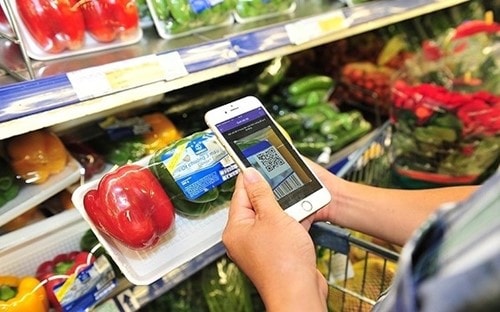
The ability to connect and transparentize data.
The core of the new system is its ability to flexibly connect and share data. The system not only serves the Ministry of Industry and Trade internally but also directly links with the data warehouse of the Ministry of Agriculture and Rural Development for agricultural, forestry, and aquatic products.
Furthermore, multi-sectoral coordination will be strengthened through connection with the information systems of the Ministry of Finance, the Ministry of Public Security, and the Ministry of Health. The goal of this interconnection is to effectively serve the management of taxes, customs, and the fight against smuggling and counterfeit goods. The retrieved data will become an important legal basis for authorities to trace and handle violations of food safety regulations.
Strategic vision to 2035
During the period 2028-2030, after the food system is operating stably, the Ministry of Industry and Trade will gradually expand the scope of traceability to other key industrial product groups. The expected list includes: tobacco, textiles, leather and footwear, paper, automobile and motorcycle parts, and supporting industrial components. This will help form a shared data platform to serve macroeconomic policy planning.
Looking ahead to the 2030-2035 period, the technical infrastructure will be completed to create a full traceability chain throughout the product lifecycle. The system will be synchronously connected to the National Product Traceability Portal, ensuring absolute transparency for all products circulating in the market.
Leveraging Vietnamese products to take root in the domestic market.
Mr. Bui Nguyen Anh Tuan, Deputy Director of the Department of Domestic Market Management and Development, affirmed that traceability is no longer an option but a mandatory requirement for businesses to develop sustainably. Transparent information helps agencies better manage risks and thoroughly address problems at their root.
Furthermore, this system is expected to increase consumer confidence in domestic goods. Currently, many Vietnamese products have conquered demanding international markets, so establishing a standardized traceability system will help domestic consumers feel secure in choosing domestic products instead of imported goods. This is a practical solution to realize the goal of "Vietnamese people using Vietnamese goods" in the digital age.


