
The Ministry of Education explains the integration of History as a subject.
History deserves to be considered an important subject, and its integration is based on legal and scientific grounds…
In recent days, public opinion has been particularly concerned about the Ministry of Education and Training's announcement of the draft "Overall General Education Program," which mentions integrating History content into a new subject called "Citizenship and the Fatherland." Many opinions express concern that the status of History as a subject may be diminished in the general education system.
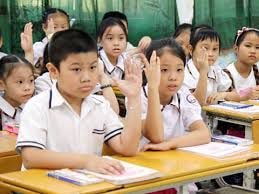 |
| Elementary school students are often interested in history stories. |
Regarding this issue, our reporter interviewed Associate Professor Dr. Do Ngoc Thong - Deputy Head of the Drafting Committee for the new general education curriculum of the Ministry of Education and Training.
History remains in its rightful place.
PV:The draft "Overall General Education Program" mentions integrating History content into a new subject called "Citizenship and the Fatherland," leading many to believe that the status of History might be diminished. Could you elaborate on this integration?
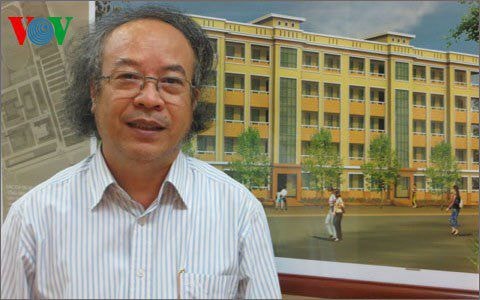 |
| Mr. Do Ngoc Thong |
Assoc. Prof. Dr. Do Ngoc Thong:There is currently a misunderstanding between public opinion and the intentions of the drafting committee for the new general education curriculum. This misunderstanding may stem from the unclear presentation and writing style of the drafting committee.
The drafting committee would like to affirm that the new general education program values all subjects in schools, especially History. The importance of History in the Draft "Overall General Education Program" is clearly demonstrated, firstly by respecting the content of this subject and making it compulsory for all students from primary school, through lower secondary school to upper secondary school.
The draft "Overall General Education Program" has been published, and at the high school level, the subject "Citizenship and the Fatherland" is mentioned. This subject is based on three main content areas: Civic Education, History, and National Defense and Security. All high school students are required to study it, with a duration of 3 lessons per week. This means that the History content is mandatory for students (1 lesson/week). In total, students will study 35 lessons per year. Over three years, students will study 105 lessons.
Furthermore, due to the requirement for differentiation in academic ability at the high school level, the curriculum requires students specializing in natural sciences, technology, engineering, etc., to study social sciences, primarily History and Geography. Each subject accounts for approximately 1.5 lessons per week. Students who tend to pursue social sciences, including History, must study a more in-depth, expanded, and demanding History course with a duration of 3 lessons per week.
Therefore, we can estimate that an average student has to study about 2.5 history lessons per week. Students majoring in Social Sciences, including History, have to study 4 lessons per week (including 1 compulsory lesson in the Civics and Patriotism subject and 3 lessons in History).
In the current general education program, students only study History for 1.5 lessons per week. Clearly, the number of History lessons in the new general education program is more than in the current program.
The reform of the History curriculum also stems from the need to overcome the current situation where students are "indifferent" to the subject. Therefore, a comprehensive reform is needed: the curriculum, textbooks, and especially the teaching methods and assessment of learning outcomes.
Furthermore, the drafting committee argues that the development of a general competency or quality is the result of the combined efforts of many subjects, not just one. From this perspective, History education cannot be solely entrusted to this subject, even though History plays a core role.
Basis for integrating History into the curriculum.
PV:On what basis did the drafting committee integrate the content of History with Ethics-Citizenship and National Defense-Security into a single subject called "Citizenship with the Fatherland," sir?
Mr. Do Ngoc Thong:Resolution 29/TW8 on fundamental and comprehensive educational reform of the Party, as well as Resolution 88/2014/QH13 of the National Assembly on reforming the curriculum and textbooks for general education, both require streamlining to avoid overlapping and duplication of knowledge between fields and subjects; integration at lower levels and gradual differentiation at the high school level. Thus, integration and differentiation should be implemented across all subjects, not just the three subjects mentioned above. It is true that, according to the old concept, these three subjects have different objectives and content.
However, the editorial board studied the content of the Law on National Defense and Security, as well as the content needed for civic education and history education, and found that many contents are similar and overlap. These three subjects share a common goal: to equip students with a minimum, fundamental understanding of the duties, responsibilities, and rights of citizens; they all require knowledge of the glorious historical traditions of the nation, the traditions of the people's army and armed forces; and they all aim to cultivate patriotism... Therefore, these common contents can be integrated into the subject of "Citizenship and the Fatherland."
Integrating content from three subjects into a single course aims to illuminate and clarify each other's impact, avoiding duplication; it helps teachers and students apply a comprehensive range of knowledge from different fields and subjects to understand and explain a problem. Therefore, the content selection for each subject cannot be overly comprehensive, preventing the course from becoming a miniature university-level science program that crams knowledge and overloads students.
However, since the three subjects—History, Ethics-Civic Studies, and National Defense-Security—also have independent content, teachers should continue to teach each area separately; while common content should be integrated to achieve the above objective.
Change the way history is taught.
PV:Sir, in line with the draft of the overall general education curriculum, how should schools change their teaching methods to make students enjoy learning History?
Mr. Do Ngoc Thong:Regarding teaching methods for history, there is a need for more in-depth and detailed discussions among pedagogical experts in the field of History. From the perspective of someone specializing in Social Sciences and Humanities, I believe that history education should be conducted through multiple forms and approaches; it must be considered in relation to other subjects, leveraging the combined strength of all disciplines.
To enhance understanding, combine knowledge and skills from various subjects. The content and requirements of History education are not solely the responsibility of History alone; subjects such as Literature, Music, Fine Arts, Life Skills Education, and Civic Education also share the burden.
In Literature class, when teaching "Bình Ngô Đại Cáo" or "Declaration of Independence," teachers not only teach exemplary argumentative essays but also treat these texts as invaluable historical documents. Through them, students understand and appreciate the sentiments and great stature of national heroes such as Nguyễn Trãi, Lê Lợi, and President Hồ Chí Minh, as well as the context of these extremely important and memorable historical periods. Similarly, all songs included in the Music curriculum are linked to a historical period, contributing to bringing historical events and figures to life, and contributing to historical education.
Particularly through creative experiential activities implemented at all three levels, with diverse and rich forms, these activities provide opportunities to educate about history through practical activities such as: visiting historical sites, organizing the collection and presentation of historical documents, people, and artifacts; visiting historical museums, cemeteries, helping and visiting Vietnamese heroic mothers, families of wounded soldiers and martyrs, organizing excursions to the roots, revolutionary war zones, traditional craft villages, and organizing history quizzes…
These practical forms of education, if well organized, can be far more effective and efficient than dry, rigid history lessons within the four walls of a classroom.
PVThank you, sir!
According to VOV


