
Vehicle inspection stickers affixed to car windows will be removed from 2027.
From January 1, 2027, the vehicle inspection sticker affixed to the windshield will be officially abolished, replaced by a completely electronic data-based management system for vehicle inspection validity periods.
According to a representative of the Vietnam Register, from March 2026, the inspection sector has implemented the issuance of electronic Certificates of Technical Safety and Environmental Protection Inspection instead of paper copies. This is further specified in Decree 89/2026 on the conditions for conducting inspection services, recently issued by the Government.
According to the Vehicle Registration Department, when a vehicle's inspection certificate is about to expire, the owner will be notified directly via phone so they can proactively bring their vehicle in for inspection. Law enforcement officers conducting roadside checks will no longer rely on stickers as before, but will instead look up information through a connected data system, combined with AI cameras, to determine the vehicle's inspection status.
The vehicle registration authority will also share data with relevant agencies to assist in the management and monitoring of vehicles.
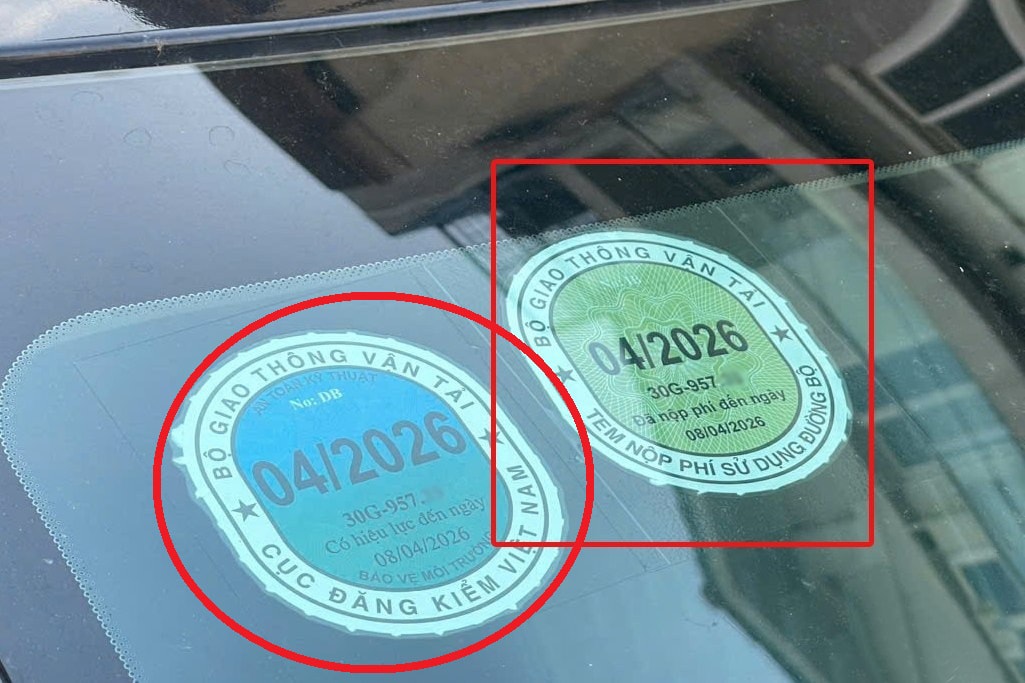
The removal of the sticker is considered to reduce printing costs for vehicle inspection centers, while also limiting the peeling, damage, or counterfeiting of the stickers. Inspections will also be more efficient by shifting to digital data, instead of relying on stickers on the vehicle's windshield.
Standardizing the classification of new technology vehicles.
Along with the digitalization of vehicle inspection management, the Ministry of Construction is seeking feedback on a draft Circular amending and supplementing some regulations on road vehicle inspection.
One of the notable points is the proposal to standardize the definition and classification criteria for new technology vehicle types such as hybrids, electric vehicles, and self-driving cars.
According to the drafting agency, the rapid development of vehicle types such as mild hybrid electric vehicles (MHEVs), full hybrid vehicles (FHEVs), extended-range electric vehicles (EREVs), and autonomous vehicles necessitates the completion of a comprehensive legal framework.
Clarifying the definition will help standardize management and transparency in vehicle registration, while also providing a basis for tax and customs authorities to accurately apply commodity codes, reduce revenue losses, and encourage businesses to introduce green technologies into Vietnam.
The draft provides specific definitions for each type of vehicle. Fuel cell electric vehicles (FCEVs) are defined as electric vehicles that use fuel cells as their sole energy source. Hybrid vehicles are clearly categorized: MHEVs only support internal combustion engines; FHEVs can run on electricity under certain conditions but cannot be charged externally; and PHEVs are capable of charging from external sources.
Hybrid configurations are also clarified, including parallel, series, and mixed, depending on the combination of internal combustion engines and electric motors. Extended-range electric vehicles (EREVs) are a development from purely electric vehicles, capable of external charging and having an additional generator, with a minimum electric driving range of 250 km.
For purely electric vehicles (BEVs), the draft regulations define them as vehicles that use only an electric powertrain and do not have a fuel-to-energy converter.
Proposal to abolish the "green vehicle" inspection sticker.
Another noteworthy point is the proposal to abolish the identification sticker for clean energy vehicles (the green inspection sticker).
According to the Vietnam Register, this regulation is no longer consistent with Law No. 118/2025. Its abolition will contribute to reducing administrative procedures, costs, and time for businesses and citizens. The draft also adds the concepts of conventional vehicles and intelligent vehicles. Conventional vehicles are directly controlled by a driver and may support low-level automation; while intelligent vehicles are capable of operating without a driver, corresponding to higher levels of automation.
Standardizing concepts and streamlining procedures are expected to create a clearer legal framework for the green and smart vehicle market, thereby promoting the transition to sustainable transportation in Vietnam.


