
A bomb hidden in a Revolutionary Guard guesthouse killed the Hamas leader.
It wasn't a missile strike, but an explosive device hidden in the complex where the Hamas leader lived in Tehran that killed him.
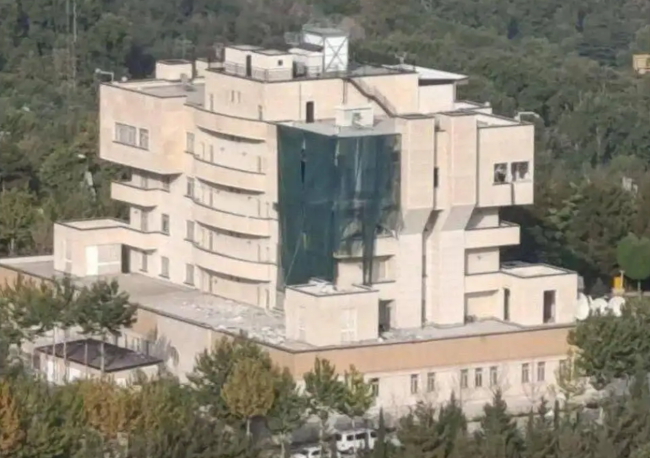
According to an investigation by the New York Times, Ismail Haniyeh, a top leader of Hamas, was assassinated on July 31 by an explosive device secretly smuggled into the guesthouse in Tehran where he was staying.
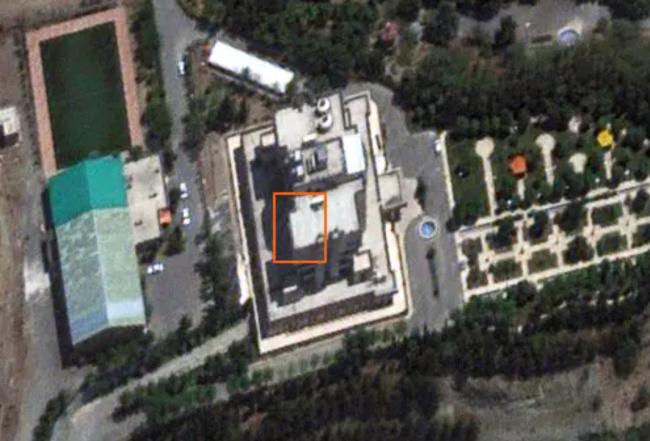
According to five Middle Eastern officials interviewed by the New York Times, the bomb was hidden about two months ago in a heavily guarded guesthouse. The guesthouse is operated and protected by the Islamic Revolutionary Guard Corps and is part of a larger complex, known as Nestat, located in an upscale neighborhood north of Tehran.
Mr. Haniyeh was in the Iranian capital that day to attend the presidential inauguration. Officials said the bomb was detonated remotely while Mr. Haniyeh was in his room at the guesthouse. The attack also killed a bodyguard.
The explosion shook the building, shattering several windows and causing part of the exterior wall to collapse, according to two Iranian officials, members of the Revolutionary Guard, who documented the incident. The extent of the damage is also evident in a photograph of the building shared with the New York Times.
According to Middle Eastern officials, Haniyeh, who heads Hamas's political office in Qatar, has stayed at this guesthouse several times when visiting Tehran.
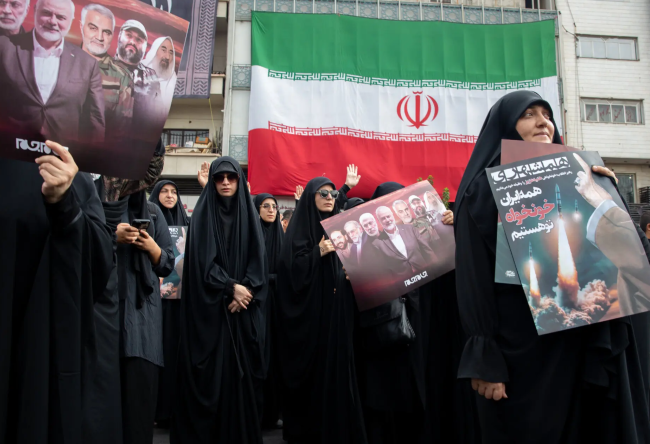
Iranian and Hamas officials declared on July 31 that Israel was responsible for the assassination of Haniyeh. The incident threatens to spark another wave of violence in the Middle East and disrupt ongoing talks aimed at ending the war in Gaza. Haniyeh was Hamas's leading negotiator in ceasefire talks.
Israel has not publicly admitted responsibility for Haniyeh's death, but Israeli intelligence officials informed the U.S. and other Western governments of the details of the operation shortly afterward, according to five Middle Eastern officials who spoke to the New York Times. However, Secretary of State Antony J. Blinken said on July 31 that Washington did not receive prior information about the assassination plot.
Hours after the assassination in Tehran, speculation immediately focused on the possibility that Israel had killed Haniyeh with a missile attack, possibly fired from a drone or aircraft, similar to how Israel launched missiles at the military base in Isfahan in April.
That missile hypothesis raised questions about how Israel could have evaded Iran's air defenses once again to carry out such a blatant airstrike on the capital Tehran.
But it turned out the assassins were able to exploit a different kind of vulnerability in Iran's defenses: a security flaw in the supposedly heavily guarded compound allowed them to plant a bomb weeks before it was detonated at its target.
Three Iranian officials, speaking on condition of anonymity, said such an act represents a catastrophic intelligence and security failure for Iran and a major embarrassment for the Revolutionary Guard, which uses the complex for secret meetings and accommodation for important guests like Haniyeh.
Currently, it remains unclear how the bomb was hidden in the guesthouse. Middle Eastern officials said planning the assassination took months and required close surveillance of the property.
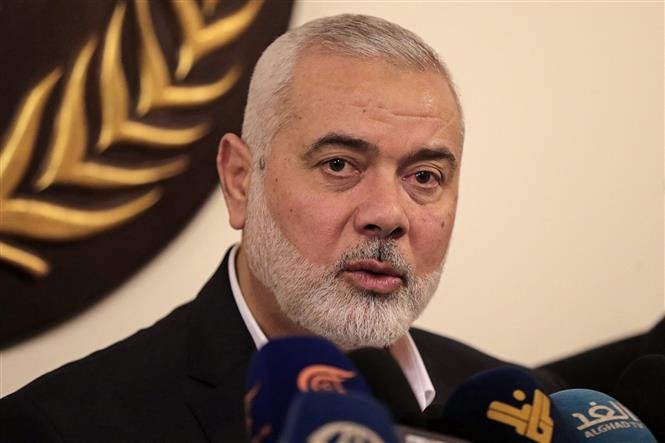
Israel reportedly decided to carry out the assassination outside Qatar, where Haniyeh and other senior members of Hamas's political leadership lived. The Qatari government is mediating negotiations between Israel and Hamas regarding a ceasefire in Gaza.
The explosion on the morning of July 31 shattered windows and caused part of the wall of the building to collapse – based on photos and information from Iranian officials.
According to Middle Eastern officials who spoke to the New York Times, the device exploded at approximately 2 a.m. local time. Officials said building staff panicked and searched for the source of the loud noise, leading them to the room where Haniyeh was staying with a bodyguard.
The building's medical team arrived quickly after the explosion. The investigating team declared that Mr. Haniyeh died instantly. They attempted to resuscitate the bodyguard, but he also died.
Two Iranian officials said that the leader of the Palestinian Islamic Jihad movement, Ziyad al-Nakhalah, was in the next room. Nakhalah's room was not severely damaged, suggesting the bomb was precisely planned to target Haniyeh.
Khalil al-Hayya, the deputy commander of Hamas in the Gaza Strip, who was also in Tehran, also went to the scene and saw the body of the leader.
Among those immediately notified was General Ismail Ghaani, commander-in-chief of the Quds Force, the foreign branch of Iran's Islamic Revolutionary Guard Corps, which works closely with Iran's regional allies, including Hamas and Hezbollah. Officials said Ghaani informed Iran's Supreme Leader, Ayatollah Ali Khamenei, at midnight.
Four hours after the explosion, the Revolutionary Guard issued a statement saying Haniyeh had been killed. According to three Iranian officials, by 7 a.m., Supreme Leader Khamenei had summoned members of Iran's Supreme National Security Council to his residence for an emergency meeting, where he ordered an attack on Israel in retaliation.
The capital Tehran was already on heightened security for the inauguration of Iran's new president, Masoud Pezeshkian, which was hosting high-ranking government officials, military commanders, and dignitaries from 86 countries who gathered at the Parliament building for the ceremony.
Following the announcement of the Hamas leader's death, rumors and debates arose in Iran regarding the manner of the assassination. Initially, Tasnim News Agency, the media outlet of the Revolutionary Guard, reported that witnesses said a missile-like object struck Haniyeh's window and exploded.
But two Iranian officials, members of the Revolutionary Guard, briefed on the attack, confirmed that the explosion occurred inside Haniyeh's room and said that initial investigations indicated explosives had been placed there beforehand.
They described the precision and sophistication of the attack as similar to the tactics employed by the AI-powered, remotely controlled robotic weapons that Israel used to assassinate Iran's top nuclear scientist, Mohsen Fakhrizadeh, in 2020.
Israel's assassination operations outside the country are primarily carried out by Mossad, its foreign intelligence agency. Mossad Director David Barnea stated in January of this year that his agency has a "duty" to hunt down the leaders of Hamas, the group behind the October 7, 2023 massacre in Israel.
"It will take time, just like after the Munich massacre," Barnea said, "but our hands will catch them wherever they are"—referring to the terrorists who murdered Israeli athletes at the 1972 Olympics.


