
Vietnamese football and the lesson about impatience.
(Baonghean.vn) - The precious silver medal won by the Vietnam U23 team in Changzhou in 2018 truly ushered Vietnamese football into a new phase of development, leading to a series of resounding victories for the Vietnam national team. However, after that, a number of key players suffered injuries.
The Vietnamese national team won the 2018 AFF Cup, reached the quarterfinals of the 2019 Asian Cup, and advanced to the second round of the 2022 World Cup qualifiers in the Asian region. The U23 Vietnamese team won the gold medal at the 2019 SEA Games…
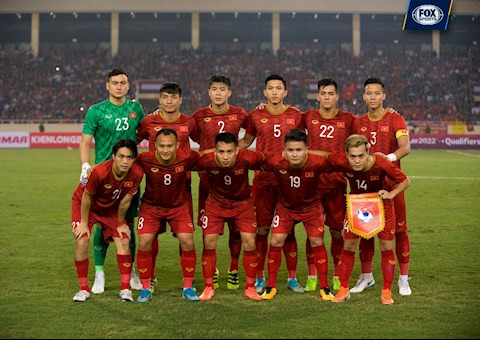 |
| The Vietnamese national team and a memorable milestone in Changzhou. (Photo: Bongda) |
But after the boundless joy from the snow-covered Changzhou, even though it happened sporadically...Vietnam National TeamKey players like Dinh Trong, Van Duc, Duy Manh, and Xuan Manh were absent due to injuries one after another, and subsequently, all of these players struggled with prolonged injuries that still have lingering effects to this day.
Similarly, after the plateSEA Games gold medalWhile playing abroad, young star Van Hau suffered an injury, and even today, people are talking about the memorable "lesson" learned from the impatience of the coaching staff, medical experts, and the player himself, which caused things to spiral out of control and sometimes had extremely detrimental effects on the player's career and the national teams.
At SLNA, the successive long-term injuries to Van Duc, Xuan Manh, and Van Lam, coupled with the coaching staff's anxiety and the depleted squad during difficult matches, led to their hasty return to the field. This seems to have done more harm than good. The fact that Van Duc and Xuan Manh, who played exceptionally well in Changzhou, were immediately brought back to the field upon their return to Vinh has had unforeseen consequences.
Van Duc suffered a long-term injury, missing a significant period from the national team. Upon his return, despite his best efforts, it was difficult to recognize the dynamic left-wing midfielder he once was. Xuan Manh, after his outstanding performance with SLNA (in Van Duc's absence), also suffered injuries and is now steadily declining, a worrying sign of his lack of national team selection. Van Lam's long-standing injury problems and loss of his place in the national team likely stem from his impatience to play. Of course, SLNA's long-standing shortage of players is a reality that can be somewhat understood.
During the Vietnamese national team's training camp in preparation for the third round of the 2022 World Cup qualifiers, the issue of injuries and haste was discussed, with all attention naturally focused on the responsibility of head coach Park Hang-seo. In many cases, injured players were the reason the coach didn't include them in the squad, but there were also many cases where players would be called up at all costs, regardless of the severity of their injuries, such as Trong Hoang, Van Hau, and Tuan Anh… They were simply called up, trained according to individual plans, allowed to recover over time, and underwent physical examinations before departure, sometimes even before fully recovering, as in the recent case of Van Hau.
In this story, of course, Coach Park Hang-seo has his own reasons: he believed in Trong Hoang's miraculous recovery not just once, and he was always right, which is admirable for both coach and player. But in the case of Tuan Anh and Van Hau, it seems his correctness doesn't exceed 50% of the requirements.
Tuan Anh has certainly played and will continue to play very well when things are going smoothly. However, the reality over the years has shown that Tuan Anh's "fragile legs" have always been a source of concern for many people. Although it's very unfortunate for this talented midfielder, it's a harsh truth that many players in football have to accept, even having to leave the sport altogether.
As for Van Hau, if coach Park Hang-seo continues with his old tactics, insisting on calling him up to the national team while he is injured and not fully recovered, and forcing him to start matches, then who knows what will happen to this young talent?
The lesson learned from Dinh Trong remains very relevant today. It's remarkable that a central defender who played so calmly and intelligently, after a long-term injury and then rushing back onto the field, is now just a shadow of his former self. Where does the lesson come from, who is responsible, and what lessons should be learned? Surely, this isn't just for one person alone.
Here, the saying "the end justifies the means" might apply, meaning the team needs maximum strength, and the sacrifice of one player, if necessary, is generally acceptable for the team's success in this once-in-a-lifetime opportunity. However, nothing in life is absolute or perfect, so replacements and additions are possible. This is even more evident in football; the question is whether the replacements and additions are equally good. If the difference between the starting lineup and the reserves is too great, then no goal can be achieved.
In short, impatience never leads to a positive outcome for either the individual or the team. Any medal, regardless of color, is precious. Making the front of the medal truly shine and increasing the chance to win the next one is an extremely difficult task, requiring the best and most effective methods to minimize the rough edges on the back of this highly sought-after and prestigious medal.


