
Brussels reacts strongly to the risk of US interference in European politics.
Experts and politicians in Brussels are expressing deep concern over the "shift in course" in the new US security strategy. While affirming the importance of the transatlantic partnership, EU leaders stressed the bloc's sovereignty in the face of accusations and intentions of interference from Washington.
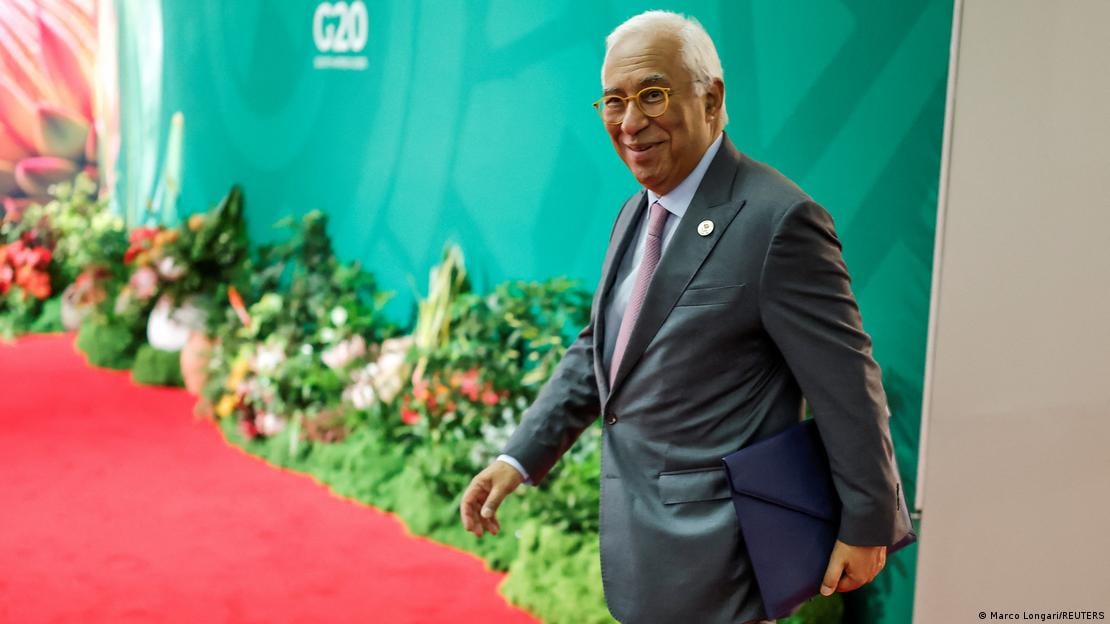
"What we cannot accept is the threat of interference in European politics," European Council President Antonio Costa declared on December 8 during a discussion at the Jacques Delors Institute in Brussels.
Costa's remarks, which emphasized European sovereignty, were made in response to the new US national security strategy – a document that, according to DW, is being seen as an insult to the "old continent".
The U.S. government regularly publishes a roadmap for future security policy. This document is seen as an indicator of what Europe can expect from Washington. However, the latest version contains scathing criticisms of European institutions.
Accusations that "democracy is in danger"
In the preface to the national security strategy, U.S. President Donald Trump immediately set the main tone: "This document is a roadmap to ensure that America remains the greatest and most successful nation in human history."
The US administration has clearly stated its priority in pursuing national interests. While Europe remains a strategic partner, it has become the target of widespread criticism. Economic recession, suppressed political freedoms, and misguided migration policies... From Washington's perspective, Europe is heading in the wrong direction.
European institutions are accused of restricting freedom of speech, suppressing opposition, and eroding national identity. "If current trends continue, the continent will be unrecognizable within 20 years or less," the document states, adding: "The era of mass migration must end."

A policy of "deals," not diplomacy.
Judy Dempsey from Carnegie Europe views this document as a continuation of the MAGA (Make America Great Again) policy. "Now we know where the Trump administration stands," she told DW.
According to Dempsey, this "is not foreign policy, but transactional policy. That is: Everything has a price. This is the core of MAGA." This strategy makes it clear that, if it wants good relations, the U.S. will defend its economic and trade policies to the end.
Furthermore, the U.S. government intends to take matters into its own hands and support "correcting" Europe's current trajectory. The document states: "Our goal is to help Europe correct its current orbit," by fostering "resistance to Europe's current orbit within European nations." The U.S. administration also expressed a positive view on the influence of "patriotic parties in Europe."
According to a recent report by Germany's national radio station Deutschlandfunk, this could signal an increasing alignment between Germany's far-right AfD party and leading Republican politicians in the United States.
Concrete effects have begun to emerge following a directive from US Secretary of State Marco Rubio: He has instructed US diplomats in Europe to lobby their respective governments to restrict immigration as much as possible.
Differences in perspective on Russia and Ukraine
To stabilize the European economy, resolving the Russia-Ukraine conflict is in the U.S. interest. However, the Trump administration finds itself "at odds with European politicians who have unrealistic expectations about the war," according to the strategy document.
Ian Lesser, managing director of the German Marshall Fund's Brussels office, explained that the two sides have completely different perspectives.
"While the US administration views this simply as an unpleasant issue that needs fixing and is set aside to move on to other problems, there is clearly an interest in seeing a ceasefire and a compromise solution in Europe," Lesser observed.
"In Europe... this is understood as symbolic of a much larger problem: How to live with Russia and a more aggressive Russia in the future."
Kaja Kallas: "Part of the criticism is justified."
While many EU observers are concerned about signals from the US, the bloc's top politicians remain committed to the transatlantic partnership. EU High Representative for Foreign Policy, Kaja Kallas, has worked to steer the narrative back to a friendly, diplomatic tone.
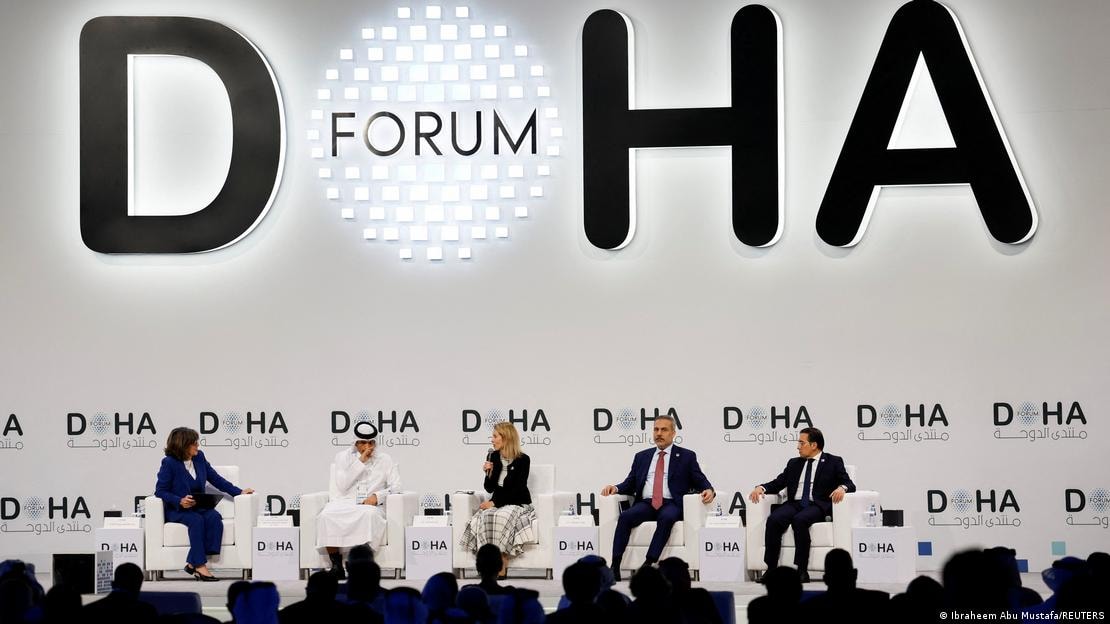
"Of course there's a lot of criticism, but I think some of it is valid," she said of the strategic document at the Doha 2025 Forum last weekend. "Europe has underestimated its own strength, especially in relation to Russia, and we should be more confident. The U.S. remains our greatest ally. And it's in America's interest that we work together."
Anitta Hipper, spokesperson for the European Commission (EC), also emphasized at a press conference on December 8th that: "When it comes to decisions concerning the European Union, they are made by the European Union, for the European Union, including decisions concerning our regulatory autonomy and the protection of our freedom of expression."
In conclusion, European Council President Antonio Costa affirmed: "The United States cannot decide for European citizens who is right and who is wrong." He stressed that, in order to protect itself, not only from rivals but also from allies who are challenging it, Europe needs to strengthen itself.


