
How to properly administer oral rehydration solution (ORS) to children?
Oral rehydration solution (ORS) is widely used, especially for children. Whenever children experience diarrhea, fever, vomiting, etc., parents often use ORS to replenish fluids and electrolytes.
Oral rehydration solution (ORS) is widely used, especially for children. Whenever children experience diarrhea, fever, vomiting, etc., parents often use ORS to replenish fluids and electrolytes. However, improper use of this medication can lead to serious consequences for children.
How to properly prepare ORS
ORS is a special mixture of dry salts that, when dissolved in clean water, can be drunk to replenish fluids and electrolytes in the body. Oresol packets, commonly sold in pharmacies, are manufactured according to UNICEF's formula, with each packet containing 27.9g of the powder to be mixed with 1 liter of cooled boiled water.
In addition, there are many different commercially available formulas; many people prefer orange-flavored ORS, in packets containing 5.63g to be mixed with 200ml of cool water, or hydroxide tablets... Each packet of ORS, according to World Health Organization (WHO) standards, contains 3.5g NaCl, 1.6g KCl, 2.5g NaHCO3 (in humid tropical climates like Vietnam, NaHCO3 can be damaged by moisture absorption, so it is replaced with 2.9g trisodium citrate) and 20g glucose.
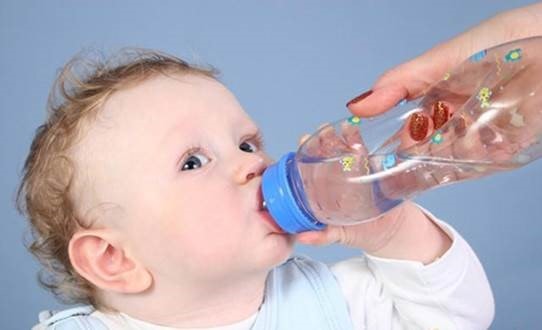 |
| Improper use of this medication can have serious consequences for children. |
Currently, according to WHO guidelines, the new type of ORS packet has low osmotic pressure and the same composition as regular ORS packets, but with altered proportions so that when mixed with water, it has lower concentrations of sugar and salt (each packet contains 2.6g NaCl, 1.5g KCl, and 13.5g glucose).
The use of a new type of ORS has been shown to be effective in shortening the duration of diarrhea and reducing the need for intravenous fluids in diarrheal patients. Studies show that using the new low-density ORS solution reduced the number of children requiring intravenous fluids by 33%, reduced the amount of stool excreted by 20%, and reduced the number of children vomiting by 30%.
Notes on preparing ORS for children:
Use boiled and cooled water to mix according to the instructions on the product packaging. Do not mix with milk, mineral water, broth, fruit juice, or soft drinks... and absolutely do not add sugar.
The entire packet of ORS must be mixed with water. Stir well until the powder is completely dissolved. Do not divide it into smaller portions for multiple uses, because diluting the salt too much will not adequately replenish fluids, and diluting the sugar too much will impair absorption.
If the mixture is too concentrated for children, it's not good because excess salt can cause salt poisoning, damaging cells due to increased blood osmolarity, and excess sugar can cause diarrhea.
Incorrect preparation can worsen diarrhea. Even more dangerous is the risk of ORS poisoning, which can lead to irreversible neurological damage and, in severe cases, death.
The prepared solution should only be consumed on the same day; any leftover solution must be discarded the next day because the prepared solution is a good environment for microorganisms to grow, including pathogenic microorganisms.
When should ORS solution be used for children?
Children who become dehydrated and lose electrolytes due to diarrhea, prolonged vomiting, or high fever should be given ORS solution. The correct dosage should be used to replenish fluids and electrolytes, helping the child regain alertness and normal activity.
Dosage for infants: 50ml per dose, 2-3 times a day; for children aged 2-6 years: 100ml per dose, 2-3 times a day; for children aged 6-12 years: 150ml per dose, 2-3 times a day. Children over 12 years old should drink as needed (drink whenever thirsty).
For young children, give them small sips continuously using a spoon or small cup. If the child vomits, wait about 10 minutes and then continue giving them fluids, but more slowly.
Children, especially those with diarrhea, need to be closely monitored. If the diarrhea does not improve (in terms of frequency and quantity of stool), the child should be taken to the hospital immediately.
According to Zing.vn


