A major shift for household businesses starting in June.
From June 1st, 2025, new regulations on taxes and electronic invoices will officially take effect, creating many requirements and opportunities for transformation for business households, especially those with annual revenue of 1 billion VND or more. This is considered a strategic step in increasing transparency in tax management.
New legal frameworks
With the goal of simplifying accounting and tax procedures for household businesses as much as possible, and aiming to convert household businesses into enterprises, the Ministry of Finance and the Tax Department have issued many important legal documents.
Mr. Nguyen Dinh Duc, Head of the Tax Sub-Department of Area X, stated: On June 1, 2025, the Director of the Tax Department issued Official Dispatch No. 72/CD-CT to guide and direct the subordinate Tax Sub-Departments to implement Circular 31/2025 and Circular 32/2025 of the Ministry of Finance, which came into effect on June 1, 2025.
Specifically: Circular 31/2025 amends and supplements several articles of Circular 23/2021/TT-BTC, guiding the printing, issuance, management, and use of electronic stamps for alcohol and tobacco; Circular 32/2025 guides the implementation of several articles of the Law on Tax Administration; Decree 123/2020/ND-CP and Decree 70/2025/ND-CP on invoices and documents.
To ensure the synchronized and effective implementation of the new regulations, the directive requires tax offices to disseminate the new regulations to tax officials and taxpayers, especially business households with annual revenue of 1 billion VND or more.
Accordingly, the Tax Department and business households are preparing the necessary conditions to review and implement electronic invoices generated from cash registers and manage electronic stamps according to the new regulations. In addition, support will be provided to taxpayers by establishing rapid response teams to address issues and assist business households in the process of installing and using cash registers and implementing electronic invoices.
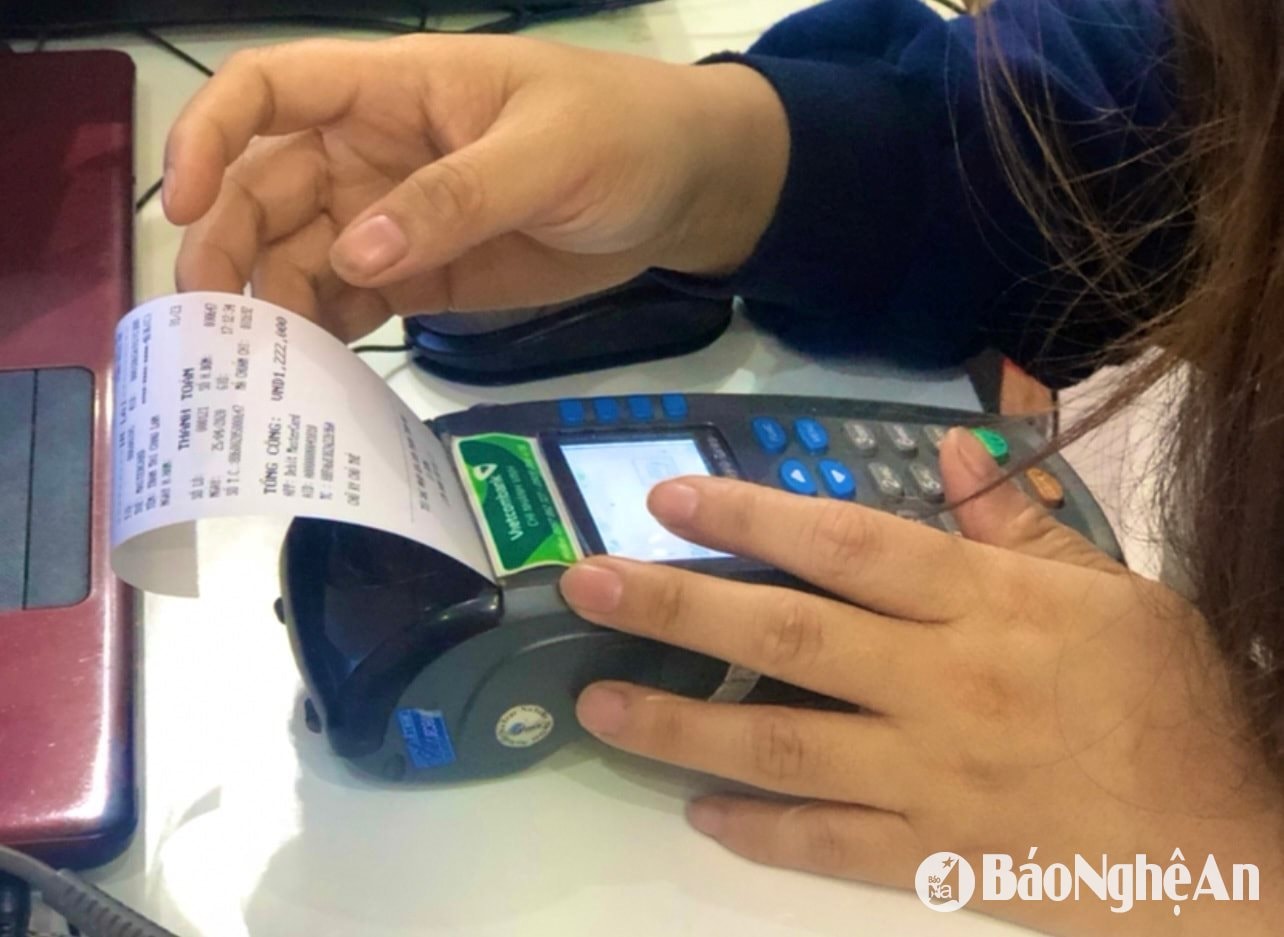
The Tax Department also requested that the Sub-departments strengthen inspection and supervision of the implementation of the new regulations at their subordinate units, ensuring compliance with the law. They are also required to report on the progress of implementation; and to submit periodic reports on the progress of implementation and any difficulties or obstacles encountered during the process so that appropriate measures can be taken promptly.
Official dispatch No. 72/CD-CT emphasizes the importance of timely and effective implementation of new regulations to improve tax management efficiency and ensure fairness and transparency in business operations from June 1, 2025.
In response to the requirements of Official Dispatch No. 72/2025 issued by the Tax Department, along with new regulations in the Law on Tax Administration, business households – especially those with annual revenue of 1 billion VND or more – are facing a series of important legal and technical obligations.

To ensure smooth production and business operations, household businesses first need to review and reassess their actual total revenue for 2024 and the first few months of 2025. If revenue exceeds 1 billion VND/year, the household will no longer be subject to the lump-sum tax method but will be required to switch to declaring taxes directly based on actual revenue and expenses, applying value-added tax (VAT) and personal income tax as prescribed. This is a fundamental change, leading to a series of requirements regarding financial transparency, accounting, and invoice usage.
Specifically, according to the new regulations in Decree 70/2025/ND-CP (amending and supplementing some articles of Decree 123/2020 on invoices and documents), business households with revenue of 1 billion VND/year or more will no longer be allowed to apply the lump-sum tax method but must declare taxes directly. This change means that business households must fully apply the regulations on value-added tax (VAT) and personal income tax (PIT), and are subject to supervision from the Tax authorities.
A restaurant owner in Vinh City was surprised to receive a notification and invitation for a training session from the Tax Department. After listening to the regulations being explained, a telecommunications company came to install a point-of-sale system capable of issuing invoices. The restaurant owner stated: "We were very surprised by the government's regulations. Now we have to get used to entering incoming and outgoing goods into the computer and practicing issuing electronic invoices to meet the tax department's requirements." In Vinh City, a review revealed that 400 businesses with annual revenue of 1 billion VND or more have received specific training from the tax department.
Important note for business owners
One of the major changes is the mandatory use of electronic invoices generated from point-of-sale systems with real-time data transmission to the tax authorities by businesses with revenue exceeding 1 billion VND. This is a significant difference from the past, when businesses could choose between electronic or paper invoices.
The cash registers used must meet the technical standards published by the Tax Department, and be capable of creating, storing, and transmitting electronic invoices securely and transparently. This regulation aims to minimize tax fraud, increase transparency in transactions, and help tax authorities manage the revenue of business households more accurately and promptly.
Cash registers must meet the technical standards published by the Tax Department. While households that registered for electronic invoices before June 1st are not yet required to use cash registers immediately, the transition is inevitable according to the roadmap. Therefore, proactively choosing equipment, learning how to use it, and receiving guidance from the tax authorities are essential steps. The Tax Department has already provided guidance on suitable cash registers for businesses on the websites of the regional tax offices.
.jpeg)
The Tax Department notes that, in order to immediately resume normal business operations, household businesses need to conduct an inventory of accounts payable and inventory, and record all assets and input costs – because from now on, all expenses that are to be considered valid for tax settlement must have complete input invoices.
It's no longer as simple as before: importing goods, selling them, paying, and buying more. Now, when importing goods, business owners must sit in front of a computer to manually enter all incoming and outgoing goods, and become familiar with calculating and clearly displaying VAT on sales invoices for customers. They must also know how to calculate VAT to avoid losses. To meet these requirements, business owners either need to acquire basic accounting skills or choose to use professional accounting services to ensure compliance.
In this context, medium and large-scale household businesses should also consider converting into enterprises. Operating as a company, households not only gain access to more business cooperation opportunities and easier access to bank loans, but can also take advantage of tax incentives, policies supporting digital transformation, and e-commerce. This also significantly contributes to the modernization of the economy and the transparency of the individual household sector – which currently accounts for a large proportion but is still managed in a fragmented manner.