
BYD Flash Charger 1,500 kW: Charges electric vehicles from 10% to 70% in just 5 minutes.
BYD's new 1,500 kW super-fast charging system allows for the equivalent of 960 km of driving range to be charged in a short amount of time, similar to filling a tank of gasoline.
Chinese automaker BYD has just announced a new advancement in infrastructure technology with its Flash Charger, capable of charging some types of electric vehicle batteries from 10% to 70% in just 5 minutes. Notably, the charging process from 10% to a full charge takes only about 9 minutes, allowing the vehicle to achieve a driving range of over 960 km.
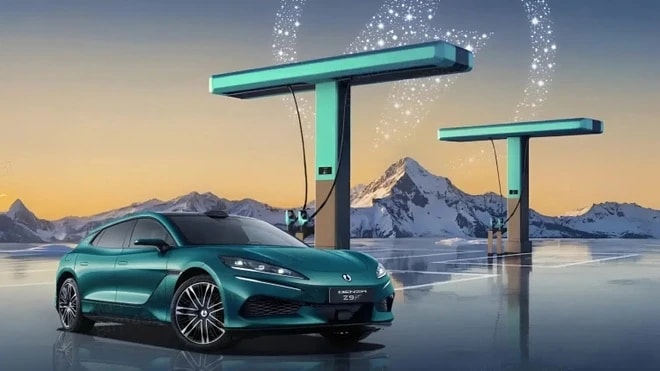
Performance that surpasses global standards.
The key to BYD's charger achieving such impressive speeds is its maximum power output of up to 1,500 kilowatts (kW). For comparison, current "super-fast" charging stations in the US typically only reach 350 kW, taking 15 to 25 minutes to charge to 80% and about 40 minutes to fully charge.
BYD's move aims to remove the biggest barrier for electric vehicle users: concerns about range and waiting times at charging stations. Bringing a charging experience comparable to refueling with gasoline is expected to boost global electric vehicle sales.
| Criteria | Standard fast charging station | BYD Flash Charger |
|---|---|---|
| Maximum power | 350 kW | 1,500 kW |
| Charging time (10% - 70/80%) | 15 - 25 minutes | 5 minutes |
| Corresponding operating range | Depending on the car model | ~960 km |
Integrated technology ecosystem
Currently, the Denza Z9GT, scheduled to debut in Paris next month, is the only model capable of fully utilizing the Flash Charger's power output. This is due to its use of the latest generation Blade battery, which utilizes lithium manganese iron phosphate (LMFP) to increase energy density by 5%.
Furthermore, BYD holds a significant advantage by manufacturing everything from the vehicle and charger to the battery in-house. All the software and wiring systems in the vehicle are specifically designed to handle extremely high currents. Components such as electrodes, electrolytes, and separators are optimized to increase ion transfer speed during the charging cycle.
Infrastructure and grid challenges
Although the technology is ready, mass deployment still faces many practical limitations. According to Gil Tal, director of the Center for Electric Vehicle Research at UC Davis, ultra-fast charging speeds may not significantly change the daily lives of most American users, who primarily charge their vehicles at home and only use public charging stations on long trips.
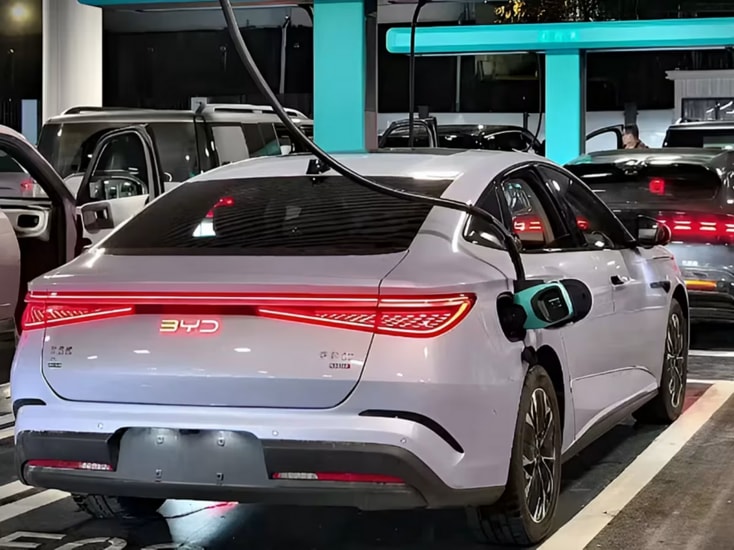
Furthermore, the pressure on the power grid is a significant challenge. Transmitting more than 1 megawatt of electricity requires a completely new and expensive electrical "pipeline" system. To address this issue, BYD plans to integrate new chargers into existing charging stations and utilize battery storage at the charging points to supplement energy, avoiding overloading the national power grid.
To date, BYD has built more than 4,000 charging stations in China and aims to install an additional 16,000 by the end of this year, along with 2,000 in the European market.


