
BYD Seal 5 PHEV: Hybrid electric sedan, C-segment, priced at 696 million VND.
209 hp plug-in hybrid C-segment sedan, 0–100 km/h in 7.5 seconds, EV range of 188 km, fuel consumption of 3.2 liters/100 km; 17-inch wheels, MacPherson/torsion beam suspension, priced at 696 million VND.
In the context of the C-segment sedan market in Vietnam gradually losing ground to SUVs/crossovers, BYD has chosen a different approach with the Seal 5 PHEV: plug-in hybrid technology, sufficiently powerful performance, and economical running costs. Priced at 696 million VND, this model places it in the heart of a fierce competition, where the Kia K3, Mazda3, and Honda Civic are already present, but its advantages in electric range and fuel efficiency are clear differentiators.
The technical highlight lies in its plug-in hybrid powertrain, combining a 1.5L gasoline engine with a front-wheel-mounted electric motor, delivering a total output of 209 horsepower. According to BYD Vietnam, the Seal 5 can accelerate from 0–100 km/h in 7.5 seconds, reach a top speed of 180 km/h; run on pure electric power for up to 188 km per charge, and has a combined driving range of 1,714 km, with a fuel consumption of 3.2 liters/100 km.
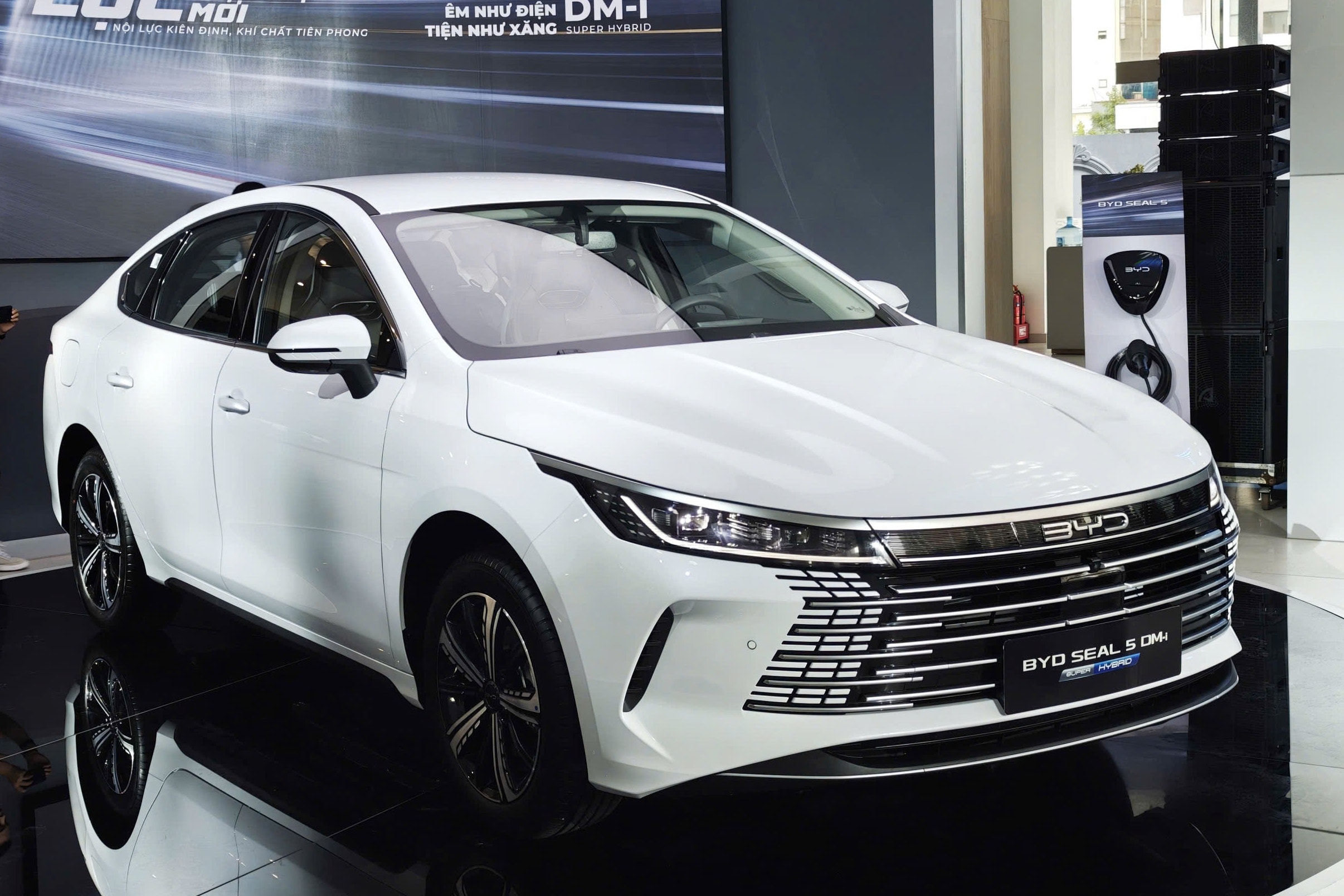
A distinctive design language that emphasizes aerodynamic efficiency.
The Seal 5 measures 4,780 x 1,837 x 1,497 mm (length x width x height), with a wheelbase of 2,718 mm. Weighing 2,030 kg, it's one of the heaviest models in the C-segment sedan category, understandable given the added weight of a pure gasoline-powered vehicle.
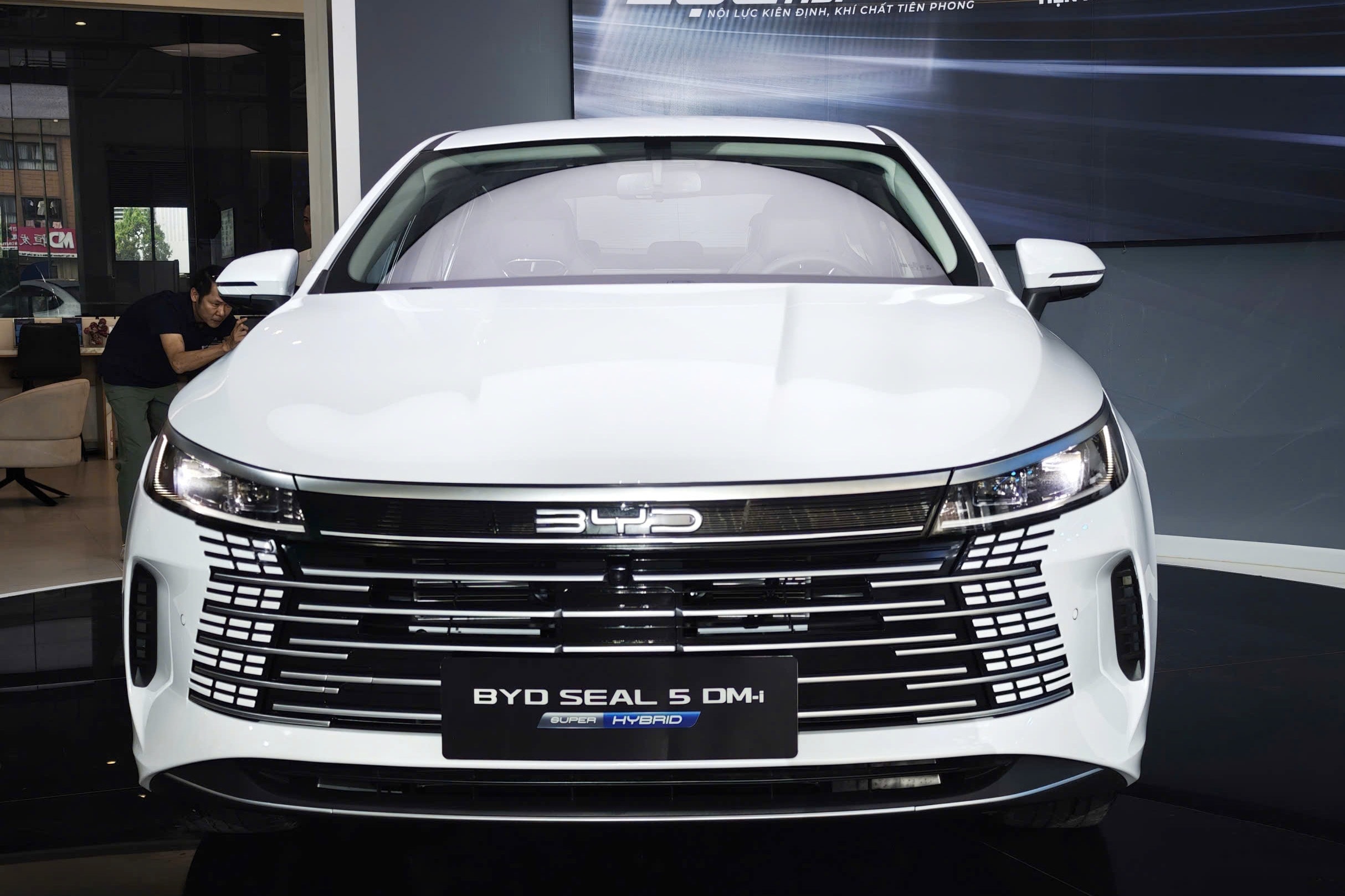
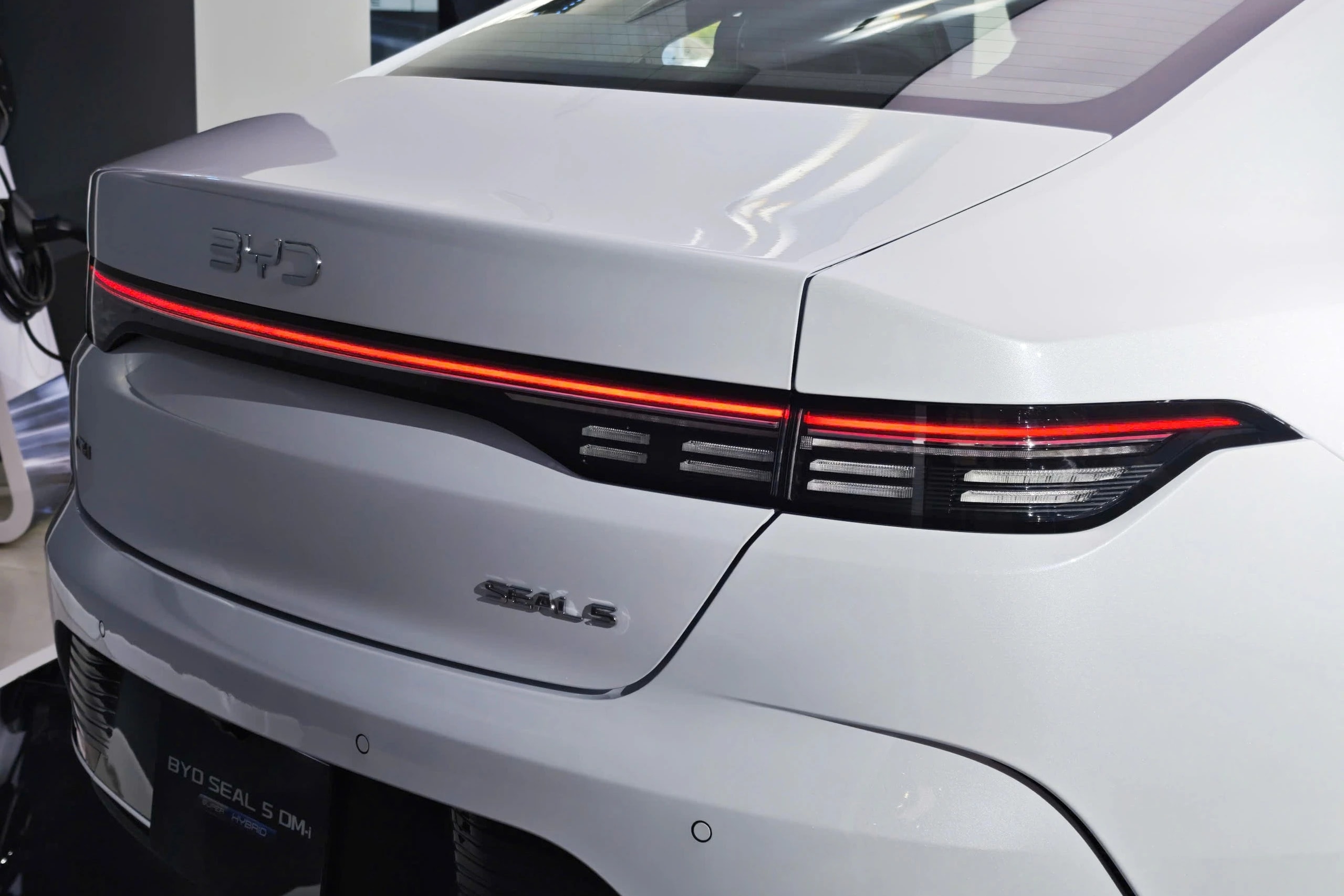
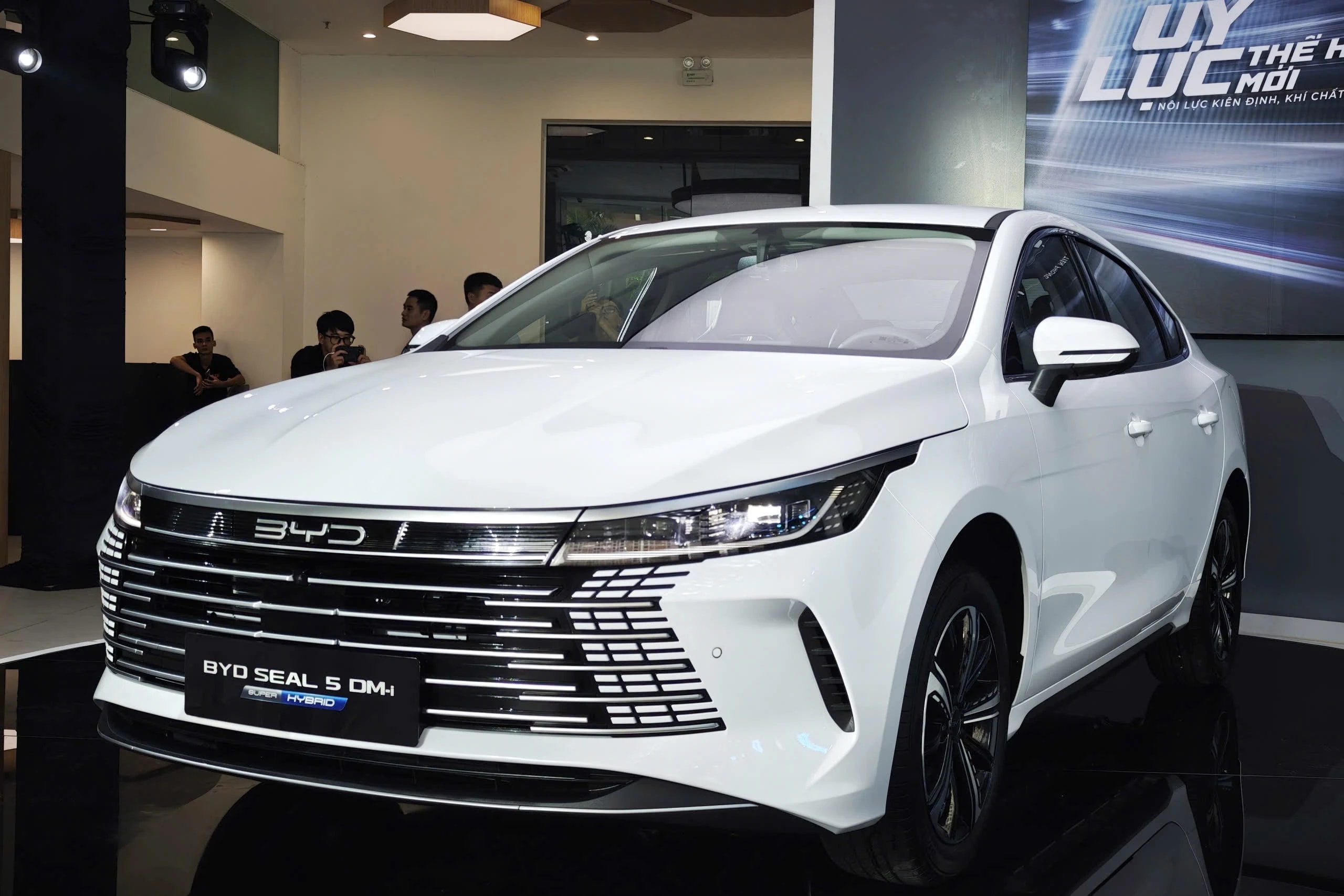
The front end is striking with its large grille, chrome trim accents, and a horizontal LED light strip connecting to the central logo – a familiar identifying detail on BYD models. The large size of the grille makes the front end look more aggressive than its siblings like the Atto 3 or Han. In contrast, the rear has a sporty, sleek look with a high-swept ducktail spoiler, coordinated with taillights that match the front lighting design.

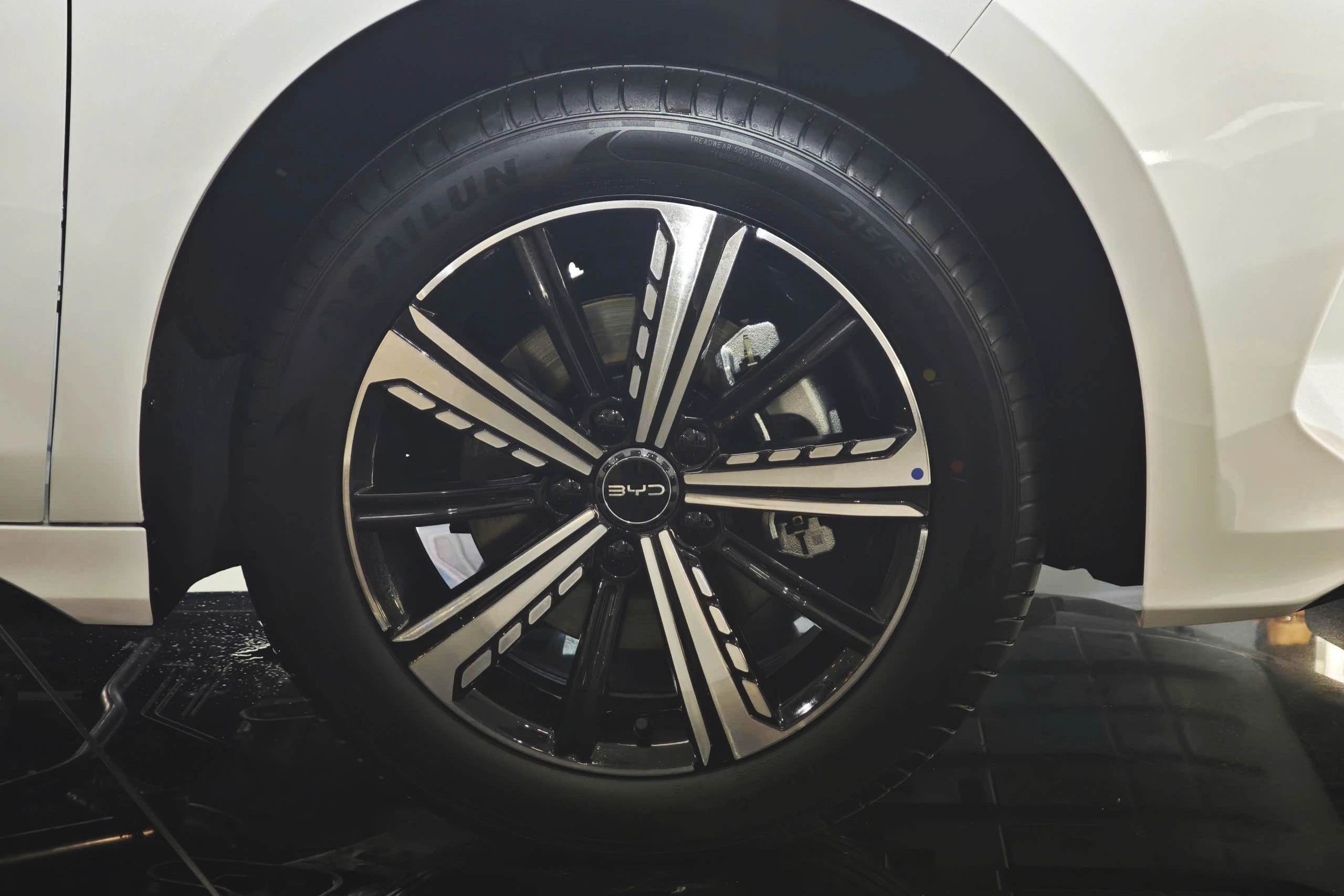
The 17-inch wheels paired with 215/55 tires strike a balance between comfort and everyday grip. Front and rear disc brakes are standard in this segment. In terms of suspension, the car uses a MacPherson strut configuration at the front and a torsion beam at the rear – a popular choice prioritizing durability and running costs, while also optimizing luggage space.
Minimalist cabin design focused on functionality.
Inside, the Seal 5 follows a modern yet practical design philosophy. A three-spoke steering wheel is paired with an 8.8-inch LCD instrument panel displaying speed and core operating information. At the center of the dashboard is a large infotainment screen, serving as the central control panel for various features.
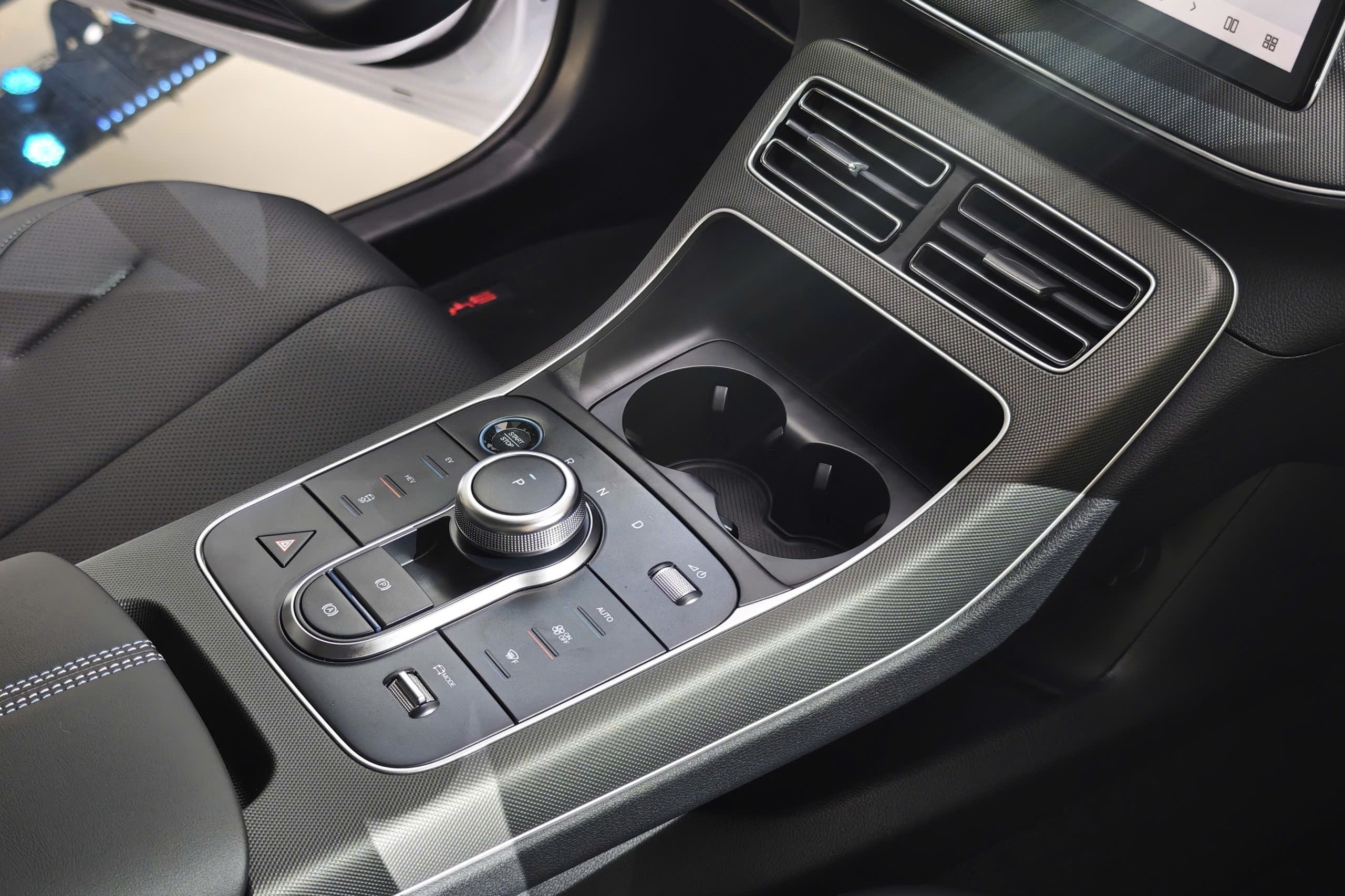
The center console area is less "showy," instead featuring large, neatly arranged physical buttons that are easy to operate while driving. The rotary gear selector frees up space, creating a more open feel for the center console. This approach aims for a consistent experience: reduced distractions, enhanced intuitiveness, and suitability for the average user.

Performance and operation: convincing figures in theory.
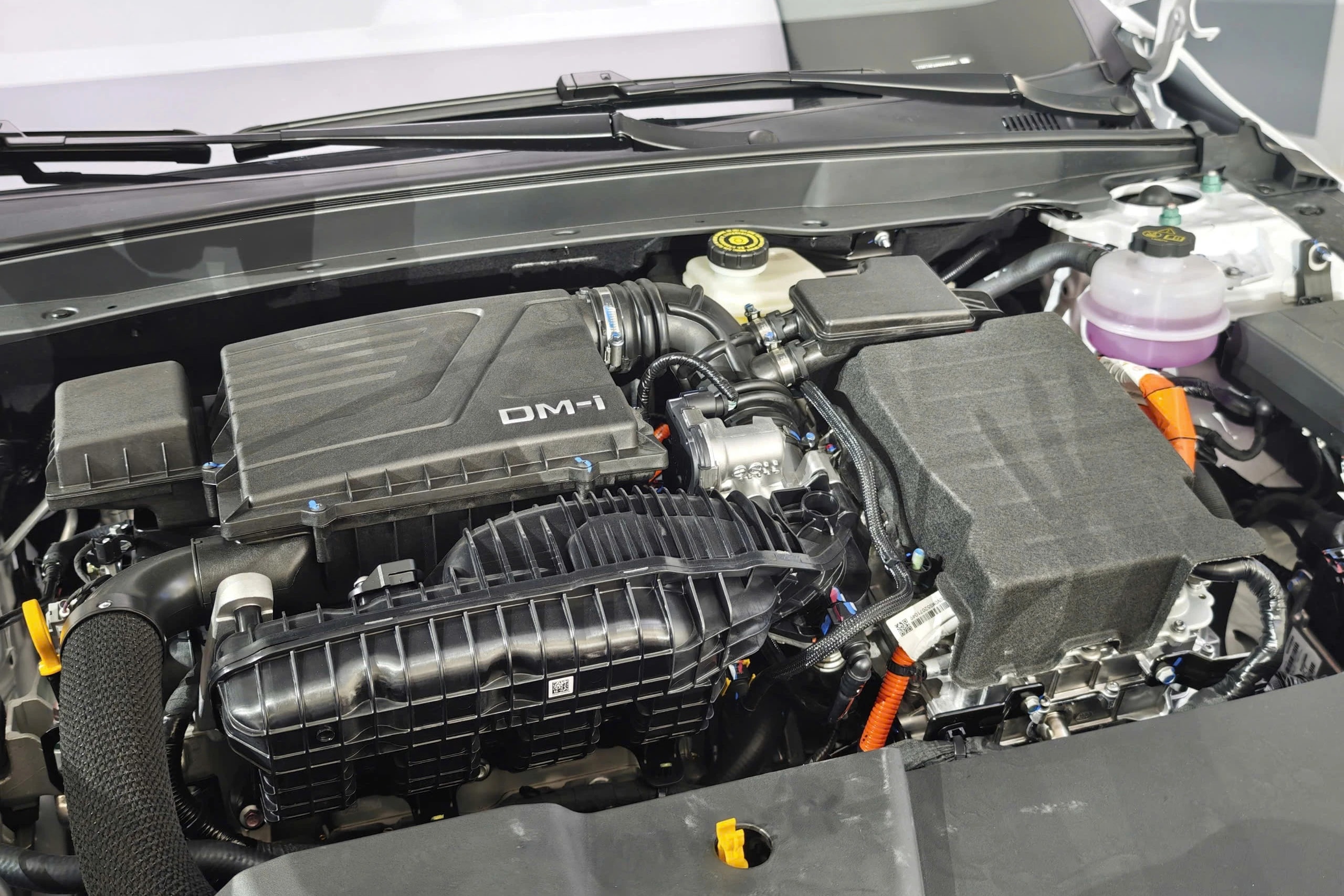
At the heart of the Seal 5 is a plug-in hybrid powertrain consisting of a 1.5L gasoline engine and a front-wheel electric motor, delivering a total output of 209 horsepower. According to BYD Vietnam, this power allows the car to accelerate from 0–100 km/h in 7.5 seconds – a remarkable achievement compared to most gasoline-powered C-segment sedans.
True to the PHEV philosophy, the Seal 5 can operate entirely on electric power for up to 188 km on a single charge (test results provided by BYD Vietnam). Combining both power sources, the total range reaches 1,714 km, while the stated fuel consumption is 3.2 liters/100 km. With a gross vehicle weight of 2,030 kg, the key to achieving these figures in real-world driving conditions lies in the optimal distribution of traction and efficient energy recovery during deceleration.
The MacPherson front suspension and torsion beam rear suspension, along with 215/55 R17 tires, are geared towards comfort and durability for both urban and highway driving. Theoretically, the increased weight can improve body stability at high speeds; conversely, it requires the brakes and tires to work more efficiently during emergency braking or high-speed cornering. Users expect smooth gear changes/power transfer between the two power sources – a common concern in PHEVs – but the actual performance depends on driving conditions and software adjustments.
Safety and driver assistance technology
BYD has not yet released a full list of driver assistance features for the Seal 5 in the Vietnamese market. Common technologies in this segment, such as adaptive cruise control (ACC), Stop & Go, lane keeping assist, and collision warning, if included, will require further details from the manufacturer. Safety ratings from organizations such as ASEAN NCAP/Euro NCAP are not yet available, so consumers should monitor further announcements before making a decision.
Main technical specifications table
| Category | Parameter |
|---|---|
| Dimensions (LxWxH) | 4,780 x 1,837 x 1,497 mm |
| Wheelbase | 2,718 mm |
| Full load weight | 2,030 kg |
| Drive system | Plug-in hybrid, 1.5L gasoline engine + front-wheel drive electric motor |
| Total capacity | 209 horsepower |
| Acceleration from 0–100 km/h | 7.5 seconds |
| Maximum speed | 180 km/h |
| Electric range | 188 km per charge (according to BYD Vietnam test results) |
| Comprehensive scope of operations | 1,714 km |
| Fuel consumption | 3.2 liters/100 km |
| Suspension system | Before the MacPherson beam, after the torsion beam. |
| Brake | Front/Rear Disc |
| Wheels/Tires | 17 inch; 215/55 |
Pricing, positioning, and competitors
Priced at 696 million VND, the BYD Seal 5 sits in the middle of its segment: higher than the Kia K3 (549–689 million VND), directly competing with the Mazda3 (599–739 million VND), and lower than the Honda Civic (789–999 million VND). The Seal 5's core advantage lies in its PHEV system, offering low fuel costs and extended electric driving range, while most competitors maintain traditional gasoline configurations. This could help the Chinese model differentiate itself in a saturated C-segment sedan market.
Nevertheless, consumer habits, the charging ecosystem, and expectations regarding safety technology will be important variables. Seal 5 needs more time to prove its operational value and durability in real-world use in Vietnam.
Conclusion: Differentiation through hybrid external charging technology.
The BYD Seal 5 PHEV boasts compelling specifications: 209 horsepower, 0–100 km/h in 7.5 seconds, an EV range of 188 km per charge, and a fuel consumption of 3.2 liters/100 km. Its striking design features a large grille and sporty rear end; a modern interior prioritizing practicality; and a suspension configuration and 17-inch wheels suitable for everyday driving.
Advantages: Efficient PHEV powertrain, long stated electric range, good acceleration performance for its price range, balanced mechanical features, and competitive pricing. Potential drawbacks: Large gross vehicle weight of 2,030 kg requires optimized handling; rear torsion beam suspension prioritizes simplicity and durability over sophistication; active safety features and independent safety ratings still need clarification. For customers seeking a plug-in hybrid vehicle experience at an affordable price, the Seal 5 is a worthwhile option.


