
Nghe An's seafood processing villages are "riding the wave" of beach tourism.
With over 80 km of coastline and abundant seafood resources, every summer, the coastal craft villages of Nghe An enter a vibrant period. Increased tourist numbers and high demand for local specialties as gifts motivate businesses to accelerate production and diversify their products.
Speed up production
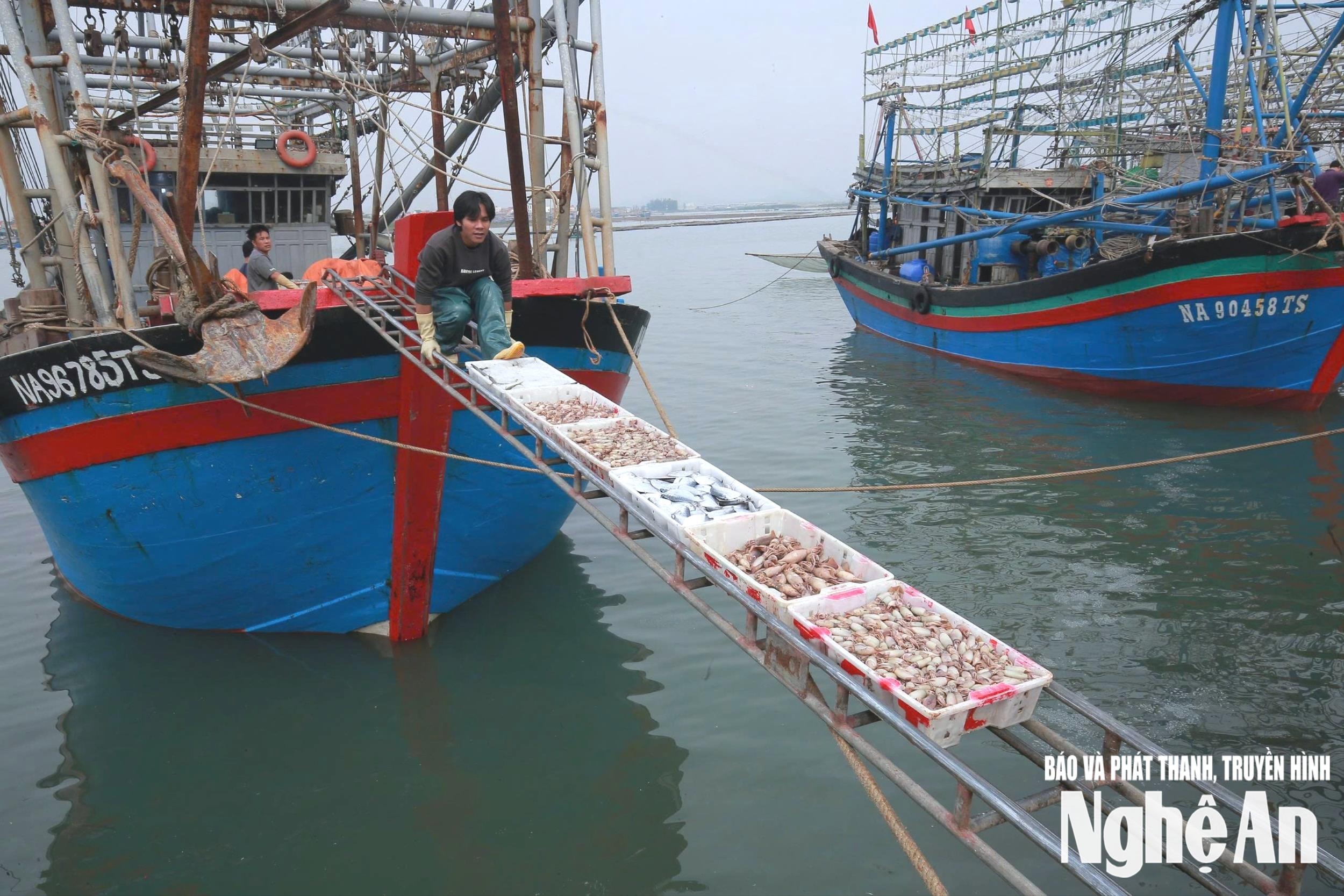
With the peak tourist season approaching, the demand for local specialties as souvenirs is increasing. Many traditional craft villages and seafood processing facilities are proactively increasing production capacity, stockpiling raw materials, and preparing their goods well in advance. Dang Thi Linh, a long-time dried seafood vendor at the Cua Lo ward seafood market, said that every time the tourist season begins, the number of visitors increases sharply, leading to a surge in demand for local specialties as gifts.
Tourists can enjoy a shopping experience at the market while also choosing convenient products to take away, such as dried fish, dried squid, sun-dried squid, and peeled shrimp… “To prepare for this year's tourist season, I increased the amount of goods I imported and diversified my sources to meet customer demand. Prices have gone up slightly, but customers still accept it because the products are of good quality,” Ms. Linh shared.
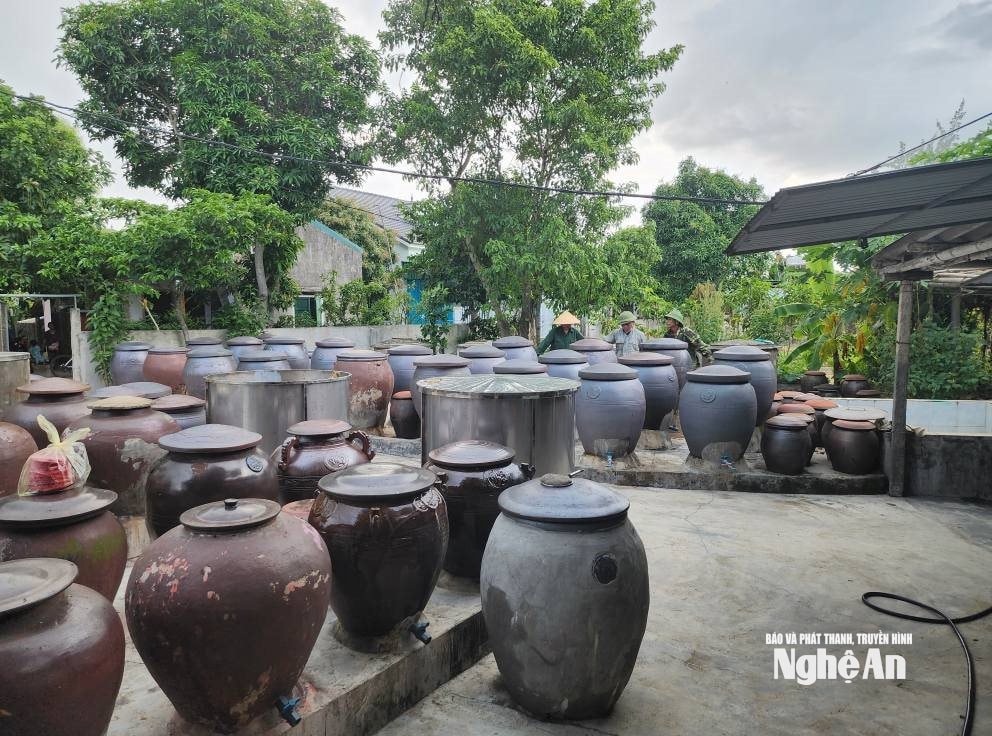
Not only retail stalls, but also traditional fish sauce villages become bustling in the summer. In coastal areas such as Cua Lo, Dien Chau, Quynh Mai, Tan Mai, etc., many fish sauce production facilities become tourist destinations. They come to witness firsthand the handcrafted fish sauce making process, feel the distinctive aroma of sun-dried fish sauce in earthenware jars, and buy bottles of pure fish sauce as souvenirs.
As a traditional fish sauce producer in Cua Lo ward, Hoang Anh Nga's family produces approximately 1,500 liters of 3-star OCOP-certified fish sauce annually for the market. The product is sold year-round, but the peak season is from April to the end of September. To ensure a sufficient supply for tourists, she proactively prepares early, personally selecting fresh fish at the dock, and then fermenting, sun-drying, and stirring the fish sauce using traditional methods.
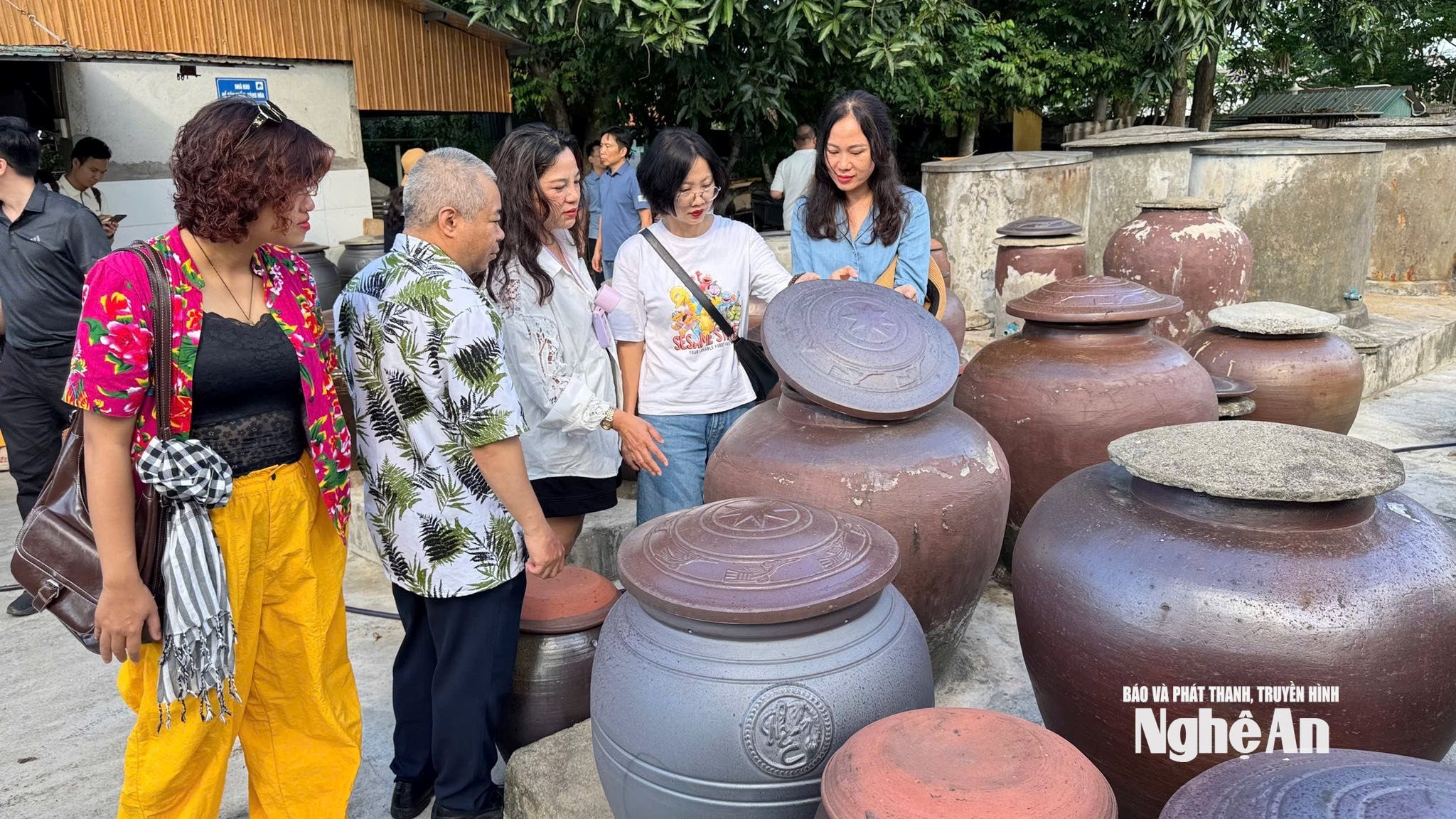
"To ensure food safety and hygiene, instead of using cement tanks for fermentation, our facility uses ceramic and earthenware jars to preserve the natural flavor. Tourists really enjoy the experience and buy our traditional fish sauce products," Ms. Nga said.
At Hai Giang 1 fish sauce village, Mr. Hoang Duc Thuong, Director of the Hai Giang 1 Fish Sauce Processing Cooperative, said that during the tourist season, the number of visitors increases sharply. Many people want to see the fish sauce making process firsthand, smell the aroma in the earthenware jars, and then decide to buy. "Every day we sell hundreds of liters of fish sauce, and we also receive orders from other provinces," Mr. Thuong said.
The appeal of traditional fish sauce lies not only in its rich flavor but also in the handcrafted processing method preserved through generations. Fresh anchovies caught from the sea are combined with white salt, fermented in earthenware jars, and naturally sun-dried for many months, preserving their color and aroma without the use of preservatives. This is the key factor that makes the product increasingly trusted and chosen by tourists.
Ms. Tan Thi Bich Hao, a tourist from Hanoi, shared: “We bought fish sauce in Cua Lo in previous seasons and found it hygienic and flavorful, so we came back this summer. Besides swimming and eating seafood, visiting traditional craft villages and buying local specialties as souvenirs has become an indispensable experience.”
Not only processing facilities, but the seafood supply chain serving the tourist season is also bustling. Ms. Nguyen Thi Thu, owner of My Thu seafood facility in Tan Mai ward, said that her family owns five cold storage warehouses with a capacity of hundreds of tons. To prepare for the tourist season, the facility has invested in additional cold storage, upgraded processing lines, and is actively gathering frozen seafood to supply processors in the tourist area.
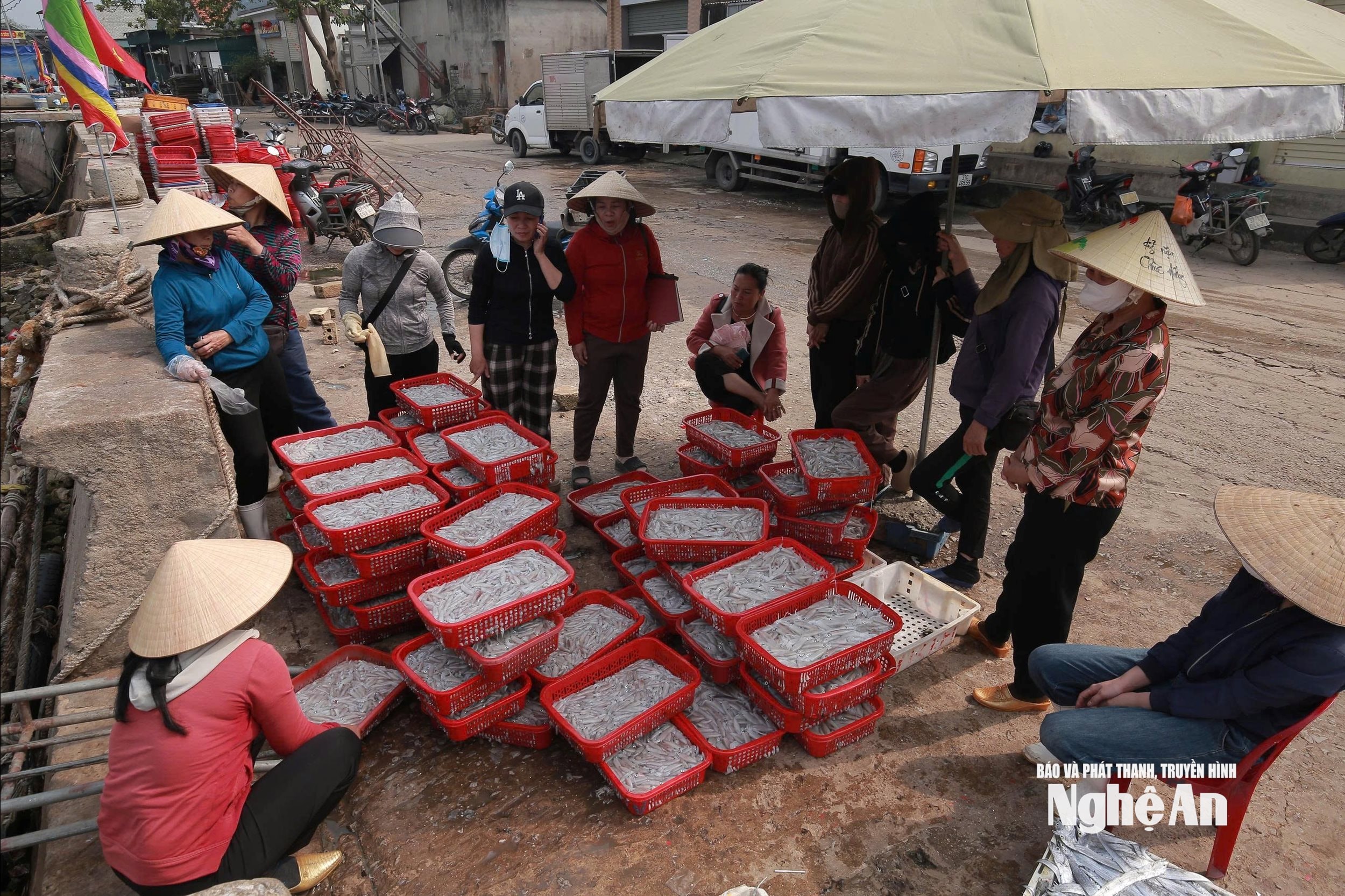
Each day, the facility employs about 10 workers to process fish, dry squid, freeze, and package goods. However, this year, raw materials are scarcer due to high fuel prices, which have led many fishing boats to limit their outings, causing seafood prices to rise. "We have to coordinate with many purchasing channels to ensure we have about 40 tons of seafood to serve the tourist season," Ms. Thu said.
The surge in consumer demand has also made seafood purchasing activities at fishing ports more vibrant. At Quynh Phuong fishing port, Mr. Mach Quang Lam, a seafood buyer, said: “At this time, gasoline and diesel prices are high, and fewer boats are going out to sea compared to the same period last year, so the supply is scarce, while demand from restaurants and processing facilities is increasing sharply. Every day, I buy about 5 tons of seafood from 4 fishing boats, including crabs, fish, snails, etc., to supply restaurants serving tourists.”
Enhancing the value of seafood specialties.
While seafood used to be mainly sold in raw or simply dried form, many establishments now focus on diversifying their products, improving packaging, and boosting marketing to attract tourists.
In Cua Lo ward, Ms. Nguyen Thi Huyen, owner of a seafood processing facility, said: "To serve this year's tourist season, my family has invested in more machinery, upgraded the processing line, and hired more seasonal workers to increase production capacity."
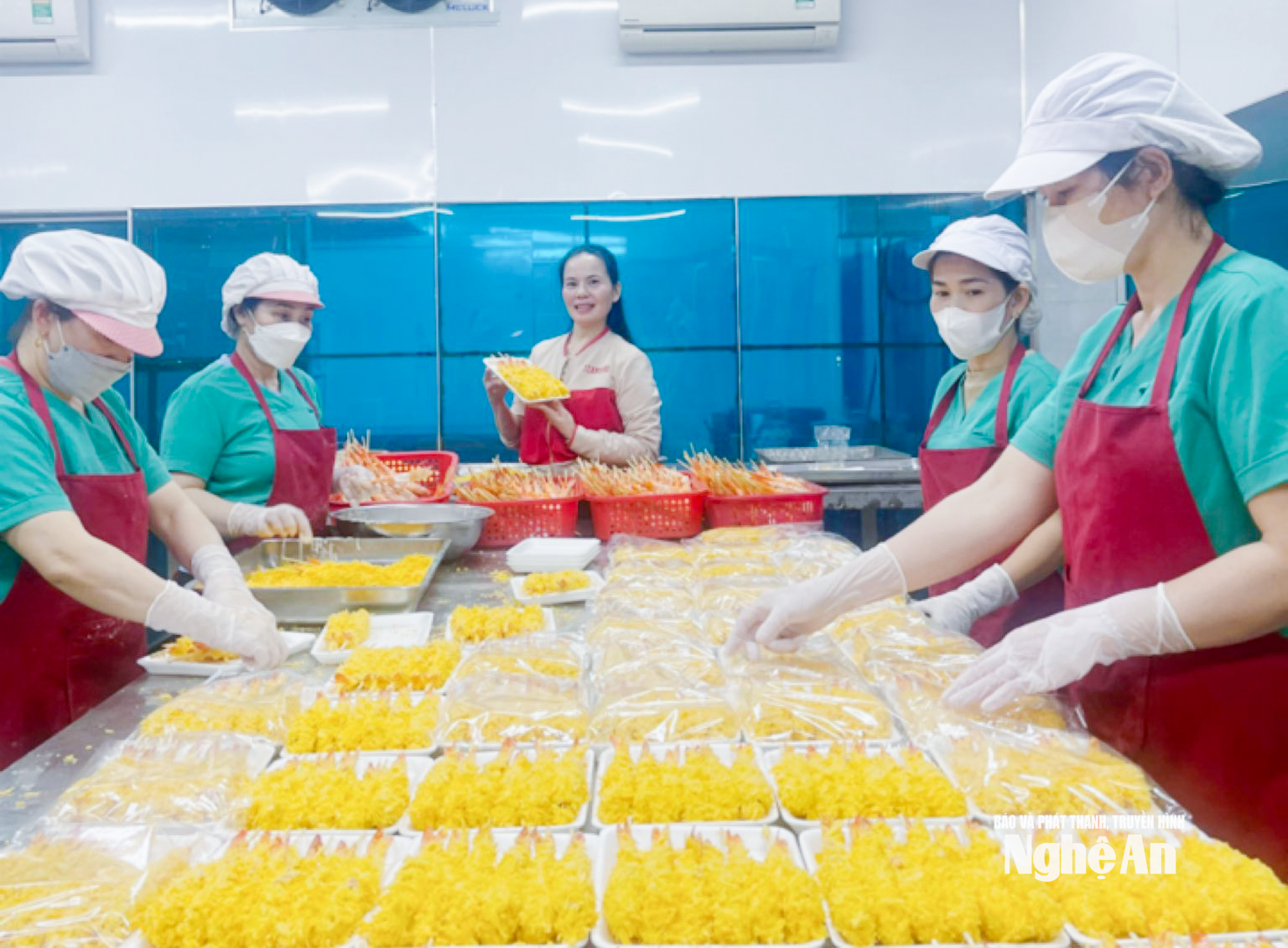
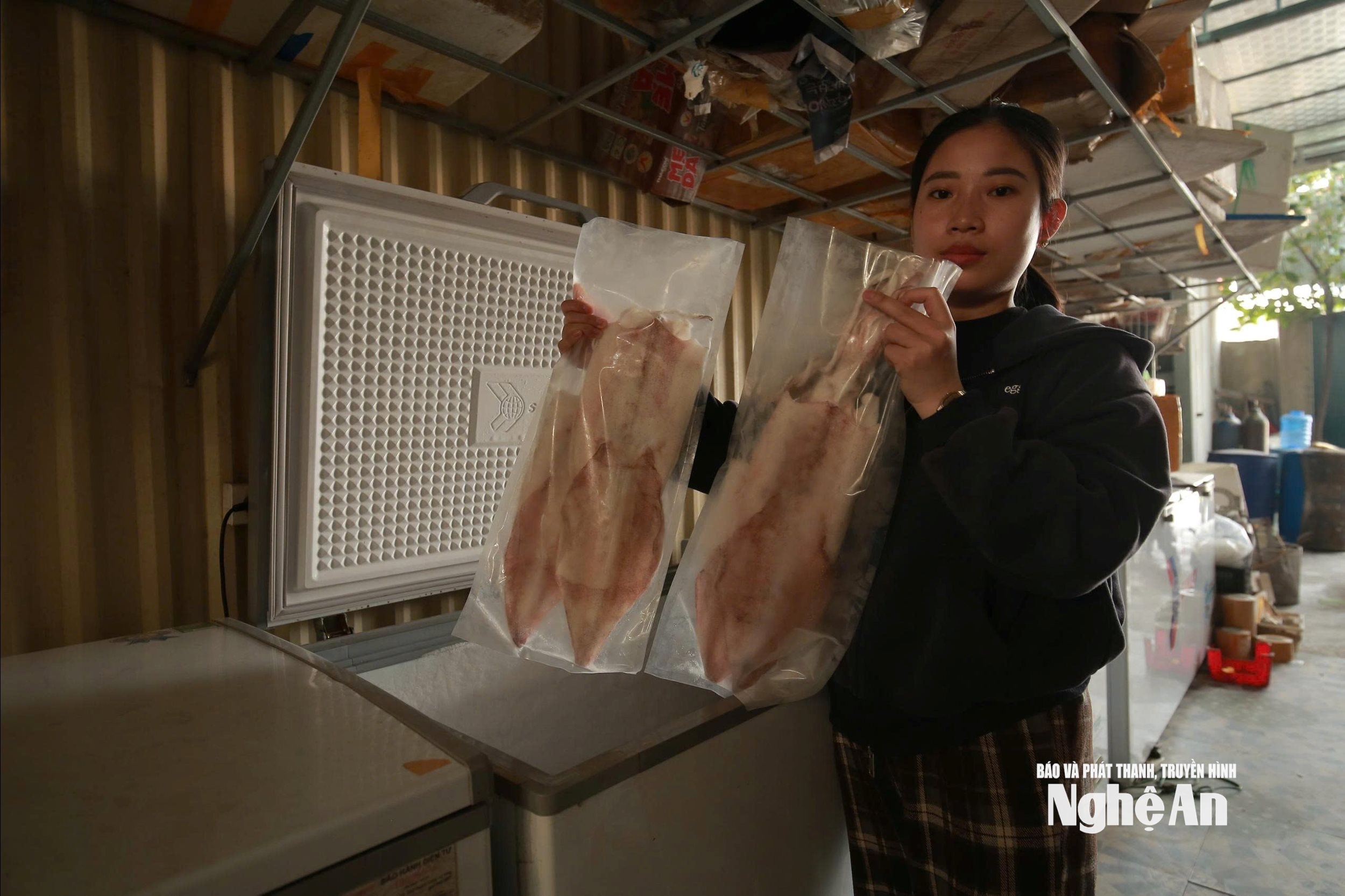
Every day, the processing facility handles tons of ingredients such as mackerel, squid, squid patties, battered and fried shrimp, seafood spring rolls, etc., to serve tourists. Not only are they increasing production, but they are also focusing on improving product quality and presentation. Vacuum packaging, complete labels, QR codes for traceability, and food safety registration are standardized to target the high-end customer segment. As a result, local seafood products are not only sold locally but also easily distributed to supermarkets and specialty stores.
Many establishments have also created souvenir combos for tourists, such as fermented shrimp paste, concentrated fish sauce, and dried shrimp paste, packaged in attractive glass jars and paper bags, priced from 100,000 to 200,000 VND. These products suit the needs of tourists who want to buy gifts quickly, conveniently, and easily transported.
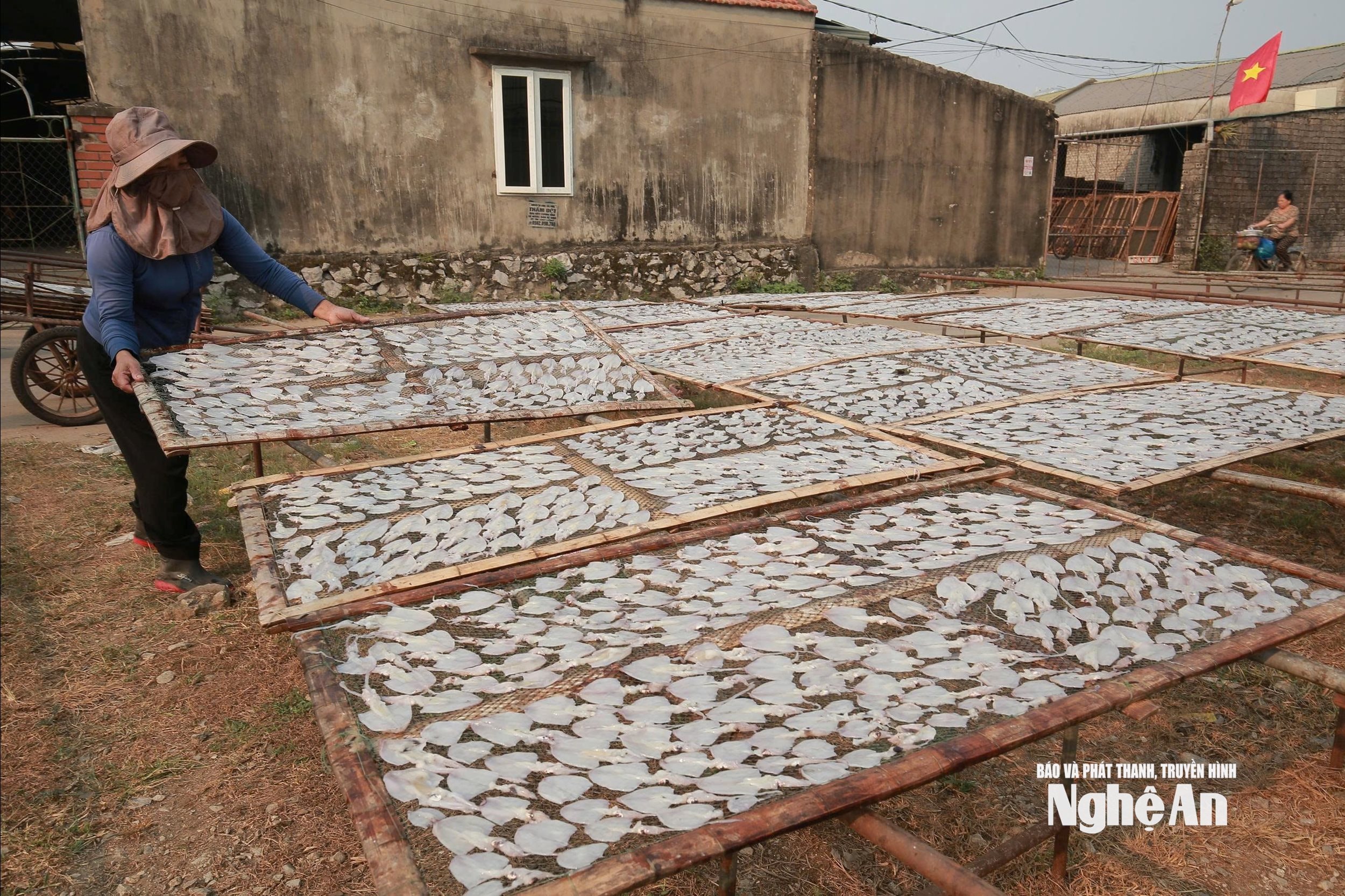
Some craft villages combine production with experiential tourism, creating a "3-in-1" model: Production - sightseeing - shopping. At the Hai Giang Fish Sauce Village Cooperative, visitors not only buy products but also get to watch the fish sauce making process, stir the fermentation, extract the fish sauce, and bottle it to take home. The display counters are beautifully designed, creating attractive check-in points. In addition, many establishments are increasing promotion on digital platforms such as Facebook, Zalo, TikTok, and livestreaming to introduce their products. As a result, tourists learn about the products even before arriving or place orders after their trip.
Product diversification and innovative market approaches are significantly increasing the value of local seafood. Instead of selling raw materials, processed products offer higher value, longer shelf life, and are suitable as gifts. Simultaneously, hands-on experiences in traditional craft villages contribute to preserving local traditions and generating additional income for residents.
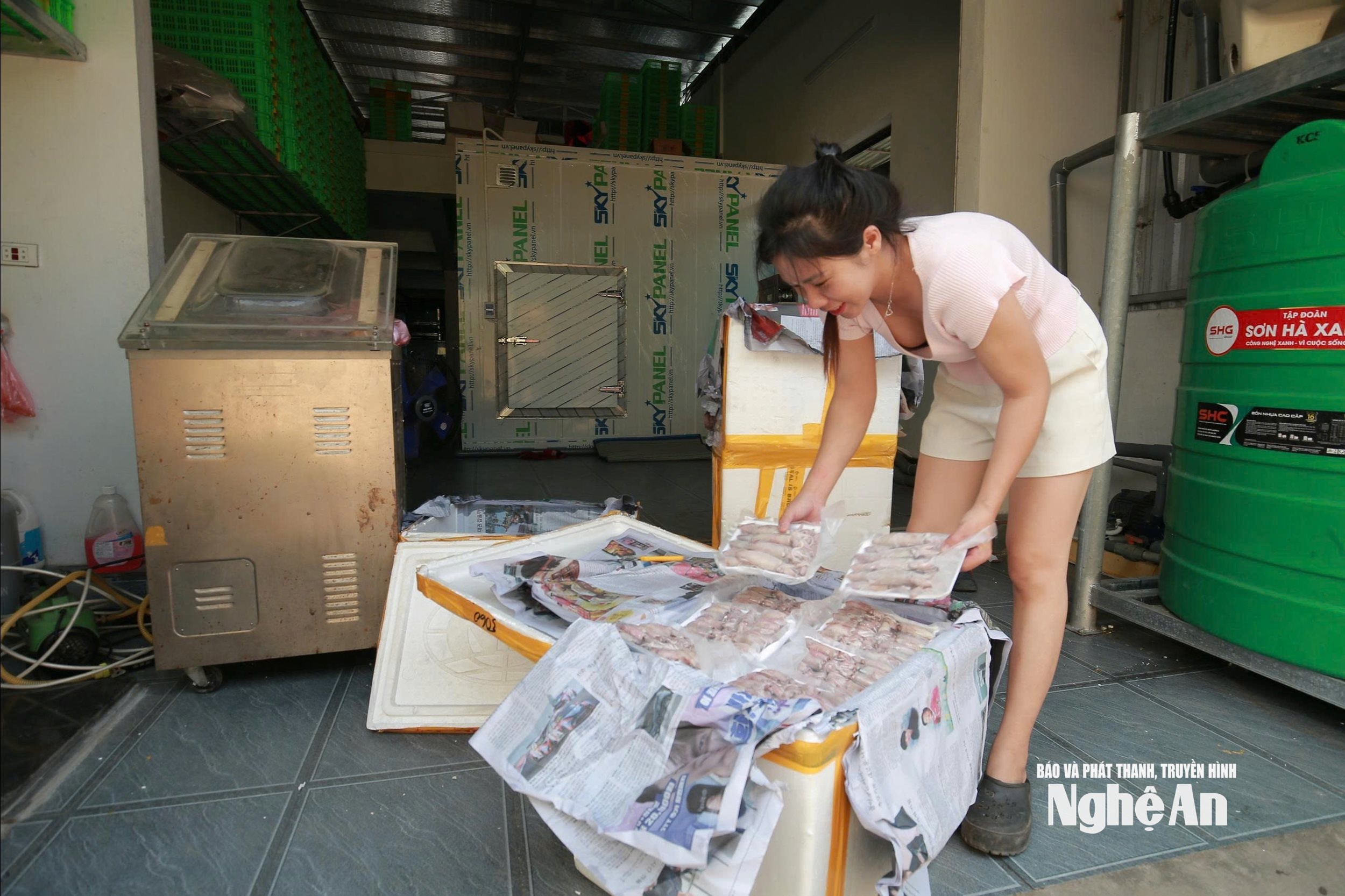
With over 500 seafood processing facilities and more than 200 cold storage warehouses, along with a large fleet of offshore fishing vessels, the coastal area of Nghe An has a great advantage in developing the processing industry linked to tourism.
To prepare for the tourist season, the local authorities have organized training sessions on customer service skills and food safety, and required establishments to publicly display prices. At the same time, they are encouraging people to diversify seafood products, develop OCOP (One Commune One Product) products, and combine this with the development of experiential tourism in traditional craft villages. We are also planning to relocate craft villages away from residential areas and build model craft villages linked to sightseeing and shopping for local specialties."
Mr. Dau Phi Luc - Head of the Economic and Infrastructure Department of Quynh Mai Ward


