
Scientists warn: Social media is eroding children's ability to concentrate.
A large-scale study tracking more than 8,300 children in the US found that increased social media use can impair concentration and contribute to a rising trend of diagnoses for attention deficit hyperactivity disorder (ADHD).
According to new research peer-reviewed, frequent exposure to social media in children is significantly linked to increasingly pronounced symptoms of attention deficit disorder.
The study tracked the development of over 8,300 American children aged 10 to 14, indicating that social media may be one of the contributing factors to increased symptoms associated with ADHD.
This study was conducted by scientists from the Karolinska Institute (Sweden) and Oregon Health & Science University (USA). The data shows that, on average, children spend about 2.3 hours a day watching television or online videos, 1.4 hours on social media, and 1.5 hours playing video games.
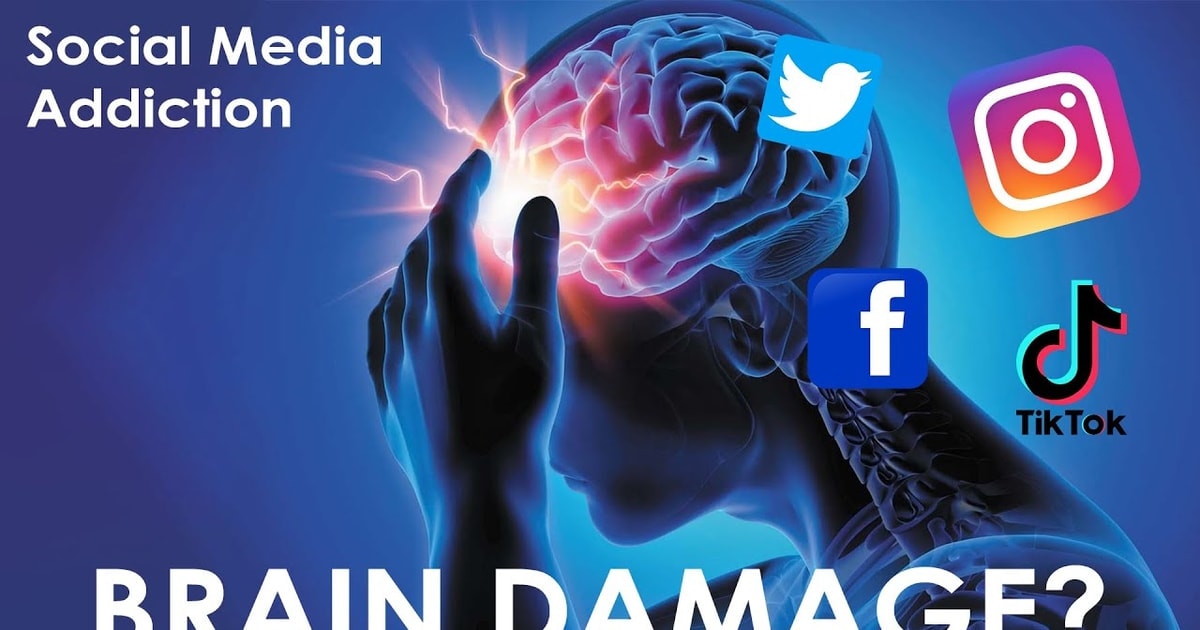
Notably, the study found no significant link between ADHD symptoms such as distraction and playing games or watching TV/YouTube. Conversely, prolonged social media use showed a clear correlation with increased symptoms of inattention in children.
ADHD is a neurodevelopmental disorder that typically manifests as difficulty concentrating, impulsivity, forgetfulness, and difficulty maintaining attention.
According to the research team, the impact of social media may not be significant for individuals, but when considered on a societal scale, this influence can become substantial.
“We have identified a link between social media use and increased symptoms of attention deficit disorder, understood here as a possible causal effect,” the report states. “While this impact is small at the individual level, it can have significant consequences when social media use behavior changes on a large scale. These findings suggest that social media may contribute to an increased rate of ADHD diagnoses.”
Professor Torkel Klingberg, a cognitive neuroscience expert at the Karolinska Institute, emphasizes that the constant distraction inherent in social media is the key factor.
“Social media constantly creates distractions through messages and notifications. Even just thinking about whether there will be a new notification is enough to divert attention,” he said. According to Klingberg, this can impair the ability to concentrate over the long term and helps explain the link observed in the study.
The study also indicated that the link between ADHD and socioeconomic status is not dominated by genetic factors. This suggests that the increased use of social media in recent years may be partly responsible for the rising trend in ADHD diagnoses.
According to the U.S. National Child Health Survey, the percentage of children diagnosed with ADHD increased from 9.5% between 2003 and 2007 to 11.3% between 2020 and 2022.
However, researchers also emphasized that these results do not mean that all children who use social media will have problems with concentration. The risk is more pronounced in children who use social media extensively as they grow older, and especially in those who access social media very early, even before the age of 13, the minimum age required by platforms like TikTok or Instagram.
The report argues that this trend of children using social media at an increasingly young age highlights the need for stricter age verification and requires technology companies to provide clearer guidance to protect children in the digital environment.
Research data shows that time spent on social media increases steadily with age, from about 30 minutes per day at age 9 to about 2.5 hours per day at age 13. The children participating in the study were followed from 2016 to 2018, and the results will be published in the international scientific journal Pediatrics Open Science (USA).
Samson Nivins, a postdoctoral researcher at the Karolinska Institute and one of the study's authors, expects these findings to provide parents and policymakers with more scientific basis. “We hope the research will support more informed decisions about healthy digital use, thereby promoting children’s cognitive development,” he said.


