
Gardeners in Nghe An province are "welcoming" the Tet market.
At this time, with the Lunar New Year of the Horse 2026 still more than a month away, farmers are focusing on tending their crops and timing their planting to improve the quality of agricultural products for the year-end market. To ensure a sufficient supply for the Tet holiday, from the beginning of the season, farmers in the province have proactively structured their crops, selected suitable varieties, and applied a comprehensive range of technical measures to achieve high yields.
Specialty fruit orchards awaiting Tet (Lunar New Year)
.jpg)
At this time of year, the atmosphere in areas growing specialty fruits is even more bustling. In orange and pomelo orchards, farmers are focusing on caring for their trees, monitoring ripening, and proactively "reserving" their stock, selecting the best-looking fruits for the Tet market.
The Sen pomelo orchard of Mrs. Bui Thi Binh's family has nearly 1,000 trees, of which almost 600 are already producing a stable harvest. At this time, many traders and regular customers have come to the orchard to inspect the pomelos and place deposits in advance. Last year's harvest yielded about 15 tons, with selling prices ranging from 40,000 to 60,000 VND/kg. After deducting expenses, the family earned 300-400 million VND. Sen pomelos are favored by customers not only for their rich sweetness and distinctive aroma but also because they are "in season for Tet," making them suitable as gifts and offerings to ancestors.
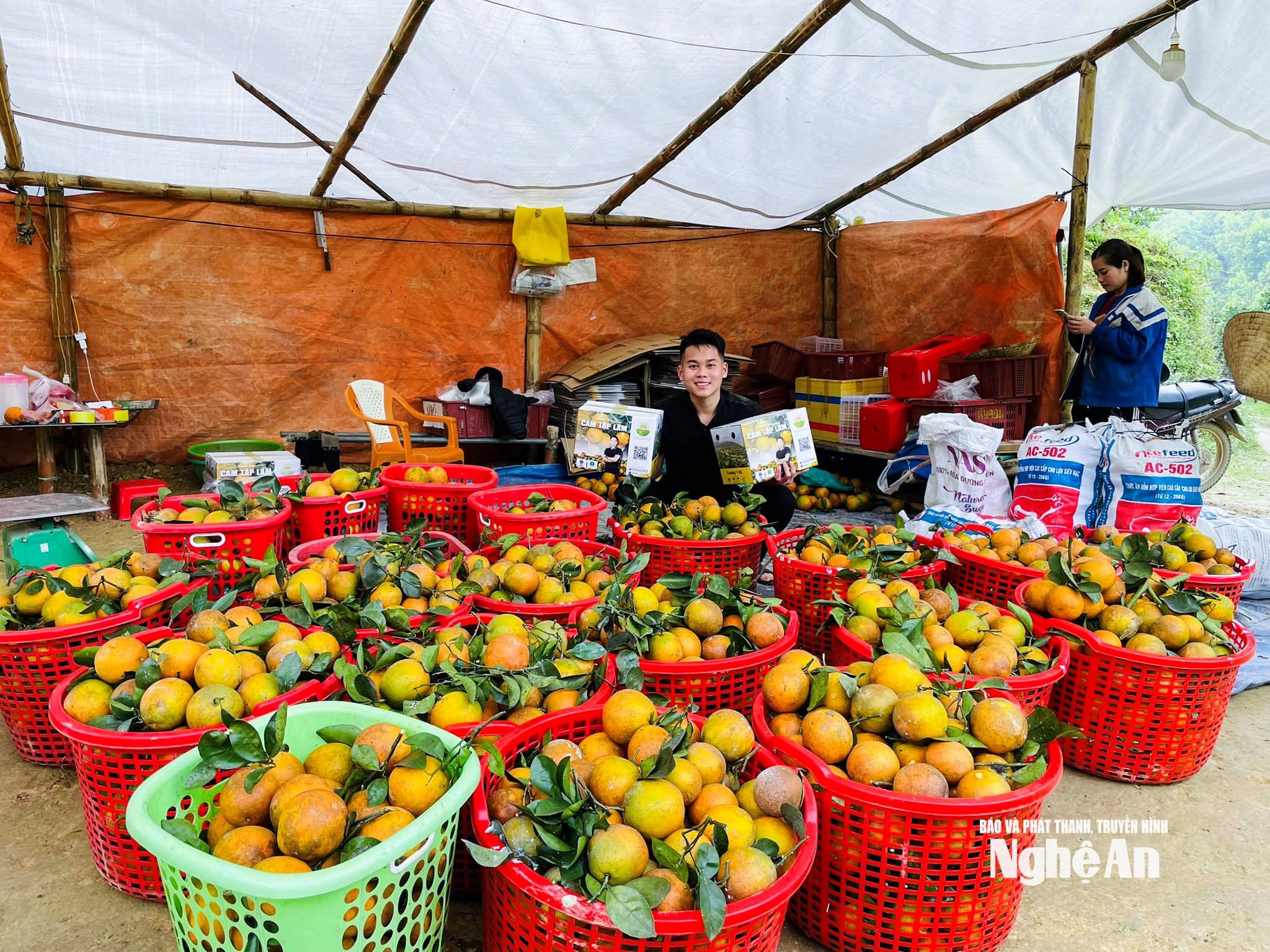
Mr. Nguyen Anh Truong, Chairman of the Farmers' Association of Yen Xuan commune, said: "The entire commune currently has about 25 hectares of 'Cam Bu Sen' oranges, a product that has been recognized as a 3-star OCOP product and has established its position in the market. The oranges ripen gradually from before to after the Lunar New Year, making it convenient for timing the harvest for the Tet holiday; the oranges have beautiful colors, many fruits have two fleshy parts shaped like lotus flowers, a rich sweet taste, a fragrant aroma, and firm, non-spongy segments. Thanks to its unique characteristics and stable quality, 'Cam Bu Sen' oranges are increasingly favored by consumers, contributing to increasing the income of local farmers."
Besides the "cam bu sen" variety, other specialty oranges such as Vinh oranges and Xa Doai oranges are also in season. Although heavy rains and storms have increased the rate of fruit drop and rotting, the reduced supply has driven up prices. Ms. Nguyen Thi Huong's family in Hanh Lam commune grows late-ripening oranges organically, with yellow flesh and a sweet, refreshing taste, currently selling them for 55,000-60,000 VND/kg, mainly for Tet (Lunar New Year) gifts.
.jpg)
At the same time, Dien pomelos, a fruit widely used in the traditional five-fruit offering during Tet (Lunar New Year), are also being proactively harvested by farmers. The family of Mr. Dam Duy Tu in Quynh Tam commune, with 700 Dien pomelo trees, has applied techniques to induce staggered flowering and fruiting, dividing the harvest into several different batches.
“Growing pomelos for Tet (Lunar New Year) requires not only careful tree care but also meticulous timing. The price changes significantly if the flowers bloom a few days early or late. Therefore, my family proactively keeps the best-looking fruits with evenly yellow skin and moderate weight to hang on the trees until Tet,” Mr. Tu shared. These pomelos for offerings usually fetch a higher price than those for consumption, ranging from 5,000 to 7,000 VND per fruit, helping farmers reduce sales pressure and maximize economic value during the Tet season.
Monitoring the weather to preserve the Tet flower season.
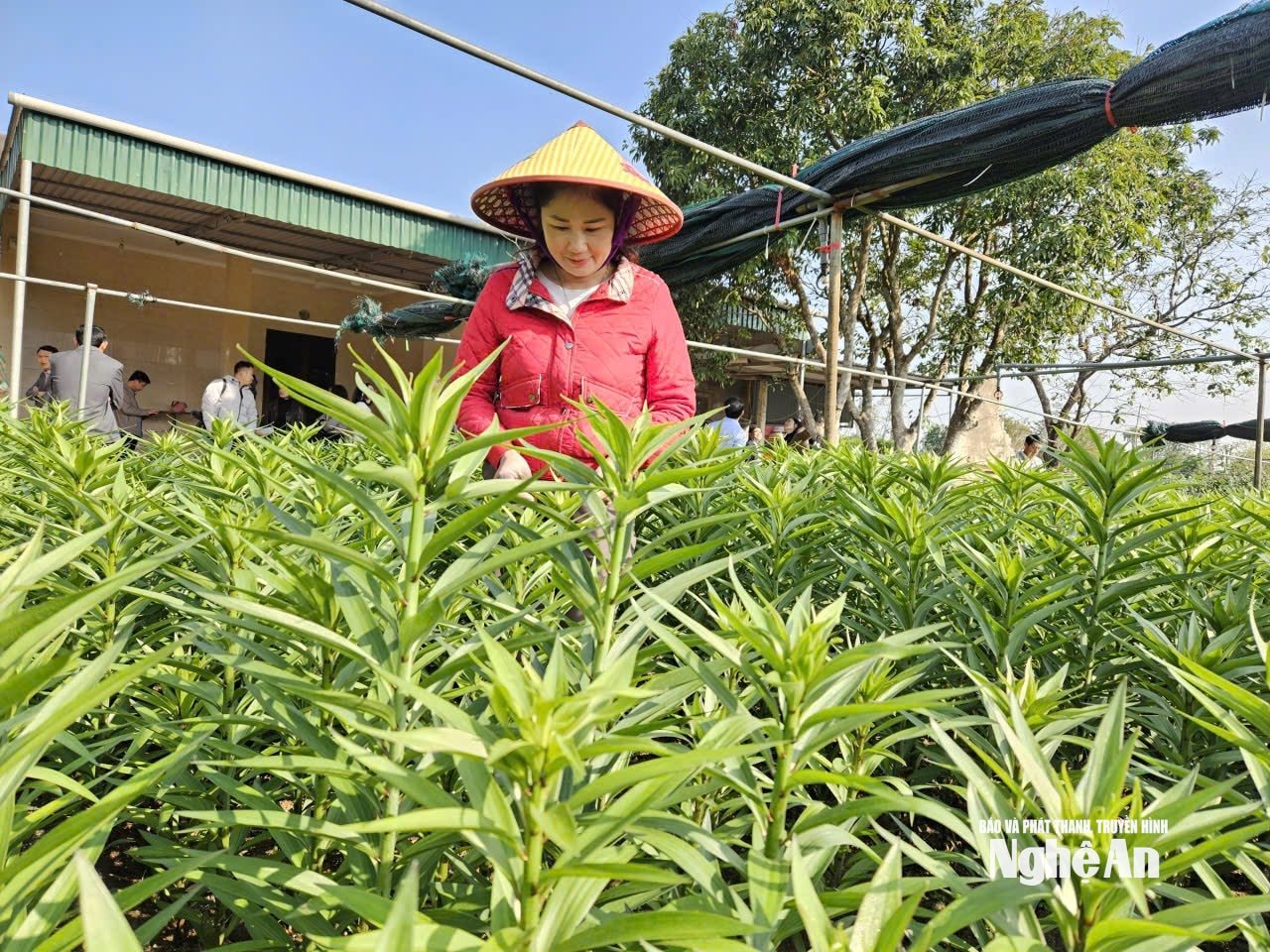
While fruit trees require long-term seasonal planning, Tet flowers are a race against time, where every day of sunshine and rain, every temperature difference, can determine the success or failure of the entire crop. Therefore, flower growers must meticulously care for their plants to ensure the flowers bloom precisely at the transition between seasons.
In Trung Lien flower village, Vinh Hung ward, farmers are entering a crucial stage of caring for lilies, a flower grown only once a year for sale during Tet (Lunar New Year). According to Ms. Vo Thi Duyen, growing lilies is highly dependent on the weather. In cold, cool conditions, the flowers have a growth cycle of about 80-85 days; but if there is prolonged hot weather, the flowers can bloom a week early before Tet.
Therefore, growers must use shade nets to reduce heat, regulate light, and closely monitor daily weather developments. “Lilies are very beautiful but also very ‘fussy.’ If you make a small mistake, the flowers will bloom too early or too late, and that’s like ruining the Lunar New Year,” Ms. Duyen shared. This year, her family planted 6,000 plants with many different lily varieties such as yellow lilies, red lilies, double lilies… hoping the flowers will bloom simultaneously, with large blooms and beautiful colors.
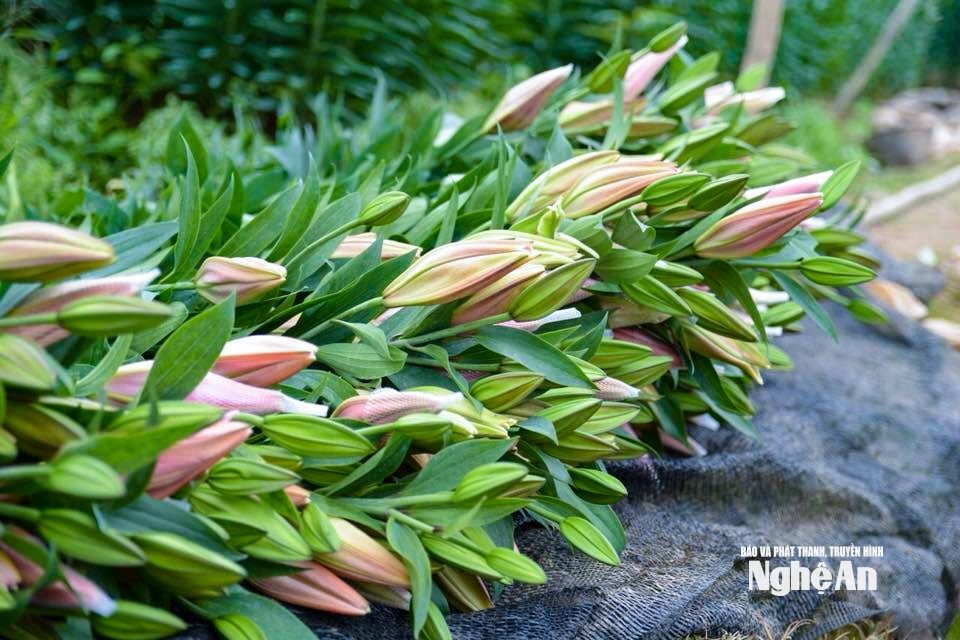
Besides being dependent on the weather, lilies are also susceptible to broken stems and root rot during heavy rains or high humidity. Therefore, growers pay special attention to soil preparation, substrate treatment, drainage, and disease prevention. According to many households, this year's late winter actually provides favorable conditions for lilies to grow according to their cycle, reducing the risk of premature blooming—a key factor in ensuring the flowers bloom in time for Tet (Vietnamese Lunar New Year).
Along with lilies, traditional flowers such as chrysanthemums, peonies, and marigolds are also being carefully cultivated by farmers. Ms. Nguyen Thi Hoai An, Chairwoman of the Farmers' Association of Vinh Hung Ward, said: “This year, the entire ward is planting 7.5 hectares of Tet flowers, concentrated in Trung Lien, Hong Lien, Trung Yen, and Nghi Kim 6 wards, mainly flower varieties for worship and decoration. Due to the large temperature difference between day and night, farmers have to constantly adjust the watering, fertilizing, and shading regimes to ensure the flowers develop evenly and bloom at the right time.”
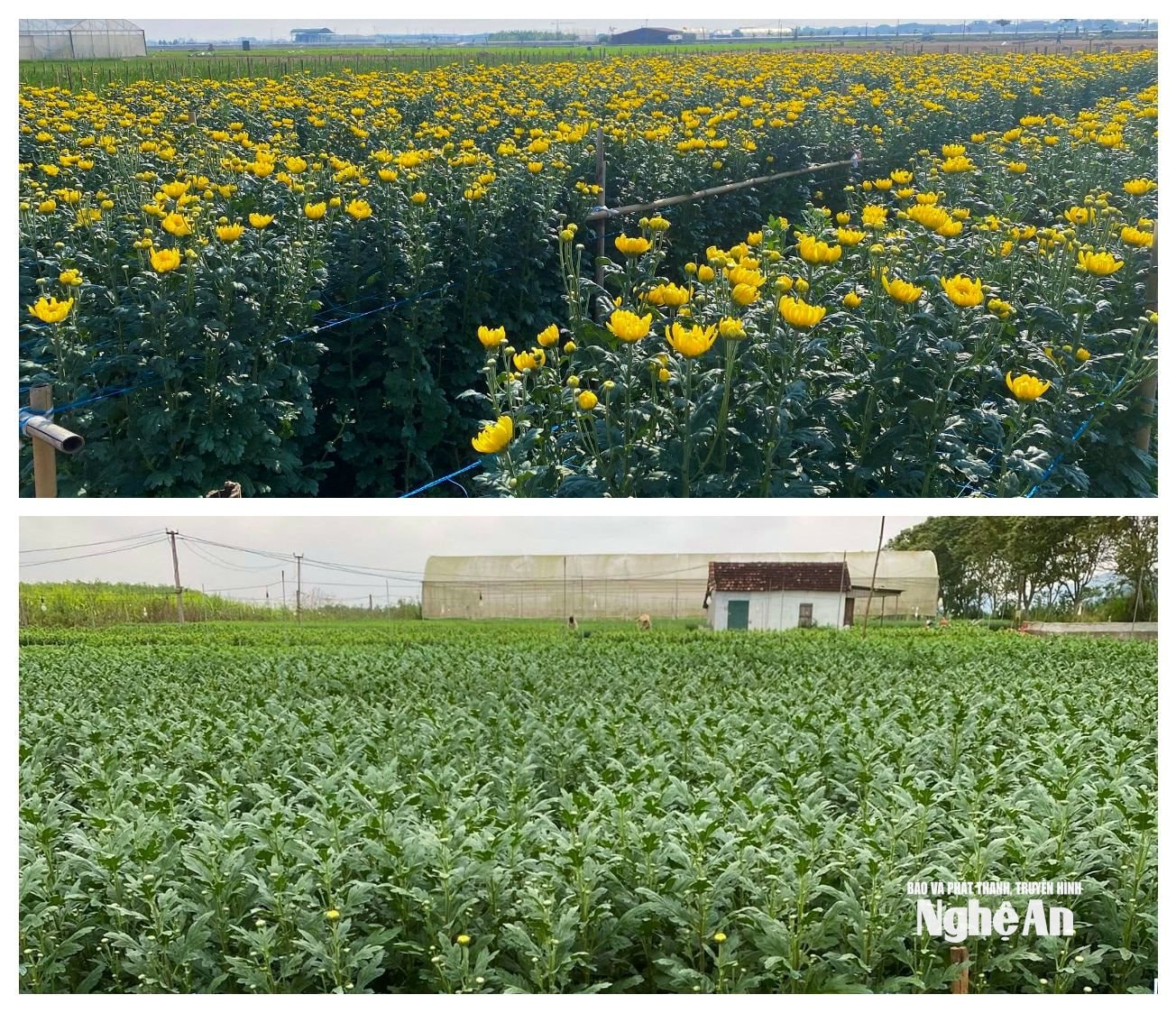
As the Lunar New Year approaches, to ensure smooth flower sales and high economic efficiency, Duc Thuy's flower farm in Thai Hoa ward, with 2 hectares of various chrysanthemum varieties, proactively divides its planting into multiple batches, each spaced 10-15 days apart. This allows for a consistent supply of flowers from the 15th day of the 12th lunar month, the Kitchen God Festival, to the Lunar New Year itself and even after, helping the farm reduce the risk of oversupply and stabilize prices. Potted chrysanthemums are carefully monitored to bloom precisely for the Tet holiday, while cut chrysanthemums are planted in staggered cycles to be sold throughout the year.
The meticulous care in every step of the process shows that Tet flowers are not just a simple agricultural product, but also the culmination of the experience, techniques, and patience of the growers. When each flower blooms at the right time, it is also the moment when the gardeners' hard work over many months is rewarded, helping to bring spring closer to each family.
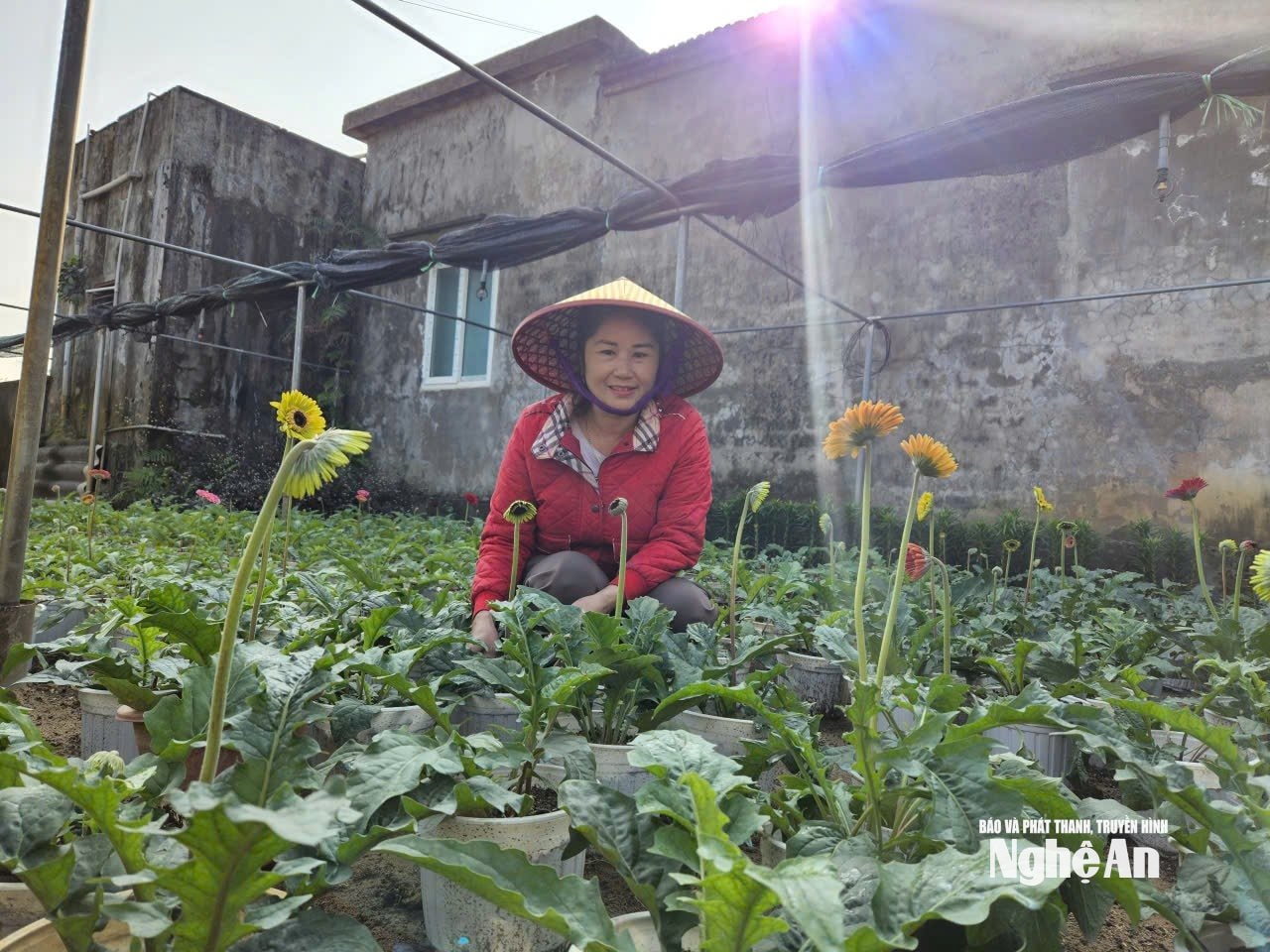
From orange and pomelo orchards to flower villages and greenhouses, it's clear that agricultural production for Tet (Lunar New Year) is not simply a harvest season, but a "special economic season" for farmers. There, the value of agricultural products is enhanced through market-oriented thinking, a rational cropping pattern, the selection of suitable varieties, and increasingly advanced farming techniques.
When farmers know how to time their farming, master techniques, and understand consumer preferences during Tet (Lunar New Year), each sweet fruit and each flower branch not only carries the flavor of spring but also becomes an important source of income, contributing to stable livelihoods, increased income, and affirming the role of agriculture in the year-end economic landscape.


