Border communes in the highlands are ready for early voting.
Thanh Cuong•March 11, 2026 21:00
In the remote villages along the border of Nghe An province, despite the rugged terrain, fragmented transportation, and the lack of national electricity in many villages, early polling stations have been meticulously prepared to ensure that every voter in these highland areas casts their ballot fully and solemnly on this "national election day."
Bringing election information to every household in remote villages.
Located more than 20km from the center of Muong Quang commune, along a mountainous road, Nam Xai village appears like an "oasis" nestled in the vast forests of western Nghe An province. In a place where phone signals are still intermittent and the only access road frequently faces the risk of landslides, preparations for election day are still underway with urgency.
With 298 voters, Nam Xai is one of two villages in Muong Quang commune that will hold early voting on March 13, 2026.
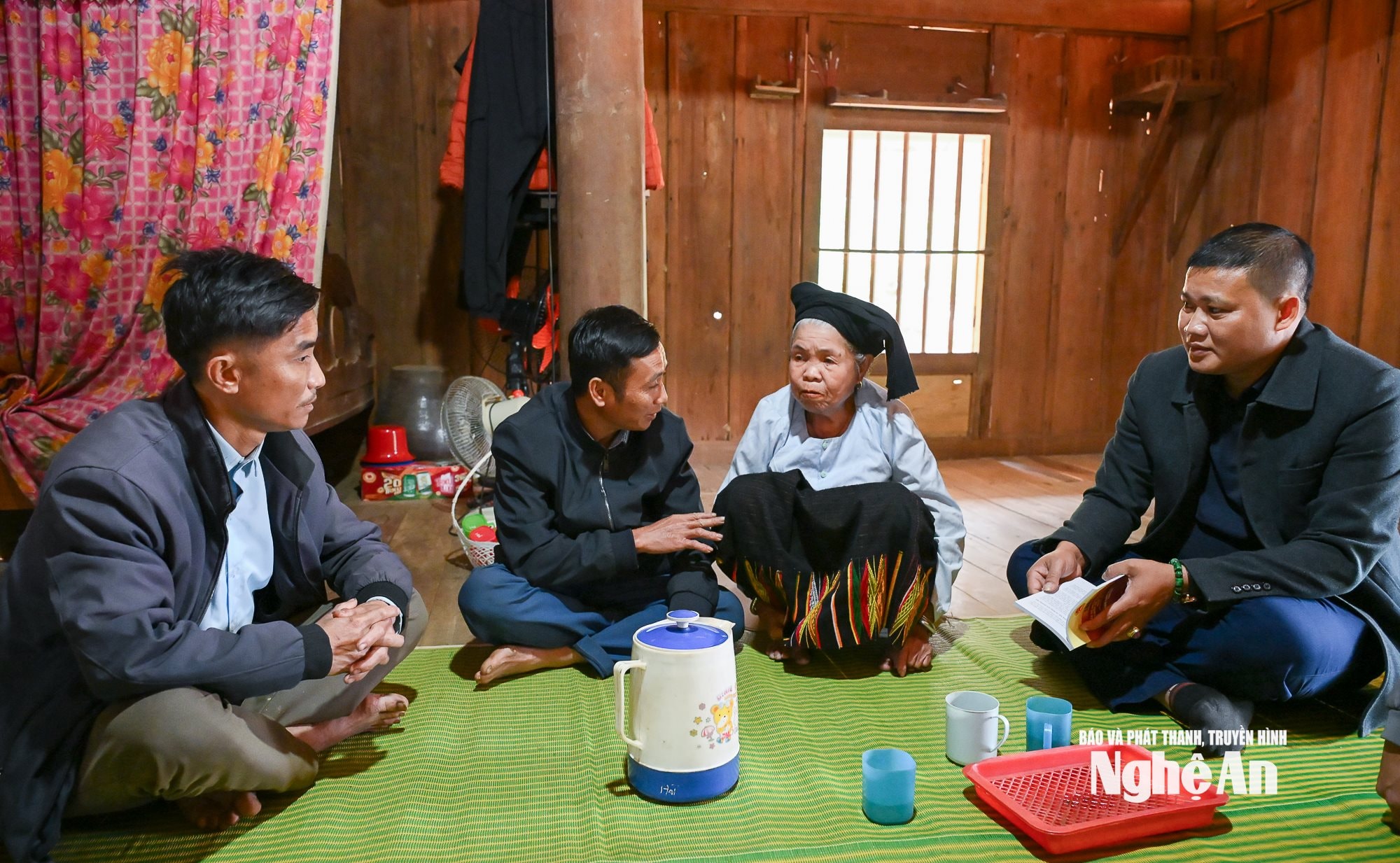
The Nam Xai village polling station staff provides information about the election to voter Vi Thi Ot, 93 years old. Photo: Thanh Cuong
From early morning, while the mist still shrouded the stilt houses, the working group consisting of commune leaders and the election committee of Nam Xai village arrived at the home of Mrs. Vi Thi Ot (born in 1933) - one of the oldest voters in the village - to inform her about the election.
At 93 years old, with failing legs, Mrs. Vi Thi Ot no longer had the strength to climb the slope to the polling station to check the list of candidates. Therefore, commune officials and respected people in the village patiently read out each name, summarizing the biographies and action programs of the candidates in Thai so that she could understand them clearly before exercising her civic right.
According to Vi Van Thieu, Secretary of the Party Branch of Nam Xai village, many elderly voters in the village are illiterate or not fluent in the common Vietnamese language. Therefore, influential people in the community are mobilized to participate in disseminating information and explaining the election process.
"They are special 'translators,' helping to convey election information into the local language in a familiar and easy-to-understand way so that people can clearly understand their rights and responsibilities," Mr. Thieu said.
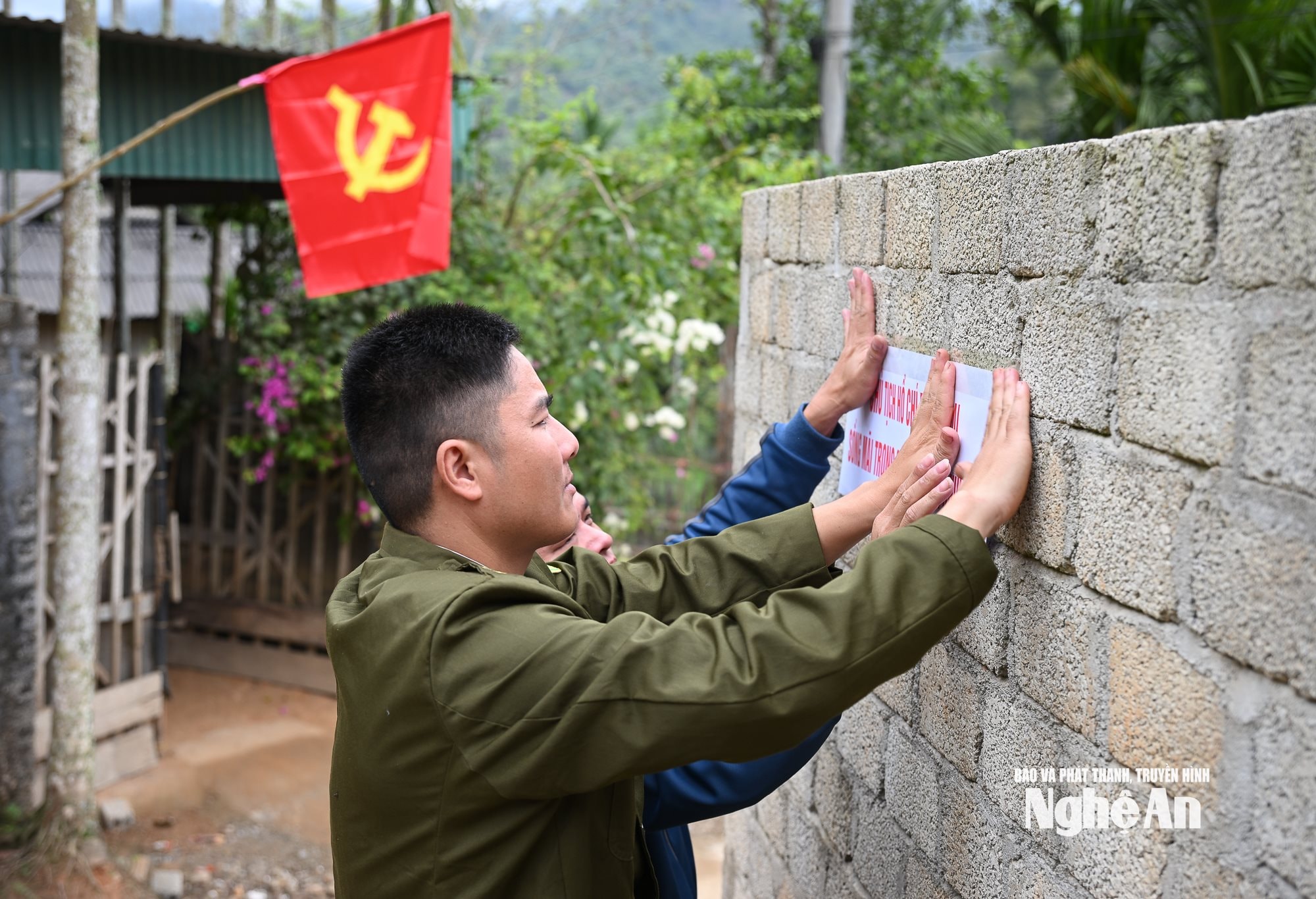
The management board of Nam Xai village posted election propaganda slogans along the village pathways. Photo: Thanh Cuong
Besides elderly voters, Nam Xai village also has many migrant workers returning home for the Lunar New Year. A survey revealed that the entire village has over 40 voters currently working in other provinces and cities.
During the Lunar New Year holiday, members of the election committee took the opportunity to visit each family, spread awareness, and encourage people to arrange their time to participate in the election.
Photo: Thanh Cuong
"
"Although starting work early would provide more income, this is the first time I've exercised my civic rights, so I decided to stay in my hometown and vote before returning to work."
Vi Van Thanh - a voter from Nam Xai village, Muong Quang commune.
Vi Van Thanh, who just turned 20, has been working as a factory worker in Hai Phong for two years. Thanh's initial plan was to return to the company right after the Tet holiday to settle into his job. However, after being informed by local officials about the significance of the election, he proactively changed his plans.
In Muong Quang commune, early elections were held in the two villages of Nam Xai and Huoi May. To date, preparations at the polling stations have been thoroughly reviewed.
The polling area is scientifically arranged, with clear directional maps, a medical area, and plans to ensure security and order. Specific plans for responding to natural disasters, landslides, or disrupted transportation have also been developed.
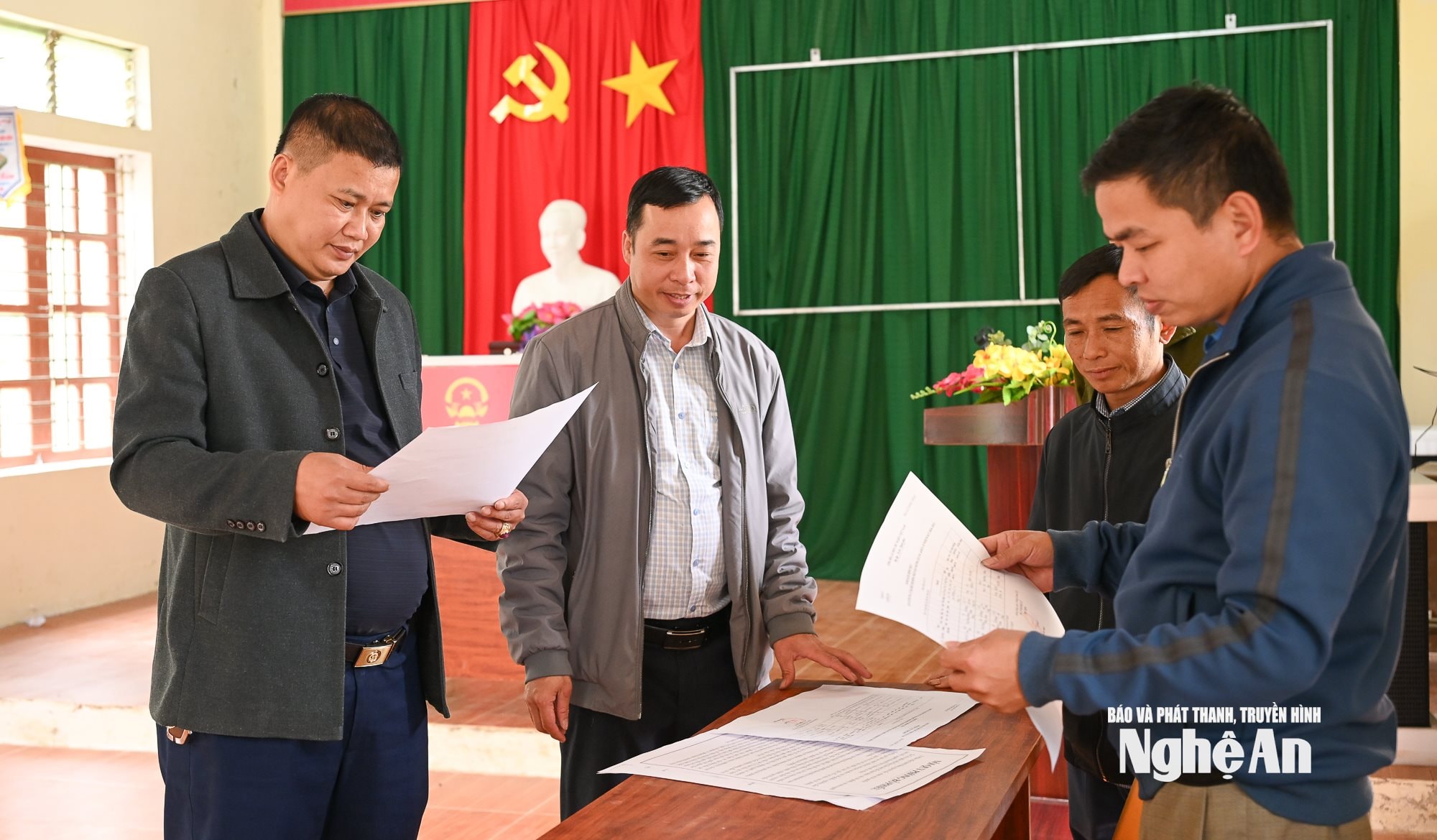
Checking election information at the polling station in Nam Xai village, Muong Quang commune. Photo: Thanh Cuong
In Mon Son commune, there are three early polling stations: Moi village, Co Phat village, and Khe Bung village. Notably, Co Phat and Khe Bung villages are home to 100% Dan Lai ethnic minority people and are located deep within the core area of Pu Mat National Park.
To reach these villages, one has to travel by boat on the Giang River for about two hours. Therefore, organizing early voting is considered a suitable solution to ensure that all voters have the opportunity to exercise their right to vote.
By this time, voter lists in all villages have been fully posted; facilities, ballot boxes, and election materials have also been meticulously prepared. Public awareness campaigns continue to be intensified to ensure people understand the purpose and significance of the election.
Thorough preparations are underway for 55 early voting areas.
According to statistics, Nghe An province has 55 early voting areas in 12 mountainous and border communes across 31 electoral units.
These are all particularly difficult areas, with fragmented terrain, scattered populations, and transportation heavily dependent on weather conditions.
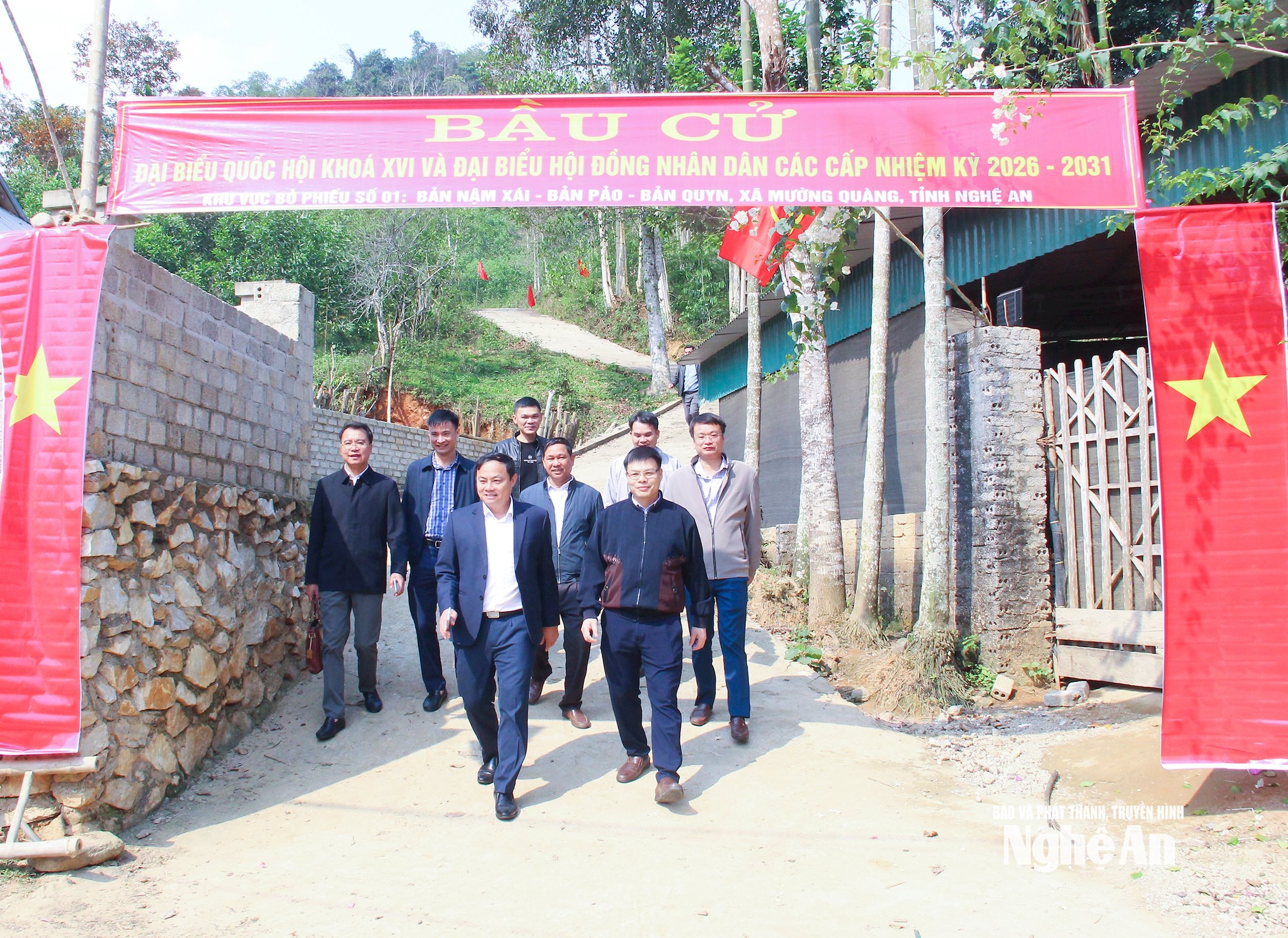
The provincial delegation inspects information and communication work at the early voting area. Photo: Mai Hoa
In 2025, the western region of Nghe An province was repeatedly affected by natural disasters, storms, and floods, causing serious damage to many transportation routes and public works. Therefore, the province developed election organization plans early on based on various scenarios, including situations involving heavy rain, floods, or disrupted transportation.
Based on local proposals, the National Election Council has allowed Nghe An to hold early voting two days before the national election day in 55 polling stations.
Early voting polling stations are located in 12 communes: Bac Ly, Keng Du, Muong Tip, Na Ngoi, My Ly, Huoi Tu, Tri Le, Muong Quang, Mon Son, Chau Khe, Huu Khuong and Tam Thai.
Organizing early voting not only facilitates voters but also helps localities proactively organize and promptly handle any unforeseen situations.
As March 13th approaches, the atmosphere of preparation for early elections in the highland villages of Nghe An province is becoming increasingly urgent. From Co Phat to Khe Na, from Pha Xac to Cha Nga, the people are looking forward to this national festival with faith and excitement.
Residents of Co Phat village hang flags to celebrate election day. Photo: HT
One of the areas facing the most difficulties in organizing early elections is My Ly border commune.
Following the 2025 rainy season and floods, many houses and public facilities in the area were severely damaged and have not yet been fully restored. The transportation system was also seriously damaged, with many villages still lacking road connections to the commune center.
The entire My Ly commune has 13 polling stations, including 3 stations where early voting is held in the villages of Xop Duong, Cha Nga, and Nhot Lot.
Currently, all three villages lack access to the national power grid and mobile phone coverage. In Cha Nga village in particular, the more than 20km road from the commune center to the village has not yet been restored after the floods. Transporting election materials, voter ballots, and ballot boxes requires a combination of walking and boat trips up the Nam Non River.
According to the Chairman of the People's Committee of My Ly commune, Mr. Luong Van Bay, organizing the election in the early voting villages faced many obstacles due to difficult transportation, electricity supply mainly relying on generators, and limited communication.
The Cha Nga village community house is currently being used as a temporary classroom for students after the old classroom was damaged by a natural disaster. Initially, the commune authorities planned to erect a tent to serve as a polling station, but the villagers voluntarily lent their houses to hold the election.
In Bac Ly commune, preparations for election day are underway with great urgency. Village cultural centers and schools are being renovated and decorated solemnly to become polling stations.
In addition to the main ballot boxes, localities have also prepared sufficient supplementary ballot boxes and mobile ballot boxes, ready to deliver them to the homes of elderly voters, those with mobility difficulties, or areas at risk of being isolated.
Comrade Thai Van Thanh - Member of the Provincial Party Committee, Vice Chairman of the Provincial People's Committee, discusses with the early voting team in Khe Na village, Chau Khe commune. Photo: MH
With thorough and early preparation, especially in the mountainous border communes, Nghe An province is gradually perfecting all aspects of the election process, aiming for the successful organization of the election of deputies to the 16th National Assembly and deputies to the People's Councils at all levels for the 2026-2031 term. The votes from remote villages will contribute to the success of this democratic festival – a festival for the entire nation.
Early voting areas in Nghe Ann: 55 kearly voting area, tbelonging to 31 electoral districts, tin 12 mountainous and border communesincluding:Bac Ly – Keng Du – Muong Tip – Na Ngoi – My Ly – Huoi Tu – Tri Le – Muong Quang – Mon Son – Chau Khe – Huu Khuong – Tam Thai.Early voting date: March 13, 2026, two days earlier than the national election day.
Your comment has been submitted and will be displayed after being reviewed by the editorial team. The editorial board reserves the right to edit comments to comply with the newspaper's content guidelines.


.jpg)
.jpg)


