
How to clean the altar and remove incense sticks for good luck in 2026.
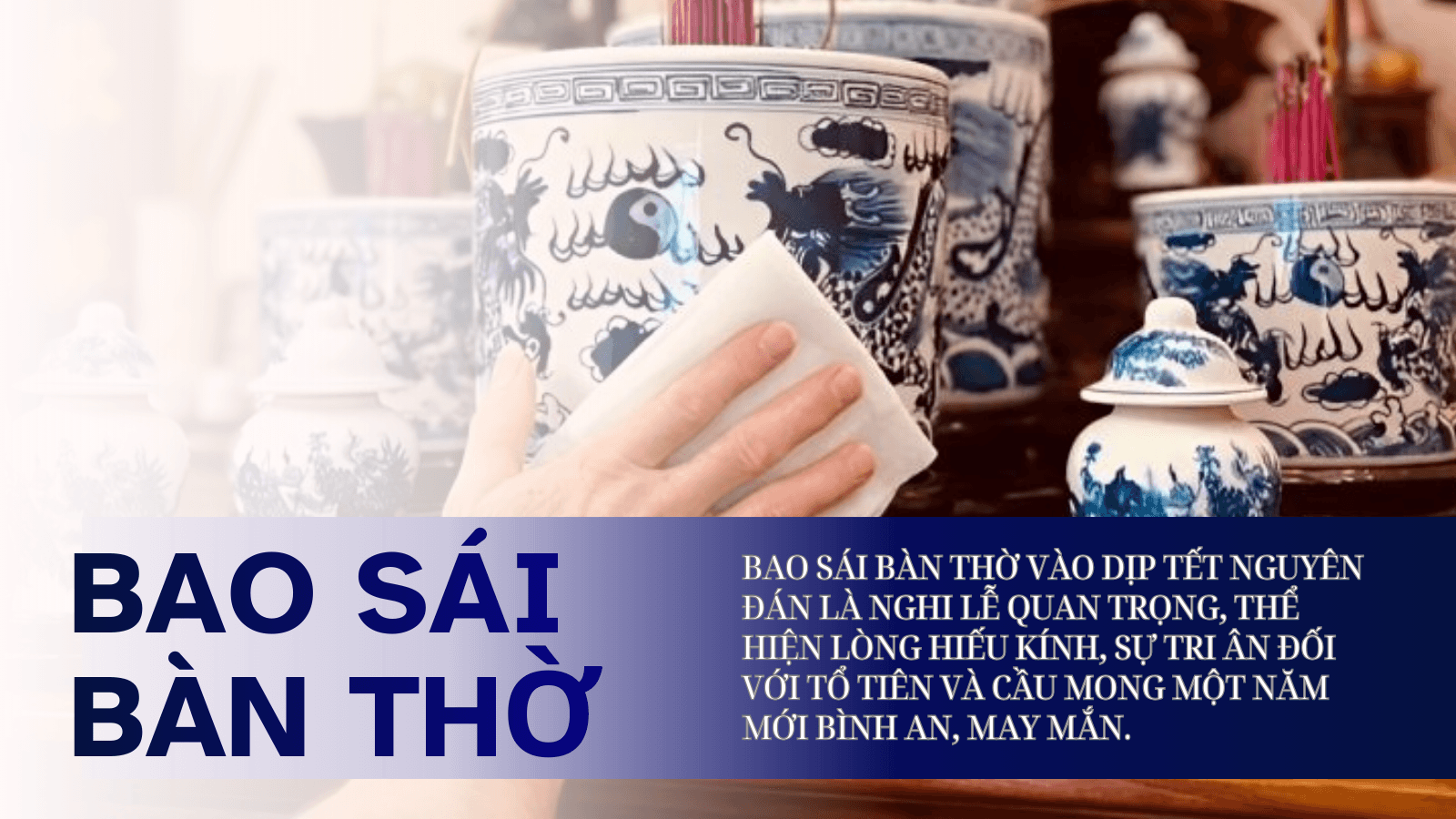
Cleaning the ancestral altar during the Lunar New Year is an important ritual, expressing filial piety and gratitude towards ancestors and praying for a peaceful and lucky new year.
Cleaning the altar is the act of tidying and cleaning the worship space, usually done at the end of the year, most commonly after the ceremony honoring the Kitchen God (23rd day of the 12th lunar month). This is not simply a cleaning task but also carries spiritual significance, reminding descendants to maintain family traditions and customs.
Auspicious times to clean the altar at the end of 2025
On the 20th day of the lunar month (February 7th in the Gregorian calendar), the cleaning and trimming of incense sticks begins from 7:10 AM to 8:50 AM. This day is auspicious for those born in the years of the Tiger, Monkey, Snake, Pig, Dragon, Dog, Ox, and Goat.
On the 23rd day of the lunar month (February 10th in the Gregorian calendar), the cleaning and trimming of incense sticks begins from 7:10 AM to 8:50 AM or 1:10 PM to 2:50 PM. This day is auspicious for those born in the years of the Tiger, Monkey, Snake, Pig, Dragon, Dog, Ox, and Goat.
After the 23rd day of the 12th lunar month, there is no longer any offering to the Kitchen God and Stove God; only cleaning and trimming of incense sticks are performed.
On the 25th day of the lunar month (February 12th in the Gregorian calendar), the cleaning and trimming of incense sticks begins from 7:10 AM to 8:50 AM or 3:10 PM to 4:50 PM. This day is auspicious for those born in the years of the Rat, Horse, Rabbit, Rooster, Tiger, Dragon, Dog, Ox, and Goat.
On the 26th day of the lunar month (February 13th in the Gregorian calendar), the cleaning and trimming of incense sticks begins from 5:10 AM to 6:50 AM and from 3:10 PM to 4:50 PM. This day is auspicious for those born in the years of the Tiger, Monkey, Snake, Pig, Dragon, Dog, Ox, and Goat.
On the 28th day of the lunar month (February 15th in the Gregorian calendar), the cleaning and trimming of incense sticks begins from 7:10 AM to 8:50 AM, 9:10 AM to 10:50 AM, or 1:10 PM to 2:50 PM. This day is auspicious for those born in the years of the Rat, Horse, Rabbit, Rooster, Pig, Dragon, Dog, Ox, and Goat.
Preparation before cleaning the altar.
The person performing the ritual should dress neatly and cleanly, and maintain a solemn demeanor. According to folk beliefs, marital relations should be avoided before the cleansing ceremony, and the consumption of foods considered "unclean" such as dog meat, cat meat, blood pudding, shrimp paste, and medicinal wine should be limited.
Cleaning should be done gently, avoiding dropping or breaking any religious objects. In particular, do not clean the ancestral incense burner before cleaning the incense burner for the deities.
The cleaning solution should be warm, clean water mixed with five-spice water and ginger wine. The five-spice water typically includes cinnamon, star anise, and aromatic leaves such as lemongrass, basil, betel leaves, pomelo leaves, and coriander leaves.
Prayer for permission to clean the altar.
Namo Amitabha Buddha (3 times)
The petitioner's name is... residing at...
Today is the... day of... month... year...
The devotee acknowledges their negligence in allowing the altar to become dusty and sincerely repents. The devotee respectfully informs the deities (depending on whether the altar is dedicated to gods, guardian spirits, or ancestors…) that, having chosen this auspicious day, they request permission to purify the altar, making it solemn and clean. They humbly ask for the deities' witness and blessings.
May the deities bless me so that I may clean and beautify the altar, place it in its proper position, ensure peace for the ancestral spirits, and grant my home a peaceful dwelling.
We, mere mortals, burdened with sins, can only show reverence and sincerity. If we have been foolish or mistaken in any way, we humbly beg for forgiveness and pardon.
(After offering prayers, bow three times).
The proper way to trim incense sticks according to tradition.
After offering prayers for permission, the homeowner proceeds to remove the incense sticks one by one, keeping an odd number such as 15, 17, or 19; families with large businesses may leave 25, 27, or 29 incense sticks to pray for good fortune in the new year.
Incense burner for the deities:Keep 15 or 25 incense sticks.
Ancestral incense burner:Keep 17 or 27 incense sticks.
Incense burner for female and male ancestors:Keep 19 or 29 incense sticks.
After removing the incense sticks from the burner, burn them to ashes, then scatter the ashes in a river or bury them at the base of a tree in the garden. Never throw them in the trash.
Throughout the process, do not move the incense burner or altar. When removing the incense burner, keep it fixed in place; it may be necessary for two people to do this carefully. After completion, the homeowner lights incense to report to their ancestors and deities.
Things to keep in mind when cleaning the altar.
Clean the incense burner first, then clean the other religious objects.
Avoid leaving the altar room door wide open while cleaning to avoid violating the "Yang Guang Sha" (Shattering of Yang Light) principle.
The prayer room should maintain yellow or red lighting, and direct sunlight should be avoided.
For wooden altars, fire-resistant protective glass can be installed, but a frosted decal should be applied to avoid reflecting off religious objects.
Cleaning the altar is not only about tidying the sacred space but also a profound spiritual ritual, helping each family prepare a peaceful and solemn mindset to welcome a prosperous and successful new year.


