
How to keep your pet safe and why you shouldn't use Apple AirTag.
Veterinary experts warn that using Apple AirTag to track pets poses a risk of swallowing batteries that could puncture the digestive tract, and that tracking effectiveness is poor in remote areas.
Many pet owners now tend to use technological devices to track their pets' location 24/7. Apple AirTag is a popular choice due to its low cost and convenience. However, veterinary experts assert that this is not a safe tool for protecting dogs and cats.
Risk of perforation of the digestive tract from the internal battery.
Dr. Shannon Vawter, medical director at Thrive Pet Healthcare Wedgewood in Nashville, Tennessee, warns that the AirTag contains a small battery inside. If a dog or cat swallows the device, acid from the battery could leak out as it is corroded by stomach acid.
This action leads to serious consequences:
- Burning of the digestive tract:Acid from batteries can puncture a pet's stomach or intestines.
- Emergency surgery:The veterinarian had to perform surgery to open the stomach or intestine to remove the device.
- High cost:A surgical procedure to remove a foreign object can cost thousands of dollars, not to mention the pain the pet has to endure.

Limitations in practical positioning capabilities.
Besides health risks, AirTag also reveals several technical weaknesses when used to locate lost pets. The device operates on a "Find My" network, relying on other nearby Apple devices to send Bluetooth signals.
Maleki Burke, founder of Snootiful Hound, said that AirTag's accuracy is limited in rural or sparsely populated areas. If a pet wanders into these places, the displayed location may be inaccurate or completely unavailable, making the search hopeless.
Safer and more effective alternatives
To ensure maximum safety for pets, experts recommend that pet owners apply the following specialized methods:
1. Install an electronic chip (Microchip)
This is the most permanent and secure solution. A chip the size of a grain of rice is implanted under the pet's skin, containing a unique identification number linked to the owner's contact information.
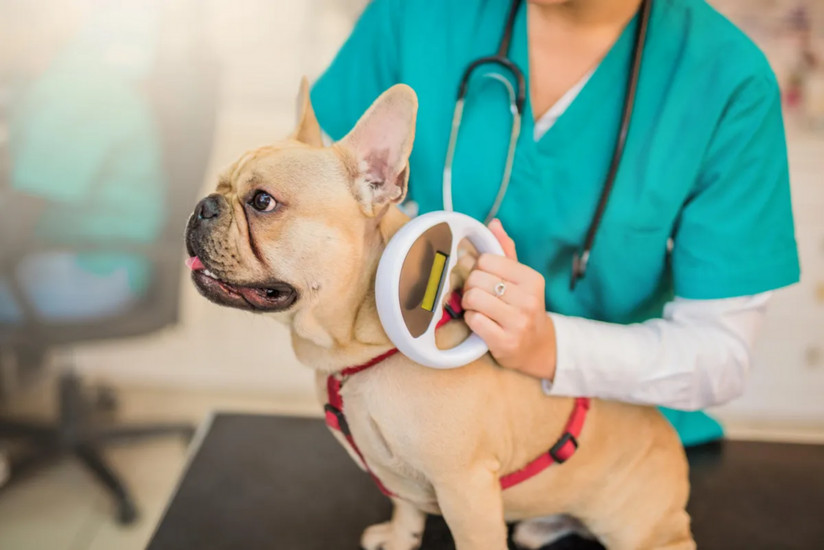
- How to do it:The veterinarian will use a specialized needle to implant the chip under the skin of the neck. This process is as quick as a vaccination injection.
- Benefit:When a pet gets lost and is brought to a clinic or rescue center, staff will use a scanner to identify it and contact the owner.
2. Use a specialized GPS necklace.
Unlike AirTags, dedicated GPS collars use satellite signals to update location in real time, independent of nearby Apple devices. This allows you to find your pet within minutes of them leaving a safe area.
Overall, combining electronic chips (for identification) and GPS collars (for active tracking) is the best way to protect pets, rather than using non-specialized devices like AirTag.


