
How to care for livestock and poultry during the rainy and stormy season.
(Baonghean.vn) - Rainstorms are unfavorable factors that greatly affect the health of livestock and poultry; at the same time, heavy rain can cause localized flooding or widespread flooding, creating opportunities for the spread of diseases. To protect and prevent diseases in livestock and poultry during the rainy season, farmers need to do the following:
Monitor weather developments and proactively prepare contingency plans.
Daily monitoring of weather information on mass media is crucial for proactively implementing technical measures such as upgrading and sheltering livestock facilities.
Develop a plan for providing food and water for the animals, including measures for evacuating the livestock when necessary.
These sessions should be held early in the morning, at noon, and in the evening to proactively implement measures for the day and prepare for the following day.
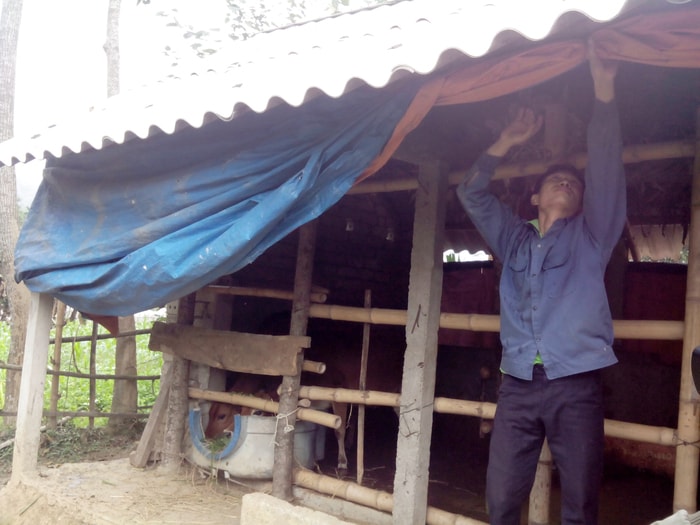 |
Inspect, upgrade, and renovate the animal housing.
- The location of the livestock enclosure should be in a dry, well-drained area, away from other enclosures and densely populated areas to minimize the risk of disease transmission to humans and vice versa. The enclosure should also be built away from areas prone to flash floods.
- Livestock shelters must be sturdy, leak-proof, and flood-resistant, with rain and windproof covers to protect livestock and poultry during heavy rain and strong winds; they should be suitable for the number, characteristics, and age of the livestock and poultry. In low-lying areas, the shelter floor must be raised to prevent flooding. There should be sufficient tarpaulins to protect against rain.
- Inspect the general drainage system of the entire area, especially reinforcing the wastewater drainage system and waste disposal areas to limit pollution during heavy rain or flooding.
- Ensure isolation between animal enclosures and living areas, or between animal enclosures. A disinfectant pit should be placed in front of the animal enclosures.
- Waste disposal areas (manure, garbage, and wastewater) must be far from livestock pens, downwind, in a low-lying location, and away from groundwater sources, schools, hospitals, etc.
Specialized care
- Enhance care and nutrition for livestock and poultry to improve their health, enabling them to withstand adverse impacts and limit disease outbreaks. Implement good care and feeding techniques, appropriate to the breed, age, and production purpose of each type of livestock and poultry.
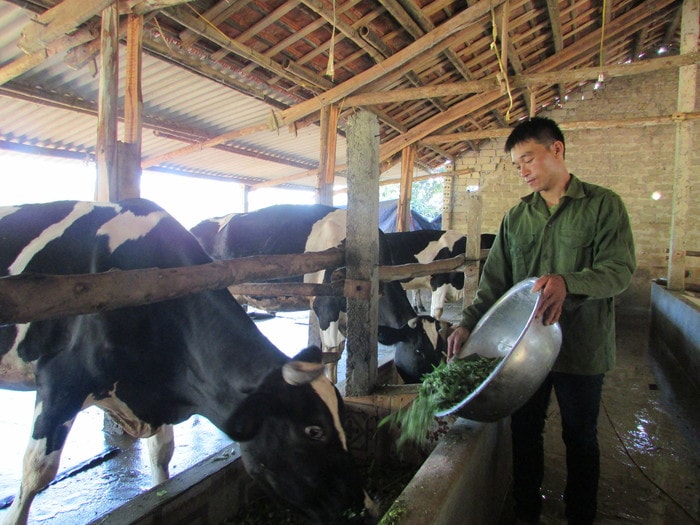
- Ensuring food supply: Grass is the main food source for grazing livestock. During storms, grass is easily flooded or flattened, so it is necessary to proactively stockpile green fodder, which can be dried (straw and grass), or ensiled grass or stems to ensure a food supply for livestock during the rainy season. It is especially important to provide additional concentrated feed for grazing livestock to ensure they receive the necessary nutrients to withstand adverse weather conditions.
- During rainy and stormy days, it is necessary to properly store concentrated feed because the humid weather and rain cause the feed to become moldy; therefore, the feed storage area must be checked regularly every day. When feeding livestock and poultry, pay close attention to the feed, and if mold or an unusual smell is detected, discard it immediately and absolutely do not feed it to the animals.
- For pregnant animals, lactating animals, and dairy cows, it is necessary to supplement their feed with minerals, vitamins, and electrolytes to enhance their immune system.
 |
Disease prevention for livestock and poultry.
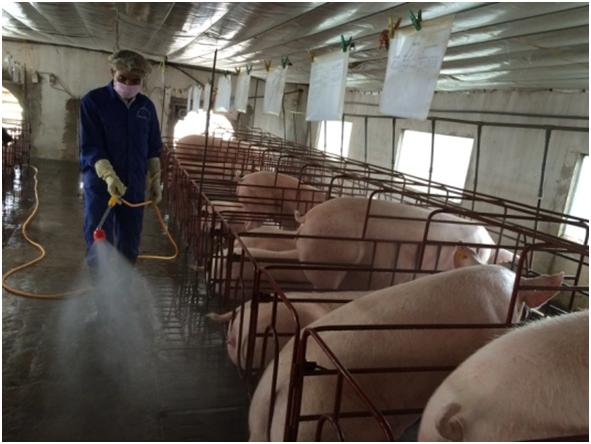
- Enhance hygiene and disease prevention for livestock and poultry: Regularly sweep and clean the inside and outside of the animal enclosures; periodically clean feed troughs, water troughs, and other farming equipment; disinfect the inside and outside of livestock and poultry enclosures to kill pathogens in the environment. Prepare a reserve of essential veterinary medicines such as supportive medications, broad-spectrum antibiotics, and disinfectants…
- Ensure food and water hygiene; Chloramin-B, Chlorine, etc., can be used to disinfect water in areas where the water source is contaminated, ensuring a sufficient supply of clean water for livestock.
- Proactive disease prevention through vaccination: administer all necessary vaccines against common diseases in livestock such as hemorrhagic septicemia in buffaloes and cattle; swine cholera, hemorrhagic septicemia, paratyphoid, foot-and-mouth disease, and porcine reproductive and respiratory syndrome (PRRS) in pigs; avian influenza, Newcastle disease, Gumboro disease, and hemorrhagic septicemia in chickens; avian influenza, duck cholera, and hemorrhagic septicemia in ducks and geese.
- Supplement livestock and poultry with vitamins, tonics, and digestive enzymes during unfavorable weather conditions.
- Regularly check the health of livestock and poultry, especially in the early morning when abnormalities are easily identified through:
Listen carefully to detect any unusual sounds or the absence of everyday sounds.
+ Observe the animals' condition to detect abnormalities such as lethargy, listlessness, or aggression; check the condition of their feces and urine; and also check the daily food and water consumption of livestock and poultry.
Recognizing unusual odors or poor ventilation helps to assess the health status of livestock and poultry.
- Promptly isolate animals showing unusual symptoms, diagnose and treat if necessary, and do not sell or distribute sick or dead livestock and poultry, or their waste, to prevent the spread of disease.
 |
How to handle livestock and poultry when they get wet from the rain.
- When livestock and poultry are exposed to rain or leaks, prolonged immersion in water or wetness will cause them to lose heat, reduce their resistance, and easily develop diseases. Therefore, wet livestock and poultry should be immediately moved into a dry and warm enclosure.
- Replace or supplement dry bedding for livestock. Enhance care and nutrition, supplementing with vitamins, minerals, and digestive enzymes. Livestock showing signs of digestive disorders or respiratory diseases must be isolated and treated promptly.
- After storms and floods, when the water recedes, it is necessary to sweep and clean the barns and pastures, collect waste, and disinfect with antiseptics to kill pathogens in the barn floors and pastures.
Ngoc Anh
(Synthetic)
| RELATED NEWS |
|---|


