
Ground robotics revolution in Ukraine: From logistical support to direct combat.
Ukraine is stepping up the automation of warfare with thousands of ground robots, handling everything from resupply to direct assault, in order to protect soldiers' lives from the pressure of UAVs.
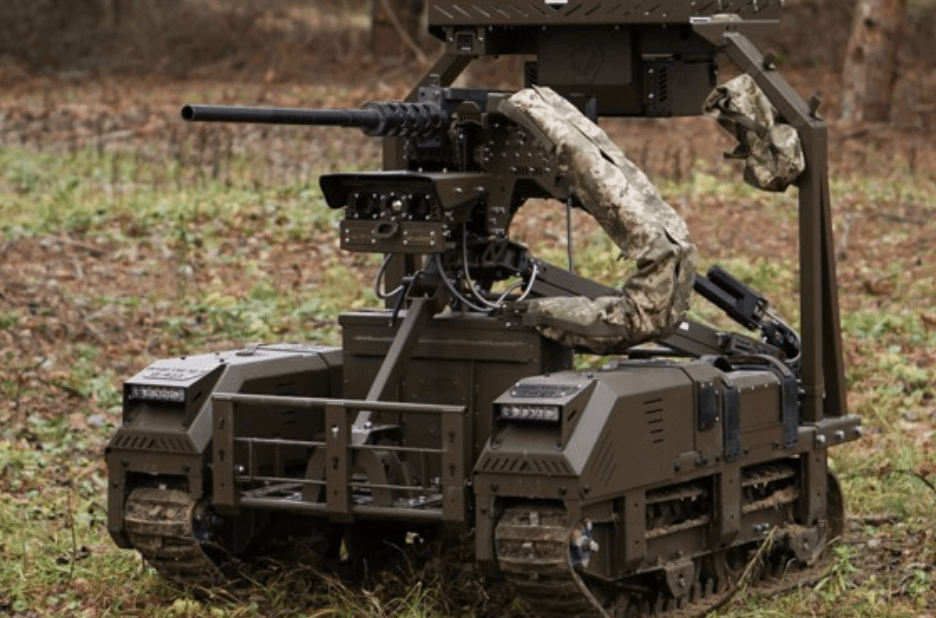
While unmanned aerial vehicles (UAVs) have changed the face of modern warfare, another revolution is quietly unfolding on the ground in Ukraine. Thousands of tracked and wheeled unmanned ground vehicles (UGVs) are becoming an indispensable force, performing tasks ranging from ammunition transport to direct assaults on enemy trenches.
Solutions to preserve lives on the front lines.
For the Ukrainian military, the greatest value of ground robots today lies in their ability to rescue people in the context of an increasingly dangerous zone along the front lines. Due to constant surveillance by enemy UAVs, any transport by pickup truck or on foot within 25 km behind the front lines faces extremely high risks.
According to reports from combat units, approximately 80% of logistical tasks in some critical areas are now being handled by robots. Compact UGV systems are harder to detect than humans and do not emit body heat, helping to maintain the supply chain of food, water, and shelter construction materials without causing casualties to the drivers.
Notably, robots also play a crucial role in evacuating wounded and dead soldiers from areas inaccessible to special forces. A robot from the K-2 Brigade recently saved the life of a wounded soldier by traveling over 4 km through a contested area, successfully bringing the soldier back to safety despite detonating three landmines along the way.
Shifting the focus to direct combat
Not content with just a support role, ground robots are beginning to participate directly in offensive operations. In December 2024, the Khartiia Corps conducted a fully coordinated robotic attack, supported by reconnaissance UAVs. Robots carrying machine guns, flamethrowers, and explosives advanced on enemy positions without deploying soldiers directly into combat.
The UGV's independent combat capabilities are also improving significantly. On some fronts, robots equipped with 12.7 mm heavy machine guns have been able to independently perform continuous position guarding duties for 45 days. During the day, the device moves to the combat position and returns to recharge at night, creating an effective automated defense layer.
Technical challenges and production targets for 2026
Ukraine aims to produce around 50,000 ground robots by 2026, double the previous year's target. Economic efficiency is a driving factor: for the cost of one armored infantry fighting vehicle, the army could equip itself with up to 77 small combat robots.
| Characteristic | Specifications/Details |
|---|---|
| Average cost | Approximately $24,000 |
| Integrated technology | Digital cameras, Starlink, explosion-proof tires. |
| Common weapons | 12.7 mm machine gun, flamethrower, landmines |
| Current limitations | Rugged terrain, higher cost compared to suicide drones. |
However, UGVs still face many technical hurdles, such as the ability to move across complex terrain and the risk of being destroyed in open areas. To overcome these, engineers are integrating Starlink satellite communication systems, high-capacity batteries, and uniform recognition chips to minimize the risk of friendly fire. This development is transforming the Ukrainian battlefield into a real-world laboratory for the next generation of automated warfare.


