
How to distinguish between PE and PVC food wrap to ensure health safety.
This guide helps you identify PE and PVC food wrap by color, flexibility, and adhesive properties, allowing you to choose the safest type of wrap for your family meals.
Food wrap is an indispensable item in the modern kitchen; however, not all types of wrap have the same properties. Currently, the two most common types are PE (Polyethylene) and PVC (Polyvinyl Chloride). According to experts, understanding the differences between them is crucial for protecting health, as PE wrap is generally considered safer when in contact with food at high temperatures.
PE food wrap: The preferred choice for safety.
PE plastic wrap is made from virgin polyethylene resin, notable for its colorless, odorless properties and the absence of harmful substances such as BPA. This type of wrap is widely recommended for household use due to its high purity.
The distinguishing feature of PE film is its high transparency, allowing users to easily see the food inside. The film is flexible and elastic, easily wrapping tightly around bowls and plates or directly over food. In particular, PE film is usually naturally white and less sticky to the touch.
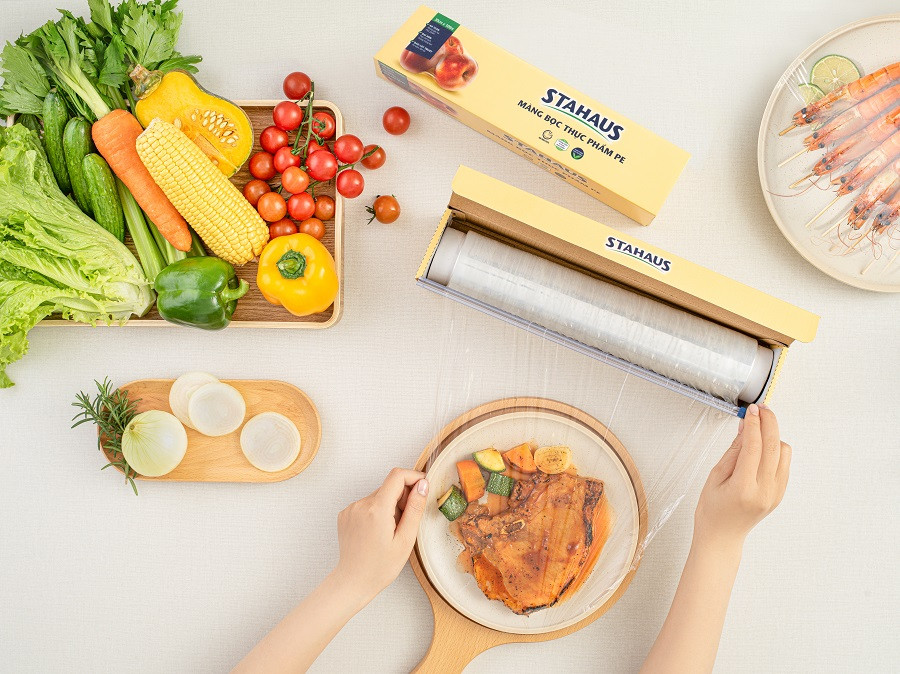
PE film is commonly used to preserve raw and cooked food, fruits, vegetables, and leftovers. Additionally, it is widely used for packaging frozen food at home.
PVC food wrap: Superior adhesion
PVC food wrap is made from Polyvinyl Chloride, which is characterized by its very strong adhesive properties. Thanks to this property, PVC film adheres tightly to the surface of food or the opening of the container, creating an effective barrier against outside air and moisture.
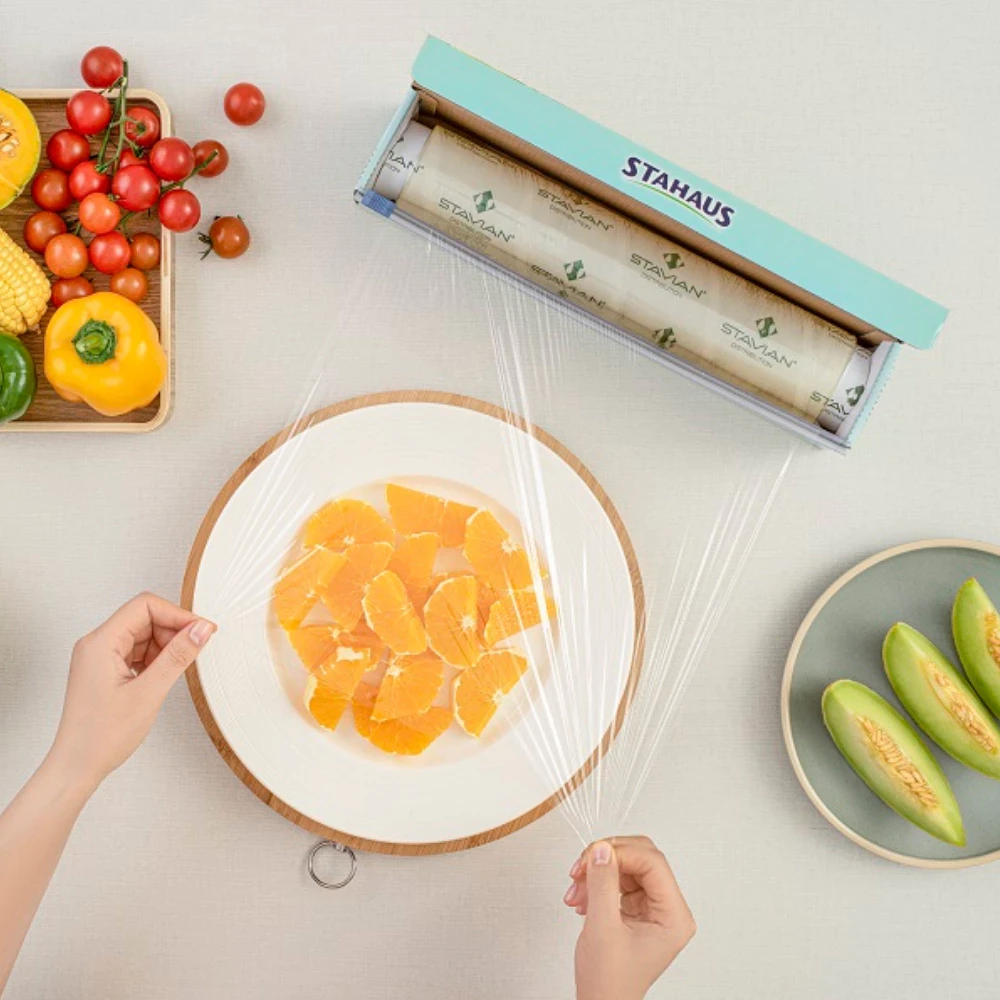
Although convenient for packaging retail food in supermarkets or preserving fresh meat and fish, users should be cautious when using PVC film. This type of film can release harmful substances if manufacturers use low-quality additives. In particular, PVC film should not be in direct contact with cooked food containing a lot of oil and fat at high temperatures.
Detailed comparison table of PE and PVC wrapping films.
To help consumers get the most objective view, here is a summary table of the technical specifications and key identifying characteristics of these two types of wrapping film:
| Criteria | PE film | PVC film |
|---|---|---|
| Material | Polyethylene | Polyvinyl Chloride |
| Color | White | Pale yellow, transparent |
| Adhesion | Moderate adhesion | High adhesion |
| Safety | Safe and non-toxic. | It can be toxic if it contains substandard additives. |
| Environment | Easy to recycle, eco-friendly. | Difficult to recycle |
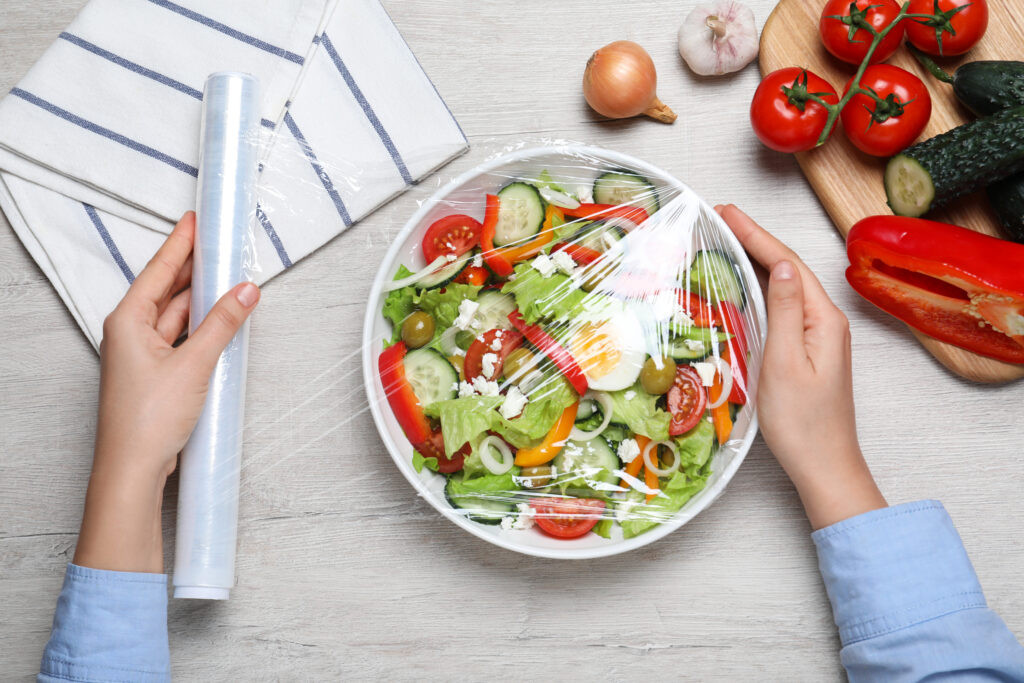
Advice when choosing food wrap
The decision of which type of plastic wrap to buy depends on the specific needs of each family. If you prioritize convenience and strong adhesion for wrapping vegetables and fruits at stores and supermarkets, PVC film is a popular option. However, it is necessary to ensure the origin is clearly stated to avoid harmful additives.
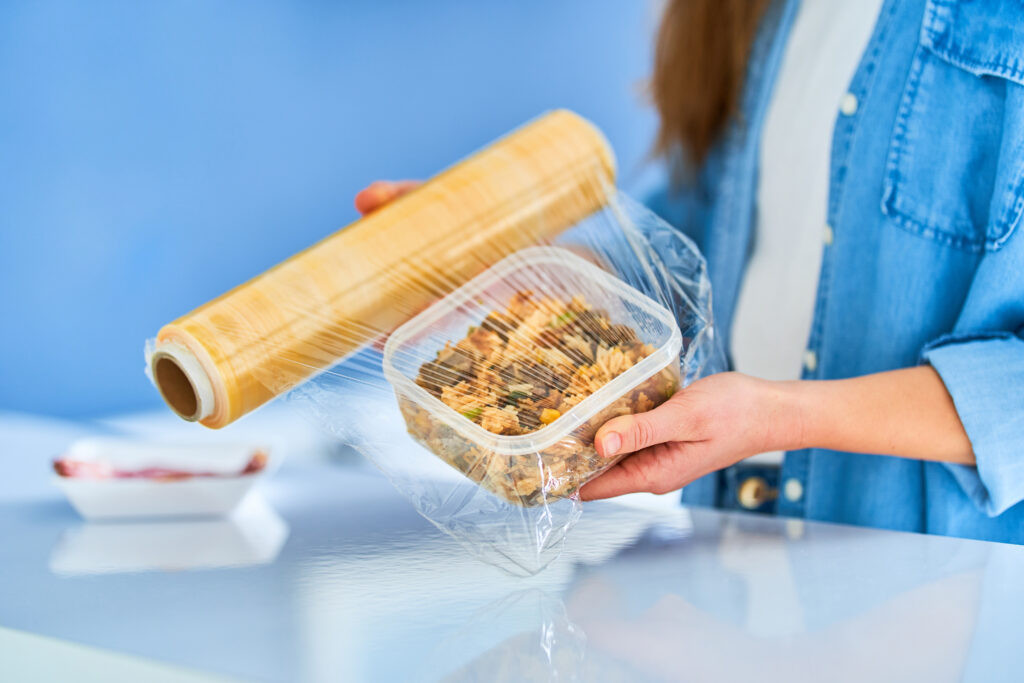
Conversely, if your top priority is health safety and environmental protection for everyday household use, PE film is a better choice. This type of film ensures greater purity and safety when in contact with various foods under basic temperature conditions.


