
There needs to be a mechanism for citizens to exercise their right to oversight.
"I think that if we want the people to exercise their right to monitor, we need to have specific mechanisms in place for them to do so."
Deeply aware of the importance of promoting democracy and upholding responsibility in implementing the "four on-the-spot" principle at the grassroots level to prevent and combat corruption, embezzlement, and waste in the new period, the Resolution of the 13th National Congress of the Party clearly states: The Party leads, the State manages, the Fatherland Front and political and social organizations are the core to enable the people to be masters, Party committees and organizations, organizations in the political system, Party members, cadres, civil servants, and public employees set an example, practice democracy, abide by the law, and uphold social ethics.
How can we promote grassroots democracy to effectively prevent and combat corruption? Our reporter interviewed Ms. Bui Thi An, a member of the 13th National Assembly, on this issue.
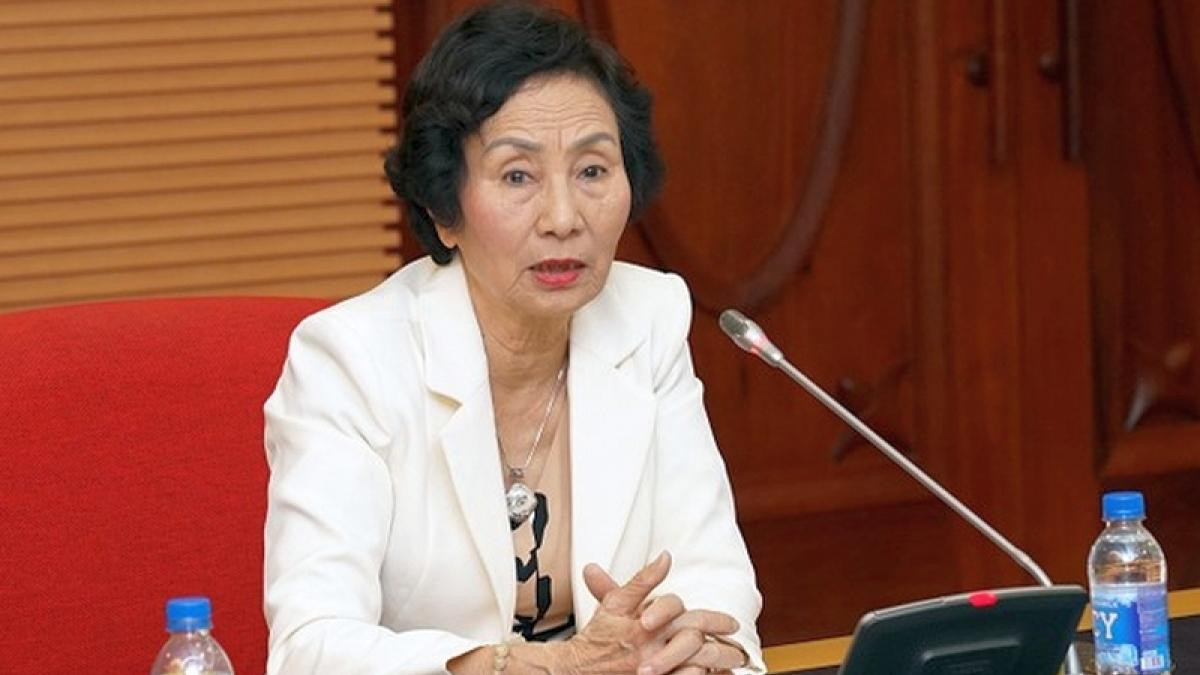 |
Ms. Bui Thi An – Member of the 13th National Assembly |
PV:How would you assess the anti-corruption efforts at the grassroots level in the recent past?
Ms. Bui Thi AnIn the recent period, with the decisive direction of the Central Steering Committee on preventing and combating corruption and negative phenomena, the work of preventing and combating corruption has made significant progress and yielded certain results; however, some limitations still remain.
If democracy is promoted effectively, the fight against corruption will be much more successful. Many people still have a hesitant mindset, fearing that speaking out might offend others, and therefore remain reserved. Not many people dare to come forward and report wrongdoing when they discover it. Therefore, in the coming period, it is necessary to enhance and promote grassroots democracy in the fight against corruption and negative practices.
PV:The 2018 Law on Prevention and Combat of Corruption clearly stipulates the rights and responsibilities of the people in participating in monitoring the implementation of laws on preventing and combating corruption, aiming to promote and mobilize the combined strength of the entire political system in the fight against corruption, Madam?
Ms. Bui Thi An:In the fight against corruption, the participation of the people is far more effective because "the people carry the boat, and the people can also overturn it; the people's power is like water." Throughout the country's history, it has been proven that with the people, we have everything; without the people, we lose everything. Therefore, in the fight against corruption, the participation of the people is extremely important.
Since the enactment of the Anti-Corruption Law in 2018, citizens have been able to participate in and supervise the fight against "internal enemies." In particular, the 13th National Congress documents added the phrase "the people know, the people discuss, the people do, the people inspect, the people supervise, and the people benefit," thus making the position of the people extremely important.
I believe that if we want the people to exercise their right to oversight, we need a specific mechanism for them to do so. What will happen to the people's opinions after they are expressed? Who will respond? How long will the response take? What is the accountability of the competent authorities? The people's right to oversight must be concretized and codified into law.
In addition, it is necessary to select leaders who are conscientious, capable, and ethical, and who formulate policies based on the interests of the people.
Therefore, how can we institutionalize citizen oversight? What are the limits of citizens' rights, how should they be exercised, and how will their opinions be addressed and explained? Only then will the effectiveness of anti-corruption and anti-negative practices be significantly improved, thereby purifying the ranks of officials.
We need to strive to select local leaders and those in various sectors who possess sufficient qualities and ethics, and who prioritize the people in policy-making. In this way, public participation and oversight will be much more effective and substantial.
Although the Party Congress documents have stated, and Article 9 of the Constitution stipulates, the Vietnam Fatherland Front has the right to supervise, I believe that it still needs to be further enhanced and made more specific for much greater effectiveness. When the people are in agreement, victory is certain.
PV:Promoting democracy at the grassroots level is considered key to the fight against corruption and waste. However, a survey by the Central Steering Committee on Anti-Corruption and Negative Practices shows that many localities and sectors have not yet thoroughly addressed this issue, leaving people dissatisfied with the way local governments operate. What are your thoughts on this?
Ms. Bui Thi An:Political and social organizations and higher-level management agencies must participate in monitoring how lower-level officials implement the law. For example, they should monitor the implementation of the Law on Citizen Reception to see if officials are fully complying with it, and whether their responses to complaints and denunciations are in accordance with the law. All of this must be public and transparent.
The Law on Access to Information stipulates that everything must be public and transparent. Information about the Party's guidelines and policies, and the State's laws and regulations, especially those directly related to people's lives, must be provided directly and comprehensively to the public for effective public oversight.
Even soliciting public opinion requires a methodical approach, considering where and how to gather opinions so that it's not merely a formality.
PV:Thank you, ma'am.


