
We need to pave the way for culture through a Sandbox mechanism.
In the context of Nghe An province urgently developing the Draft Action Program to implement Resolution No. 80-NQ/TW of the Politburo and Resolution No. 30/NQ-CP of the Government on culture, a keyword is attracting special attention from experts and managers: Sandbox Mechanism.
A regulatory sandbox is a controlled legal framework that allows businesses to test new products, services, or business models, with limitations on scope and duration, under close supervision by regulators to minimize risk.
When writingchemistry"Partnering" with the digital economy
Government Resolution 30/NQ-CP clearly outlines the task of implementing a controlled testing (sandbox) mechanism in the reform of the organization and management of cultural activities. Based on the spirit of Politburo Resolution 80-NQ/TW and Government Resolution 30/NQ-CP, as well as the specific characteristics of the province, we propose a Sandbox mechanism (controlled testing) through the following four key proposals:
Firstly, a Sandbox approach to exploiting heritage economically on a digital platform.For a locality with such a vast heritage treasure as Nghe An, digitizing 100% of its heritage is an urgent goal. However, to prevent this data from remaining "dormant," Nghe An needs a Sandbox mechanism that allows for piloting the National Financial Asset Trading (NFT) business based on images of tangible and intangible heritage.
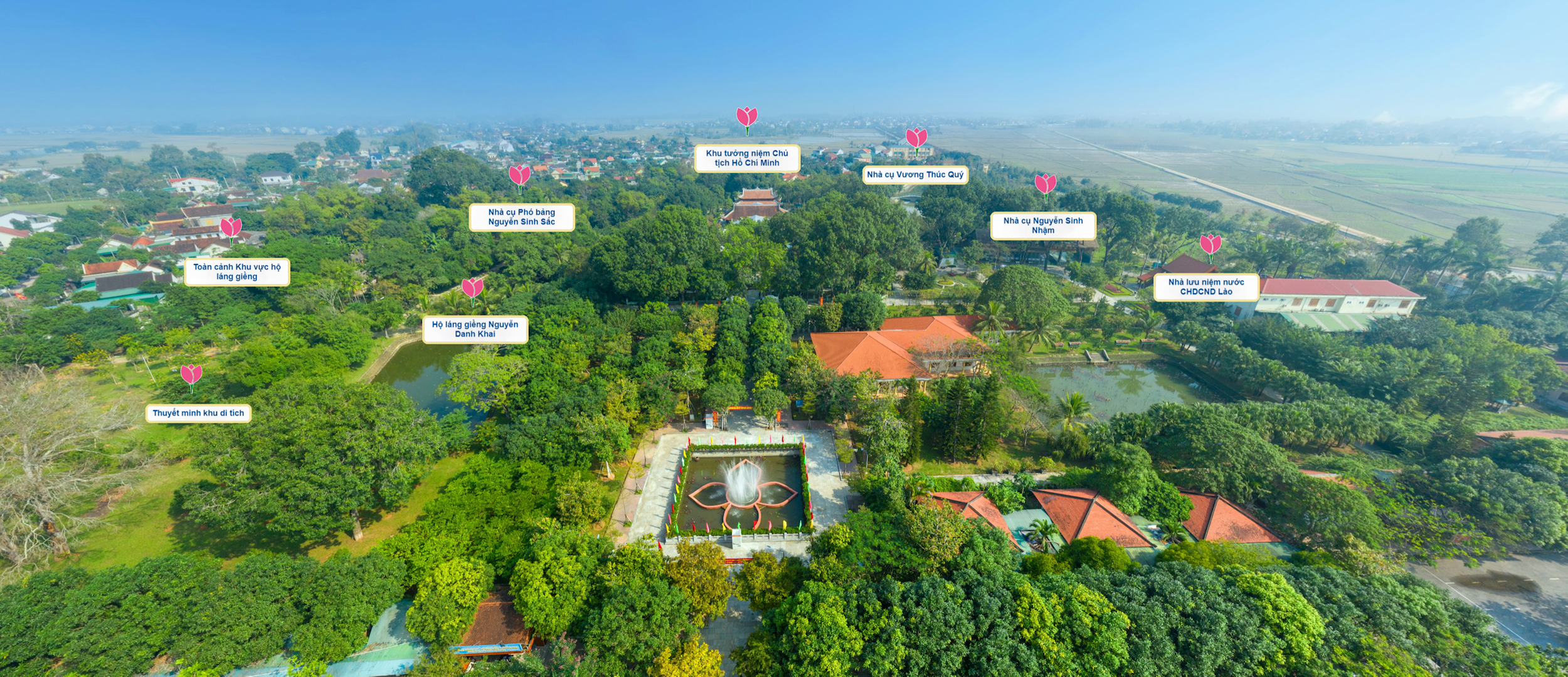
Instead of just focusing on preservation, the province could allow technology companies to collaborate with museums and historical sites (such as the Kim Lien Memorial Area or the Nghe An Museum) to create digital cultural products and virtual reality (AR/VR) shows. Importantly, the commercialization of heritage works and images as digital assets (NFTs) on cross-border platforms is a new field lacking clear legal regulations; therefore, a Sandbox mechanism is needed to protect copyright and digital cultural sovereignty. This mechanism would help solve the problem of "both preservation and development," transforming heritage into digital resources capable of generating real economic value.
In addition, a pilot model of "One Heritage Site - One Digital Product" could be implemented, introducing interactive cultural experience services at key historical sites such as the Kim Lien Memorial Area or Vinh Ancient Citadel, where tourists can pay for and enjoy cultural services online.
Secondly, the Sandbox model in the context of new collaboration and cultural governance.One of the biggest bottlenecks in cultural development is the operational efficiency of public institutions. The "public investment - private management" model in large projects such as the Ví, Giặm Theater or the Provincial Sports Complex is a necessary direction. Accordingly, the State invests in infrastructure but entrusts professional businesses with operation to optimize business efficiency and maintenance of the facilities.
The Sandbox mechanism here involves boldly piloting the delegation of operational authority over state-funded cultural institutions to professional private entities. This not only helps reduce budgetary pressure for maintenance (currently, the draft requires a minimum of 2% of the total annual budget) but also creates high-quality cultural services that closely match market demands.
At the same time, it is also necessary to pilot a public-private partnership model for the development of arts and culture, piloting a mechanism that allows this Fund to receive resources from social mobilization and disburse funds to creative art projects in a flexible manner, not bound by rigid public investment regulations, in order to promote high-quality works of art.
Third, a sandbox for emerging cultural industries and the night-time economy.Resolution 80-NQ/TW of the Politburo sets a target for cultural industries to contribute 7% of GDP by 2030. Government Resolution 30/NQ-CP also mentions encouraging digital cultural products and Esports. The draft Action Program of the Provincial Party Committee to implement Resolution 80 has identified key areas such as software, entertainment games, and especially promoting professional Esports. Nghe An could pilot professional Esports tournaments linked to promoting the local image and positioning the province as a new creative center.
To achieve this, the province needs a policy sandbox to attract innovative technology startups. Nghe An could pilot "digital content creation spaces" with specific tax incentives, land use rights, and superior telecommunications infrastructure to attract game designers and streamers to the province.

Nghe An has identified the development of nighttime economy and new industries, therefore a Sandbox mechanism is needed to "pave the way". The mechanism for live shows and the nighttime economy needs to pilot specific regulations regarding operating hours, sound management, security, and accompanying services for experiential spaces like "Choa Show" or shows on Vinh pedestrian street, helping businesses invest confidently without worrying about being hampered by usual administrative regulations.
Fourth, the Sandbox approach in talent attraction and retention policies.There is a need for a mechanism to "commission" innovative and groundbreaking works, piloting a model of commissioning artists and artisans based on output results (works winning international awards, shows generating high revenue) instead of administrative budget allocations.
In addition, there is a need for exceptional treatment of folk artisans, allowing for pilot programs of special regimes for artisans who transmit the heritage (Vi, Giam) in communities and schools, considering this a type of "special public cultural service" to mobilize local budgets for flexible payment.
Risk management through transparency
Many have expressed concerns that "experimental" testing could lead to legal risks or distort cultural values. However, Resolution 30/NQ-CP emphasized the shift from "pre-inspection" to "post-inspection" linked to a transparent system of standards and regulations.
The sandbox for Nghe An is not a privilege to do wrong, but rather a fast-track mechanism for rapid response. All experimental activities, from the live night show at Vinh Ancient Citadel to digital tourism services, need to be closely monitored through the V-Culture Index and modern data management tools.

Integrating the Sandbox mechanism into the Provincial Party Committee's Action Program early will help Nghe An proactively adapt to the development of Industry 4.0 and digital transformation. It creates a "safe space" for the province to test new cultural business models before scaling them up, helping to unlock social resources and reduce pressure on the provincial budget.
This not only demonstrates the decisiveness of the Nghe An Provincial Party Committee in implementing the Central Government's directives, but also affirms a modern approach to cultural management: Culture is not just for preservation, it is also for building the future.


