
The construction of embankments to prevent erosion along the Lam River banks needs to be implemented soon.
During the prolonged rainy season of 2025, riverbank erosion along the Lam River in the western part of Nghe An province, particularly in Con Cuong commune, became severe. This situation necessitates the urgent construction of embankments.
Riverbank erosion causes anxiety among residents.
In the days following the 2025 rainy season and floods, Con Cuong commune was one of the localities in Nghe An province that suffered the most damage. Besides causing widespread flooding, the rising floodwaters also triggered landslides along the banks of the Lam River, threatening the lives of the local people.
In fact, we recently observed that along the Lam River section flowing through Con Cuong commune, many patches of land have been deeply eroded. Sections of the riverbank have collapsed from previous floods, creating large cavities that expose the reddish soil, like unhealed wounds. The once peaceful Lam River has become a constant threat, as each major flood puts large areas of land at risk of landslides into the river.
.jpeg)
In Thuy Khe village, Con Cuong commune (formerly Chi Khe commune), many sections of the Lam River bank have been eroded by 5-8 meters, in some places even encroaching on the foundations of people's houses. It has even encroached right up to National Highway 7. Particularly, in the area of the Chi Khe gas station, the riverbank has eroded the wall of Mr. Tran Van Hai's family home. It is noteworthy that this erosion has been occurring for 7-8 years, with the most severe damage expected in 2025.
In the Vinh Hoan hamlet of the former Bong Khe commune, several houses along the riverbank have suffered serious erosion. Among them, five households have had to dismantle their houses and gather what little remains to urgently relocate to temporary housing elsewhere.
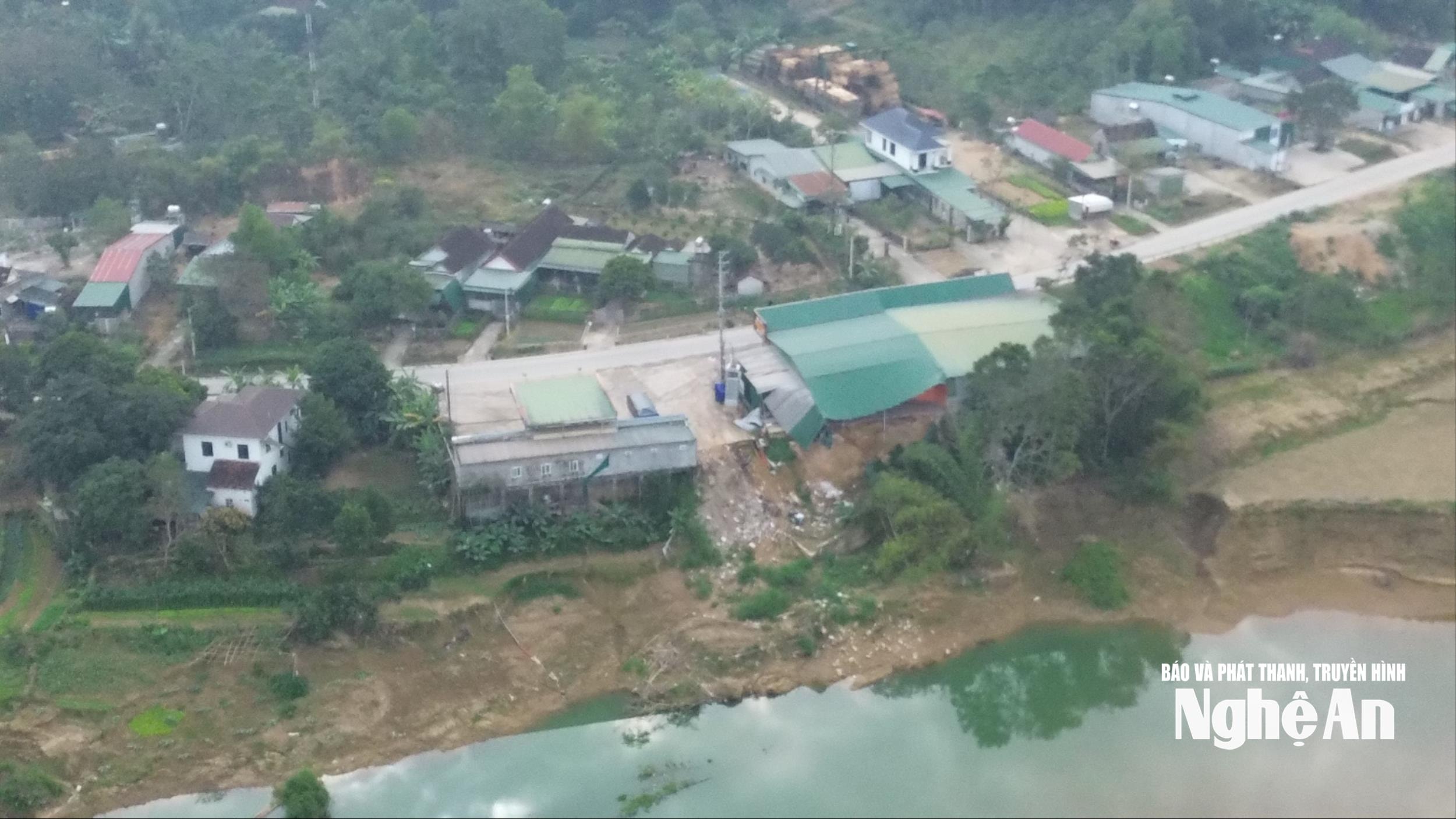
Ms. Tran Thi Bay, a resident of Vinh Hoan village whose house is located near the landslide area, shared that those whose houses were swept away have had to relocate temporarily, while the remaining families living along the riverbank live in constant fear. According to Ms. Bay, although the government has a plan to build a riverbank protection embankment, the project has not yet been implemented. The people here only hope that the embankment will be built soon so they can live in peace and stability.
Not only have people lost their homes, but they have also witnessed thousands of square meters of agricultural land being swept away after just a few floods. The alluvial plains along the river, the main source of livelihood for many households, are now just jagged, deep holes. In some places, in just one rainy season, the riverbank has receded dozens of meters, wiping out entire stretches of corn, peanut, and other crops. The erosion is happening so quickly that people can't react in time.
.jpeg)
Regarding the erosion of the Lam River banks, for many years, residents of Chi Khe, Bong Khe communes and the former Con Cuong town (now Con Cuong commune) have repeatedly petitioned the relevant authorities. The concerns and anxieties of voters have also been continuously reflected in voter outreach meetings, expressing their hope for a fundamental solution to protect the riverbanks and stabilize the lives and production of the people living along the river.
A protective embankment needs to be built soon.
According to statistics from the People's Committee of Con Cuong commune, following successive natural disasters in 2025, many areas along the Lam River in the commune suffered serious erosion and urgently need embankment construction for protection. Specifically, Section 1 is the Lam River embankment from Thanh Nam bridge to Vuc Bong strait, Lam Bong village, with a length of approximately 2.5 km; Section 2 is the embankment from Thanh Nam bridge to Chi Khe gas station, passing through Block 4 and the villages of Tien Thanh, Quyet Tien, and Thuy Khe, with a length of approximately 4.5 km.
.jpg)
Furthermore, the riverside area between the two aforementioned embankment sections, from Thanh Nam bridge to Vuc Bong strait, approximately 2.5 km long, is currently experiencing particularly severe erosion, with an unusually rapid rate of soil erosion after each flood. In fact, many sections of the riverbank have been torn apart, losing hundreds of meters of land each year; some houses, buildings, and essential infrastructure have completely collapsed. The erosion is expanding, directly threatening people's lives, property, agricultural land, and nearby transportation systems.
Mr. Cao Tien Thinh, Head of the Economic Department of Con Cuong commune, said that after the heavy rains and floods caused serious erosion along the Lam River, the local authorities promptly reviewed and compiled damage statistics and reported the findings, proposing that higher authorities invest in the construction of protective embankments as soon as possible. According to Mr. Thinh, if the project is not implemented promptly, the risk of losing residential and agricultural land, and affecting many public infrastructure projects, is very high. Investing in embankment construction at this stage is urgent and also has long-term significance in stabilizing the riverbanks, protecting residential areas, ensuring safety against natural disasters, and preserving land resources for the locality.
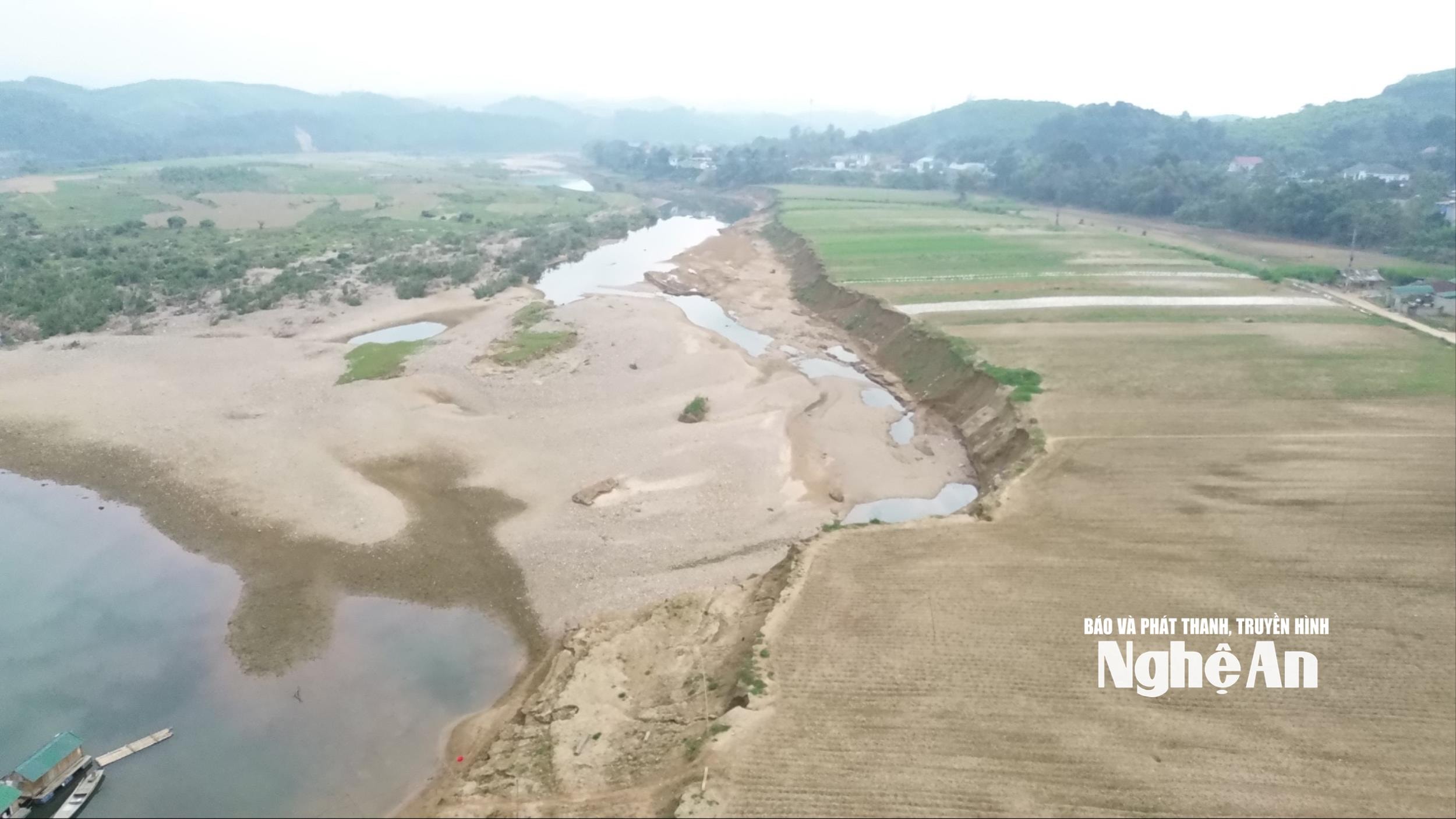
According to Mr. Thinh, the People's Committee of Nghe An province issued Decision No. 2980/QD-UBND dated September 22, 2025, on the allocation and supplementary budget expenditure. Based on that, the Department of Agriculture and Environment - the project's investor - is directing the Management Board of Investment Projects for Agricultural and Rural Development to prepare a report proposing the investment policy for the project "Construction of emergency landslide prevention embankments in the residential area of Vuc Bong Pass, Vinh Hoan village, Con Cuong commune". For other landslide-prone areas, the locality will continue to compile reports and proposals for consideration of investment in the future.
It is evident that landslides are no longer a localized phenomenon but have become a constant threat, spreading across many villages and hamlets along the Lam River. The increasingly strong and erratic currents render temporary reinforcement measures insufficient. Without fundamental and systematic solutions, the risk of further loss of residential land, agricultural land, transportation infrastructure, and public facilities is unavoidable, leading to long-term consequences for the socio-economic development of the locality.
Given this situation, the early implementation of projects to build embankments to prevent erosion along the Lam River section passing through Con Cuong and other localities is not only an urgent requirement but also a vital task to protect the people, preserve land resources, and ensure the safety of National Highway 7. This is not simply an infrastructure project, but a "shield" against natural disasters, a support system to help people stabilize their lives and restore production after heavy losses caused by floods.


