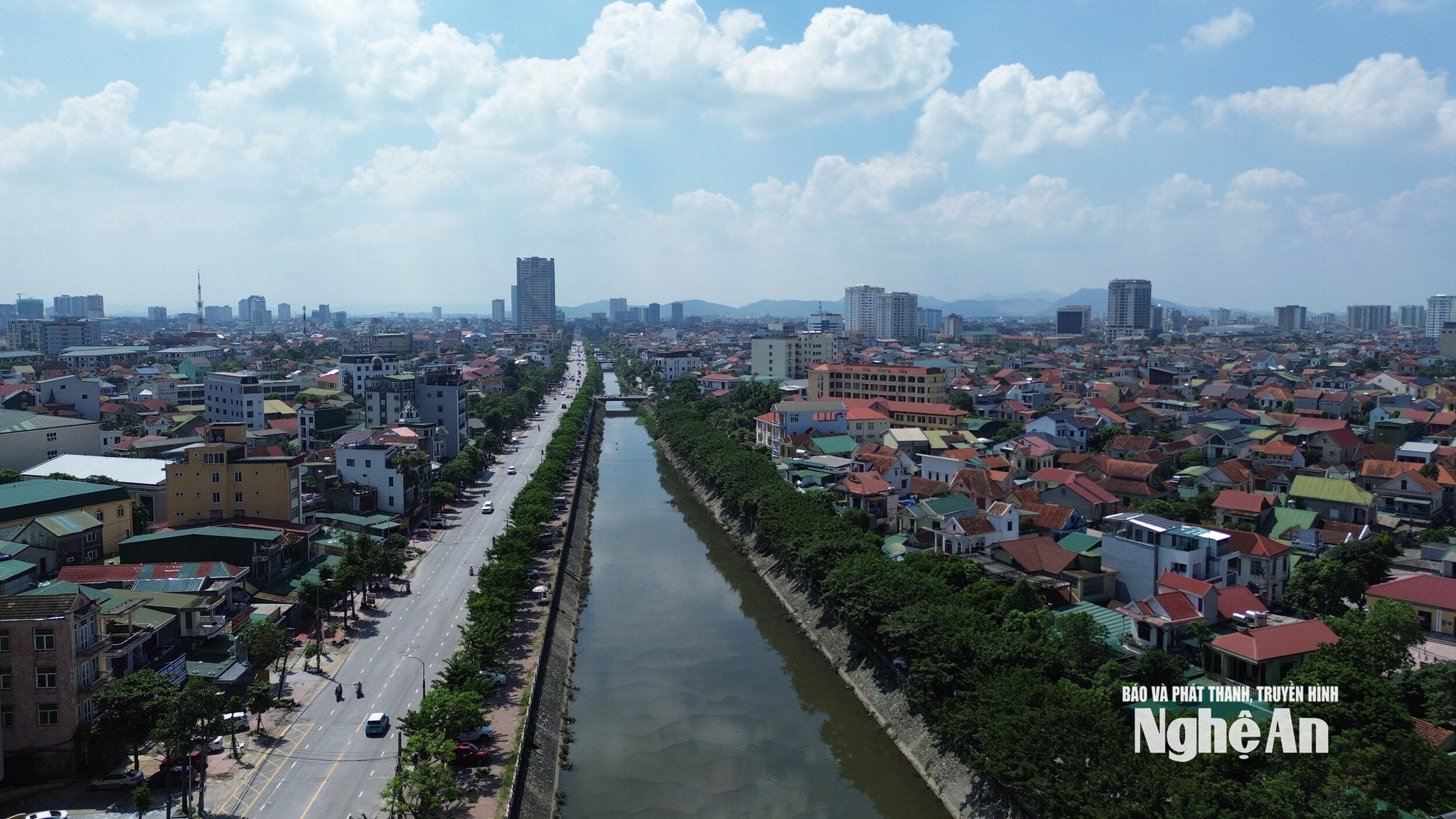
Caution is needed regarding the "undergrounding" of the North Canal.
Almost immediately after the Vinh urban area was flooded on September 19th, the issue of "undergrounding the North Canal," which had subsided, was reignited. This is understandable, as the devastating flood highlighted a crucial function of the North Canal: drainage. Therefore, many pressing questions have arisen: If undergrounded, will the North Canal become silted up and clogged with waste, rendering its drainage function ineffective over time?
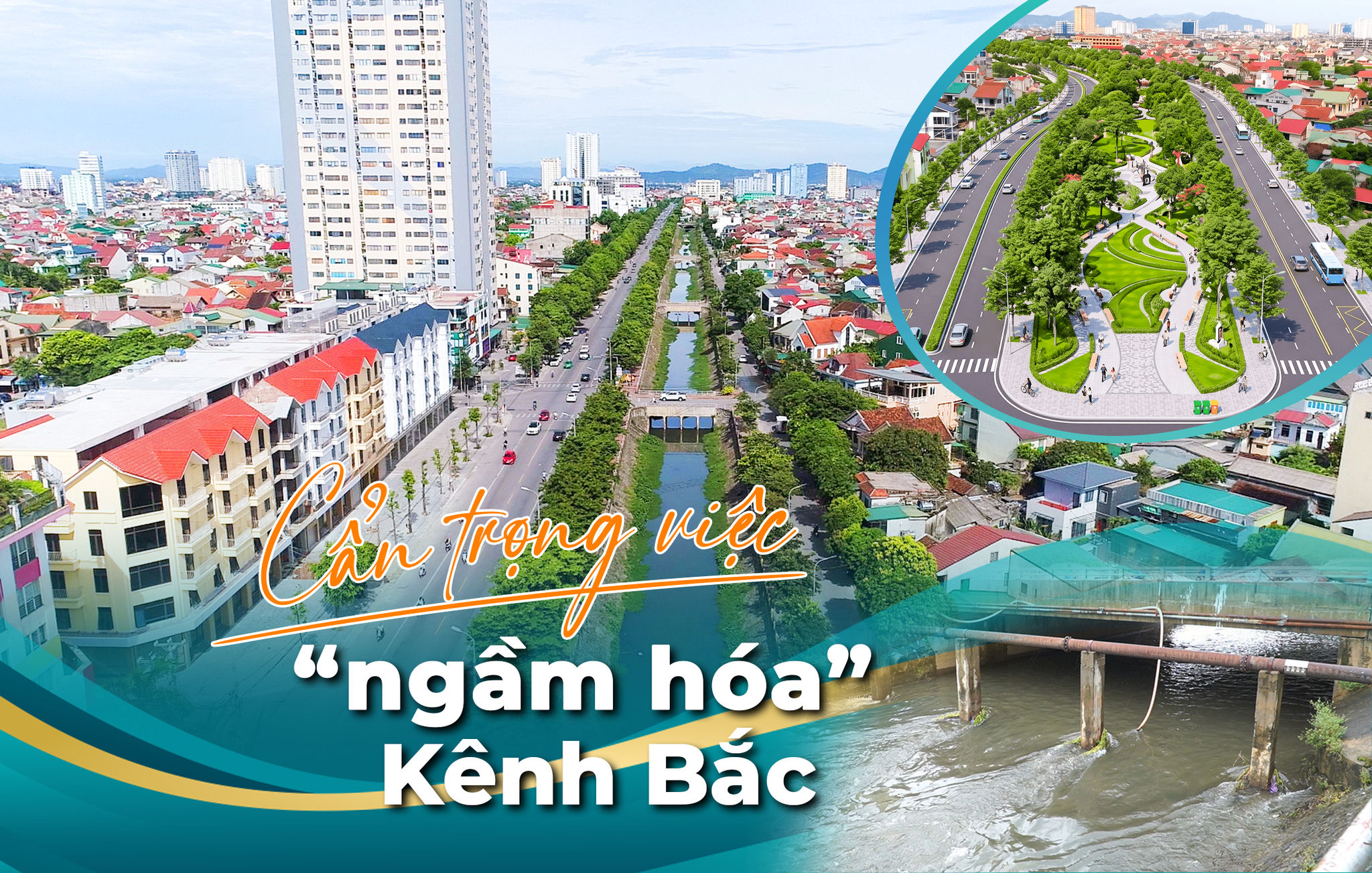
Content:Nhat Lan |Design:Huu Quan
•23/09/2026
Almost immediately after the Vinh urban area was flooded on September 19th, the issue of "undergrounding the North Canal," which had subsided, was reignited. This is understandable, because this devastating flood clearly demonstrated a crucial function of the North Canal: drainage. Therefore, many troubling questions have arisen: If undergrounded, will the North Canal become silted up, accumulating mud and waste, thus negating its drainage function over time?
Let's go back to mid-August, when the Nghe An Department of Construction organized a consultation with organizations and individuals regarding the local adjustment plan for the general planning of Vinh City until 2030, with a vision to 2050. The main focus was on expanding Nguyen Sy Sach Street to 60m, with 10 lanes, and undergrounding the entire North Canal section from Nguyen Van Cu Street to Hung Hoa regulating lake.
The plan was announced because Nguyen Sy Sach Street is an important external transportation artery connecting the old Vinh City with the developing areas in the East, but the road's cross-section is inadequate and inconsistent across different sections.
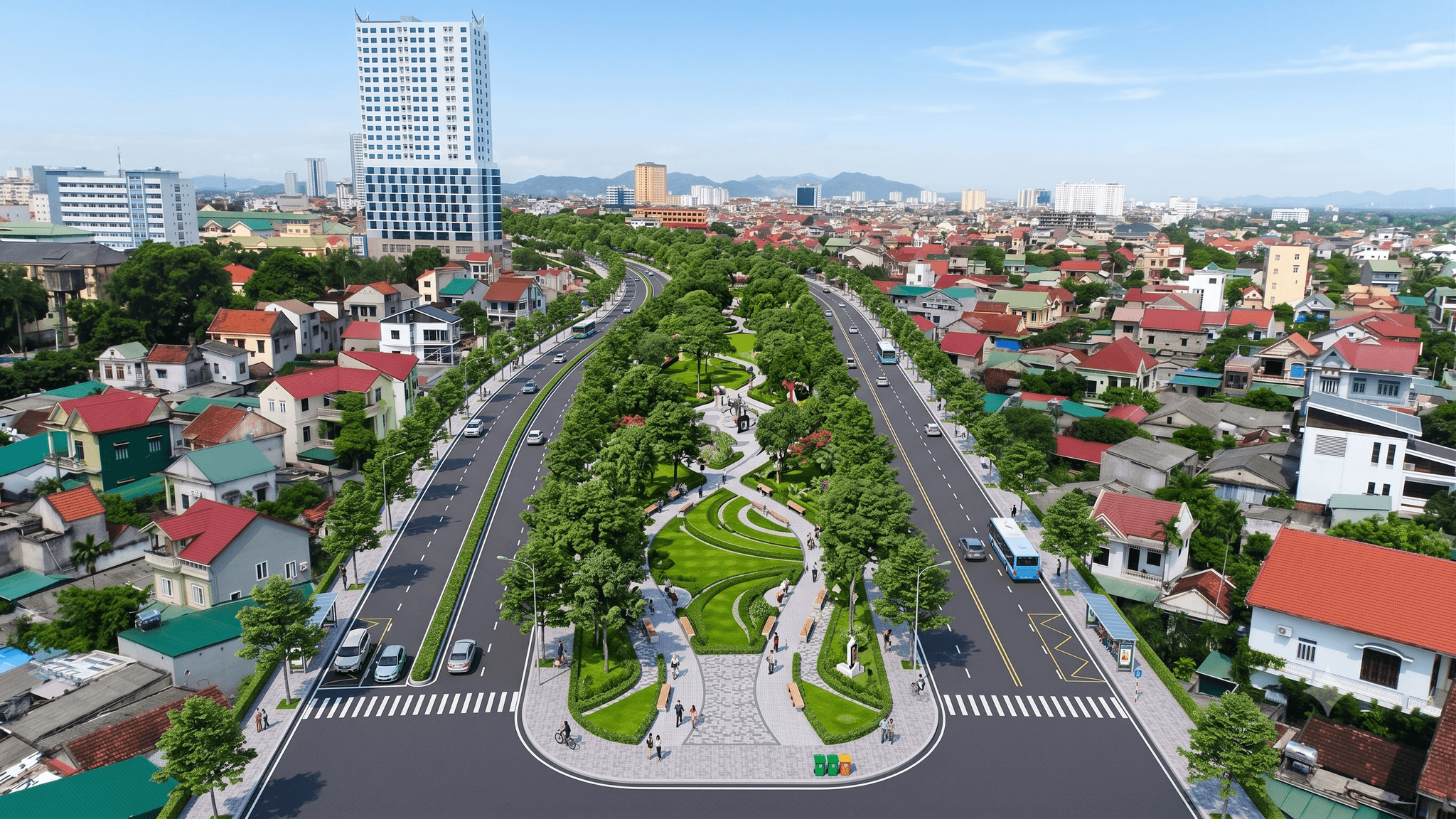
Regarding benefits, according to experts, when Nguyen Sy Sach Street is widened, it will significantly increase traffic capacity, thoroughly resolve the risk of traffic congestion, and open up new development space for the Northeast region of Vinh City (formerly).
At the same time, it helps eliminate environmental pollution hotspots, improve urban sanitation quality, and allows for the synchronized investment in modern technical infrastructure systems (drainage, electricity supply, telecommunications, green spaces, lighting) so that Nguyen Sy Sach Street becomes "the most modern and exemplary street in the core area of the old Vinh city".
And then something unexpected happened.
Almost immediately after its announcement, despite being touted as offering numerous benefits, the plan received considerable criticism. Notably, among these dissenting opinions were many experts, managers, and researchers. With their deep understanding, they dissected, analyzed, and compared the advantages and disadvantages, recommending extreme caution in the undergrounding of the North Canal!
For me, reading such recommendations is truly commendable. Because from this, I've accessed many sources of information and documents to understand the harmful effects of burying rivers, streams, and canals underground; I've learned that many cities around the world, and in Vietnam, have buried rivers, streams, and canals underground, but later had to spend a great deal of resources to restore them.
This is Cheonggyecheon Stream in Seoul, South Korea. During the 1950s and 1960s, Cheonggyecheon Stream was heavily polluted, so the Seoul government decided to fill it in and build an elevated highway over the stream. By 2003, nearly $380 million had been spent to demolish the highway and restore the 5.8 km long stream, turning it into an ecological and tourist symbol of Seoul.
That's the Bièvre River in France. Due to pollution from textile and leather industrial waste, the Parisian authorities undergrounded the entire river into a sewer system in 1912. But since 2000, large-scale projects have been implemented to "free up" sections of the river, aiming to restore its natural flow to the heart of Paris.
This is the Utrecht Ring Canal (Netherlands). In the 1970s, a section of the canal was filled in to make way for a 12-lane highway. After decades of public opposition, the canal was restored in 2020 to bring back the refreshing flow of water surrounding the center of Utrecht.
In Vietnam, the undergrounding of canals and ditches, followed by subsequent restoration, has also occurred. Specifically, in Ho Chi Minh City, around the year 2000, due to severe pollution and pressure from land encroachment, the authorities installed a box culvert system to underground the entire Hang Bang canal, approximately 1.4 km long, transforming the surface into roads and residential areas.
And then, immediately after being filled in, the surrounding area suffered terrible floods whenever there was heavy rain or high tide due to the loss of its natural water storage space. On the other hand, the underground environment became suffocatingly polluted but could not be dredged. Recognizing the planning mistake, in 2016, the Ho Chi Minh City government had to implement a project to reopen the Hang Bang canal with compensation and relocation costs amounting to trillions of VND for hundreds of households that had settled on top of the culvert, in order to restore the canal bed, build embankments, and create parks on both banks.
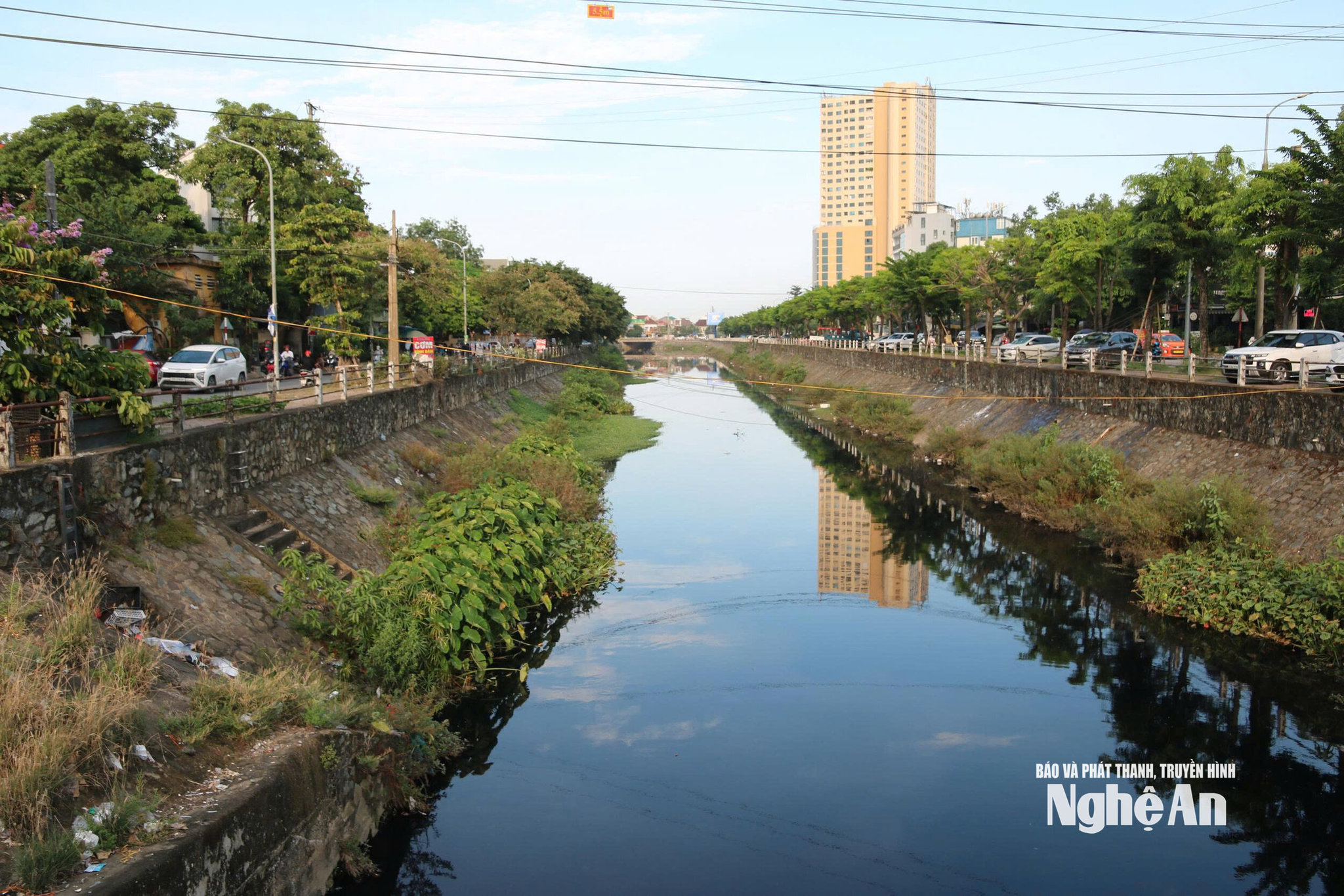
Regarding the North Canal, it has a total length of over 4.6 km. Since 2015, with loan capital from the World Bank, the first 1.2 km section has been undergrounded using box culverts; the remaining 3.4 km, extending to the Hung Hoa regulating lake, was renovated in 2016. However, since then, the North Canal has become a localized "pollution hotspot," with the water constantly black, foamy, and emitting a foul odor. Faced with this situation, residents living along both banks of the canal have likened the North Canal to an "open-air cesspool" in the heart of the city.
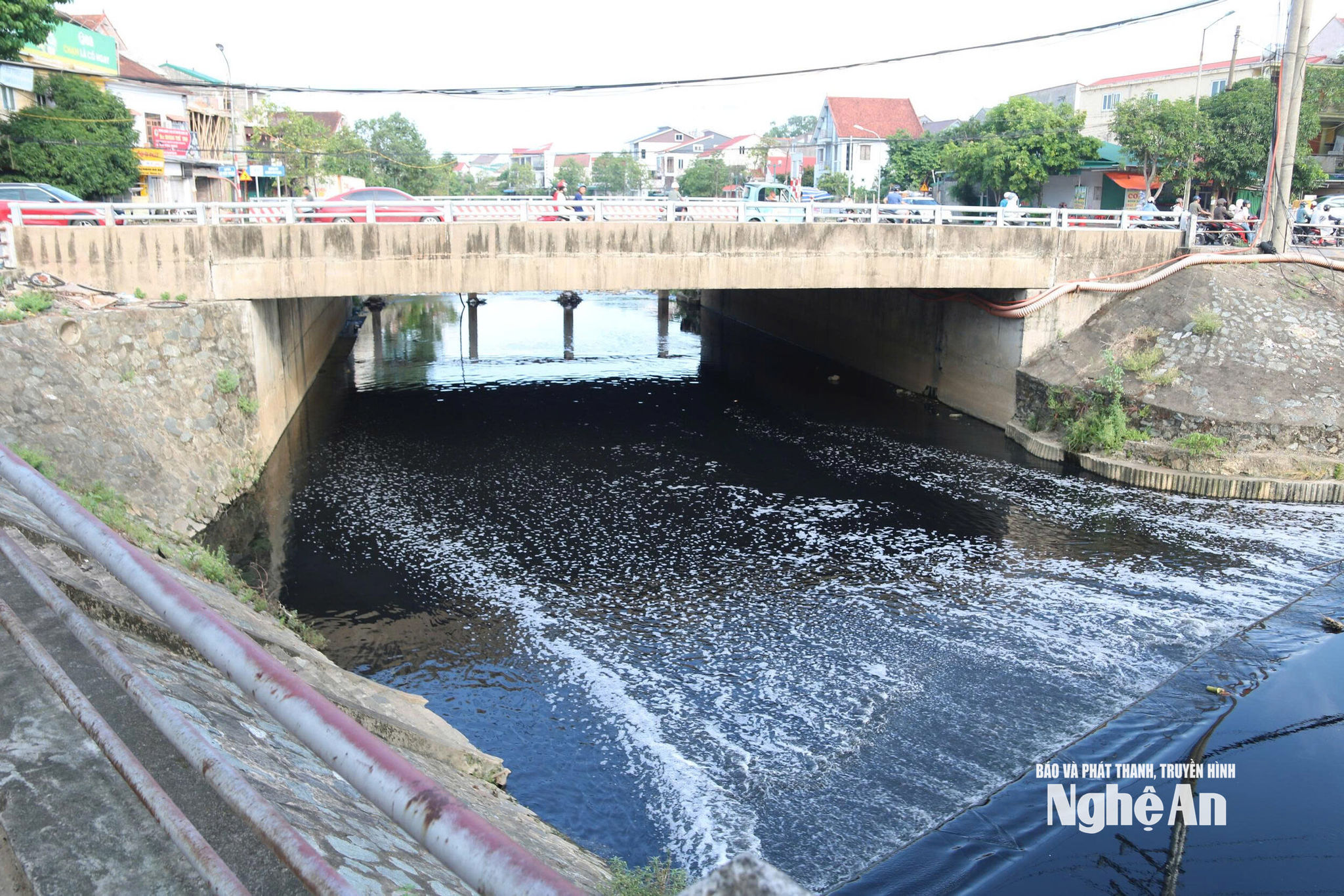
The causes of pollution in the North Canal have been thoroughly analyzed. The previous North Canal renovation project included a separate wastewater collection system running parallel to the canal. In principle, domestic wastewater was not supposed to flow into the canal but only overflow during heavy rains through automatic discharge gates. However, these automatic gates were damaged, causing wastewater to leak and flow freely into the canal even when it wasn't raining. The underground drainage system and manholes were frequently clogged with mud and massive amounts of garbage carelessly thrown in by residents, causing serious blockages.
Living in Vinh city and working as a journalist for the province, in February 2023, my colleagues and I followed urban infrastructure management workers to the area under the North Canal bridge and along the canal's drainage wells to investigate the cause. There, we observed that damaged technical equipment was not being repaired or replaced; accumulated mud and garbage were not being dredged; and wastewater from the streets was freely overflowing into the canal.
Through this, I understand that due to a lack of proper attention from the management and the absence of clean water for flushing, the North Canal has become a stagnant wastewater stream, causing environmental pollution. Therefore, when reading the plan to underground the North Canal, I understand that this is a method to conceal the polluted water from view, rather than a solution to address the root cause of the wastewater discharge and solve the environmental pollution problem.
"Undergrounding" the North Canal can be understood as a method of concealing the polluted water from view, rather than a measure to address the root cause of the wastewater discharge and solve the environmental pollution problem.
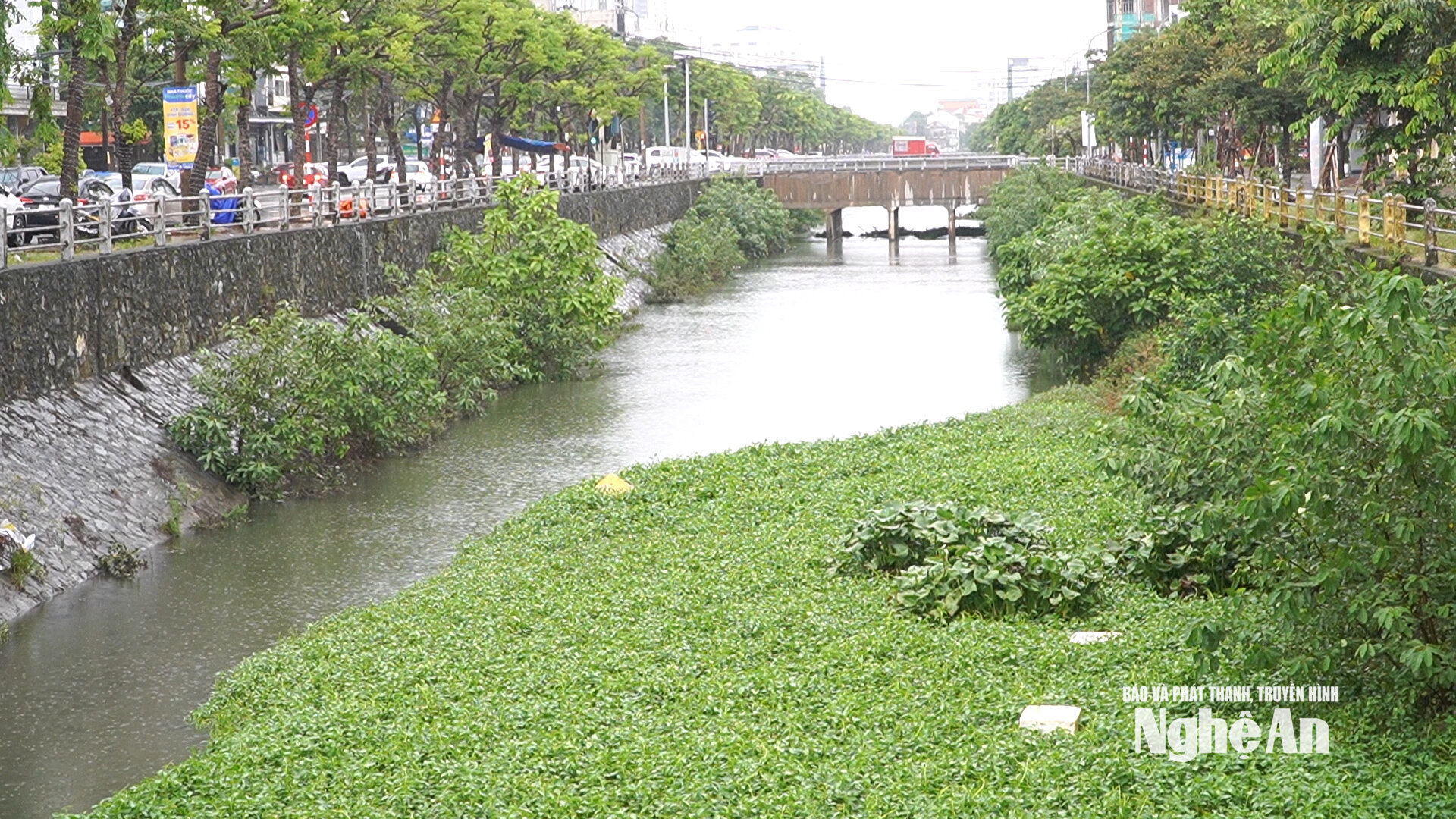
Regarding traffic and urban landscape issues, in my observation, Nguyen Sy Sach Street is not yet at a level where the relevant authorities need to propose a renovation plan. In fact, with its existing infrastructure—including road width, lighting, trees, sidewalks, etc.—Nguyen Sy Sach Street, connected to the North Canal and Phung Chi Kien Street, boasts some of the most beautiful scenery in Vinh's inner city. Furthermore, it remains a much more open and convenient route compared to other inner-city roads such as Le Hong Phong, Nguyen Van Cu, Quang Trung, Tran Phu, and Ho Tung Mau.
On September 21st, former Standing Deputy Secretary of the Provincial Party Committee Nguyen Van Thong posted an article on his personal Facebook account (facebook Nguyen Van Thong) titled "Flooding makes one think of 'undergrounding the North Canal'." Among the four points he analyzed, one concerned traffic. According to him, the two roads running along the North Canal, each over 3km long, are not excessively busy or congested; and the chaos on those roads stems from weak urban management. Therefore, he argued that using the expansion of Nguyen Sy Sach road to 10 lanes to alleviate traffic pressure as a reason for undergrounding the North Canal is unconvincing!
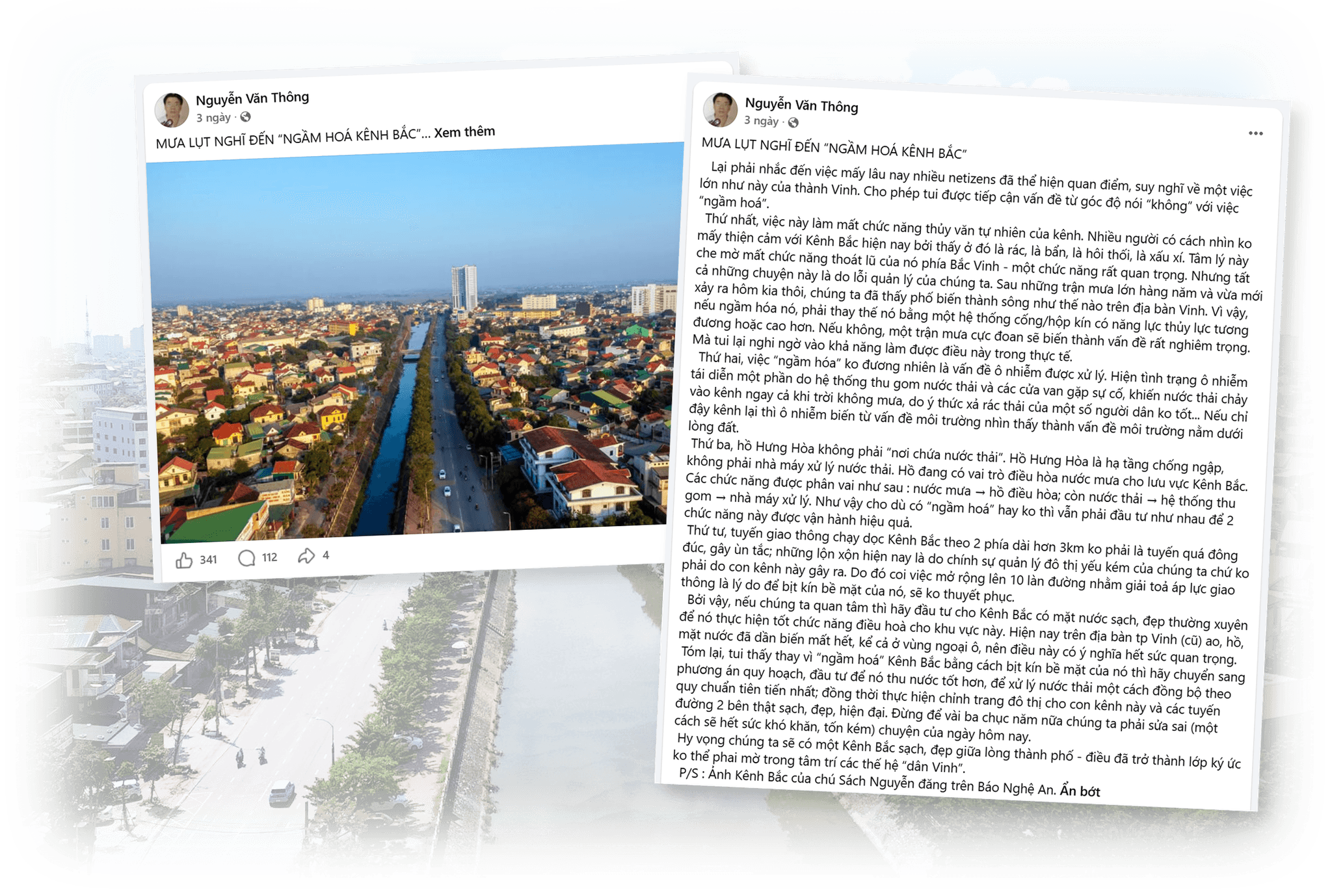
Former Standing Deputy Secretary of the Provincial Party Committee Nguyen Van Thong also warned that undergrounding the North Canal would lead to the risk of losing its flood drainage function. He wrote: “Many people have a negative view of the North Canal currently because they see it as garbage, dirt, foul-smelling, and unsightly. This mentality obscures its crucial flood drainage function in northern Vinh. But all of this is due to our management failures. After the annual heavy rains and the recent one just the other day, we saw how the streets turned into rivers in Vinh. Therefore, if it is undergrounded, it must be replaced with a closed culvert/box system with equivalent or higher hydraulic capacity. Otherwise, an extreme rainstorm will become a very serious problem. And I doubt the feasibility of doing this in practice.”
And he made the recommendation: “If we care, let's invest in the North Canal to ensure it has clean, beautiful water regularly so that it can effectively regulate the area. Currently, in the old Vinh city area, ponds, lakes, and water surfaces have gradually disappeared, even in the suburbs, so this is extremely important. In short, I think instead of “undergrounding” the North Canal by sealing off its surface, we should switch to a planning and investment plan to improve its water collection, to treat wastewater in a synchronized manner according to the most advanced standards; and at the same time, carry out urban beautification for this canal and the roads on both sides to make them clean, beautiful, and modern. Let's not have to correct (in a very difficult and costly way) today's mistakes in a few decades.”
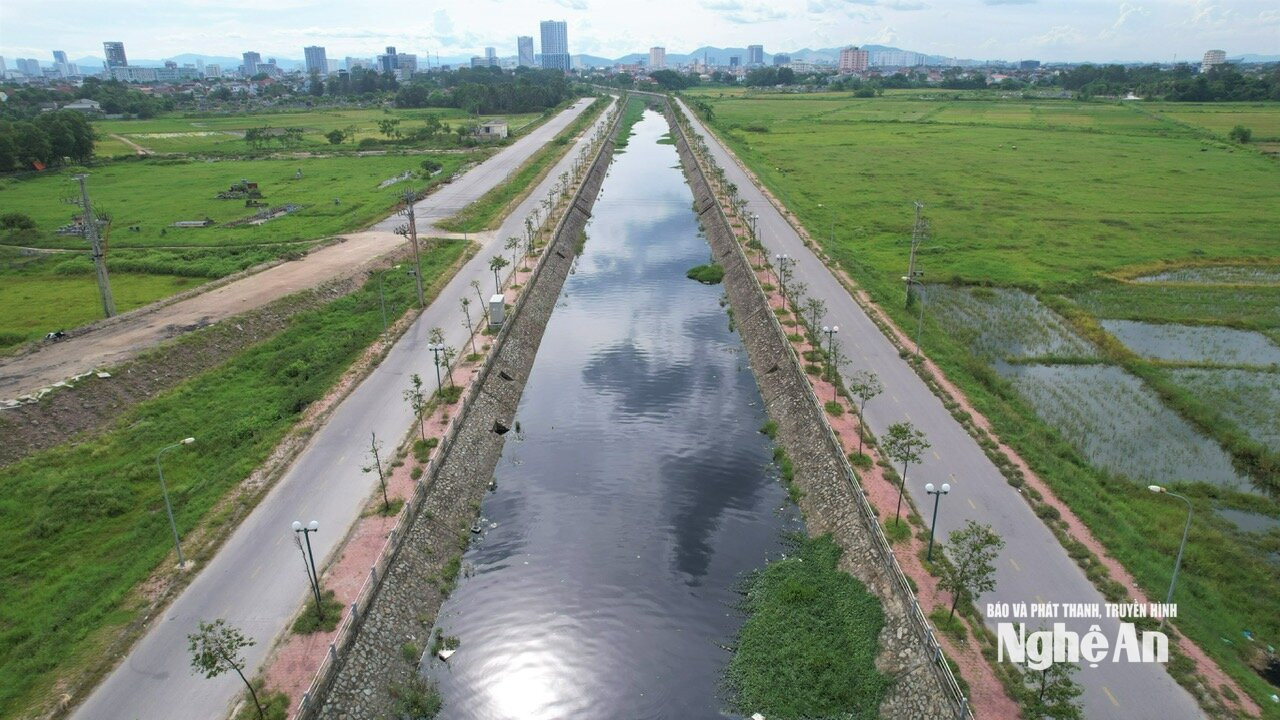
Having lived in the Vinh urban area for many years, I also recognize that the North Canal plays a crucial role in the flood drainage system for the entire northern part of Vinh city. Besides that, I've also noticed that the undergrounding of some large canal sections running parallel to Nguyen Van Cu Street, Hong Bang Street, etc., while having some positive aspects, is also a cause of severe flooding in residential areas along these routes.
The flooding experienced during heavy rains, especially on September 19th, demonstrates that Vinh's inner-city drainage system is severely overloaded. Therefore, if the North Canal is undergrounded, its natural drainage capacity during heavy rains will be significantly reduced. Undergrounding by covering it with concrete will eliminate the open space for surface water to flow into the canal. Furthermore, when the underground flow becomes clogged with garbage and sludge, the risk of urban flooding will become even more difficult to control.
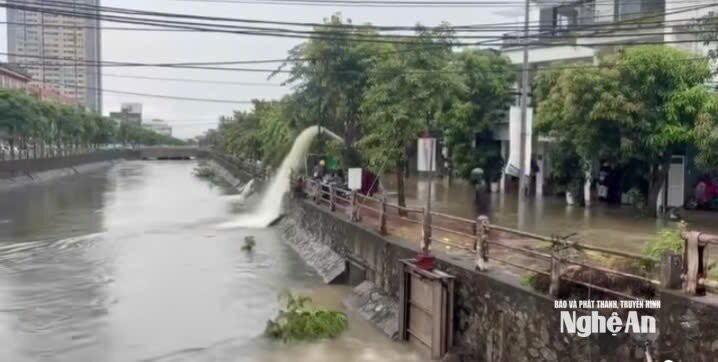
Therefore, instead of choosing the solution of "killing off" the North Canal by burying it underground, I believe we need to conduct thorough research and decisively address the existing technical issues to preserve the canal's flow. At the same time, we need to raise community awareness of environmental protection and apply severe penalties for polluting activities.
Everyone understands that restoring the clear waters of the North Canal is a difficult journey, requiring great determination and the collective efforts of the entire society. But please, let's preserve the canal, give it the proper attention and investment, and treat it with civility so that the North Canal truly becomes a "green lung," an ecological symbol of Vinh city. Let's avoid wasting resources in the future and view this as a step backward in urban planning!