
EU-China trade tensions: Can negotiations resolve the conflict?
The high-level meeting in Brussels on June 29th between top officials provided an opportunity for both sides to assess the possibility of de-escalating EU-China trade tensions amid the risk of a full-blown tariff war.
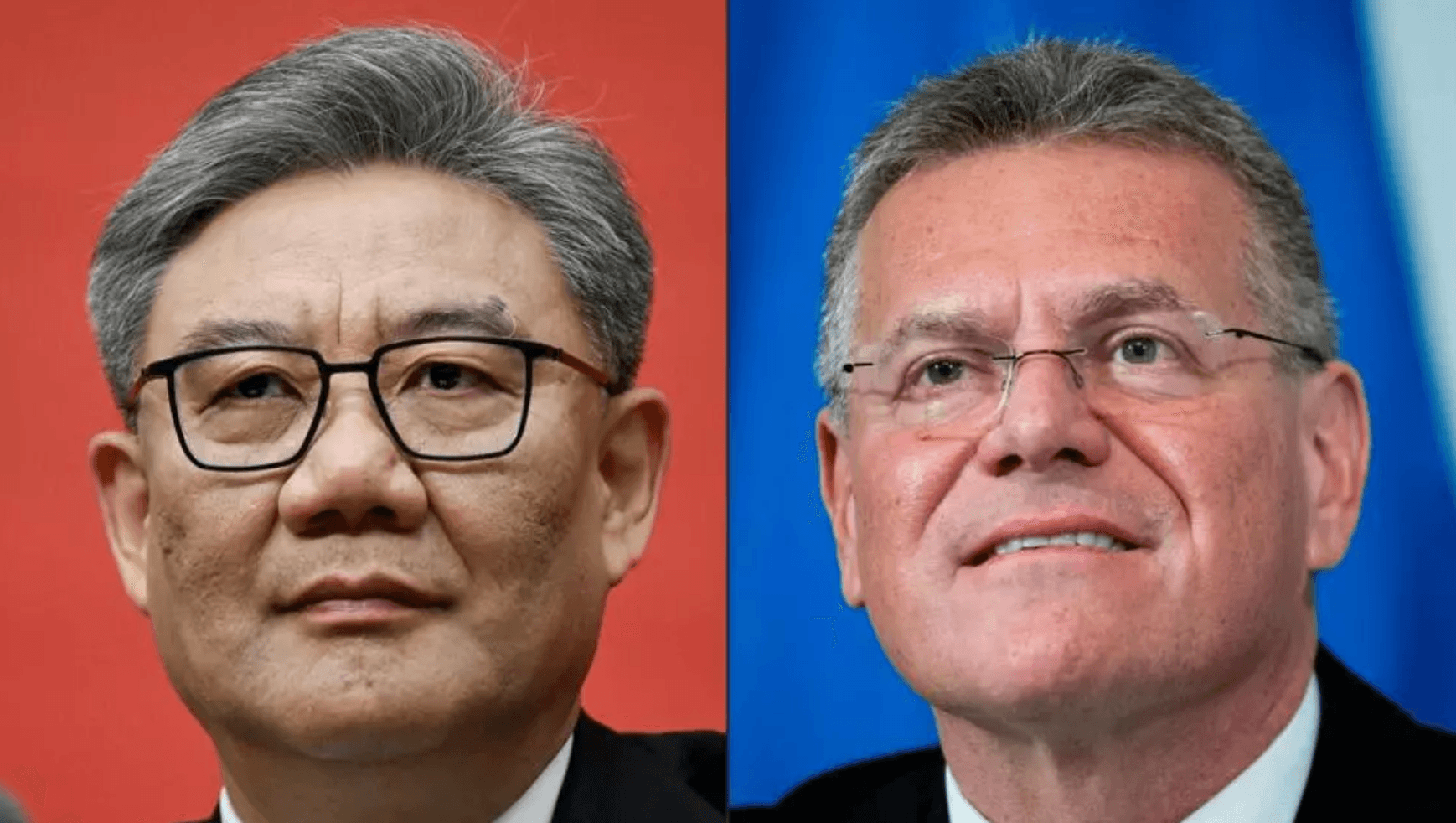
According to AFP, Europe and China will have an opportunity to assess whether current trade disputes can be resolved through dialogue. On June 29 (Brussels time), European Union Trade Commissioner Maros Sefcovic will chair a day-long meeting and talks with Chinese Commerce Minister Wang Wentao in Brussels.
The EU is shifting its focus to China, amid growing concerns in Brussels about the serious trade imbalance between the 27-member bloc and the Asian economic powerhouse.
For the EU, this is a particularly urgent issue. Brussels fears it will lose several key industries entirely if it does not act against the influx of cheap goods from China – a factor that directly threatens European manufacturers. The EU's goods trade deficit with China (2025) is estimated at around 360 billion euros (~410 billion USD).
Chinese Commerce Minister Wang Wentao's visit comes less than two weeks after EU leaders tasked the European Commission with resolving the crisis through negotiations with Beijing. Simultaneously, the bloc is preparing enhanced defense measures to protect key sectors.
On the Chinese side, Minister Wang Wentao may seek to gauge the seriousness of the EU's threats to deploy its arsenal of trade defense "weapons" against Beijing.
However, according to the European Commission, the EU still hopes to avoid a full-blown trade war with its second-largest goods trading partner. China has also sent a clear signal that it will retaliate if subjected to measures it deems unfair.
According to the Organization for Economic Cooperation and Development (OECD), between 2005 and 2024, Chinese companies received three to eight times more government support than their OECD counterparts. The organization emphasized that this is only "a conservative estimate."
To address this situation, the EU possesses a range of powerful trade defense tools, including: imposing higher tariffs; and emergency safeguard measures.
New control mechanisms are also being urgently developed. The European Commission is developing a new legal instrument to force businesses to diversify their suppliers in particularly critical areas such as semiconductors and rare earth elements.
In May 2026, French President Emmanuel Macron also proposed implementing a European version of "Section 301." This is a trade tool similar to the one US President Donald Trump used to impose higher tariffs on specific industries following independent investigations.


