
Warning of pest outbreaks in rice paddies in Nghe An province.
This year's summer-autumn crop season in many localities of Nghe An province saw thousands of hectares of rice fields left uncultivated, instead of being planted on time, allowing the rice to regenerate naturally. This situation not only negatively impacts yield but also poses a risk of widespread pest and disease outbreaks.
In mid-June, walking along the fields in the communes of Dien Dong, Dien Thai, and Dien Lam (Dien Chau district), instead of the usual bustling scene of production, one encounters patches of rice paddies with a mix of green and yellow seedlings. The plants are sparsely grown and are in the heading stage.
Mr. Tran Minh Tam, a farmer in Dien Lam commune, said that his family currently has 2 sao (approximately 0.2 hectares) of rice for ratooning. "Compared to transplanted rice, ratooning requires much less investment, no plowing, less fertilization or spraying, and less labor for care. However, the yield is only 60-80 kg per sao, so the profit isn't much," Mr. Tam shared.
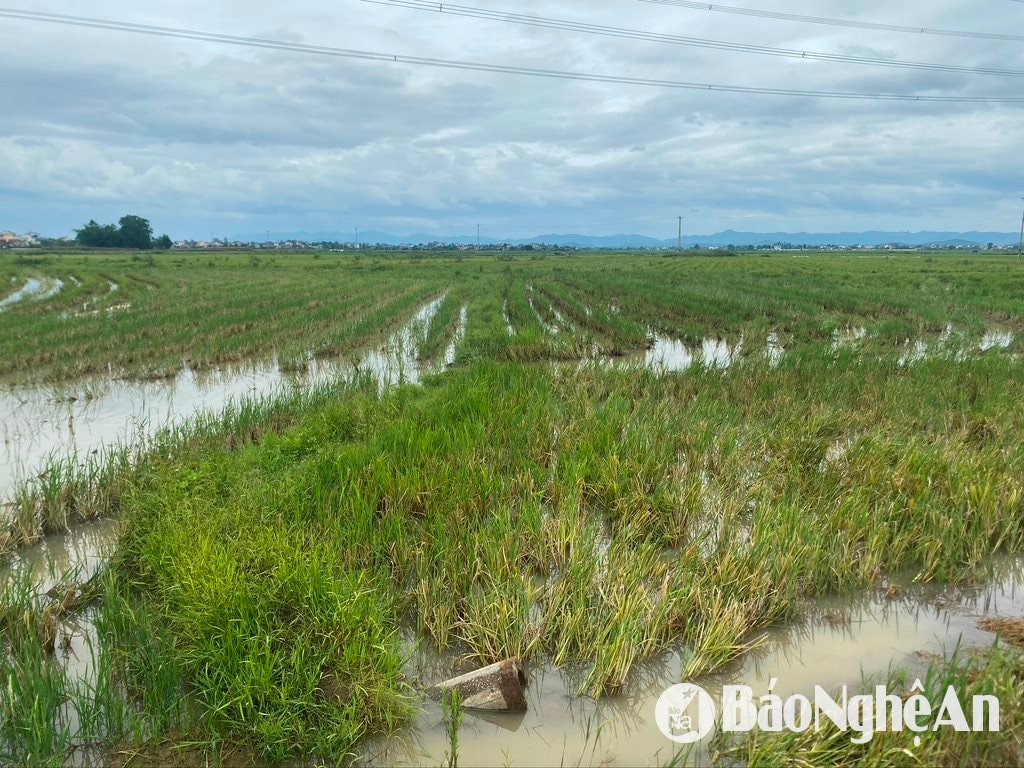
According to statistics from the People's Committee of Dien Lam commune, the entire commune only planted about 100 hectares of summer-autumn rice, leaving more than 100 hectares for rice to regenerate. Mr. Ta Thanh Hao, Chairman of the People's Committee of the commune, explained: "People are hesitant to cultivate summer-autumn rice due to dependence on reservoir water, high production costs, difficulty in hiring laborers, and complex pest and disease problems, so they choose to let the rice regenerate to reduce risks."
The entire Dien Chau district has approximately 6,000 hectares of summer-autumn rice, of which up to 1,500 hectares are planted with ratooned rice. According to Mr. Le The Hieu, Deputy Head of the District's Agriculture and Environment Department, "Leaving ratooned rice is not recommended by the industry, but the farming habits of the farmers are very difficult to change."
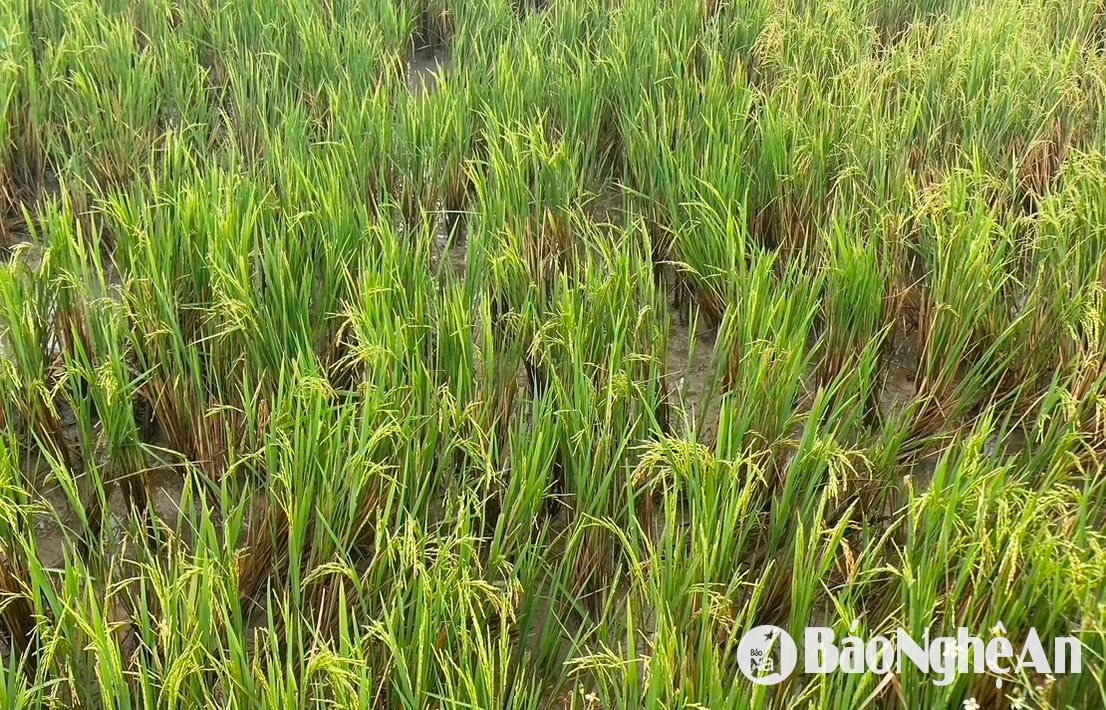
Not only in Dien Chau, but the same situation is also occurring in Quynh Luu district. Along communes such as Quynh Hung, Quynh Ba, Quynh Giang, Quynh Dien... many rice fields are flowering, showing no signs of being cared for.
Mr. Nguyen Minh Quang, a farmer from Quynh Hung commune, shared: “The land is low-lying and easily flooded, and fertilizer prices are rising. If we prepare the land and sow the seeds but encounter bad weather, we lose everything. Leaving the rice seedlings to grow, although the yield is lower, provides an additional 70-80 kg per sao (approximately 1000 square meters) if conditions are favorable.”
Mr. Tran Binh Trong, Chairman of the People's Committee of Quynh Hung commune, said that out of about 200 hectares of rice fields in the commune, most farmers leave the rice stalks uncultivated. The authorities have conducted awareness campaigns and encouraged farmers to continue cultivating the crop, but have encountered many difficulties due to concerns about weather and pests.
In Quynh Luu district, the 2025 summer-autumn rice crop will cover over 4,500 hectares, of which over 1,400 hectares will be planted with ratooned rice. According to Mr. Nguyen Van Truong, Head of the District's Agriculture and Environment Department, most of the ratooned rice fields are not productive. The district is directing communes to guide people in converting to suitable crops in areas where conditions for summer-autumn rice production are not met.
According to statistics from the Department of Crop Production and Plant Protection of Nghe An province, this summer-autumn crop season, the entire province planted over 80,000 hectares of rice; for ratooning rice, there are approximately 3,500 hectares in the province. These areas are concentrated in the districts of Quynh Luu, Dien Chau, Yen Thanh and Hoang Mai town.
Mr. Nguyen Tien Duc, Head of the Department of Crop Production and Plant Protection, affirmed: "Raising ratoon rice is not included in the recommended production structure because the yield is very low, usually only 1/4 to 1/3 of that of normal rice, and in many places, there is no harvest at all. More importantly, leaving ratoon rice provides an ideal environment for pathogens to survive and spread to the next crop."
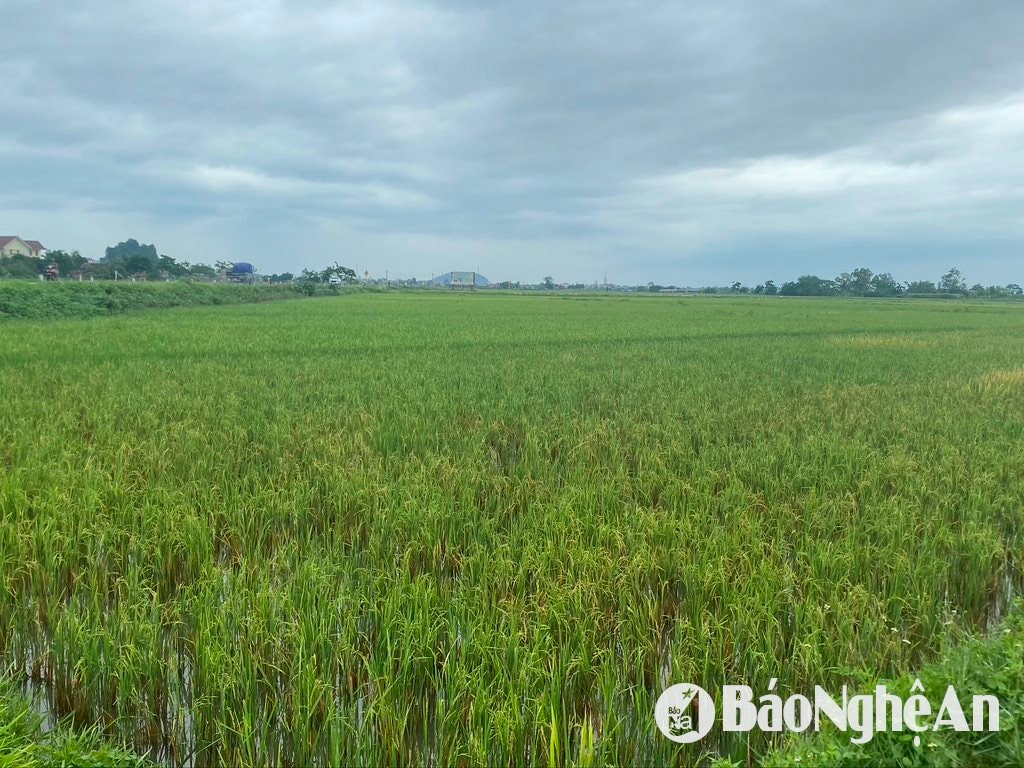
According to Mr. Duc, rice seedlings remaining in the fields for too long without soil treatment create an ideal breeding ground for rats and fungal diseases. "This acts as a bridge for dangerous pests and various viruses. In the long run, it will seriously affect the yield and quality of main rice crops," Mr. Duc emphasized.


