
'Master' rat trappers in Nghe An
In the rural areas of Nghe An, many people hunt field rats, but not many consider it a livelihood like Mr. Cao Van Nam.
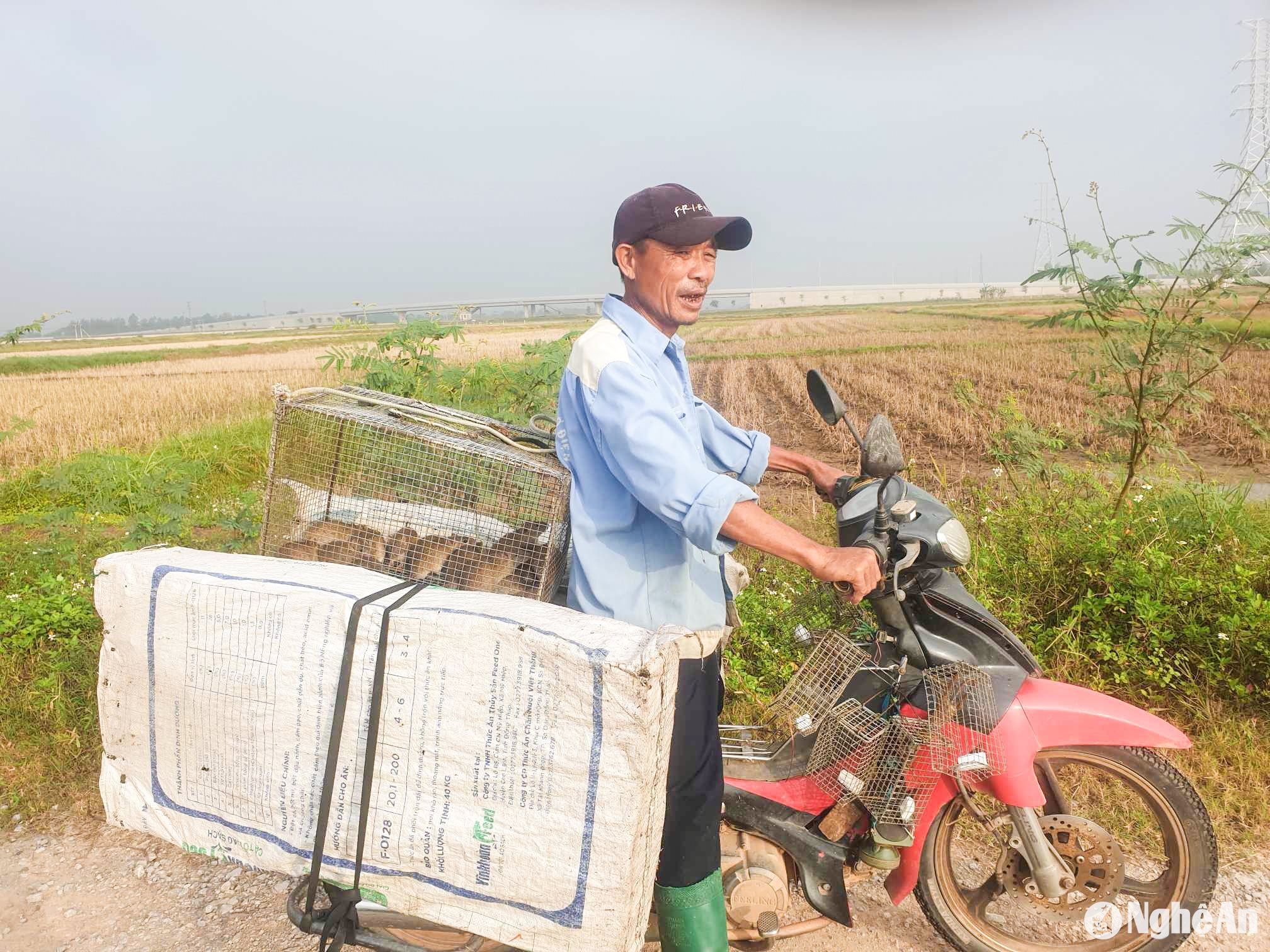
In early winter, the weather is chilly. After quickly eating his lunch, Mr. Cao Van Nam (Hamlet 1, Dien An Commune, Dien Chau District) puts on an extra jacket, puts his rat traps into a sack, and heads straight to the fields on his rickety motorbike. Pushing aside knee-high weeds and the crumbling soil underfoot, in just a moment, he has set hundreds of rat traps.
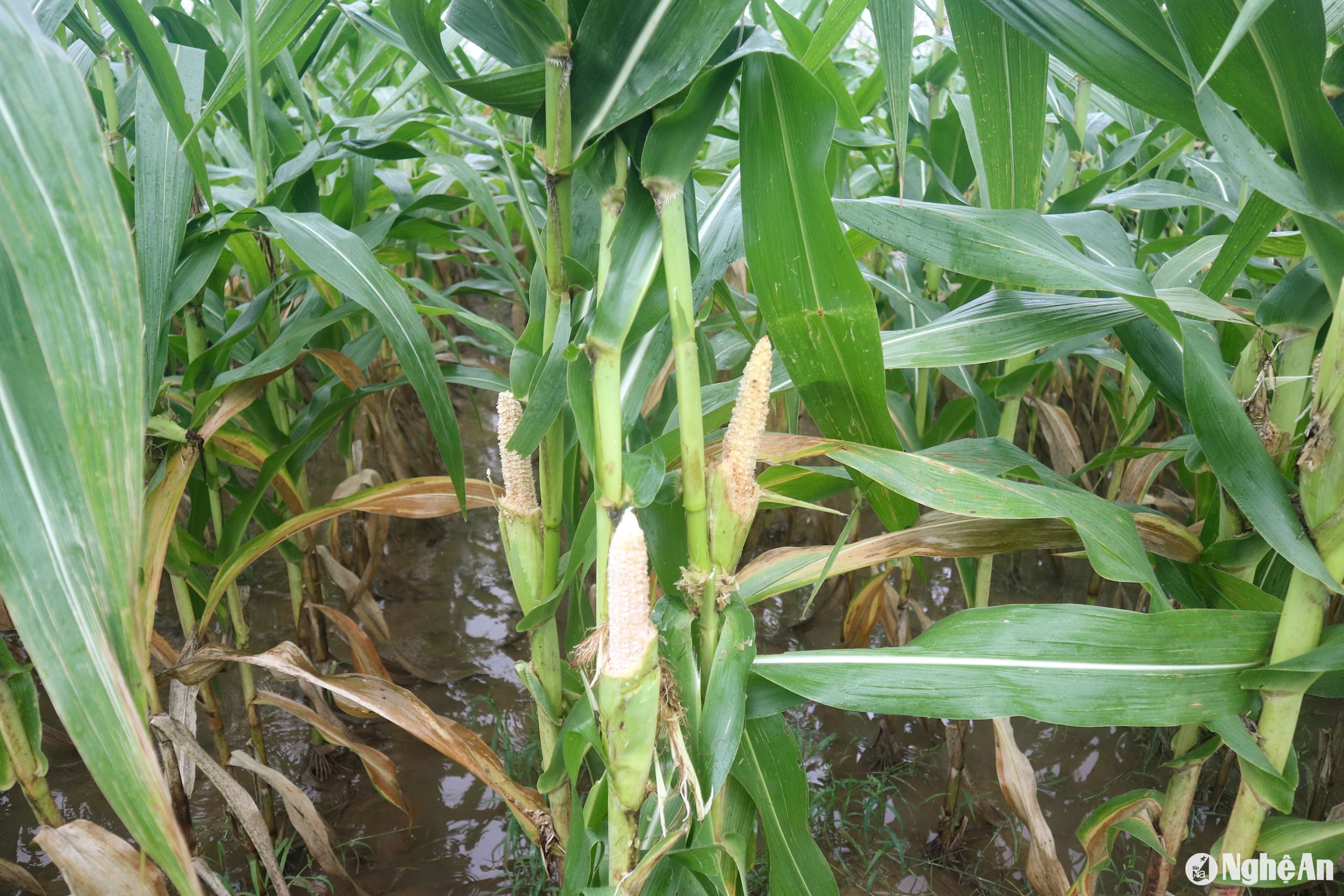
Mr. Nam is considered a "master" rat trapper in Dien Chau district, having been involved in the profession for five years now. Having spent more than half his life working in agriculture, he feels heartbroken seeing rats destroy crops. Corn fields in the milky stage are gnawed to pieces, stalks broken; peanut fields with ripe kernels are dug up and devastated…
.jpg)
The villagers used rat poison and traps, and the local authorities launched a campaign to eradicate rats to protect the crops, but to no avail. In the area, there was a dealer who bought live rats and rat meat. He thought, why not trap rats to sell? It would both protect the fields from destruction and provide him with extra income.
Rat burrows are easy to spot because there are small mounds of earth dug out by rats at the entrance, allowing you to dig deeper into the burrow with a shovel to catch them. However, this method is ineffective because rats are very agile, have many escape routes, and can easily damage field embankments and soil. Alternatively, you can burn straw and use the smoke to fumigate the burrow, or pour water into the burrow to catch the rats; this method requires many people, is laborious, and less effective.
After researching online for the most effective, least strenuous, and harmless way to catch rats, Mr. Nam chose to hunt them using cage traps.
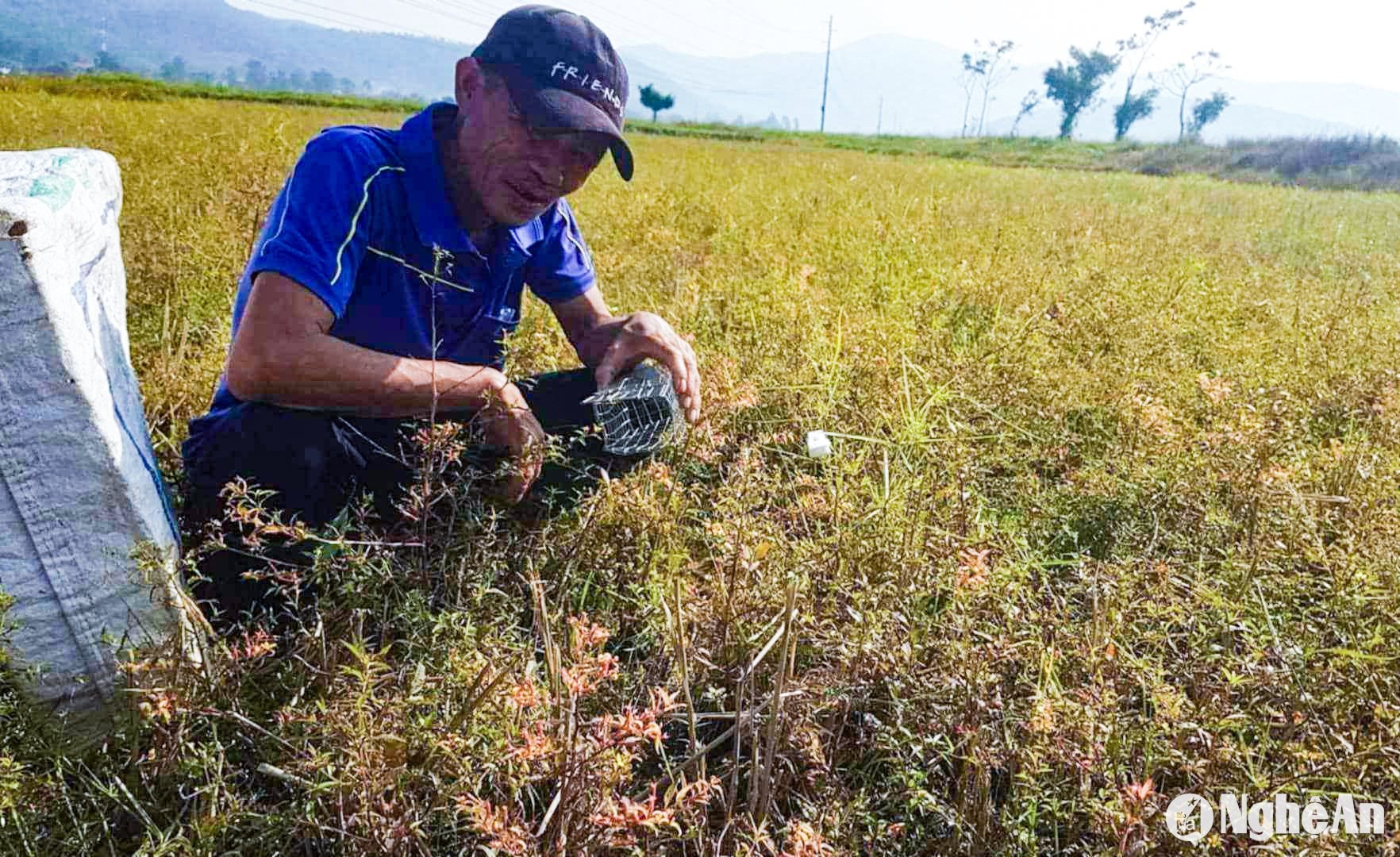
Every day, at noon, he begins surveying the areas to set traps. According to his experience, by visually observing the rice paddies with mouse footprints and the small mounds of earth on the embankments, he knows there will be many mice there. First, he clears the grass to create pathways for the mice. Then he scatters the traps at pre-calculated intervals; the placement of the traps depends on each person's experience.
Mr. Nam said: "Field mice usually live in dense, wooded areas and only come out to the fields at night to look for food. On average, I set about 150 cage traps every day."
The trapping work begins at noon and is finished by dusk. After resting and eating, they go to collect the traps they set that afternoon. Rats are very cunning, so they have to create new trails every day to set traps. Each rat hunter has their own experience; they must understand the characteristics of each type of rat to have tricks for catching them.”
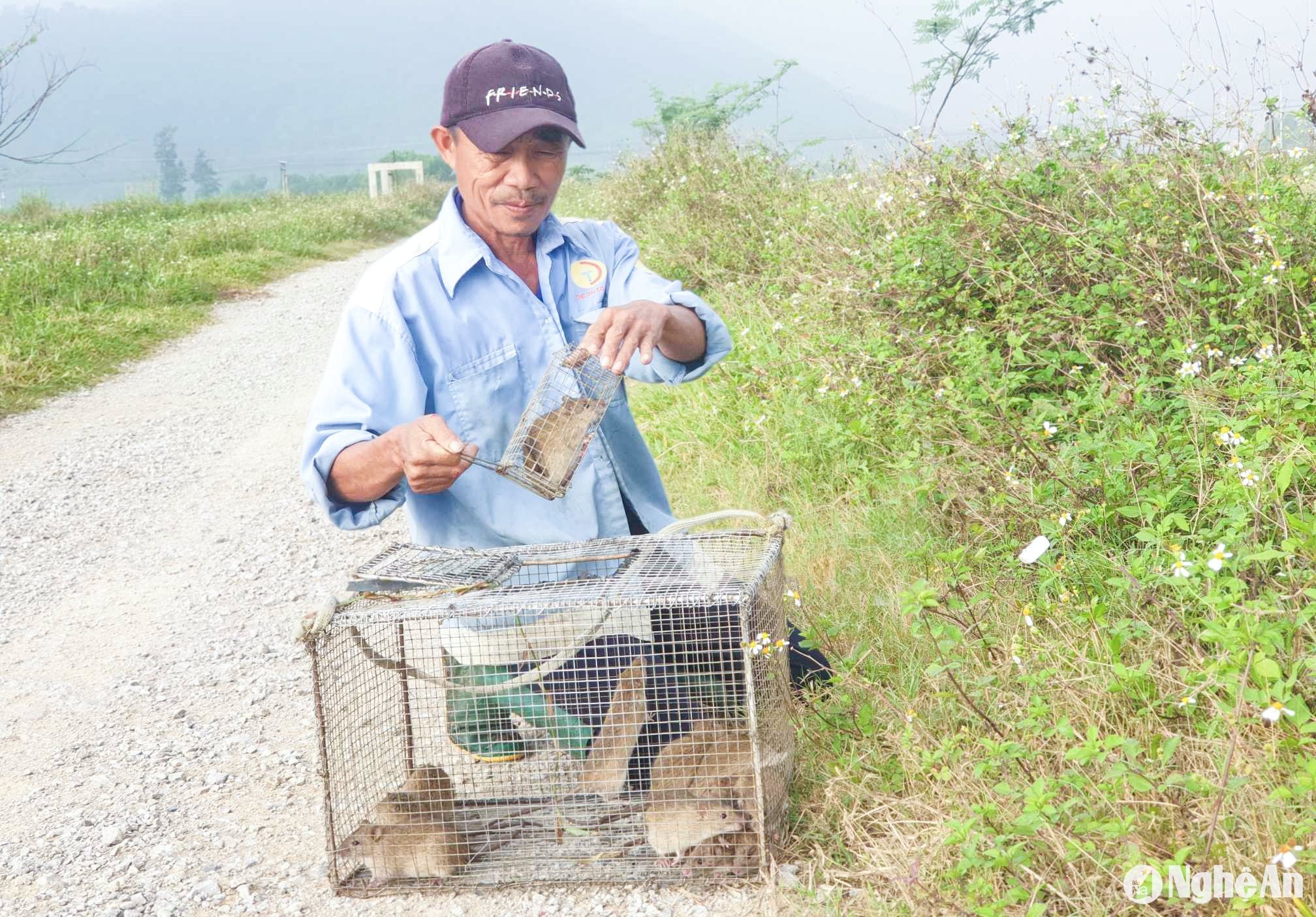
In the rural areas of Nghe An province, there are many rat hunters, but only about a dozen, like Mr. Cao Van Nam, consider it a livelihood. This is because the job is arduous; regardless of sun or rain, or the freezing cold of winter, Mr. Nam's rat hunting work begins at midday and ends at midnight or early morning. He has to travel through the desolate fields around the area, even venturing into Nghi Loc and Yen Thanh districts, day and night.
In return, the income from hunting field rats is quite stable. Accordingly, during the field rat hunting season (which lasts from August to the end of December in the lunar calendar), he hunts about 25-30 kg of live rats each day, selling them at 120,000 VND/kg for small rats used as snake feed, and 35,000-50,000 VND/kg for large, old rats.
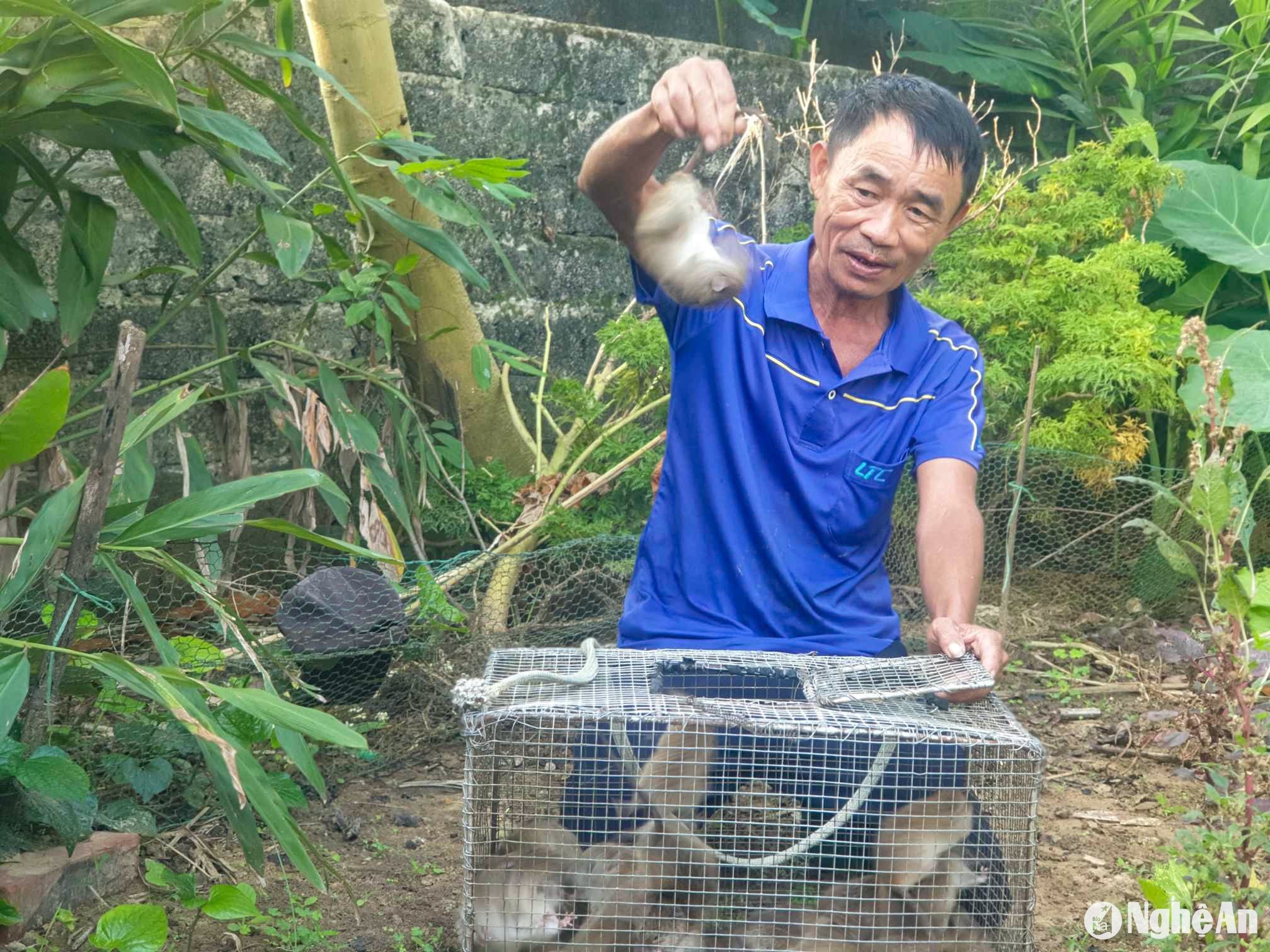
On average, he earns 700,000 to 1 million VND per day, enough to cover his family's living expenses. "Whatever I catch, I sell it immediately to the purchasing agent in the village, and I get cash right away, so I don't worry about finding buyers," Mr. Nam shared.
Nowadays, field rat meat has become a delicacy, favored by some restaurants and eateries. The profession of hunting field rats has therefore flourished, providing many people with a decent income while also protecting crops from rat damage. Thanks to rat hunters like Mr. Nam, the fields are greener, and farmers feel more secure preparing for bountiful harvests.
According to statistics, rats are the most harmful and difficult to manage pests in agricultural production. From a single pair of parent rats, a year of reproduction can result in a lineage of up to 2,000 offspring! Rats mature very quickly; from birth to two or three months old, they are already breeding rats. Rats destroy crops throughout the year, in all types of crops, and across all fields.


