
Castelion raises $350 million to accelerate hypersonic weapons development.
Castelion received $350 million, valued at $2.8 billion; tested at Mach 4, aiming to surpass Mach 5, and opened a New Mexico factory producing thousands of missiles annually.
Castelion, a defense startup based in Torrance, California, announced it has raised $350 million at a valuation of $2.8 billion, aiming to accelerate the development and production of hypersonic weapons. The company has already tested speeds equivalent to Mach 4 and plans to surpass Mach 5 next year, while also building a factory in New Mexico capable of producing thousands of missiles annually within two years.
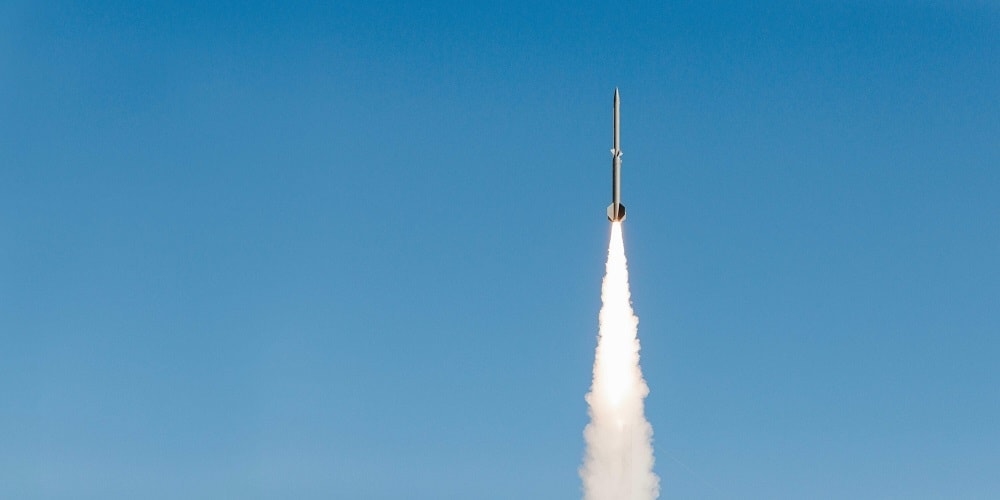
Overview: Supersonic range and US demand
The Pentagon considers hypersonic weapons one of six key technologies that will shape the future of U.S. military dominance, given that China and Russia already possess arsenals of long-range, highly mobile, and high-speed weapons, while the U.S. does not yet have a comparable system deployed. Hypersonic weapons fly faster than 3,800 miles per hour, can be launched from long distances, are difficult to intercept, and shorten enemy reaction times.
Mark Lewis, former acting deputy deputy secretary of defense for research and engineering, noted that U.S. investment in hypersonic technology has been inconsistent, leading to missed opportunities. Pressure to meet deadlines is mounting as U.S. officials mention the 2027 deadline in operational scenarios in the Pacific.
Blackbeard's technical and product capabilities
Castelion says it has built around 50 missiles this year and conducted about 20 tests, achieving a maximum speed of Mach 4. The company aims to surpass Mach 5 next year. According to CEO Bryon Hargis, the main challenge is not achieving hypersonic speed, but rather the ability to mass-produce a reliable, operational weapon at a reasonable cost.
Castelion's product portfolio focuses on the Blackbeard missile family. The company expects to sell them for hundreds of thousands of dollars per unit, significantly lower than current long-range cruise missiles ($3–4 million per unit). Castelion says it manufactures key components such as solid-fuel rocket engines, flight computers, and navigation hardware and software, aiming to shorten the supply chain and increase production speed.
| Parameter | Value according to Castelion/source |
|---|---|
| Maximum speed tested | Mach 4 |
| Speed target | Exceeding Mach 5 (next year) |
| Reference hypersonic threshold | Over 3,800 miles per hour |
| Blackbeard's expected price | Hundreds of thousands of USD per unit |
| Current reference prices for long-range cruise missiles. | 3–4 million USD/unit |
| Production output during the year | Approximately 50 missiles |
| Number of trials | Approximately 20 |
| New Mexico plant capacity (projected) | Thousands of missiles per year after two years |
| US government contract | Over $100 million (Army, Navy) |
Production and platform integration strategy
Castelion is betting on scaling up production to provide the Pentagon with "relatively inexpensive" weapons starting in 2027. The company is working with the U.S. Army and Navy to integrate the Blackbeard into existing platforms, including the Army's Himars mobile missile launcher. Hargis emphasized, "Making it fly fast isn't really the hard part"—the company's priorities are production speed, reliability, and cost.
Procurement policy and investment ecosystem
Under President Donald Trump, the Pentagon loosened some procurement rules, encouraged the adoption of commercial software and technology, and facilitated faster procurement by the military branches. Startups expect these changes to translate into large-scale contracts.
According to PitchBook, in 2025, venture investors poured more than $2 billion into US startups in the hypersonic sector, double the amount from previous years. The related ecosystem includes Hermeus (autonomous hypersonic aircraft), Rocket Lab (launch services for hypersonic flights), and Ursa Major (liquid-fuel rocket engines), with Ursa Major announcing a $100 million funding round and an additional $50 million in debt in November.
The Department of Defense has requested more than $3.9 billion for the current fiscal year for hypersonic weapons, including restarting a previously shut-down Air Force program.
Military service progress and regional context
The Army had initially aimed to deploy long-range hypersonic weapons by 2023 but fell behind schedule, pushing the deadline back to the end of September. An Army spokesperson told the Wall Street Journal that they remain on track to deploy their first hypersonic system before the end of December.
Last month, a U.S. defense official included hypersonic technology on a list of six cutting-edge technologies. Meanwhile, at a military parade in Beijing in September, the People's Liberation Army showcased new hypersonic weapons; according to the U.S.-China Security and Economic Review Commission, they could support operations in the Taiwan Strait and target U.S. warships.
Mark Lewis stated, "We just need to keep going... Everything in the Pacific scenario needs to be thought about 2027, not 2037." In that context, Castelion's efforts emphasize mass production capabilities, cost, and deployment speed – factors that could determine America's ability to bridge the hypersonic gap.


