
A 'bridge' connecting policies and laws to the people.
(Baonghean.vn) - Those eligible for free legal aid include vulnerable groups in society (the poor, children, ethnic minorities), and people who have contributed to the revolution…
"A pillar of support" for the people.
In the days leading up to the Lunar New Year, despite being busy, Mr. Tran Huu Q. from Trung Phuc Cuong commune (Nam Dan district) still managed to visit the Legal Aid Center under the Department of Justice to seek help regarding a case involving his son, who was attacked by a neighbor when he was only 3 years old, stemming from a conflict between adults.
Mr. Q. said this was the second time he had come to ask for help.legal aidPreviously, the center had also sent someone to provide legal support to his son, and the case had gone to trial. At the trial, the defendant was sentenced to 3 years in prison and promised to compensate Mr. Q.'s family 60 million VND, but so far only 30 million VND has been paid.
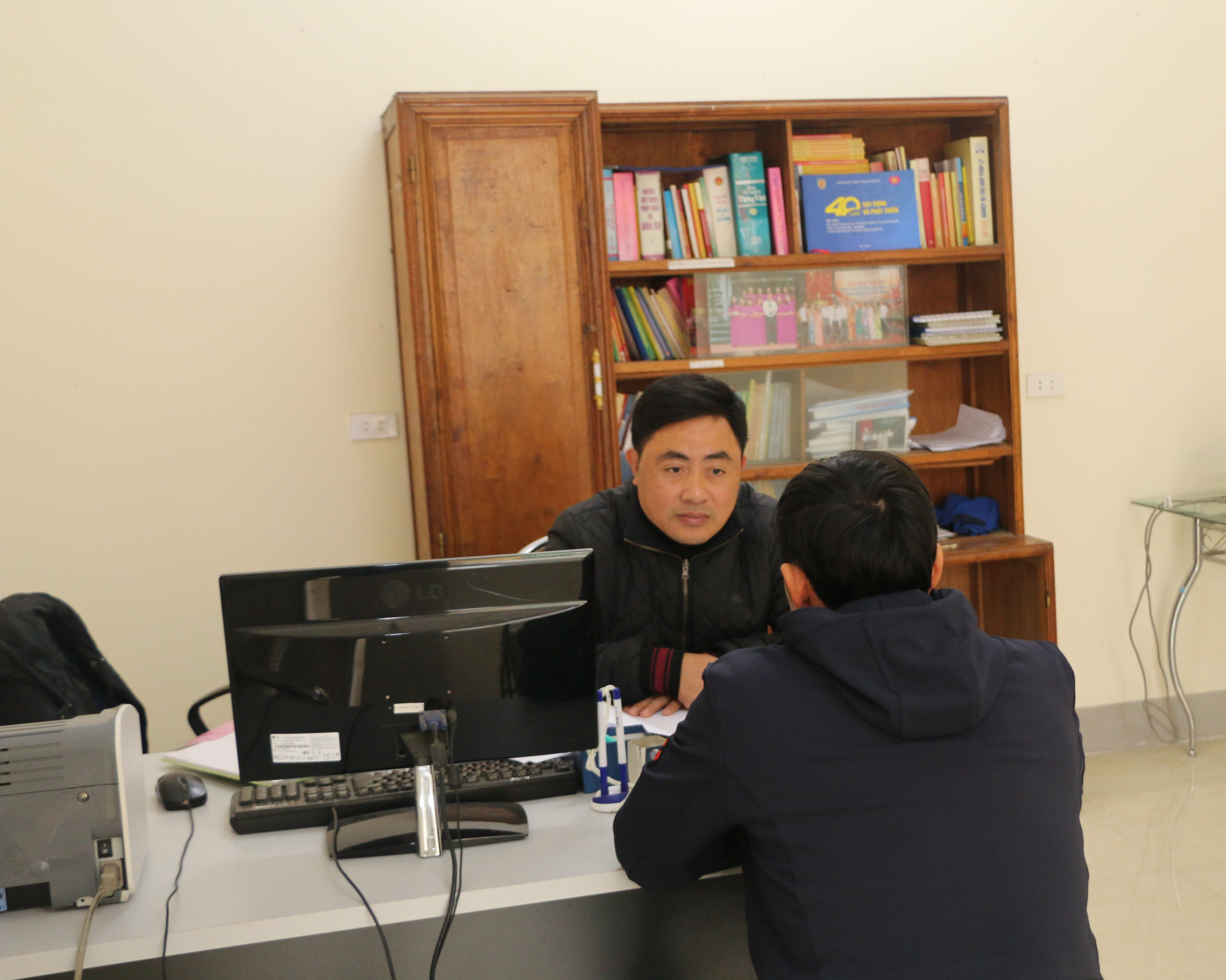 |
| Legal aid workers from the provincial State Legal Aid Center provide legal advice to citizens. Photo: KL |
Mr. Q. felt unsatisfied and wished to continue receiving legal assistance to seek justice for his son. “Free legal aid is a ‘pillar of support’ for poor people like us. With this legal assistance, I have more faith in the strictness of the State’s laws,” Mr. Q. said.
For example, Mr. CVB, a person recognized as a revolutionary hero in Lang Son commune (Anh Son district), was involved in a civil dispute over land use rights. Specifically, Mr. CVB's family was allocated two plots of forest land with green land certificates in 1995. After Decree 163 re-allocated the forest land in 2000-2001, the commune reclaimed the land to issue new certificates. In 2004, a dispute arose between Mr. CVB's family and Mr. CVQ (a relative) regarding the aforementioned land. On March 23, 2004, the People's Committee of Lang Son commune drew up a mediation report and proceeded with the on-site division, with each side receiving 1.5 meters out of a 3-meter boundary. The matter was resolved amicably, but in 2007, Mr. CVQ filed another complaint. The case became complicated when the 2004 dispute resolution file from the commune was lost.
Accompanying the defendant's family was Mr. CVB, and legal assistant Le Van Ly helped the family find the records still stored at the forestry department. The crucial detail was the police's expert report indicating that Mr. Q's forestry land allocation records showed signs of alteration and added numbers. "Finally, both sides agreed that Mr. Q would compensate Mr. B 65 million VND, and the matter was settled in court," legal assistant Le Van Ly said.
In 2020, the Nghe An Provincial State Legal Aid Center handled and processed 1,016 cases, including 101 cases of legal advice and 905 cases of litigation participation. The total number of people receiving legal aid was 800, including 429 ethnic minorities, 54 children, 136 accused persons aged 16 to under 18, and 7 people with meritorious service to the revolution…
It can be said that, along with socio-economic development, legal aid is gradually becoming an indispensable need in the lives of people, especially vulnerable groups. This activity also contributes to resolving difficulties and disputes at the local level, reducing the burden of travel for people, and helping to reduce the number of complaints and petitions that are escalated to higher levels and prolonged.
At Nghe An Newspaper, since the beginning of 2015, the editorial office has collaborated with Trong Hai & Associates Law Office to organize free legal consultations every Thursday morning. Those seeking assistance at the free legal aid office located at 3 Le Nin Avenue, Nghe An Newspaper, come from diverse backgrounds and age groups, from poor laborers and ethnic minorities to civil servants and public employees. The areas of consultation are also varied, but the most common focus is on land-related issues. Each person has a different situation and story, but they all share the common desire and hope of receiving advice, answers to their concerns and difficulties, and guidance on relevant legal procedures to protect their rights. On average, the free legal aid office at Nghe An Newspaper conducts over 40 consultation sessions annually, serving dozens of citizens. In 2020 alone, 43 counseling sessions were conducted, reaching 57 participants.
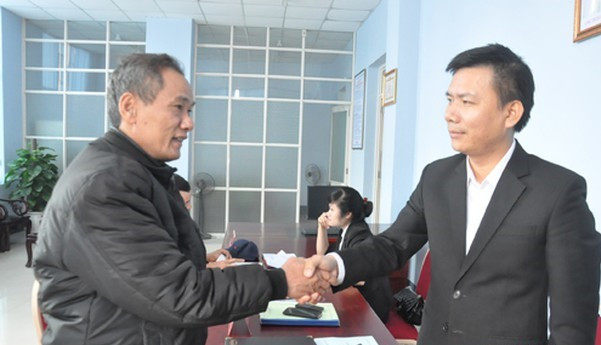 |
| Lawyers provide advice to citizens at the Nghe An Newspaper Legal Aid Office. (Photo: Archival image) |
Over the past six years, the office has not only left a positive impression on those who have received advice, but young lawyers like Minh Huyen, born in 1997 and a graduate of Hanoi Law University, have also expressed, "Participating in free legal aid, being exposed to many cases and situations, has also been an opportunity for us to gain experience, hone our skills, and realize that we must learn, improve, and research further to provide better advice and meet the needs of the people…".
Focus on the grassroots level.
With the belief that "one more person understanding the law is a joy," in 2020, despite being affected by two periods of quarantine and social distancing to prevent and control the Covid-19 pandemic, the legal aid assistants of the Provincial State Legal Aid Center and its branches implemented many measures to overcome the challenges. These included drafting, distributing, and printing 560 audio recordings of the Law on Legal Aid in Kinh, Thai, and Hmong languages to enhance communication through loudspeakers in communes, villages, and hamlets. In addition, they organized 9 communication sessions at the grassroots level in 96 particularly disadvantaged communes, villages, and hamlets in the districts of Que Phong, Nghia Dan, Tuong Duong, Tan Ky, and Ky Son.
“Communication activities reaching people in remote villages and areas with particularly difficult socio-economic conditions are quite challenging due to difficult roads, often encountering language barriers and requiring village officials to act as interpreters. However, the joy and happiness of legal aid workers simply come from firm handshakes and sincere thanks from the people,” shared legal aid worker Vo Thi Hoa. In addition to participating in professional training courses, many legal aid workers also voluntarily fund their own language lessons to better provide legal aid to ethnic minorities. Furthermore, the Center effectively collaborates with competent authorities to promote the activities of the Inter-sectoral Coordination Council on Legal Aid in provincial litigation, ensuring the legal rights and interests of those eligible for legal aid in litigation.
 |
| Local police officers are disseminating legal information to people in the mountainous region. (Illustrative photo: Duc Vu) |
However, Nghe An province has a large geographical area, and while approximately 50% of the population is eligible for legal aid, this group is concentrated in areas with complex terrain, rugged natural conditions, and difficult access. Therefore, legal awareness campaigns have not reached many remote villages and hamlets. The level of legal understanding among the people (especially ethnic minorities living in the three poorest districts) remains limited. Consequently, accessing and receiving legal support is often difficult and time-consuming.
Furthermore, local funding for legal aid activities is limited, especially funding for professional activities, which is too low; insufficient to pay the fees for legal aid services provided to legal aid providers. “Previously, in addition to the team of 15 legal aid assistants, there were 18 lawyers who were collaborators of the center and received a portion of the fees according to Decision 32/2016 QD-TTg, which promulgated the policy on legal aid for the poor and ethnic minorities in poor districts, poor communes, and particularly difficult villages and hamlets during the 2016-2020 period, and support for complex or typical litigation cases. However, by 2020, this funding had run out, and there was no additional funding,” said legal aid assistant Le Van Ly.
Another reason why current legal aid services do not meet practical needs is that some agencies, departments, and localities are not enthusiastic about this activity. According to Dr. Trong Hai, lawyer and head of Trong Hai and Associates Law Office: In reality, many localities are not enthusiastic about providing free legal advice and assistance because they fear touching upon "sensitive" issues at the grassroots level. The people invited are mainly officials, civil servants, and village/hamlet leaders, so it is somewhat of a formality.
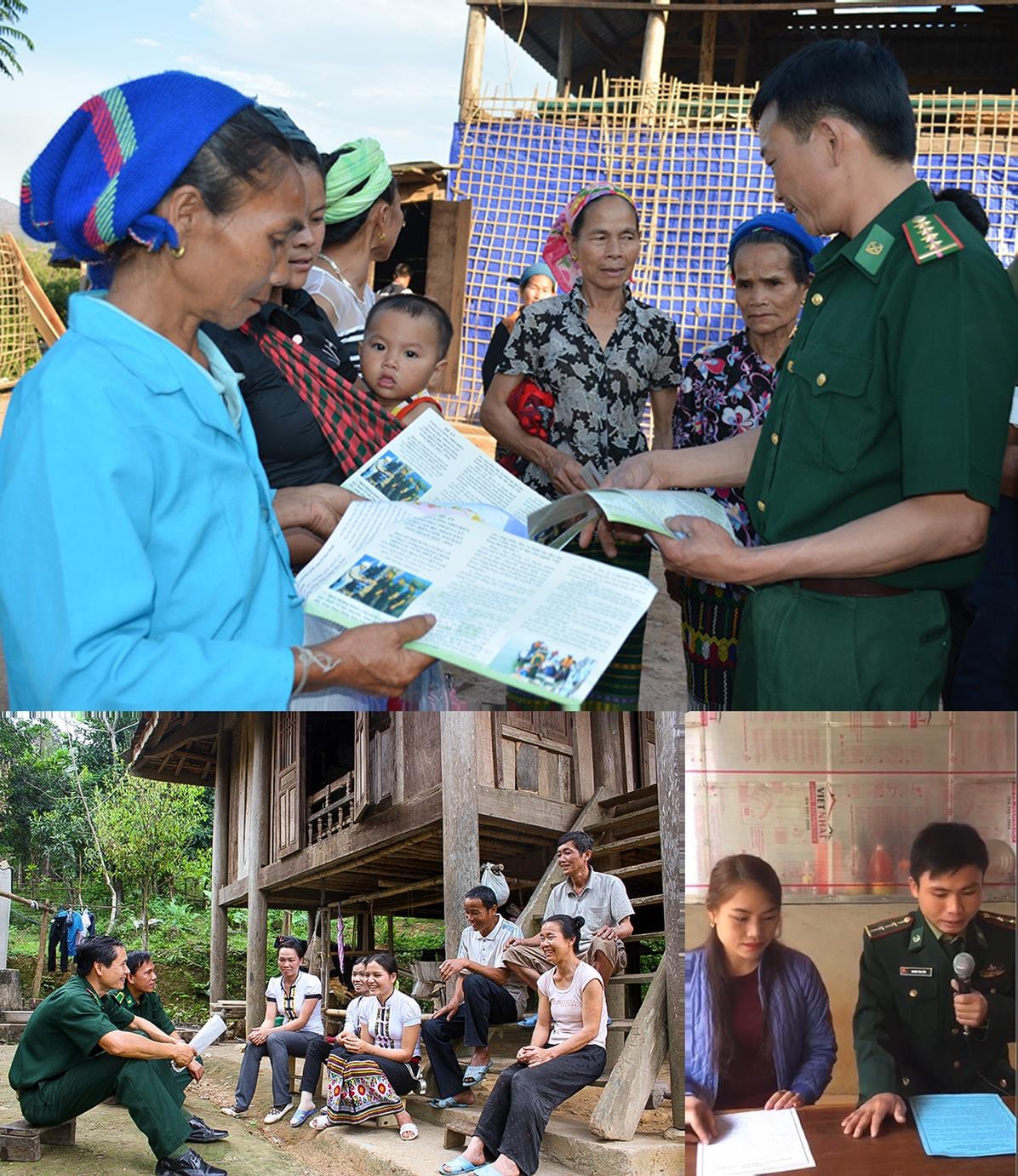 |
| Nghe An Border Guard Force disseminates legal information to people in border areas. (Photo: Le Thach) |
In addition, legal aid workers also expressed concern about the fact that in some cases, even after receiving advice and guidance on procedures, the legitimate rights of individuals have not been considered or protected by relevant agencies and localities, or have been resolved inadequately, superficially, or with the cover-up of wrongdoings, causing frustration and requiring people to make multiple trips…
Despite many difficulties and shortcomings, the trust and expectations of citizens are the driving force for those providing free legal advice and assistance to uphold their spirit and responsibility, continuing to be a legal "bridge" and "support," contributing to strengthening the people's confidence in the Party's policies and the State's laws.


