
Football's construction: PU, latex, flight path, bounce.
Rule 2 (IFAB 2024/25): 68-70 cm, 410-450 g, 0.6-1.1 atm. PU/PVC shell, multi-layer lining, latex/butyl inner core, hand-stitched or heat-sealed construction determine flight path; Jabulani and Al Rihla are examples.
A spectacular curling shot or an unpredictable bounce doesn't just come from the player's feet. According to the IFAB's Laws of the Game 2024/25, the ball's construction – from the cover, lining, inner core, to the stitching/gluing – is what determines its trajectory, bounce, and even feel. The controversies surrounding Jabulani (World Cup 2010) or the technological advancements of Al Rihla (World Cup 2022) demonstrate that every detail makes a difference on the pitch.
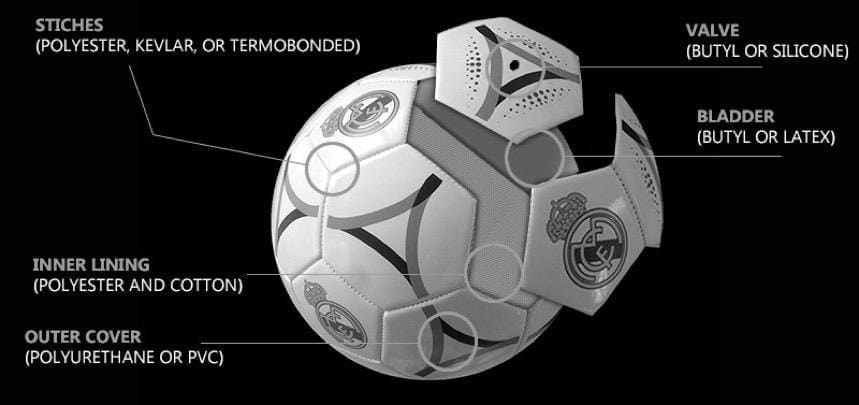
IFAB standards and the four core sections of the ball.
According to Rule 2 – The Ball (IFAB 2024/25), a size 5 ball used in competition must be spherical, with a circumference of 68-70 cm, a weight of 410-450 g, a pressure of 0.6-1.1 atm, and made of a suitable material.
| Parameter | Value |
|---|---|
| Shape | Globular |
| Perimeter | 68-70 cm |
| Weight | 410-450 g |
| Pressure | 0.6-1.1 atm |
A standard soccer ball consists of four main parts:
- Outer cover:It determines the tactile feel and durability.
- Inner linings:Maintains shape and bounce.
- Ball bladder:Containing air directly affects bounce and air retention.
- Pump valve:Assists in pumping and stabilizes pressure.
Material and its impact on feel, bounce, and flight path.
Outer shell: PU, PVC, or genuine leather?
- PU (polyurethane):Sensitive to the foot, stable flight path, commonly used for high-end competition balls (World Cup, EURO). The glossy coating helps to repel water and reduce wear and tear.
- PVC (polyvinyl carbonate):Durable, weather-resistant, suitable for training or artificial turf pitches.
- Genuine leather:Water absorption makes the ball heavy, thus it is rarely used in modern competitions.
Lining: stabilizes shape and reduces impact force.
Professional footballs typically have four or more layers of polyester/cotton to maintain their shape, ensure consistent bounce, and reduce impact during play. Training balls have fewer layers, making them more prone to deformation over time.
Inner bladder: latex, butyl, and carbon-latex
- Latex:Soft and bouncy, but deflates quickly (requires weekly inflation).
- Butyl:Long-lasting hold, a balance between bounce and feel, common in the mid-to-high-end segment.
- Carbon-latex:Combining the advantages of latex and butyl, it has fewer pores and better air retention.
Pump valve: maintains stable pressure
Butyl or silicone-treated valves make pumping easy and maintain stable pressure for extended competition days.
Hand stitching, machine stitching, or heat sealing: differences in aerodynamics.
- Hand-stitched:Deep, durable stitching, commonly found on high-end balls.
- Machine-stitched:Fast and inexpensive; however, if the quality is poor, it can easily tear along the seams.
- Thermal bonding:Smooth surface reduces air friction, increasing flight speed; durability depends on the manufacturing process.
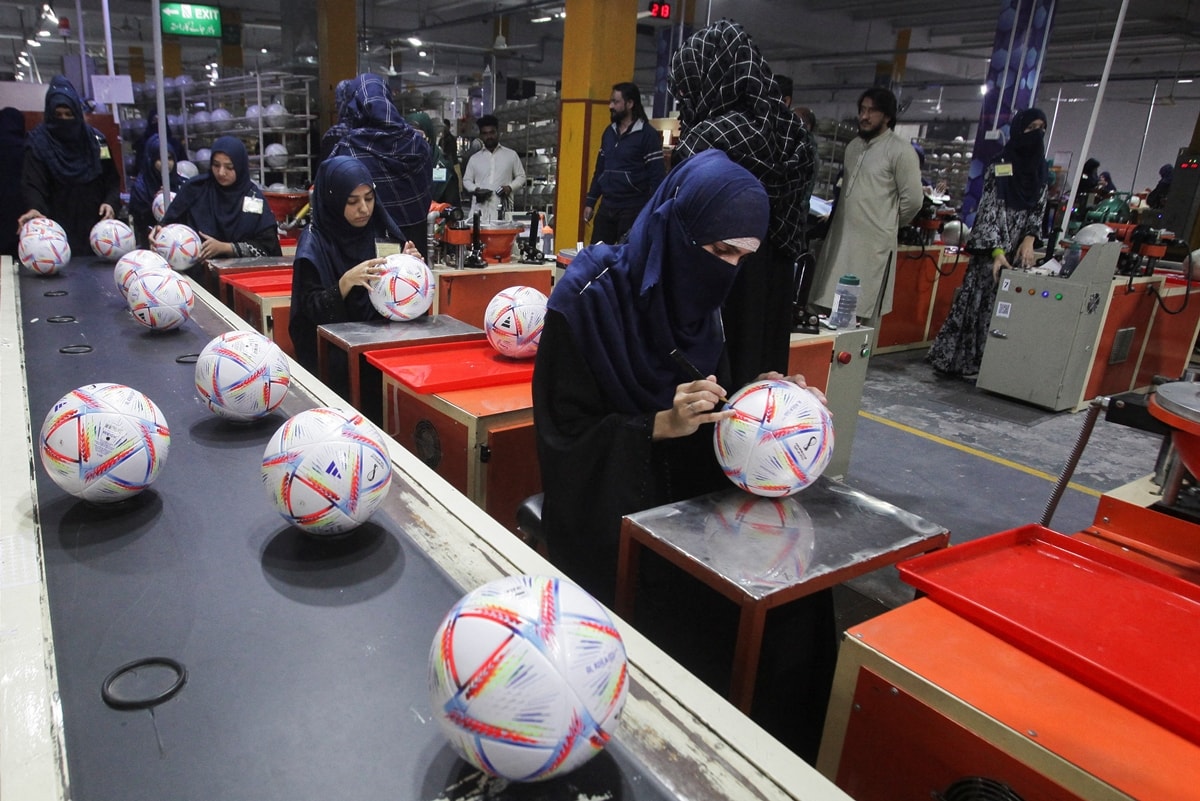
In fact, the balls used in major tournaments are often manufactured in Pakistan, where the supply chain and specialized stitching/gluing skills are concentrated.
Jabulani, Al Rihla, Fussballliebe: eloquent examples
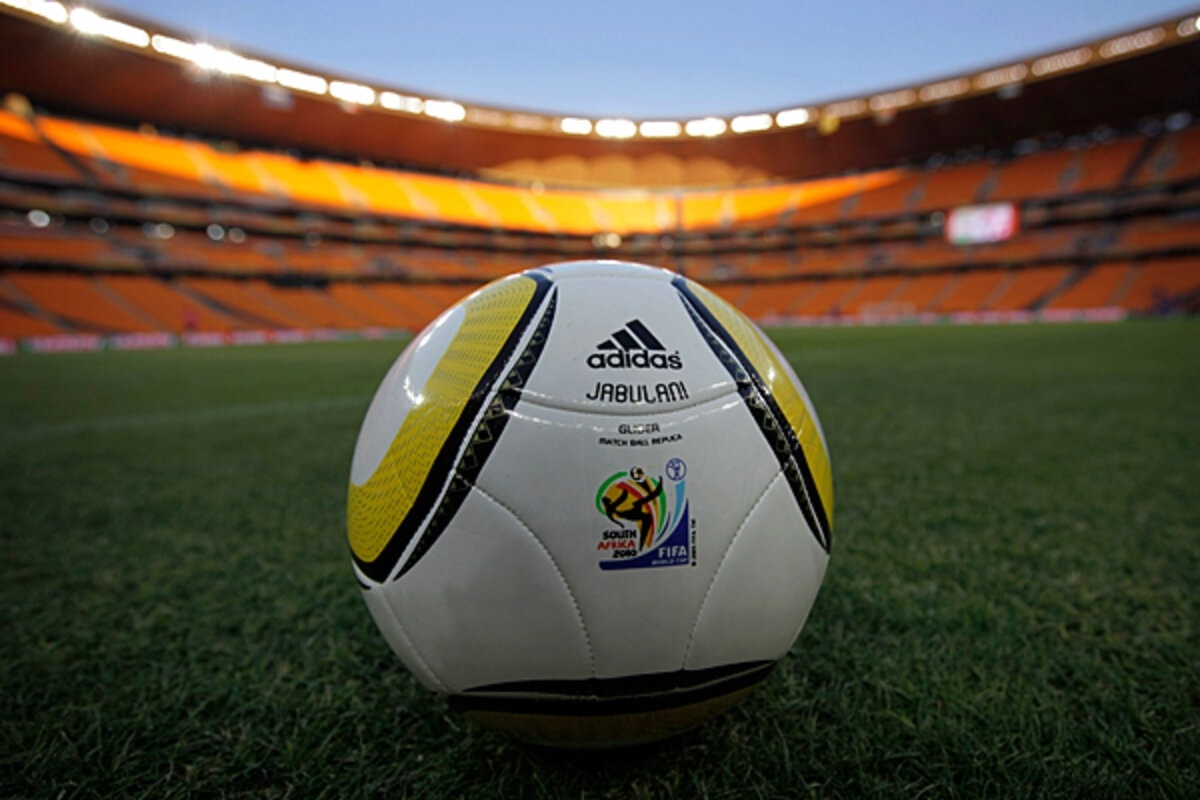
- Jabulani (World Cup 2010):Heat-bonded, with only 8 PU panels (compared to 32 traditional panels). Poor aerodynamic stability causes the ball to tend to fly in a zigzag pattern; goalkeeper Iker Casillas complained the ball was "unpredictable".
- Al Rihla (World Cup 2022):High-grade PU, multi-layered lining, butyl core with integrated sensors to assist VAR in accurately determining position (such as in Lautaro Martinez's offside situation).
- Fussballliebe (EURO 2024):The heat-resistant and waterproof PU coating, praised by Cristiano Ronaldo for its stable bounce, supports more accurate long-range shots.
Common misconceptions about football
- "All balls are the same":Incorrect. Cheap balls (PVC, with few layers of padding) have uneven bounce and deflate quickly; they are far different from high-quality PU balls.
- "Genuine leather is the best":Incorrect. Real leather absorbs water, making it heavy and shiny; FIFA recommends using PU/PVC.
- "The machine operation is always poor":Not exactly. Machine-stitched balls from reputable manufacturers are durable enough for training, though not as good as hand-stitched ones.
Choose the right ball for the purpose: training or competition?
- Training/Artificial Turf:Durable PVC casing at a reasonable price; butyl inner lining for long-lasting air retention.
- Competition:PU shell with water-repellent coating; multi-layered lining for shape retention; latex or butyl inner core depending on preference for feel and stability.
Quick FAQ
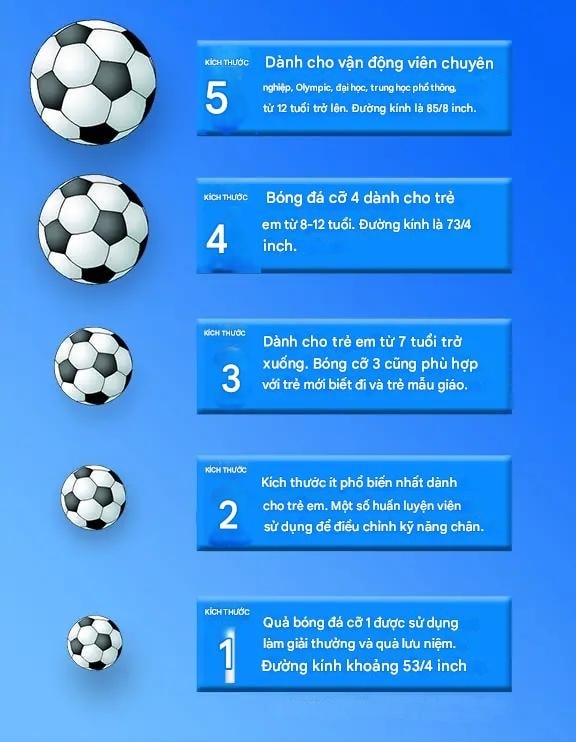
What is the number 5 ball?
Standard size for professional competition, circumference 68-70 cm (unlike size 4, which is smaller and for children).
What materials are suitable for training?
PVC is durable and inexpensive, combined with a butyl core to retain air for longer periods, making it suitable for artificial turf.
Are heat-sealed bags better than hand-sewn bags?
Heat sealing creates a smooth seam; hand-stitching is more durable. The choice depends on the intended use.
Practical impact: performance and safety
High-quality materials and construction ensure the ball meets FIFA standards, reducing the risk of injury (e.g., head impact) and guaranteeing accurate flight. Understanding the construction – from the PU/PVC outer shell, lining, latex/butyl inner core to the stitching/gluing – is key to optimizing training and performance.


