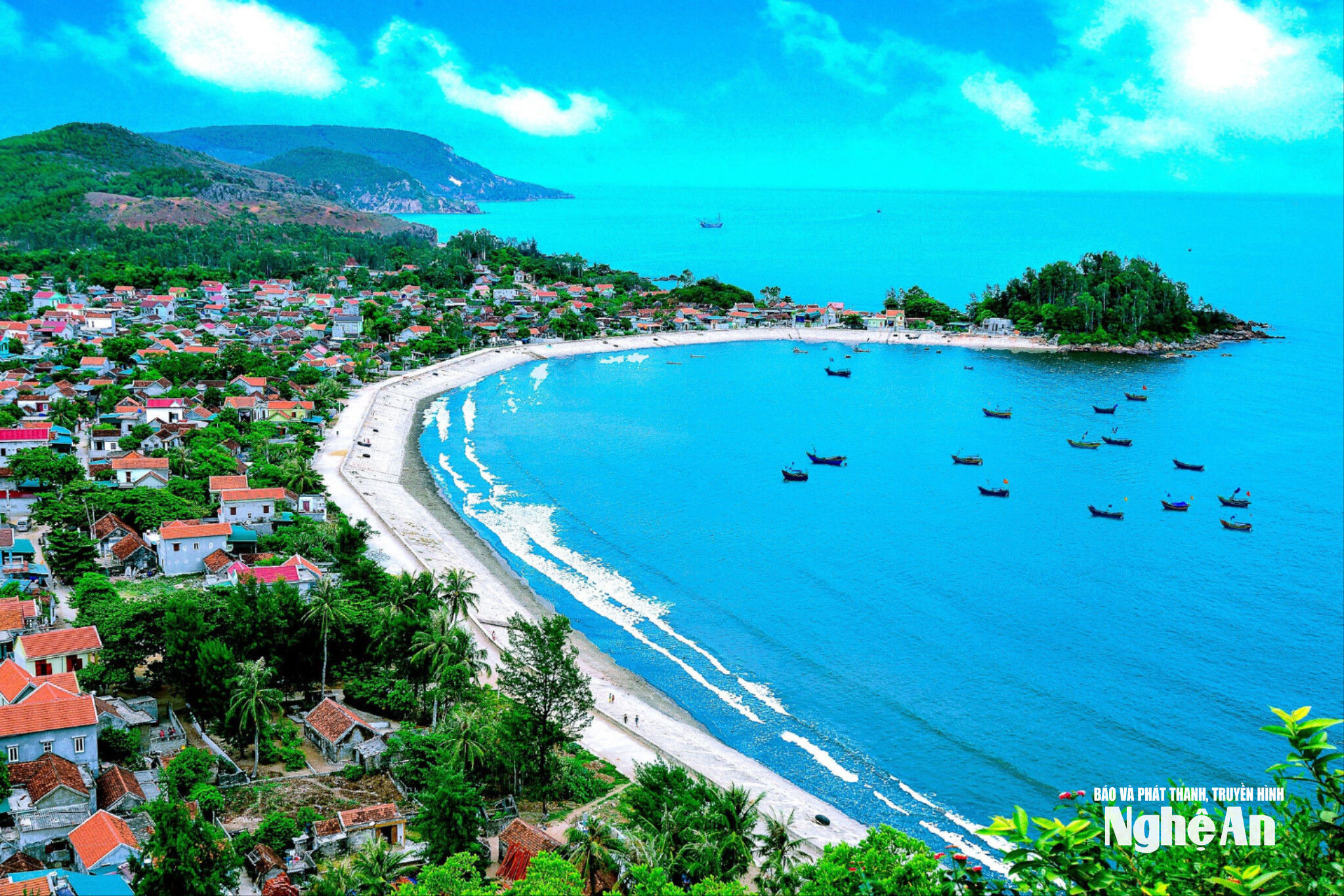
Plants that bring wealth to the coastal areas of Nghe An.
The natural conditions and soil of Nghe An's coastal region are suitable for coconut cultivation. If tens of thousands of hectares of high-yielding coconut trees can be planted, it will provide a significant and stable long-term source of income compared to some current crops. At the same time, it will create many jobs for farmers and fishermen, and attract tens of thousands of tourists to the coconut-growing coastal region for relaxation.
.png)
Nguyen The Trung •26/08/2026
The documents of the 14th National Congress of the Communist Party of Vietnam clearly stated: "Promote the application of science and technology and digital transformation in agriculture, develop large-scale commodity production areas with high quality and added value, linked to deep processing and product branding."
The above guidelines for agriculture are absolutely correct and need to be further studied and deeply understood in order to organize their implementation in practice. One of the tasks is to identify and select crops in each region of the province for intensive investment, increasing productivity to achieve large yields, high quality, and suitable prices, linked with deep processing and building product brands.
On July 31, 2026, Nghe An province announced the adjustment of the Nghe An Provincial Planning for the period 2021-2030, with a vision to 2050. The province identified the plain and coastal areas as one of the three spatial zones for socio-economic development, including orientations for the development of agriculture, forestry, and fisheries. With that in mind, the proposal to choose coconut trees for cultivation in coastal areas is feasible and offers long-term benefits.

The total coconut growing area nationwide is currently over 200,000 hectares, with the Mekong Delta accounting for over 80% of this area. Provinces with significant coconut cultivation include Ben Tre, Tra Vinh, Tien Giang, and Vinh Long (based on pre-merger provincial names). Ben Tre accounts for 42% of the national coconut growing area and exports many products to 70 countries and territories.
First of all, coconuts are a highly valuable economic crop, providing a large source of income thanks to their wide export market including the US, China, European countries, Japan, and South Korea. All parts of the coconut tree can be harvested and processed into various products, mainly coconut meat, coconut water, coconut oil, coconut fiber, activated charcoal, etc. This creates many jobs for agricultural workers.
According to data from the FAO's 2006 guide to the processing of pure coconut oil, pure coconut oil is extracted from dried and fresh coconut flesh and contains medium-chain triglycerides, which are antioxidants and rich in natural vitamin E. Its aroma ranges from subtle to strong depending on the processing technology. For a long time, coconut oil in general, and pure coconut oil in particular, has been used in both food and non-food applications. Pure coconut oil is recognized for its higher value compared to traditional coconut oil and is therefore used as a base oil for skincare products, moisturizers, functional foods, and cosmetics. Pure coconut oil is also used as a nutritional food due to its anti-inflammatory, antibacterial, and antioxidant properties, protecting people from atherosclerosis and cardiovascular disease.
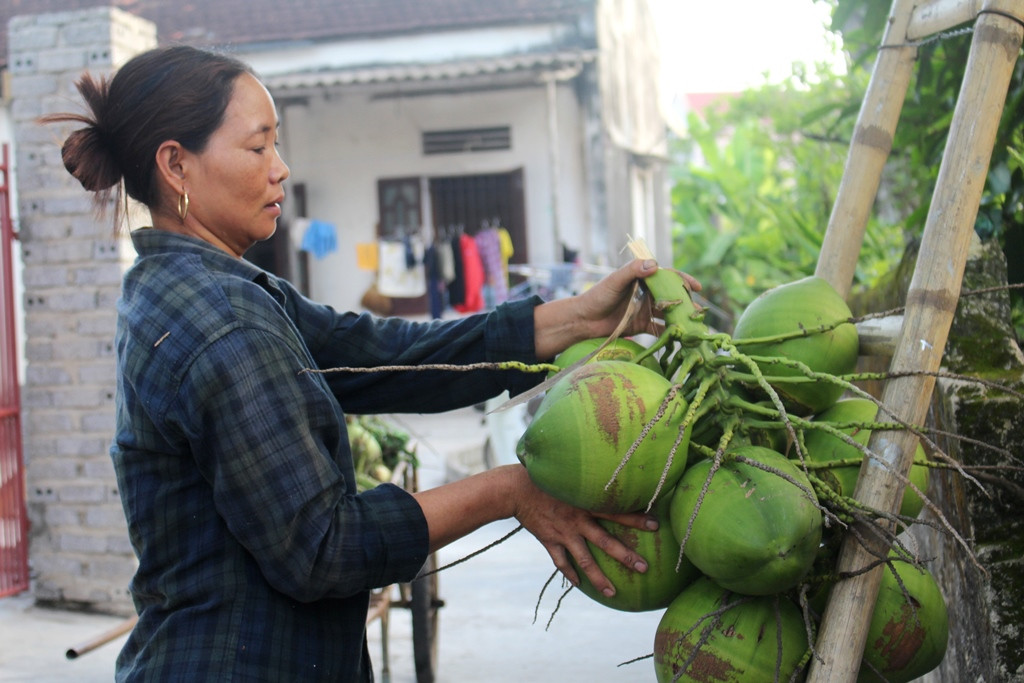
Coconut water is currently a popular beverage among consumers and is used as an ingredient in the food industry. Coconut blossom nectar, in addition to its very high sugar content, also contains minerals, trace and macronutrients, 12 types of vitamins, and 17 amino acids, all of which are very beneficial to health. Compared to other bottled soft drinks, coconut blossom nectar is very nutritious and pure.
Thus, the coconut tree is both a perennial fruit tree and a valuable medicinal plant. Besides being processed into coconut oil, coconut flesh is also used to make coconut flour, coconut milk, etc. Coconut fiber is used as soundproofing material and rope for ships at sea. The coconut trunk is used as construction timber and for producing handicrafts. The coconut shell is used as a raw material for activated charcoal. Coconut leaves are used for roofing, brooms, and other traditional products.
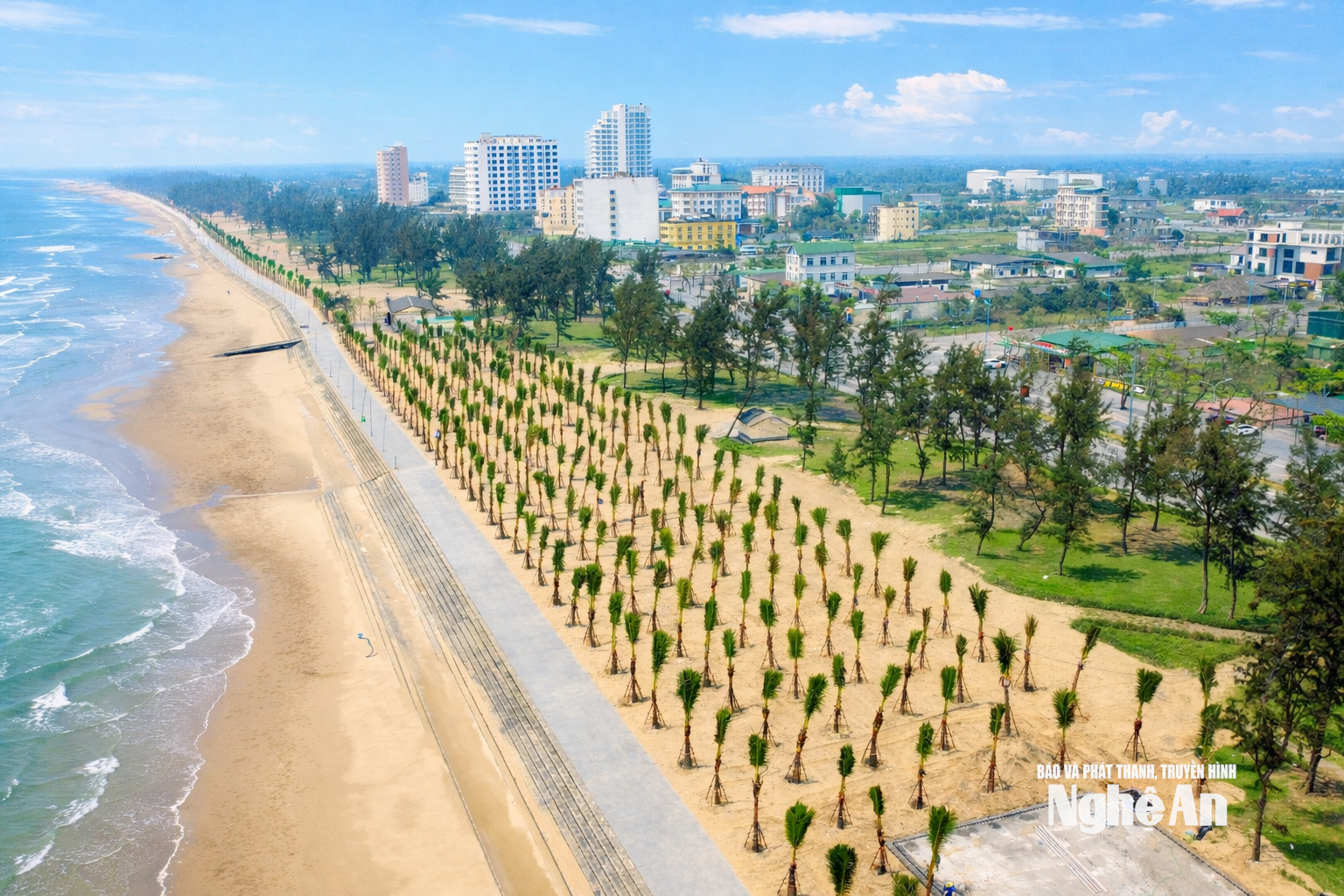
In recent years, Vietnam's coconut export value has increased rapidly, reaching hundreds of millions of USD annually. The main export products include fresh coconuts, canned coconut water, dried shredded coconut, coconut oil, activated charcoal, etc. Coconut trees in general, and those in coastal areas in particular such as Nha Trang and Ninh Chu, have opened up attractive ecotourism opportunities, drawing many visitors.
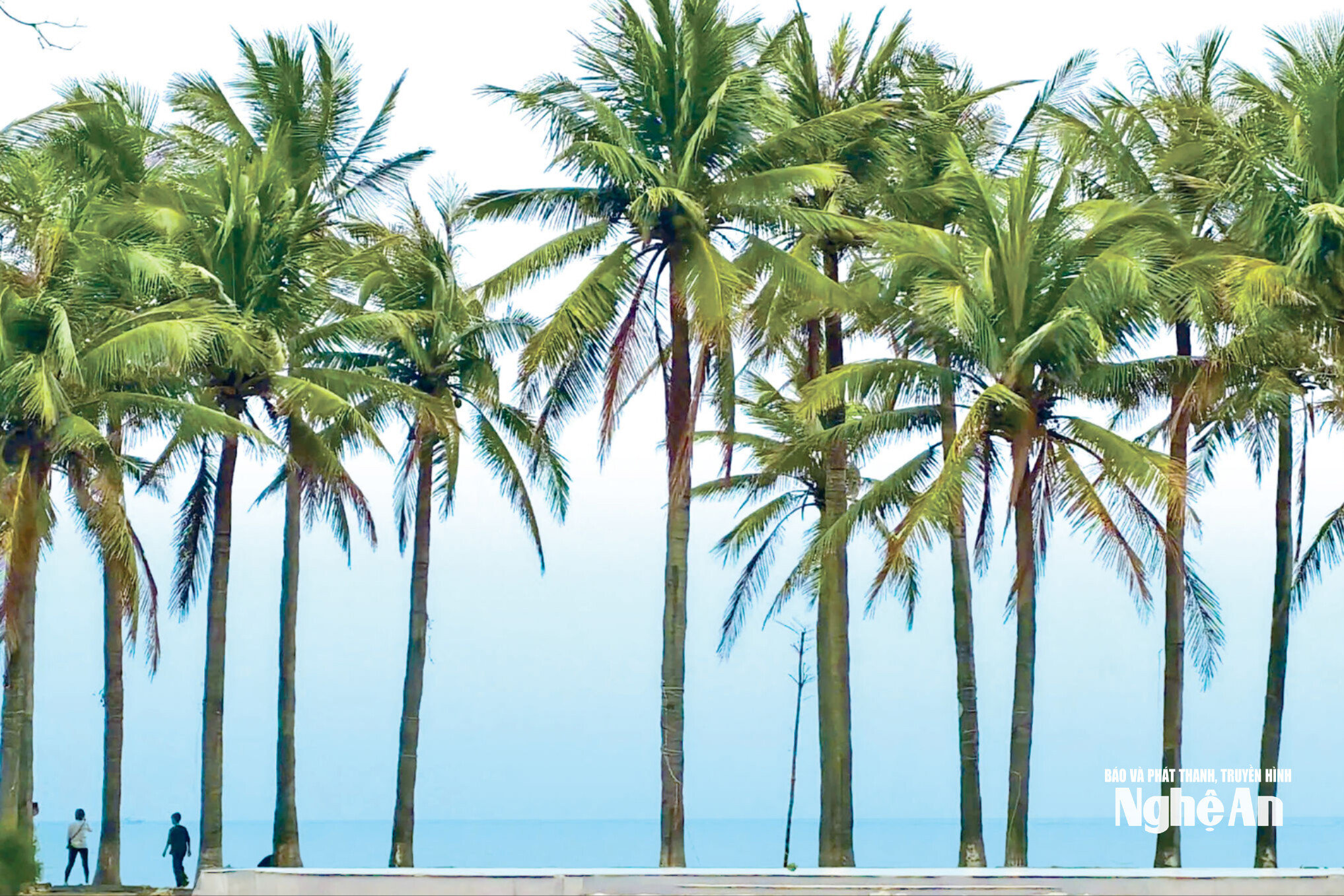
In Nghe An province, the natural conditions and coastal soil are suitable for coconut tree cultivation. Despite global climate change, successive natural disasters, and saltwater intrusion shrinking the area for other crops, coconut trees remain resilient to adverse conditions. In particular, coconut trees not only create beautiful landscapes but also possess excellent resistance to storms and strong winds. Surveys conducted after major storms in 2025 showed that while casuarina, eucalyptus, and mahogany trees were all broken and felled, coconut trees remained standing strong along the coastal strip of Nghe An.
To intensify coconut cultivation and increase yield, growers need to pay attention to several key factors:
First, it is necessary to choose the right coconut variety for planting. According to research by the Institute of Oil and Oilseed Research, Vietnam currently has a full range of varieties, from green Siamese coconut, green Siamese coconut, fiery Siamese coconut, red Siamese coconut, etc. Some hybrid coconut varieties such as PB121 (recognized as a national variety since 1999), and IVA1 and IVA2 (allowed for regional cultivation since 2004) achieve high yields. Hybrid coconut varieties can yield 100-200 fruits/tree/year (nearly 4 tons/ha).
Coconut trees are cross-pollinating plants. Selecting varieties using traditional methods of local selection will result in a higher rate of cross-pollination and lower purity compared to hybrid coconut varieties produced through artificial or assisted pollination. Good seedlings must meet the following standards: high and stable yield, early fruiting, resistance to certain pests and diseases, and suitability to local ecological conditions.
Based on the intended use, select the appropriate coconut variety. For oilseed coconuts, thick flesh and high oil content are required; for drinking coconuts, sweet water, thin shells, and attractive fruit color and shape are needed. Harvesting coconuts for seed requires selecting medium-sized, disease-free fruits, ideally during the dry season. Store seed coconuts in a cool, well-ventilated place (avoiding direct sunlight and rain) for 15-20 days for dwarf coconuts and 10-15 days for tall coconuts. After storage, the seed coconuts are grown in a greenhouse or shaded area, regularly watered to maintain moisture (65-70% humidity), and sprayed with pesticides to control pests such as coconut beetles, rats, and leaf spot.
Depending on the soil and growing conditions, seedlings can be transplanted from the nursery when they have about 3-4 leaves (if the soil is good) and 5-6 leaves (if the soil is poor).

Coconut trees are suitable for planting in various soil types such as sand, sandy loam, clay, etc., but sandy loam soil with a pH of 5-8 and a cultivation layer thickness of 0.8-1m is best, or at least 50cm for acidic soils. Planting density should be 6-7m/tree for dwarf coconut varieties and 7.5-9m/tree for tall coconut varieties. Before planting, apply organic fertilizer and NPK fertilizer, mix with soil, and fill the planting hole. In acidic soils, apply lime to the bottom of the hole beforehand. The best time to plant coconut trees is at the beginning of the rainy season. After planting, the coconut plantation must be regularly cared for, including watering, fertilizing, and monitoring for pests and diseases (such as coconut beetles, rhinoceros beetles, weevils, rats, and shoot rot).
Given the multifaceted benefits of coconut trees, and to transform coconut products into major commodities, relevant agencies need to coordinate with coastal communes and wards to plan planting areas and organize training for growers on proper technical procedures. Planting tens of thousands of hectares of high-yield coconut trees would provide a significant and stable long-term source of income compared to some current crops. Simultaneously, it would create numerous jobs for farmers and fishermen and attract tens of thousands of tourists to the coconut-growing coastal region for relaxation. Developing coconut forests would also create a protective barrier against storms, reducing damage to people and property in the storm-prone areas of Central Vietnam.
With the strong determination of the entire political system, we are confident that the coconut-growing region along the 82 km stretch of coastline from Cua Hoi to Hoang Mai in Nghe An will certainly become a reality.