
Raising chickens using biological bedding: a circular economy model in the new rural development program in Binh Minh commune.
In the new rural development movement, many localities in Nghe An have boldly applied scientific and technological advancements to production. Among them, raising chickens using biological bedding in Binh Minh commune is considered a significant step forward, both reducing environmental pollution and improving economic efficiency for farming households.
Environmentally friendly livestock farming solutions
While traditional chicken farming methods used to cause pollution, the use of biological bedding has significantly improved the farming environment.

In Roc Lua hamlet, Binh Minh commune, Mr. Trinh Xuan Minh's family is one of the pioneering households to apply the biological bedding model on a scale of 30,000 chickens.
Mr. Minh shared: “Previously, I had to clean the chicken coop 2-3 times per breeding cycle, which was both time-consuming and created unpleasant odors. Since switching to biological bedding, I hardly have to clean up the manure anymore, the chickens get sick less often, and the mortality rate has decreased significantly. The bedding is mainly made from rice husks, sawdust, and probiotics, which can decompose chicken waste right in the coop, minimizing odors, creating a dry, warm, and healthy environment for the animals. After each breeding cycle, the bedding material is bagged and sold to gardeners to be used as organic microbial fertilizer for crops, creating a closed loop in agricultural production.”
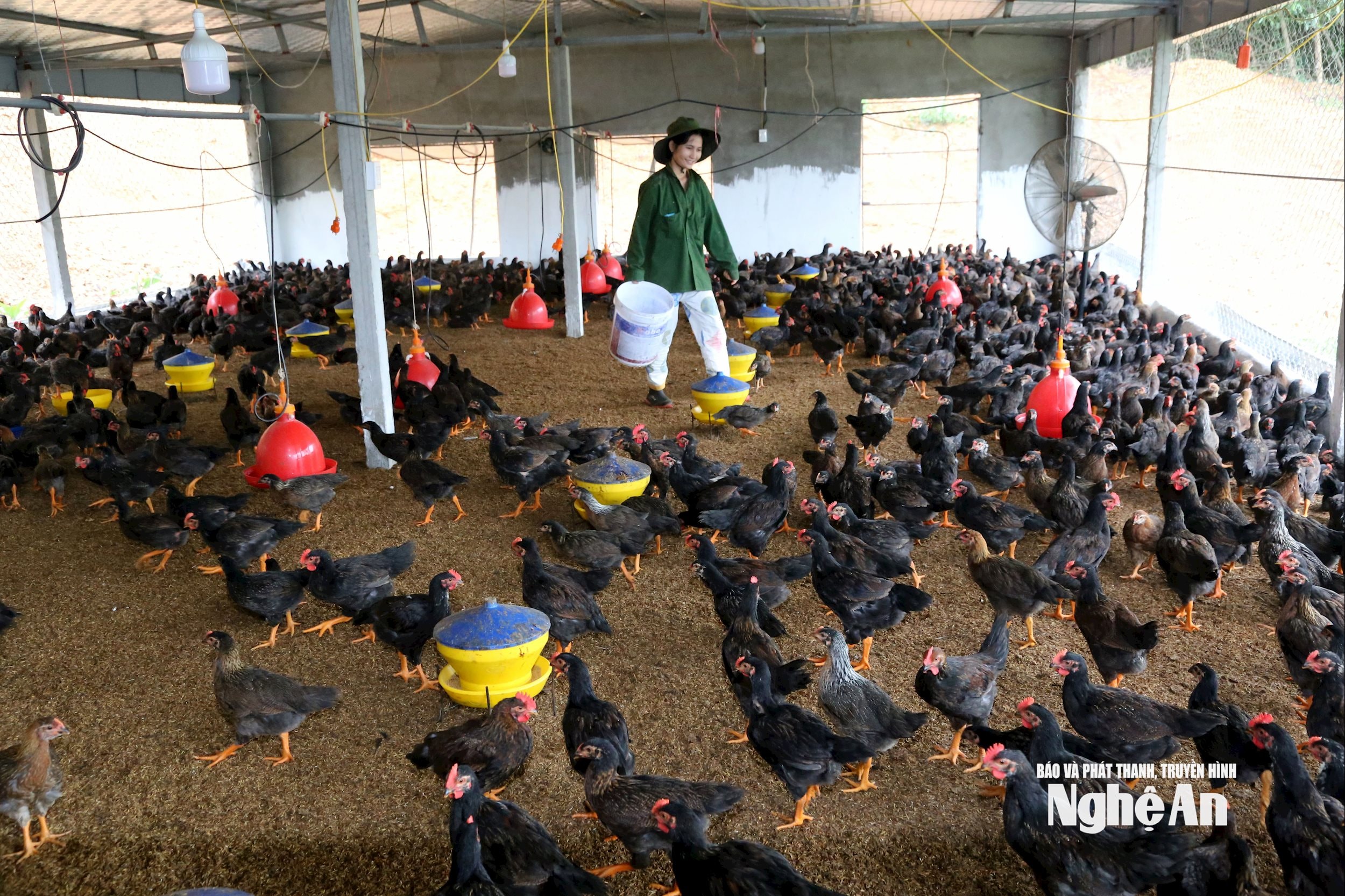
Besides providing economic benefits, this model also helps farmers significantly reduce veterinary medicine costs and cleaning expenses, while improving feed efficiency. Chickens raised on biological bedding have better resistance to disease, firmer meat, and are favored by the market.
Also in Roc Lua hamlet, Ms. Truong Thi Hoai, a farmer raising 6,000 chickens per batch, said: “Raising chickens using biological bedding is not only cleaner but also much more efficient. After 45-50 days, the chickens reach a weight of 1.4-1.5 kg/each, selling for 60,000 VND/kg. Each batch yields a good profit, and the chicken coop no longer smells, and the surrounding environment is cleaner. The commune officials consider this a suitable farming method in line with the criteria of the new rural development program.”

According to Mr. Ta Quoc Quang, head of Roc Lua hamlet, out of 120 households in the hamlet, half are engaged in commercial chicken farming; about 20 households raise chickens on a scale of 10,000 or more per batch. “Since switching to biological bedding, productivity and economic efficiency have increased significantly, and people's lives have become more prosperous. Many households have built new houses and invested in expanding their chicken coops on a large scale,” Mr. Quang said.
According to local calculations, each batch of 1,000-1,500 chickens raised using biological bedding yields an income of 30-50 million VND, 20-25% higher than traditional methods. More importantly, this model also helps reduce the environmental burden, aligning with criterion number 17 in the National Criteria Set for New Rural Development.

Creating a sustainable path
Mr. Tran Dinh Canh, Head of the Economic Department of Binh Minh commune, said:
“Currently, the entire commune has over 100 households raising chickens commercially, of which 27 households have invested in large-scale farms with over 2,000 chickens per batch, and some even raise up to 50,000 chickens per batch. The good news is that most farms apply biological bedding techniques. Besides the environmental benefits, the use of biological bedding also creates favorable conditions for the formation of new growth.”c"Green agricultural value chain, towards sustainable development."

According to Mr. Canh, Binh Minh commune (formed by merging four communes: Tan Thanh, Tien Thanh, Ma Thanh, and Duc Thanh) has a long tradition of livestock farming. Thanks to technical support from the agricultural sector, households have mastered the technology, proactively selected suitable microbial products, and participated in training courses on environmental management in livestock farming.
"In the coming time, the commune will plan a concentrated chicken farming area, separated from residential areas to ensure environmental hygiene, and at the same time, encourage people to cooperate to establish livestock cooperatives to develop sustainably and increase the value of the product," said Mr. Tran Dinh Canh.

The model of raising chickens using biological bedding is a crucial link in the circular agriculture strategy – utilizing by-products, reducing emissions, and reusing waste as organic fertilizer. When linked to the criteria of the new rural development program, this model not only helps increase income but also changes people's perceptions of green, clean, and safe production.
In Nghe An province, the application of biological bedding not only brings economic benefits but also contributes positively to disease control, water conservation, and labor savings. This model is suitable for implementation in advanced new rural areas, aiming for the criteria of "green, clean, and sustainable new rural areas".

Based on the practical results in Binh Minh commune, it can be affirmed that raising chickens using biological bedding is not only an effective economic model, but also an essential direction in building advanced and model new rural areas.


