
Seedless lemons - a promising new variety in Nghe An.
In the context of Nghe An province seeking new directions for its citrus fruit development program, seedless lemons stand out as a potential option due to their superior advantages in yield, quality, and market demand. Trials have shown that seedless lemons are well-suited to the climate and soil conditions of Nghe An.
Seedless lemons have many advantages.
The seedless lime tree (Citrus latifolia, Lime), also known as the four-season lime, is a variety created by John T. Bearss in 1895 in California (USA). It is a medium-sized tree with a wide canopy, thriving in tropical and subtropical climates with ideal temperatures between 20 and 30°C. When temperatures drop below 10°C, the tree grows slowly and has difficulty flowering and bearing fruit.
The plant is relatively drought-tolerant but still requires adequate watering to maintain productivity. It is suitable for a variety of soil types such as hilly soil, coastal sandy soil, and acidic soil, but grows best in alluvial soil with a pH of 5.5 - 6.5.
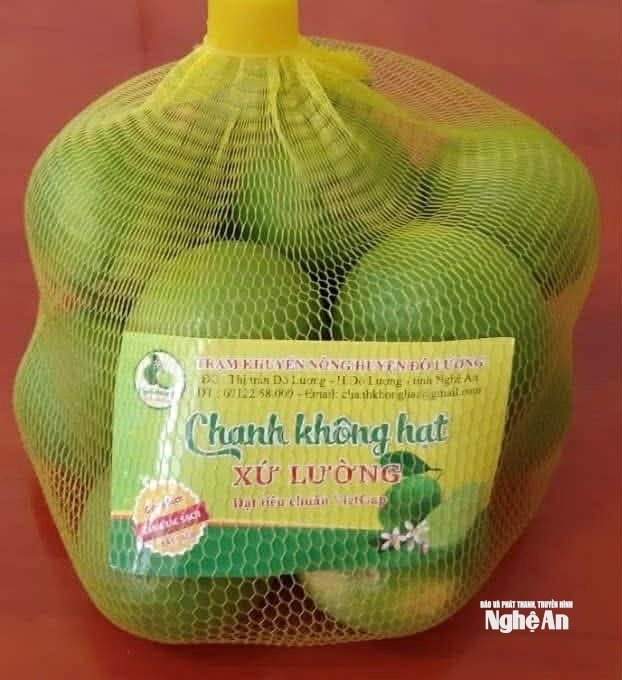
This lemon variety possesses several outstanding advantages. The fruit is seedless or has very few seeds, a major advantage for the consumer and processing markets, preventing the lemon juice from having a bitter taste. The fruit is large, with a diameter of 5-6 cm, averaging 7-8 fruits per kilogram, meeting the aesthetic standards of demanding markets.
The lemon peel is thin, the fruit is juicy, with a refreshing sour taste and a mild aroma. It is not overly sour, not bitter, and rarely develops a bitter taste when brewed with hot water. The fruit can be stored for a long time under normal conditions, making it suitable for long-distance transport and export.
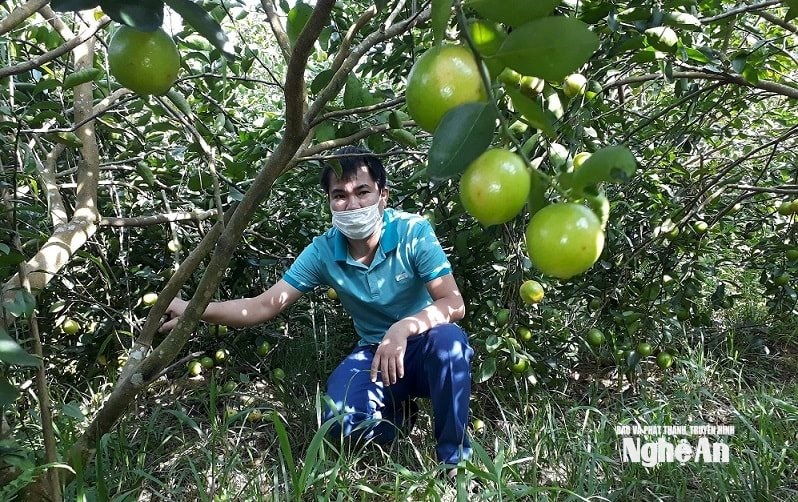
Seedless lemons bear fruit year-round, can be harvested after 2 years of planting, and have a lifespan of over 10 years. Yields are high and stable, commonly 20-40 tons/ha depending on cultivation conditions. This lemon variety has good resistance, especially to citrus greening disease – a disease that severely damages many other citrus varieties.
Seedless lemons are grown in many countries around the world, but Mexico, Brazil, and the United States are the largest producers and exporters. Lemons are considered a "superfood" due to their low cost but high value, offering benefits ranging from health protection and immune system enhancement to digestive support, detoxification, diuretic effects, beauty enhancement, and household use. Demand for lemons is high in countries with hot climates. In 2024, the global lemon market reached approximately $46 billion, with the Asia-Pacific region accounting for about $31 billion. Major importing markets include the Middle East (UAE, Saudi Arabia, Qatar, Oman) and Europe (Netherlands, UK, Germany, France), particularly serving the beverage and food processing industries.
Seedless lemons were introduced to people in Southern Vietnam at the end of the 20th century. Since 2012, seedless lemons have flourished most in the Mekong Delta, then spread to Central and Northern Vietnam.
Currently, the Mekong Delta alone has nearly 15,000 hectares of seedless lemon cultivation, of which Long An (now partly part of Tay Ninh) accounts for more than 11,000 hectares.
Prospects in Nghe An
Nghe An province has a long tradition of growing lemons, but local lemons still exhibit limitations such as having many seeds, difficulty in staggering harvests, and difficulty meeting processing and export requirements, thus mainly serving the domestic market. Based on this reality, in 2017, the Center for Application of Scientific and Technological Advances (Nghe An Department of Science and Technology) collaborated with communes in the former Do Luong district to implement a project to introduce, produce seedless lemon varieties, and conduct trial plantings.
The results showed that the plant adapted well to the current local ecological conditions in Bach Ngoc, Van Hien, and Thuan Trung, with a yield of approximately 28 tons/ha. Subsequently, the model was further tested in Hung Nguyen (formerly) and Quynh Luu (formerly).
In Bach Ngoc and Thuan Trung communes, the area planted with seedless lemons has expanded to over 20 hectares with stable yields, generating an income of 300-400 million VND/hectare. In the context of orange trees – the province's main crop – entering a period of degeneration due to Greening disease, coupled with the advantage of having Nafood Group (a large and experienced fruit exporter and processor of lemons in Long An) operating in the area, seedless lemons are emerging as a potential option to supplement Nghe An's citrus fruit development program.
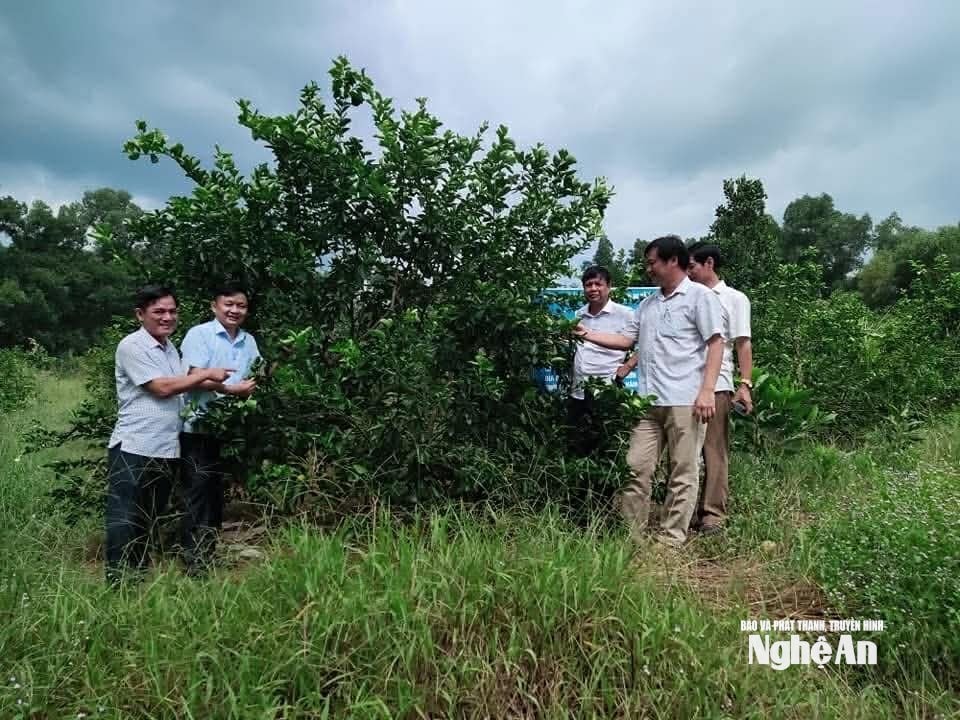
Based on the province's citrus fruit development plan, the agricultural sector needs to carefully survey suitable land areas such as semi-mountainous regions, hills, and alluvial soils along rivers to plan for selective expansion of cultivation, avoiding indiscriminate development. The Provincial Agricultural Extension Center should establish demonstration models in favorable areas for people to learn from. In particular, areas where orange cultivation is deteriorating should be supported in converting to seedless lemon cultivation to utilize available land, infrastructure, equipment, and the farmers' experience in citrus fruit cultivation.
The province needs to focus on developing large-scale concentrated farming areas of 100 hectares or more to ensure the synchronized application of technology and production management. Farmers need to be trained to apply VietGAP/GlobalGAP from the outset to meet the requirements of export markets and supermarket chains. Water-saving irrigation systems, especially drip irrigation, should be prioritized for investment to ensure a reliable water supply during the dry season – a crucial issue for Nghe An. Simultaneously, training courses on techniques for inducing off-season flowering and fruiting should be organized to harvest during periods of high prices, typically from April to August each year.
Cooperative societies or cooperative groups need to be strengthened to act as a link between farmers and processing and export businesses. The province should encourage the signing of long-term purchase contracts between farmers, cooperatives, and businesses like Nafood from the moment the lemon orchards begin to bear fruit. Besides exporting fresh fruit, the development of small and medium-scale processing industries should be promoted, such as the production of concentrated lemon juice, frozen lemons, and lemon essential oils, to increase consumption, stabilize prices, and enhance value. The management of planting area codes and packaging facility codes according to EU and Chinese import standards must be strictly implemented, while the application of traceability systems should be promoted.
With an investment of approximately 150-170 million VND/hectare, the province needs a policy to support capital so that farmers can confidently switch to this model. Developing citrus fruit cultivation remains a major direction for Nghe An, but in the context of declining orange trees due to disease, switching to different varieties is necessary.
Based on successful trial results, the ability to proactively manage seed varieties, and the advantages in consumption and processing from existing businesses, developing seedless lemon raw material areas is a suitable direction. With the attention of the government, the involvement of businesses and people, seedless lemon trees could become a key crop for processing and export in Nghe An in the coming years.


