
Chelsea and the number 9 dilemma: Joao Pedro is not yet the solution.
Enzo Maresca lacked a central striker, so he used Joao Pedro as the main forward, even though he's better suited to a withdrawn forward role. Tony Cascarino spoke up; Delap was injured, so Guiu was the young option.
Chelsea are still struggling with the center forward position under manager Enzo Maresca. With a thin squad and extensive rotation, Joao Pedro is often deployed as a number 9, but his performances on the pitch suggest he's better suited to a withdrawn forward or number 10 role than as a central striker.
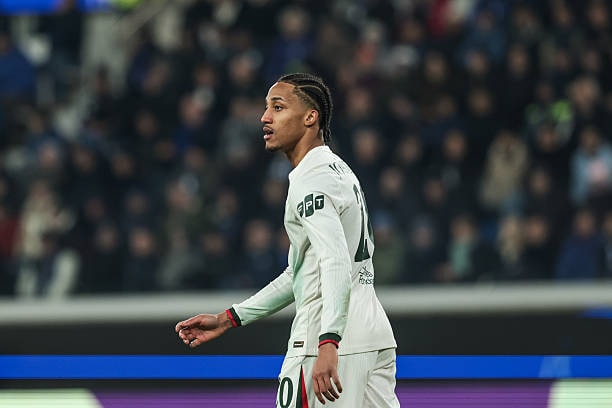
Joao Pedro's natural role and the space in the penalty area.
Pedro is not a classic number 9: he lacks decisive touch, sharp positioning, and the ability to play with his back to the goal – qualities that define a center forward. Instead, the Brazilian forward tends to drop deep, link up play, and support the midfield – the job of a number 10/spined forward. When he leaves the penalty area to participate in build-up play, Chelsea often lose a clear target at the end of the attack.
The problem, therefore, doesn't lie solely with the player. Pedro didn't play badly; he was simply pushed into a less than optimal position, leading to a decrease in overall performance: the attacking moves lacked weight at crucial moments, and the midfield had to rush in to fill the gaps in the penalty area.
Maresca's rotation and the price of experimentation
This season, Maresca has rotated his squad more than any other Premier League manager, according to the source, in an attempt to find the optimal formula for a newly assembled team. However, the constant changes have led to an unstable playing structure: players struggle to develop habits, team spacing is inconsistent, and the attacking line pays the price in terms of off-ball movement.
Cascarino correctly identified the bottleneck.
Former striker Tony Cascarino bluntly stated: “I think Chelsea have players who can score goals, but I’m not sure Joao Pedro is a true center forward.” This assessment hits the nail on the head: using a “number 10” to play the role of a “number 9” weakens both the destination and the trajectory of the ball.
Cascarino also spoke about the inconsistency: “There are times when I watch Chelsea and think: ‘They are a good team, they can beat any opponent.’ But other times, I don’t understand why they play so badly,” while also pointing to the major problem in defense, where Chelsea lack a leader to control the tempo. When the defensive foundation is shaky, the team finds it even harder to be patient with a “false” number 9 who is still getting used to the role.
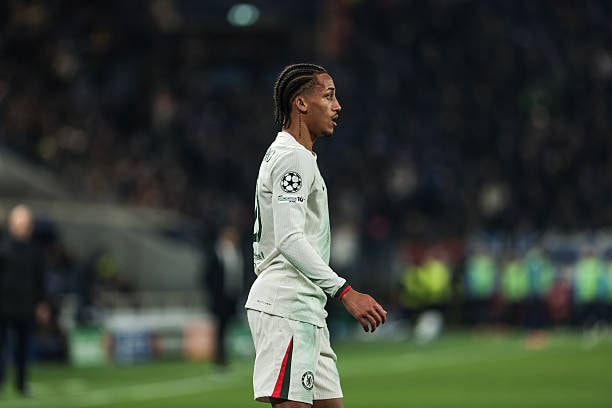
Limited options: Delap is injured, Guiu is still inexperienced.
Although many argue that Pedro shouldn't play as the furthest forward, Maresca currently has few options. Liam Delap – a possible replacement – is injured. Marc Guiu is a young talent still gaining experience. In the short term, Pedro will almost certainly have to continue playing the number 9 role out of necessity.
Tactical perspective: when the "number 10" disguises himself as a "number 9"
When a player with a tendency to drop deep is tasked with controlling the 5.5-meter area, the common outcome is:
- The space in front of the opposing center-backs wasn't constantly marked, allowing them to proactively push forward and disrupt passes down the flanks or through the middle.
- Crosses/low passes to the near post lacked a target that allowed the center-backs to move diagonally in front of them; the ball had to loop back to the second line more often, slowing down the pace of the attack.
- The midfield's role is stretched thin: it's both organizing and attacking, but no one is truly playing the "spearhead" role in the hot spots.
To reduce their reliance on a true center forward, Chelsea need to strengthen their conventional attacking runs from supporting positions, or adjust Pedro's starting position so that he is always marked by a central defender on the inside flank. However, these are only temporary solutions when there is a shortage of players in the number 9 position.
Impact and adjustment requirements
Joao Pedro isn't the biggest problem, but he's a reflection of the current tactical instability. When not playing to his strengths, he struggles to perform at his best, and as a result, the Blues' attacking efficiency is eroded. With a packed schedule and limited resources, Chelsea needs to quickly redefine Pedro's role and stabilize the squad to create momentum for the system's development.
As long as the striker problem remains unresolved, experimentation is very likely to fail. And at this point, the solution is not just about a name, but also about how Maresca redesigns the attacking structure to suit the qualities of the players he has.


