
The estimated cost of deploying the U.S. Yellow Dome missile defense system is $1.2 trillion.
A report from the U.S. Congressional Budget Office (CBO) shows that the operating costs of the Golden Dome system are six times higher than initially projected, with the burden of the budget lying on the satellites.
The U.S. Congressional Budget Office (CBO) has just released a detailed report on the multi-layered missile defense system called Golden Dome. According to the report, the total cost of deploying and operating this system is estimated at $1.2 trillion, six times higher than the $185 billion figure announced by General Michael Guetlein, Director of the U.S. Space Force Program, last March.
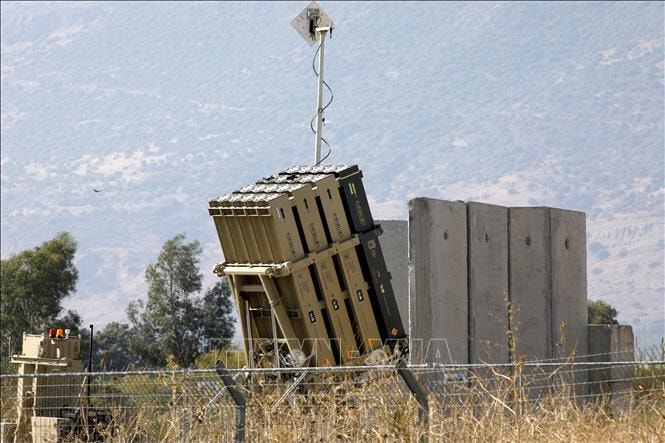
Multi-layered defense system structure
The CBO's estimate is based on a scenario of a comprehensive defense system capable of covering all 48 contiguous states plus Alaska and Hawaii. The system is designed to intercept targets from the ground to outer space with four main components:
- Nearly 7,800 interceptor missiles are deployed in the air.
- Two new locations have been equipped with ground-based interceptor missiles.
- Four locations are equipped with the land-based version of the Aegis system used by the US Navy.
- 35 regional sites are equipped with radar systems along with Patriot missile systems and Terminal High Altitude Area Defense (THAAD).
Budgetary burden from the spatial component
Notably, the space component has been identified as the most expensive part of the entire project. Interceptor satellites operating in low Earth orbit near the poles account for approximately 70% of the procurement costs and 60% of the total system cost. The development, deployment, and maintenance of this satellite network alone is projected to cost around $720 billion.
In addition to the initial investment cost, the CBO report highlighted that the annual operating and support costs for the entire system would amount to approximately $8.3 billion. Senator Jeff Merkley, a senior member in Washington, cited this report to express concerns about the feasibility of the budget.
Progress and technical challenges
The Golden Dome development plan was announced by President Trump in early 2025 with the goal of completion by the end of his term in 2029. The US Congress has approved an initial budget of $25 billion, and the Pentagon is continuing to propose an additional $17 billion for the next fiscal year.
However, the project is facing skepticism as much of its core technology has yet to be tested in real-world conditions. In April 2025, the US Space Force awarded $3.2 billion in contracts to 12 companies, including Lockheed Martin and SpaceX, to focus on developing prototype interceptor missiles.


