
BPI Index: A New Perspective on the Private Sector Economic Landscape
After years of focusing on measuring governance quality and the business environment through the Provincial Competitiveness Index (PCI), the Vietnam Chamber of Commerce and Industry (VCCI) recently introduced the Business Performance Index for the first time, opening up another important perspective on the actual development capacity of the private business sector in each locality.
The Business Performance Index (BPI) was developed to answer the question: To what extent has the private sector truly developed and contributed to economic growth, in the context of Politburo Resolution No. 68, which identifies "the private sector as the most important driving force of the national economy, a pioneering force in promoting growth, creating jobs, improving labor productivity, national competitiveness, industrialization, modernization, and restructuring the economy towards a green, circular, and sustainable direction"?
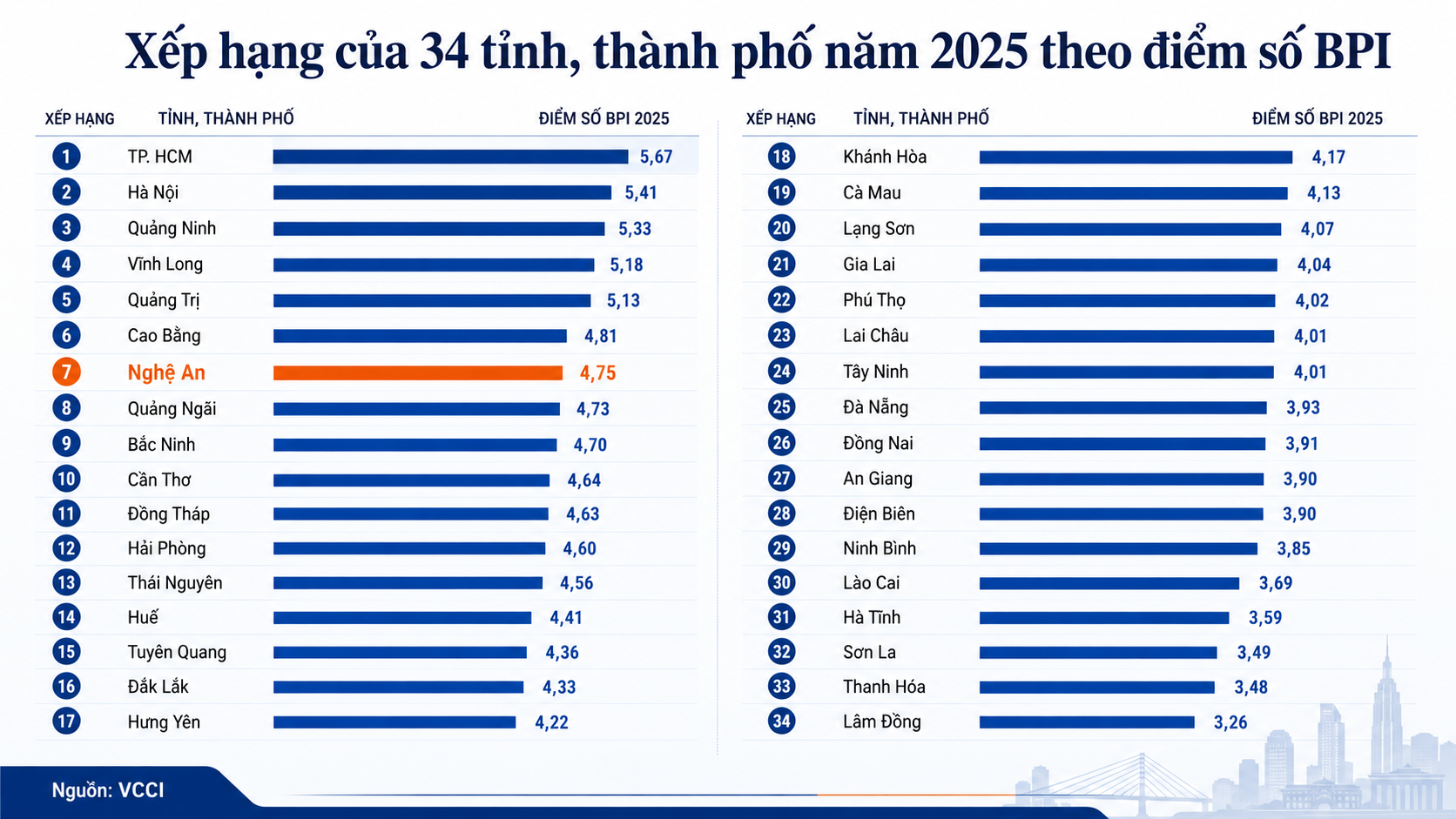
In the first-ever ranking, Nghe An scored 4.75 points, placing 7th out of 34 provinces and cities. A closer look at the score structure, formed from the average of two dimensions, reveals several noteworthy trends.
In the aspect of "Development of the private sector," Nghe An scored 3.89 points. Meanwhile, in the aspect of "Innovation," the province achieved 5.61 points, placing it among the highest-scoring provinces nationwide.
The significant gap between the two dimensions reflects the reality that Nghe An's private sector is not yet truly outstanding in terms of scale and economic potential, but it demonstrates relatively good innovation and adaptability.
The ratio of active businesses in Nghe An is currently equivalent to 3.2 businesses per 1,000 people, a rather modest figure compared to many economic centers across the country.
The majority of businesses in the province belong to the small and micro-sized group. Their capital accumulation capacity is limited, their market expansion potential is low, and their resilience to economic fluctuations is weak. The percentage of businesses deeply involved in global supply chains is also not high.
Many businesses still operate in traditional trade and service sectors with low added value. These factors partly explain why the scores in the private sector development aspect do not match its leading position.
However, the outstanding results in the innovation aspect show a positive development trend. Technological adaptability, the ability to innovate production and business models, and the level of participation in high-tech fields are clearly improving.
Outstanding innovation results show that Nghe An's private business sector is shifting towards a more modern and dynamic direction. This trend is occurring in parallel with a strong wave of investment in processing, manufacturing, and high-tech industries in the province.
In recent years, the Southeast Economic Zone has continuously attracted large-scale projects in the fields of electronics, technology components, new materials, supporting industries, and logistics, contributing to promoting economic restructuring and enhancing the competitiveness of local businesses.
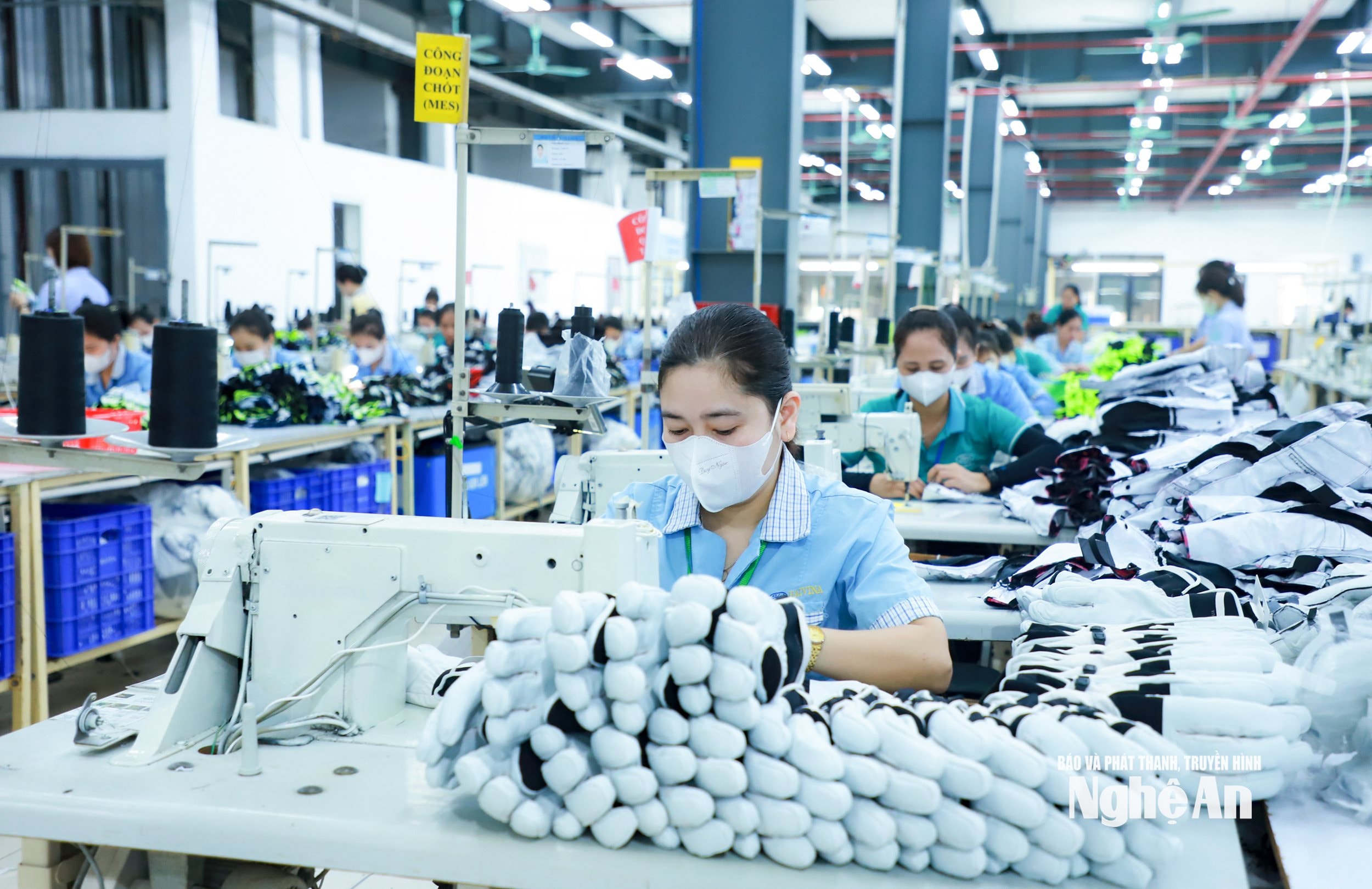
The impact of large-scale projects extends beyond increasing production value or budget revenue. More importantly, they create an environment for local businesses to access new technologies, improve management capabilities, and gradually participate in the supply chains of larger enterprises. As these production linkages are formed and expanded, opportunities to improve productivity, product quality, and added value for local businesses also increase.
An economy can achieve high growth rates for a period thanks to investment capital or the exploitation of existing advantages. However, the ability to maintain sustainable growth depends on labor productivity, technological level, and the innovation capacity of businesses.
Therefore, the results recorded by BPI in terms of innovation are highly significant for the development prospects of Nghe An in the coming years.
The BPI results provide a more practical basis for planning business development policies. If the reform momentum is maintained, linkages between domestic businesses and the FDI sector are promoted, and the competitiveness of the local business community is enhanced, Nghe An has every reason to expect the emergence of many private enterprises capable of expanding into national and international markets, creating new impetus for economic growth in the next development phase.


